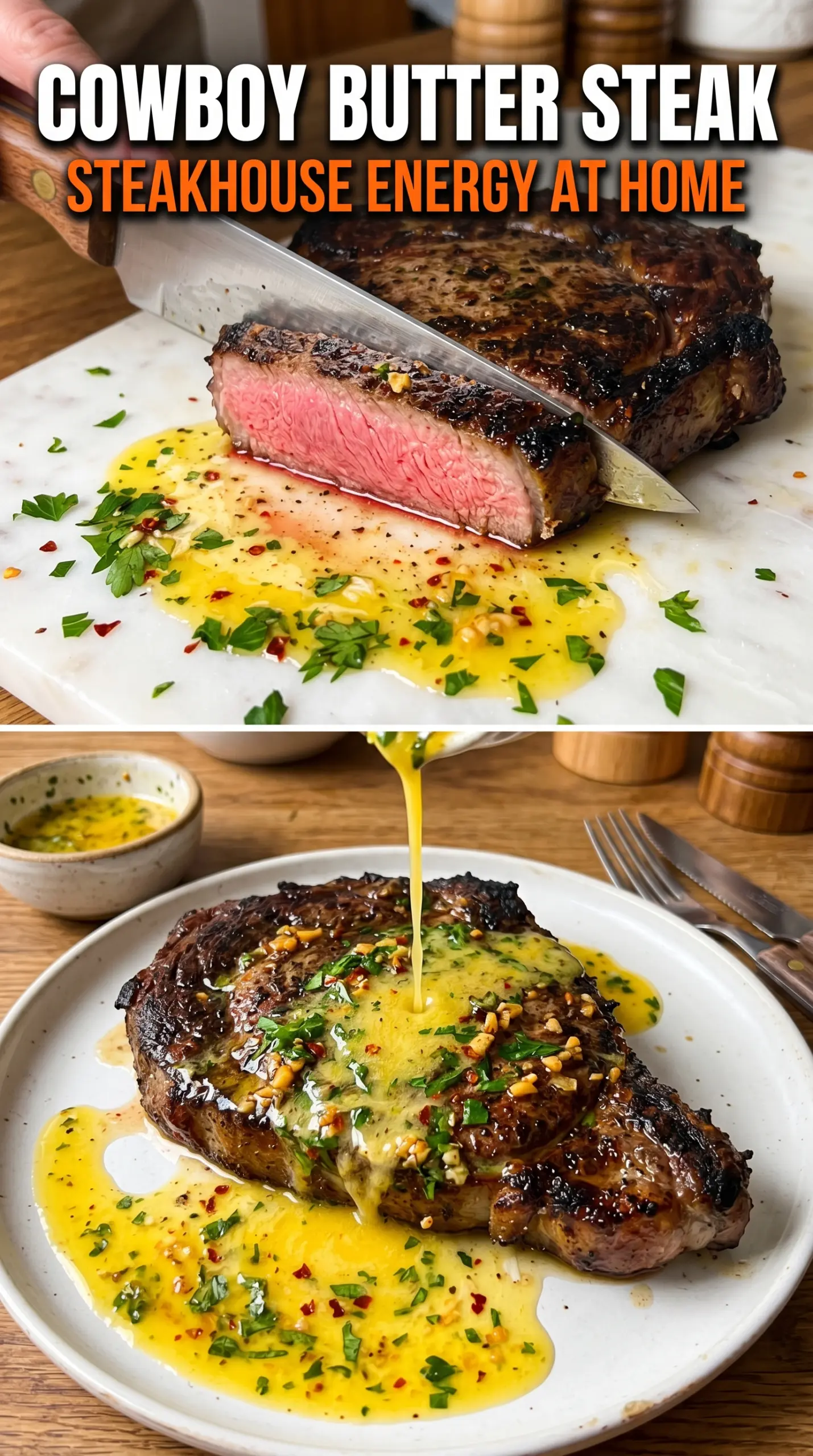
Cast iron-seared ribeye gets even better when it’s finished with cowboy butter that melts into every nook of the crust. The steak stays beefy and centered, while the butter brings garlic, lemon, herbs, and just enough heat to cut through the richness. What you end up with is the kind of steak dinner that feels steakhouse-worthy without being fussy.
The key here is that the butter is made ahead and chilled so it can sit on top of the hot steak without turning greasy. That contrast matters. The skillet needs to be hot enough to build a deep crust fast, and the final pat of butter in the pan gives you basting flavor without drowning the sear. Ribeye works especially well because the fat renders into the butter and carries the herbs right through each bite.
Below, I’ve included the small details that keep the steak from steaming, the butter from getting lost, and the center from overcooking while the crust catches up.
The cowboy butter melted into the steak just enough without washing off the crust, and the garlic-herb flavor came through in every bite. I followed the timing exactly and got a perfect medium-rare ribeye the first time.
Save this cowboy butter steak for the night you want a crackly ribeye crust, garlic-herb butter, and a steakhouse finish from one skillet.
The Part That Keeps the Crust From Going Soft
The mistake with butter-basted steak is adding the butter too early and letting it soak the surface before the crust has time to form. That turns a promising sear into a damp, pale exterior. Here, the skillet does the heavy lifting first. Once the ribeye has a deep brown crust and releases easily from the pan, the cowboy butter goes in for the last minute of basting, where it perfumes the steak without stopping the browning.
Thick steaks need two things at once: high heat for the outside and restraint for the inside. A ribeye that’s 1 to 1.5 inches thick gives you enough time to build that crust before the center overshoots. If the steak sticks when you try to turn it, it isn’t ready yet. Let it go another 30 seconds and it will usually release on its own.
What the Cowboy Butter Is Actually Doing Here
- Unsalted butter — This gives you the creamy base and lets you control the salt level after the steak is cooked. Salted butter works in a pinch, but it narrows your margin for seasoning the meat itself.
- Garlic, parsley, and chives — These are what make the butter taste fresh instead of flat. Mince the garlic finely so it softens into the butter; big pieces can taste harsh when they hit the hot steak.
- Lemon juice and Dijon mustard — Both cut through the richness and keep the butter from tasting heavy. Dijon also helps the mixture emulsify, which gives you a smoother spread once it melts.
- Smoked paprika and red pepper flakes — These add a little warmth and a gentle smoky edge that plays well with a charred ribeye. If you want less heat, cut the pepper flakes in half, but don’t skip the paprika.
- Ribeye — The marbling matters here. A leaner steak won’t give you the same buttery payoff because there’s less fat to mingle with the cowboy butter as it melts.
The Sear, the Baste, and the Short Rest
Shaping the Butter First
Blend the cowboy butter until it looks evenly flecked and cohesive, then roll it into a log and chill it until firm. That chill is what lets you slice off a clean piece later instead of having the whole thing slump into the plate. If the butter is too soft, it melts away before it can finish the steak.
Building the Crust
Season the steaks generously on all sides, then heat the cast iron until it’s smoking before the oil goes in. You want the steak to hiss the second it lands in the pan. If the pan isn’t hot enough, the meat will gray before it browns, and no amount of butter can fix that.
Finishing With Butter in the Pan
Sear the steaks for 3 to 4 minutes per side for medium-rare, adjusting only if your steaks are thinner or your stove runs hot. Add a small pat of cowboy butter during the last minute and tilt the pan so the melted butter pools for basting. Spoon it over the top continuously, but don’t drown the steak early or the crust will soften before it can finish crisping.
Resting and Serving
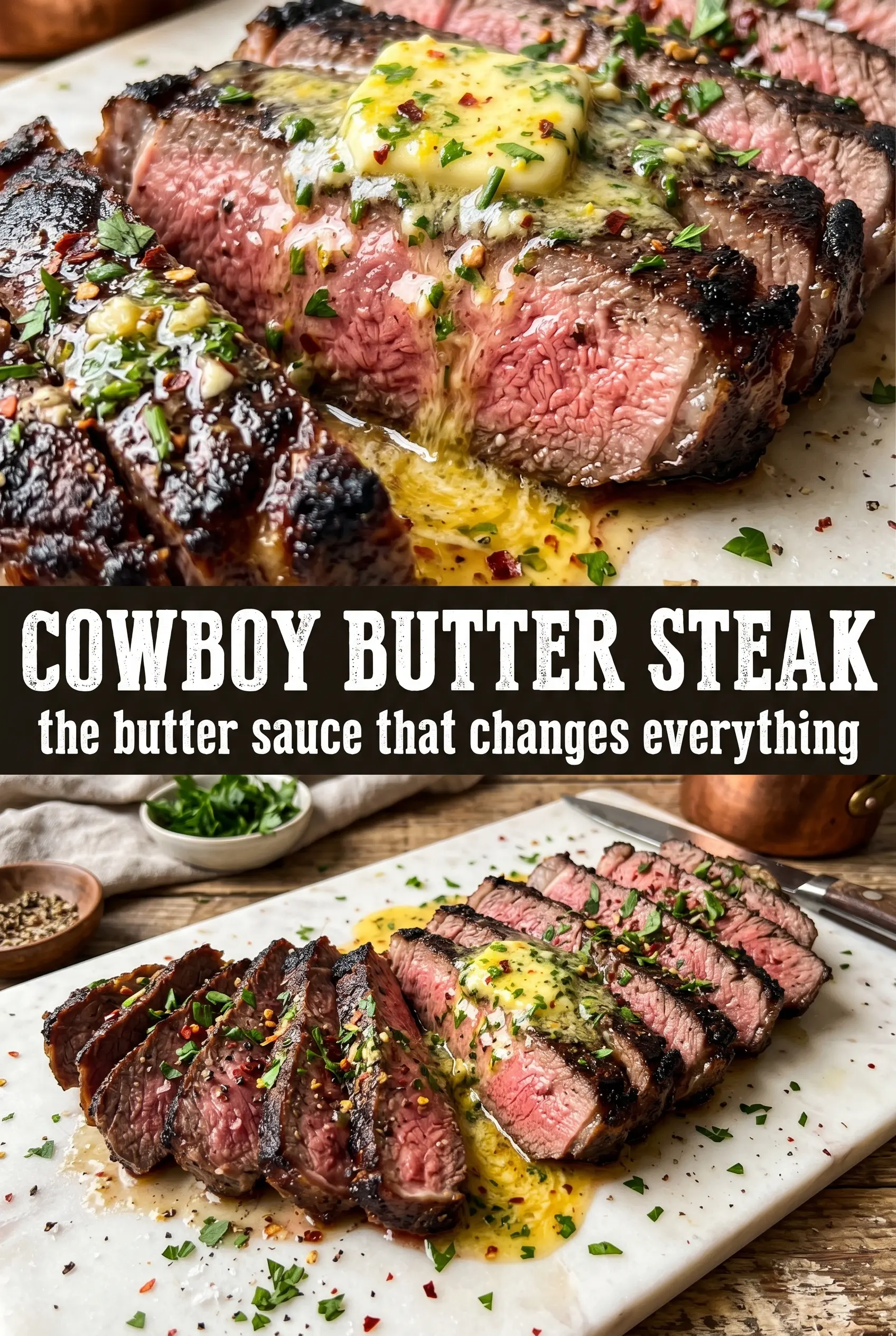
Move the steaks to a plate and rest them for 5 minutes, tented loosely with foil. That rest keeps the juices in the meat instead of running onto the cutting board. Add a thick slice of cowboy butter on top while the steak is still warm so it melts into the crust, then serve with extra on the side for the last bites.
Three Ways to Work This Steak Into Your Own Kitchen
Make It Dairy-Free
Use a plant-based butter that melts cleanly and has a neutral flavor. You’ll lose a little of the rich dairy finish, but the garlic, herbs, and lemon still carry the dish. Chill it the same way so it can sit on the hot steak instead of melting out across the plate.
Use Strip Steak or New York Strip
Strip steak gives you a firmer bite and a little less marbling than ribeye, so it won’t feel quite as lush, but it still holds a beautiful crust. Keep the butter amount the same and watch the pan closely, since leaner steaks can overcook a little faster at the edges.
Dial Back the Heat
Cut the red pepper flakes in half if you want the butter more herb-forward and less fiery. The steak still tastes full and rich because the paprika and garlic keep the butter grounded. Don’t remove the pepper entirely unless you want a much milder finish.
Storage and Reheating
- Refrigerator: Store leftover steak and cowboy butter separately for up to 3 days. The steak will lose some crust, but it still reheats well.
- Freezer: Freeze the butter log tightly wrapped for up to 2 months. Cooked steak can be frozen, but the texture gets noticeably firmer after thawing, so I wouldn’t plan on it unless you have to.
- Reheating: Warm the steak low and slow in a 250°F oven until just heated through, then finish with a fresh slice of cowboy butter. High heat will push it past medium-rare and dry out the edges before the center is warm.
Answers to the Questions Worth Asking
Cowboy Butter Steak
Ingredients
Equipment
Method
- Blend unsalted butter, garlic cloves, lemon juice, parsley, chives, Dijon mustard, smoked paprika, red pepper flakes, and salt until smooth with visible herb specks. Roll the mixture into a log shape in plastic wrap, then refrigerate until firm for 5 minutes.
- Pat ribeye steaks dry and season generously on all sides with salt and coarse black pepper. Heat a cast iron skillet over high heat until smoking, add vegetable oil, and sear steaks 3–4 minutes per side for medium-rare.
- In the final 1 minute of searing, baste each steak with a pat of cowboy butter so it melts and glazes the surface. Remove steaks to a plate and rest for 5 minutes tented with foil.
- Place a thick slice of cowboy butter directly on each steak while still warm so it melts into a glossy topping. Serve immediately with extra cowboy butter on the side.