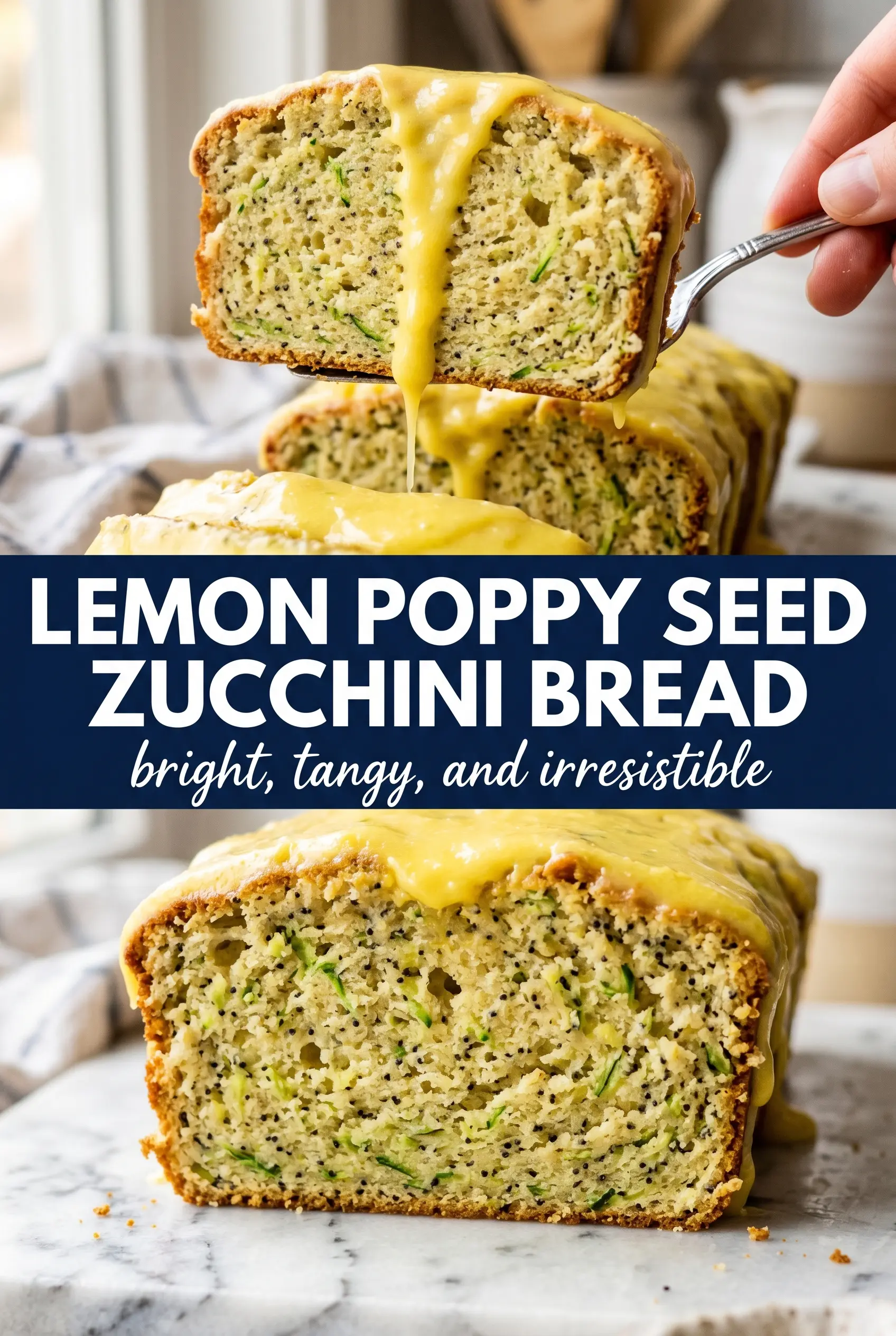
Lemon poppy seed zucchini bread bakes up with a tender crumb, bright citrus aroma, and just enough poppy seed crunch to keep each slice interesting. The zucchini keeps the loaf soft for days, but you never taste vegetables here — just a clean lemon flavor that lands somewhere between a quick breakfast bread and a little afternoon treat.
What makes this version work is balance. The oil brings a plush texture, the Greek yogurt adds moisture without making the crumb heavy, and the lemon zest carries more flavor than juice alone ever could. The zucchini has to be squeezed dry before it goes in, because extra water is the fastest way to end up with a gummy middle and a loaf that sinks after baking.
Below, I’ve included the little details that matter most: how dry the zucchini should be, when to stop mixing, and how to glaze the loaf so it looks glossy instead of disappearing into the top.
The crumb stayed soft for three days and the lemon glaze soaked in just enough without making the top soggy. I loved how the poppy seeds stayed evenly distributed instead of sinking to the bottom.
Like this lemon poppy seed zucchini bread? Save it to Pinterest for a bright loaf that stays moist, slices cleanly, and finishes with a glossy lemon glaze.
The Zucchini Needs to Be Dry Before the Batter Comes Together
The biggest mistake with zucchini bread is treating the vegetable like a free source of moisture. It isn’t. Once grated zucchini hits the batter, it starts releasing water as the loaf bakes, and that extra liquid can turn a good crumb dense and wet in the center. Squeeze it dry with your hands or a clean towel until it looks a little shriveled and no longer leaves a puddle behind.
This loaf also depends on a light hand after the dry ingredients go in. Overmixing wakes up the gluten in the flour and gives you a tougher, tighter slice. Stop as soon as the flour disappears, even if the batter looks a little rough. The oven will do the rest.
What the Lemon, Yogurt, and Poppy Seeds Are Each Doing Here

- Lemon zest — This is where most of the lemon character lives. Juice gives sharpness, but zest gives the aroma that makes the loaf smell bakery-level the second it comes out of the oven. Zesting the lemons directly into the sugar helps release those oils and spreads the flavor through the batter.
- Greek yogurt — This keeps the bread tender without making it greasy. Sour cream works in the same amount if that’s what you have. Plain yogurt is fine too, but use the thickest one you can find so the batter doesn’t get loose.
- Vegetable oil — Oil gives this loaf a softer, more even crumb than butter would. Butter would add flavor, but it also firms up more as it cools. If you want the bread to stay plush on day two, keep the oil.
- Poppy seeds — They add crunch and keep the loaf from feeling one-note. A full two tablespoons is enough to show up in every slice without turning the crumb speckled and dry. If your poppy seeds are old and smell flat, replace them; stale seeds taste dusty instead of nutty.
- Zucchini — Grate it on the fine side of a box grater for the most even texture. No need to peel it. The skin softens completely during baking and adds those flecks of green that make the loaf look homemade in the best way.
Building the Batter So the Loaf Stays Tender, Not Dense
Whisk the Dry Ingredients First
Start with the flour, baking soda, baking powder, salt, and poppy seeds in one bowl. This keeps the leavening evenly distributed, which matters in a quick bread because there’s no kneading or second rise to fix uneven mixing. If the baking soda clumps, you’ll get pockets with a bitter taste and an uneven lift.
Beat the Wet Ingredients Until Smooth
Whisk the sugar, eggs, oil, yogurt, lemon zest, lemon juice, and vanilla until the mixture looks glossy and unified. The sugar should start dissolving into the eggs, and the zest should look slightly darker as it releases its oils. This is the point where the loaf gets its flavor foundation, so don’t rush it.
Fold, Don’t Whip, After the Flour Goes In
Add the dry mixture to the wet ingredients and stir just until the flour streaks disappear. Then fold in the zucchini. If you keep stirring after that, the batter tightens up and the loaf bakes up with tunnels instead of a soft, even crumb. The finished batter should look thick, spoonable, and lightly speckled with poppy seeds and zucchini.
Glaze While the Loaf Is Still Warm
Let the bread cool for about 15 minutes, then whisk the glaze until completely smooth and pour it over the top. A warm loaf grabs the glaze instead of letting it slide off, which gives you that shiny finish and a little citrus soak on the surface. If the loaf is too hot, the glaze melts away; if it’s fully cool, it sits on top in a thick layer and never settles in.
Three Ways to Adjust the Loaf Without Losing Its Character
Dairy-Free Version
Use a plain dairy-free yogurt with some body, not a thin drinking-style version. The loaf will still stay moist, but the crumb may be a touch less rich than the original because Greek yogurt adds a little tang and structure at the same time.
Gluten-Free Swap
Replace the all-purpose flour with a 1:1 gluten-free baking blend that includes xanthan gum. The loaf should still slice well, but it may bake a little faster and benefit from a full cool before slicing so the crumb can set cleanly.
Less Sweet, More Breakfast-Style
Cut the sugar back to 2/3 cup if you want a more restrained loaf and keep the glaze on the lighter side. You’ll lose a little of the cake-like softness that sugar contributes, but the lemon flavor becomes sharper and the bread works better toasted with butter.
Storage and Reheating
- Refrigerator: Store covered for up to 5 days. The glaze will soften into the top, and the crumb stays moist.
- Freezer: Freeze the unglazed loaf or individual slices tightly wrapped for up to 2 months. Add the glaze after thawing for the cleanest finish.
- Reheating: Warm slices in the toaster oven or microwave just until lightly heated. Overheating dries out the zucchini bread fast, especially once it’s sliced.
Answers to the Questions Worth Asking
Lemon Poppy Seed Zucchini Bread
Ingredients
Equipment
Method
- Preheat oven to 350°F and grease a 9x5 loaf pan. Set the pan aside so the batter can go in right after mixing.
- Whisk all-purpose flour, baking soda, baking powder, salt, and poppy seeds together. Whisk just until the poppy seeds are evenly dispersed.
- Beat granulated sugar, eggs, vegetable oil, Greek yogurt, lemon zest, fresh lemon juice, and vanilla extract until smooth. The mixture should look glossy and fully combined.
- Stir in grated zucchini that has been squeezed dry. Stop when the zucchini is evenly mixed through with no dry pockets.
- Fold the dry ingredients into the wet ingredients until just combined. Mix only until no flour streaks remain to keep the loaf tender.
- Pour batter into the prepared loaf pan and bake at 350°F for 50–58 minutes. Remove when a toothpick inserted in the center comes out clean and the top looks golden.
- Cool the loaf for 15 minutes. Keep it warm for the best drizzle flow.
- Whisk powdered sugar, lemon juice, and lemon zest until smooth, then pour generously over the warm loaf. Watch for the glaze to spread and set with a glossy finish.