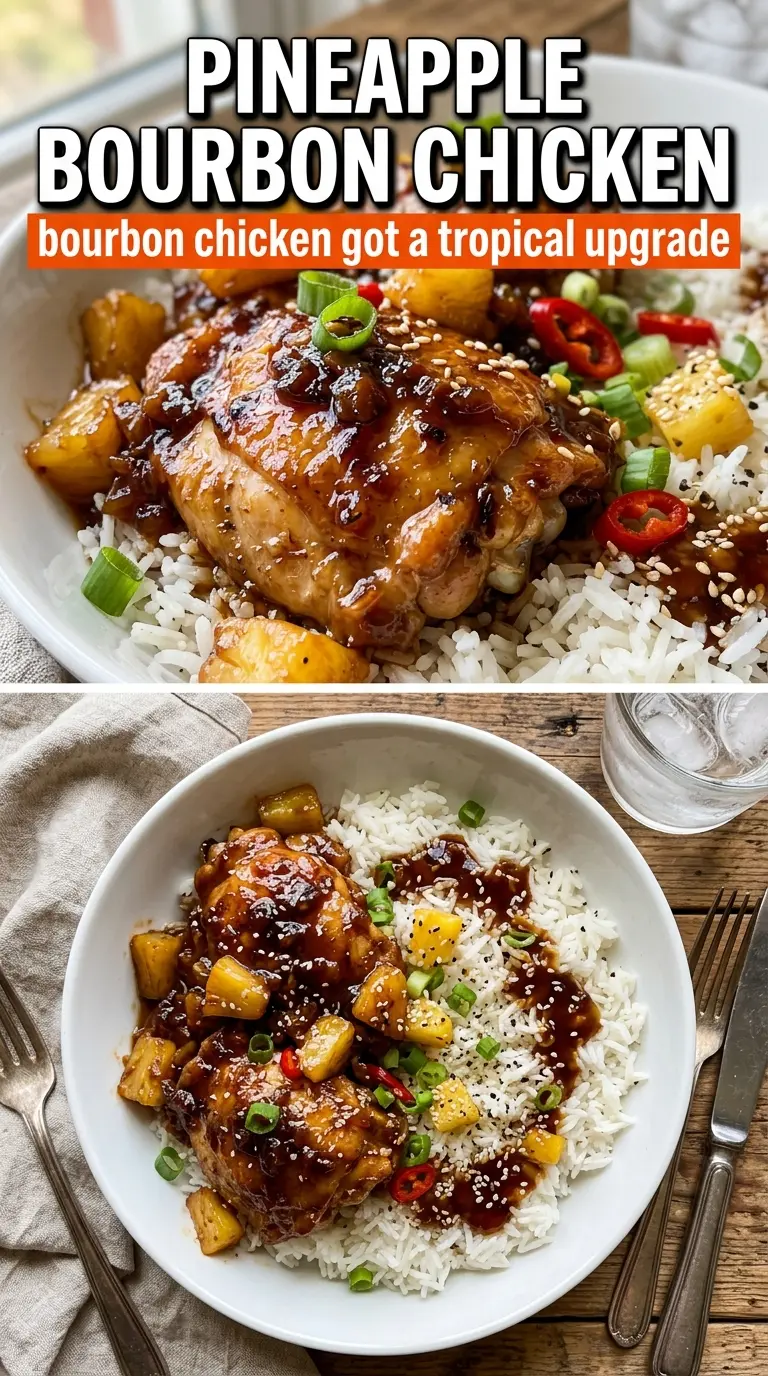
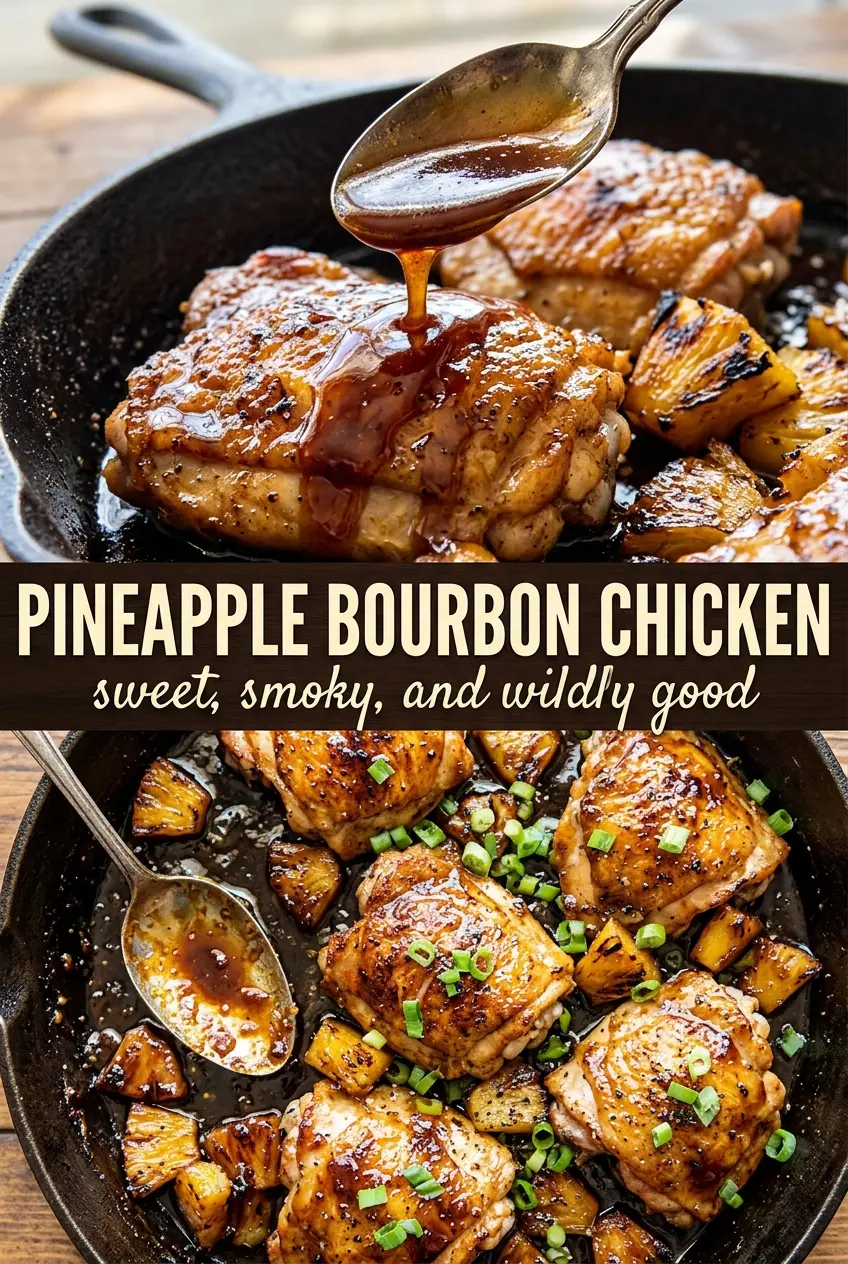
Sticky pineapple bourbon chicken hits the table with glossy edges, tender chicken, and a sweet-savory sauce that clings to every piece instead of pooling at the bottom of the pan. The pineapple keeps it bright, the bourbon adds depth, and the skillet finish gives the sauce that lacquered, takeout-style shine people always go after with this dish.
What makes this version work is the order. The chicken gets browned first, then pulled out so the sauce can reduce on its own before the cornstarch goes in. That keeps the glaze concentrated instead of watered down, and it also keeps the chicken from overcooking while the sauce thickens. A little ketchup adds body and color, soy sauce brings salt, and fresh ginger keeps the sweetness from flattening out.
Below you’ll find the small details that matter here: how to get the sauce sticky without turning it gummy, when to add the pineapple so it stays juicy, and a few swaps if you need to make it without bourbon or with what’s already in the kitchen.
The sauce thickened up beautifully and coated the chicken instead of turning runny. I used the full 5 minutes of simmering before adding the slurry, and the pineapple stayed juicy without making everything watery.
Love the glossy bourbon-pineapple glaze? Save this sticky chicken skillet for the nights when you want takeout-style flavor without the takeout box.
Why This Sauce Stays Sticky Instead of Thin
The biggest mistake with bourbon chicken is adding the slurry too early, before the sauce has had a chance to reduce. If the liquid is still loose when the cornstarch goes in, the glaze can turn pasty before it ever gets properly thick. Here, the sauce simmers first so the pineapple juice, bourbon, soy sauce, sugar, and ketchup concentrate into a base that already tastes finished.
Chicken thighs help here too. They stay tender through the final toss back into the pan, which matters because the last few minutes are where the sauce tightens up and the pineapple gets folded in. If you use chicken breast, it still works, but pull it the moment it’s cooked through or it can go dry before the glaze is ready.
- Bourbon — It adds warmth and a little oakiness, not a strong whiskey bite. If you want to cook without alcohol, use extra pineapple juice plus a teaspoon of apple cider vinegar for balance, though the sauce will taste a little brighter and less rounded.
- Pineapple juice — This is the backbone of the sauce. Fresh or canned both work, but canned juice tends to be more consistent and a little sweeter, which is handy for a sticky glaze.
- Soy sauce — It keeps the sweetness in check and gives the sauce its deep color. Low-sodium soy sauce is the easiest swap if you want more control over salt.
- Cornstarch slurry — Mix it with cold water before it hits the pan. If you dump cornstarch straight into hot liquid, you’ll get little lumps that never fully smooth out.
What Each Ingredient Is Actually Doing in This Recipe
- Primary ingredient (the star) — This carries the main flavor. Quality matters here more than anywhere else.
- Cooking medium (oil, broth, or sauce) — This carries flavors and prevents the dish from tasting dry or one-dimensional.
- Aromatics (onion, garlic, herbs) — These add depth and complexity. They sweeten and mellow as they cook.
- Seasonings (salt, spices, herbs) — These define the personality and keep the dish from tasting flat.
- Vegetables (texture, nutrition, color) — Choose ones that complement the protein. Cut to size so they cook evenly.
- Acid (lemon, vinegar, tomato, wine) — This brightens and prevents heavy dishes from tasting one-dimensional.
- Optional richness (cream, cheese, butter) — These make the dish luxurious. Balance with acid so it stays bright.
- Proper technique (heat, time, stirring) — Follow the method to get the best results. Even great ingredients need proper technique.
Building the Skillet Glaze in the Right Order
Brown the Chicken First
Season the chicken pieces with salt and pepper, then cook them in hot oil until the outside is golden and the centers are cooked through. You’re not trying to deeply sear every edge like a steak; you just want color and a little fond left behind in the pan. If the skillet looks crowded, cook the chicken in two batches so it browns instead of steaming. Pull it out as soon as it’s done so it doesn’t keep cooking while the sauce comes together.
Reduce the Sauce Before Thickening It
Pour the pineapple juice, bourbon, soy sauce, brown sugar, ketchup, garlic, and ginger into the same pan. Stir and scrape up the browned bits, then let it simmer for about 5 minutes. The sauce should look slightly darker and smell less sharp, with the raw alcohol note cooked off. If it still seems thin at this point, that’s normal; the cornstarch comes later.
Add the Slurry Only After the Flavor Has Concentrated
Stir the cornstarch and water together until smooth, then pour it into the simmering sauce while stirring. The glaze should thicken within a minute or two and turn shiny and clingy. If it looks cloudy and gluey, the heat was too high or the slurry went in all at once. Lower the heat and keep stirring until it smooths out.
Finish With Pineapple and Return the Chicken
Once the sauce is sticky, add the chicken back in along with the pineapple chunks. Toss everything until the pieces are coated and glossy, then cook just long enough for the pineapple to warm through. This last minute matters because it keeps the fruit from breaking down into mush. Serve right away over rice with green onions and sesame seeds so the glaze stays where it belongs: on the chicken.
How to Adapt Pineapple Bourbon Chicken Without Losing the Glaze
No-alcohol version that still tastes rounded
Swap the bourbon for more pineapple juice and add 1 teaspoon apple cider vinegar or rice vinegar. You lose the mild caramel depth bourbon brings, but the sauce still tastes balanced instead of one-note sweet.
Chicken breast instead of thighs
Chicken breast works if that’s what you have, but it needs a shorter cook time and a gentler finish. Cook it just until done, then move fast when the sauce is ready so it stays juicy instead of stringy.
Gluten-free version
Use a gluten-free soy sauce or tamari and keep everything else the same. The texture stays identical, and tamari usually gives you a slightly deeper, less salty finish.
Make it spicier
Add a pinch of red pepper flakes or a squirt of chili garlic sauce to the simmering glaze. The heat cuts through the sweetness and gives the dish a sharper finish without changing the texture.
Storage and Reheating
- Refrigerator: Store in an airtight container for up to 4 days. The sauce will thicken as it chills, which is normal.
- Freezer: It freezes well for up to 2 months. Cool it completely first, then freeze in a sealed container; the pineapple softens a little after thawing, but the flavor holds.
- Reheating: Warm it gently in a skillet over medium-low heat with a splash of water or pineapple juice. The common mistake is blasting it on high heat, which can tighten the chicken and make the glaze seize up.
Questions I Get Asked About This Recipe
Pineapple Bourbon Chicken
Ingredients
Equipment
Method
- Season the chicken pieces with salt and black pepper, then heat vegetable oil in a large cast iron skillet over medium-high heat and cook the chicken for 5–6 minutes until cooked through and golden—remove and set aside.
- In the same skillet, combine pineapple juice, bourbon, soy sauce, brown sugar, ketchup, garlic, and ginger, then bring to a simmer.
- Cook the sauce for 5 minutes until it reduces slightly.
- Stir in the cornstarch slurry and cook, stirring until the sauce thickens into a sticky glaze that coats the back of a spoon.
- Return the chicken to the skillet and toss to coat in the thickened bourbon-pineapple glaze.
- Add pineapple chunks and cook for 2 more minutes until the glaze is glossy and caramelized at the edges and the chicken is fully reheated.
- Serve the pineapple bourbon chicken over rice and garnish with green onions and sesame seeds.