Caprese pasta salad brings together the parts people actually want most in a cold pasta dish: juicy tomatoes, soft mozzarella, plenty of basil, and a balsamic dressing that clings instead of pooling at the bottom of the bowl. It eats like a proper side dish, not a sad afterthought, and the best bites have that mix of chilled pasta, sweet tomato, and creamy cheese in one forkful.
The difference here is in the balance. Rinsing the pasta stops the cooking fast and keeps the salad from turning gummy, while a short chill gives the garlic and balsamic time to mellow into the oil. Fresh mozzarella matters because it stays tender and milky without falling apart, and torn basil releases more aroma than neatly chopped leaves ever will. A final drizzle of balsamic glaze gives the bowl that glossy finish and a little concentrated sweetness right before serving.
If you’ve ever had pasta salad taste flat after an hour in the fridge, the fix is in the dressing and the timing. Below you’ll find the small details that keep the pasta lively, the basil fresh, and the whole salad tasting bright even after it sits.
The pasta stayed springy after chilling, and the balsamic dressing soaked in just enough without making it soggy. I made it for a cookout and every last bit disappeared.
Love the red, white, and green contrast in this Caprese Pasta Salad? Save it to Pinterest for an easy chilled side with basil, mozzarella, and balsamic glaze.
The Trick to Keeping Caprese Pasta Salad Bright After It Chills
The part that ruins most cold pasta salads is the chill itself. Pasta straight from the pot grabs the dressing better, but if it goes into the bowl warm, the mozzarella softens too much and the basil bruises. Rinsing the pasta under cold water stops that problem fast, and it also keeps the salad from absorbing all the dressing before serving.
The other thing that matters is restraint. Caprese ingredients already bring a lot of flavor, so the dressing should taste lively and clean, not heavy. A little garlic goes a long way here; enough to lift the tomatoes and balsamic, but not so much that it takes over the salad after an hour in the fridge.
- Cold-rinsed pasta — This keeps the noodles from overcooking and makes the salad ready to chill right away. Skip the rinse only if you plan to serve it warm, which isn’t the goal here.
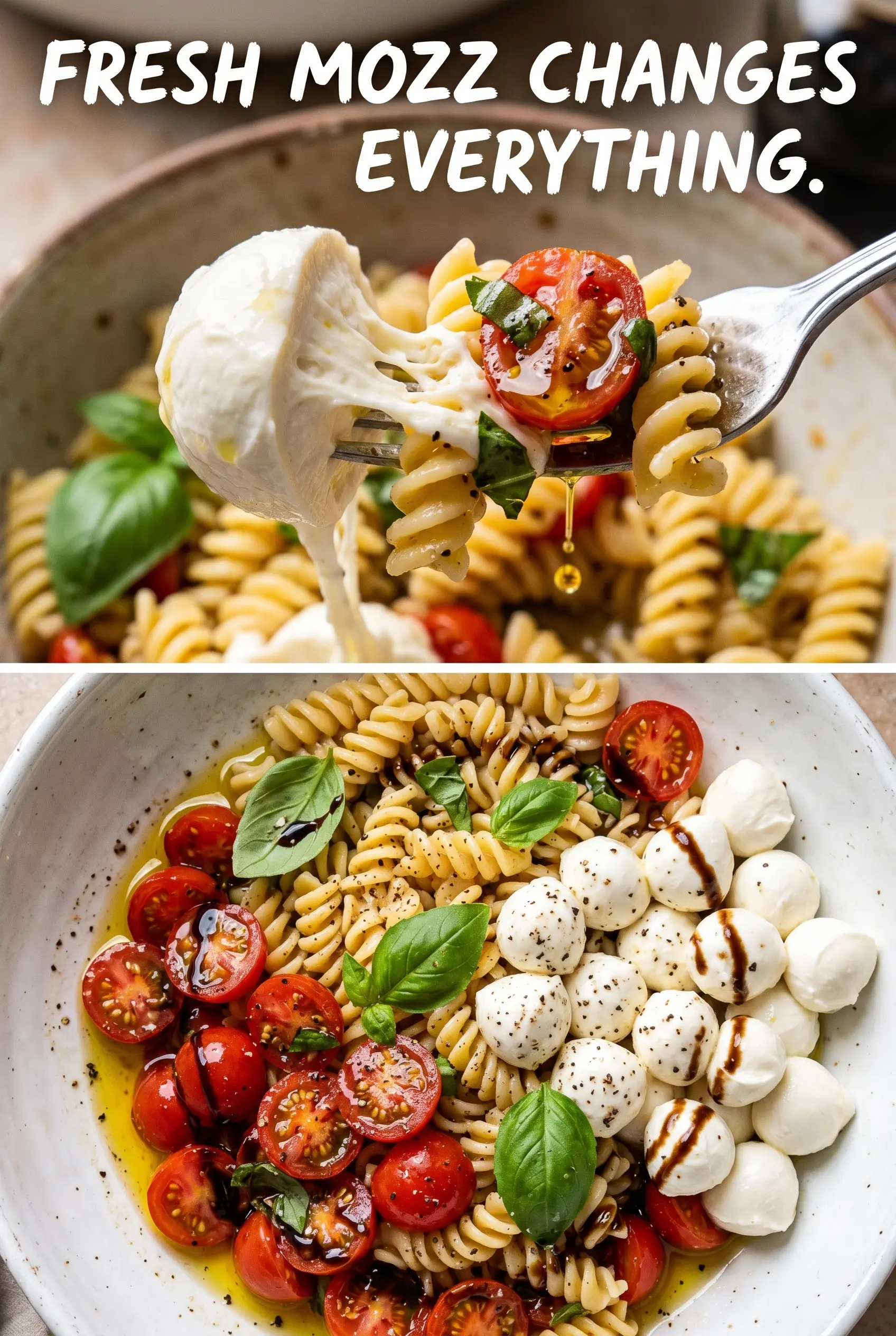
- Fresh mozzarella balls — Ciliegine hold their shape and give you those soft, milky bites that make this feel like Caprese instead of plain pasta salad. If you only have a large ball, tear it into small pieces and drain it well first.
- Balsamic glaze — This is the finish that makes the whole bowl taste complete. Regular balsamic in the dressing gives tang, but the glaze adds a concentrated sweet-tart layer right before serving.
What Each Ingredient Is Doing in the Bowl
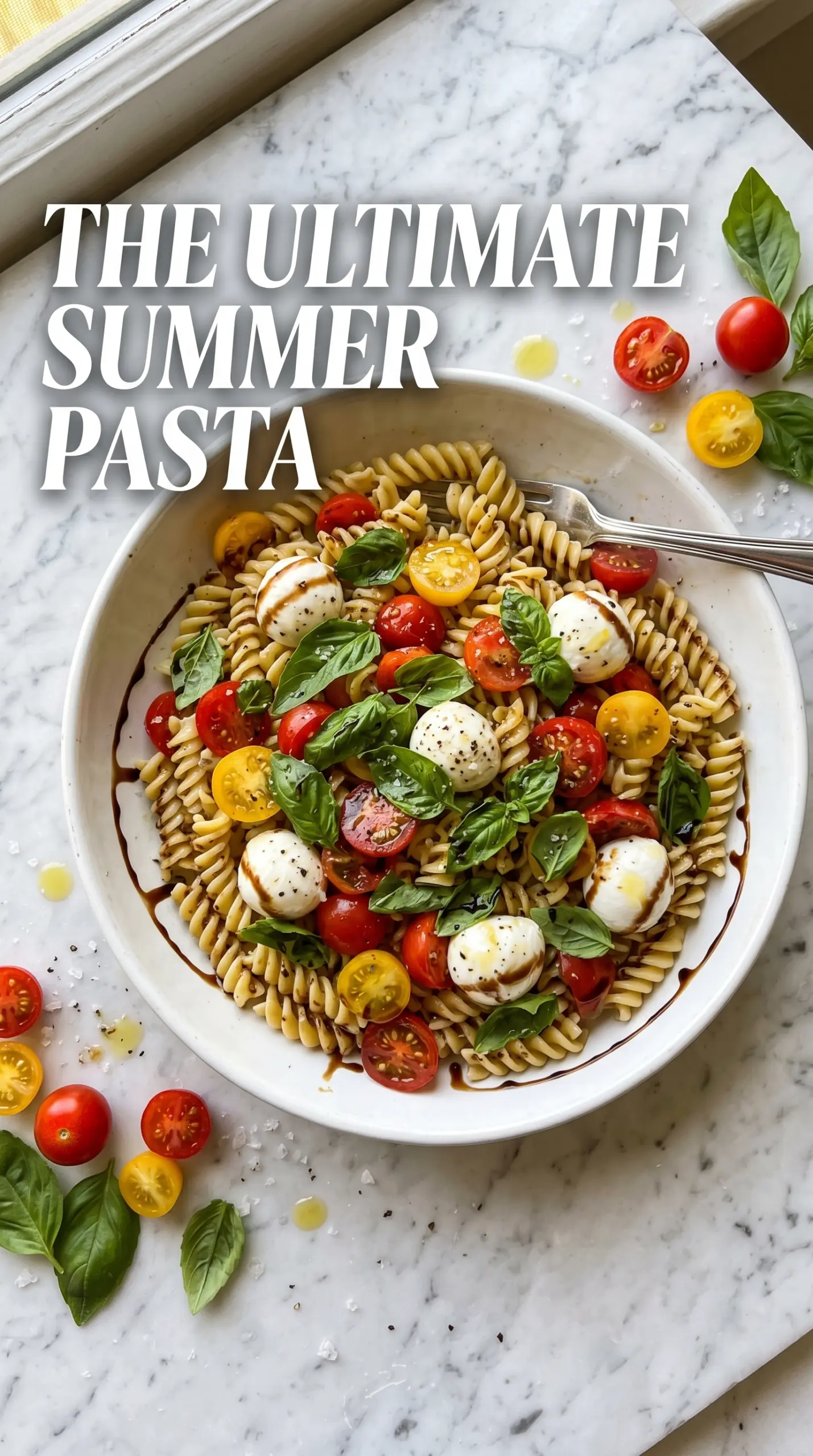
- Rotini or farfalle — You want a shape with ridges or folds so the dressing has somewhere to cling. Long, slippery pasta doesn’t hold the balsamic as well.
- Cherry tomatoes — These stay juicy and sweet without turning watery the way some larger tomatoes can once they sit. Halving them lets their juices mix into the dressing instead of staying trapped inside.
- Fresh basil — Torn basil gives off more aroma than chopped basil, and it looks better scattered through the bowl. Add it just before chilling so it stays green and fragrant.
- Olive oil and balsamic vinegar — This is the base of the dressing, and good olive oil matters more here than in a heavily seasoned dish because there aren’t many ingredients to hide behind. Use the best balsamic you’ve got, but don’t use one that’s so syrupy it turns muddy in the bowl.
- Garlic — Two cloves add a sharp edge that wakes up the tomatoes. If raw garlic usually feels too aggressive to you, mince it very fine so it disperses instead of landing in one hot bite.
Building the Salad So the Basil Stays Fresh
Cooking and Cooling the Pasta
Cook the pasta until it’s just tender, then drain it and rinse under cold water until it stops steaming. That rinse matters because the residual heat is what wilts basil and softens mozzarella too fast. Shake off as much water as you can so the dressing isn’t diluted.
Mixing the Dressing First
Whisk the olive oil, balsamic vinegar, garlic, salt, and pepper together before anything else goes in. Garlic needs a little time in the dressing to lose its raw edge, and whisking helps the oil and vinegar emulsify enough to coat the pasta. If the oil and vinegar separate a little later, that’s normal; just toss again before serving.
Combining Without Crushing
Add the pasta, tomatoes, mozzarella, and basil to a large bowl, then pour the dressing over the top and toss gently. Use a light hand so the mozzarella stays intact and the tomatoes don’t burst all over the bowl. The salad should look evenly glossy, not soupy.
Letting It Sit Before the Final Drizzle
Chill the salad for at least an hour so the flavors settle together. If it looks a little dry after chilling, that’s the pasta doing what pasta does; a small extra drizzle of olive oil or balsamic glaze right before serving brings it back. Add the glaze at the end so it stays visible and doesn’t disappear into the dressing.
How to Adapt This Caprese Pasta Salad for Different Tables
Gluten-Free Version with the Same Fresh Finish
Use a sturdy gluten-free rotini or farfalle and cook it just to tender, since gluten-free pasta can go soft if it sits in hot water too long. Rinse it well after cooking so it stops at the right texture, then chill it as written. The dressing and add-ins stay the same, but the pasta may absorb a little more liquid, so reserve a small extra splash of olive oil for serving.
Dairy-Free Caprese-Style Salad
Replace the mozzarella with marinated vegan mozzarella or leave it out and add more tomatoes plus a handful of chopped olives for richness. You lose the milky, creamy bite of classic Caprese, but the balsamic, basil, and tomato backbone still works. This version leans brighter and sharper, which is a good trade if dairy is off the table.
Add Protein for a Main-Dish Lunch
Toss in diced grilled chicken, white beans, or chickpeas if you want this to eat like a fuller meal. Chickpeas keep the vegetarian angle intact and work especially well because they catch the balsamic dressing in the same way the pasta does. Add protein after the salad has chilled so it doesn’t get broken up during tossing.
Storage and Reheating
- Refrigerator: Store covered for up to 3 days. The basil will darken a little and the pasta will absorb more dressing, but the flavor stays good.
- Freezer: Don’t freeze this salad. The tomatoes and mozzarella change texture after thawing, and the basil won’t recover.
- Reheating: This salad is meant to be served cold or at cool room temperature. If it comes straight from the fridge, let it sit 10 to 15 minutes, then toss with a small drizzle of olive oil or balsamic glaze to wake it back up.
The Questions People Ask Before They Make It
Caprese Pasta Salad
Ingredients
Method
- Cook the pasta according to package directions until al dente, then drain and rinse with cold water to stop the cooking.
- In a bowl, whisk together olive oil, balsamic vinegar, garlic, salt, and pepper until smooth and slightly glossy, with no garlic clumps visible.
- Combine the pasta, cherry tomatoes, mozzarella, and torn basil in a large bowl so the red, white, and green are evenly distributed.
- Pour the vinaigrette over the salad and toss gently until every pasta piece looks lightly coated.
- Refrigerate for at least 1 hour so the flavors meld and the basil looks fresher and darker in color.
- Drizzle balsamic glaze over the top right before serving for a glossy finish and quick visual contrast.