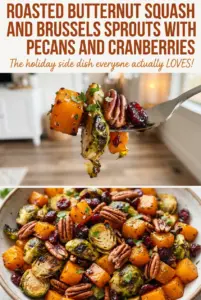
Roasted butternut squash and Brussels sprouts turn into the kind of side dish people keep reaching for: caramelized edges, tender centers, a little crunch from toasted pecans, and pops of sweet-tart cranberry in every bite. The maple balsamic drizzle pulls everything together without making the vegetables soggy, so you get contrast instead of one soft, blended pan of ingredients.
The trick is high heat and enough space on the pan. When the squash and sprouts are crowded, they steam before they brown, and that’s where most versions fall flat. A hot oven, a single layer, and a halfway toss give you those deep roasted edges that make this dish taste like more than the sum of its parts.
Below, I’ve included the details that matter most: how to keep the Brussels sprouts from going limp, when to add the maple balsamic so it coats instead of washes off, and a few smart swaps if you need to work with what’s in the pantry.
The squash caramelized beautifully and the Brussels sprouts stayed crisp on the edges instead of turning mushy. The maple balsamic was just enough to tie everything together, and the pecans added the perfect crunch.
Pin these roasted butternut squash and Brussels sprouts for a caramelized, sweet-savory side with cranberries and pecans.
The Reason These Vegetables Brown Instead of Steam
Roasting works here because the vegetables are cut to a size that gives the oven time to do its job without burning the edges. Butternut squash brings soft sweetness and needs a little more surface area to caramelize, while Brussels sprouts need their cut sides exposed to the pan so they can crisp instead of collapse. If either one is packed too tightly, moisture gets trapped and you lose the roasted flavor that makes this dish worth making.
The other detail that matters is timing. The maple balsamic goes on after roasting, not before, because syrup in the oven can turn sticky before the vegetables finish browning. Added at the end, it coats the hot vegetables in a thin glaze and keeps the pecans from tasting dusty instead of toasted.
What Each Ingredient Is Doing in the Pan
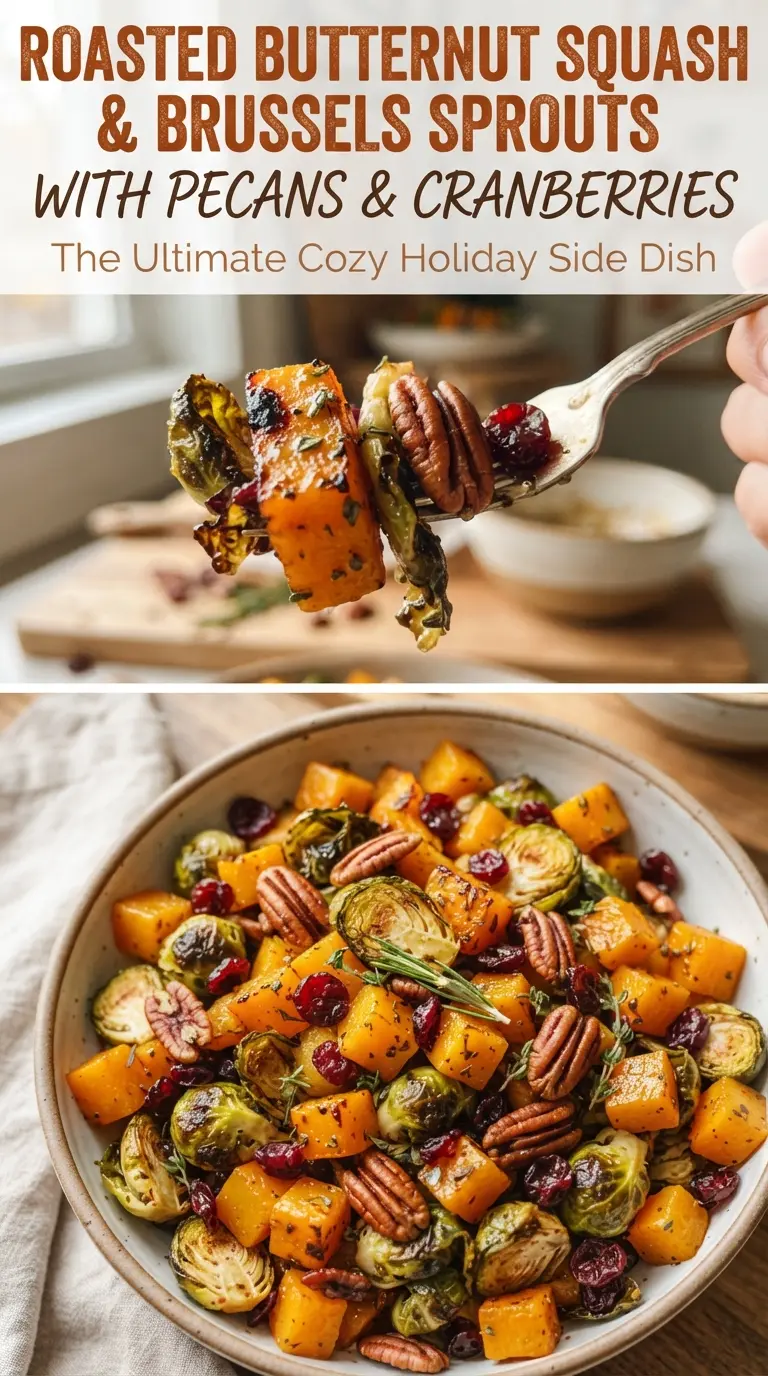
- Butternut squash — This gives the dish its soft, sweet base and turns silky at the center while the edges brown. Cubes around the same size roast more evenly, so keep them close to 1-inch pieces.
- Brussels sprouts — Halved sprouts roast into crisp-edged, nutty bites when the cut side hits the pan. If you buy large sprouts, trim them down a little so they finish at the same time as the squash.
- Olive oil — Enough oil is what helps the vegetables brown instead of dry out. A lighter olive oil works fine here, since the maple balsamic and pecans carry most of the flavor.
- Maple syrup and balsamic vinegar — This is the glaze, and both parts matter. Maple adds round sweetness, while balsamic cuts through it with acid, so don’t swap in plain honey without expecting a softer, less sharp finish.
- Pecans — Toasted pecans bring crunch and a buttery note that keeps the dish from feeling one-dimensional. If yours are already toasted, add them at the end and keep them out of the oven so they stay crisp.
- Dried cranberries — These give you little bursts of tart sweetness that wake up the roasted vegetables. If they’re very dry, let them sit in the warm dressing for a minute before tossing everything together.
The 30 Minutes That Matter Most
Preheating for Real Browning
Set the oven to 425F before you start cutting anything. That hot oven is what gives the squash and sprouts their browned edges instead of letting them slowly soften. If the pan goes into a lukewarm oven, the vegetables spend too long releasing moisture and the texture turns dull.
Tossing for Even Color
Use a large sheet pan and spread the vegetables into a single layer after tossing them with oil, salt, and pepper. The cut side of the Brussels sprouts should face the pan wherever possible, because that’s where the best browning happens. Halfway through roasting, give everything a good toss so the darker pieces don’t overcook while the rest catch up.
Finishing with the Glaze
Whisk the maple syrup and balsamic vinegar in a small bowl while the vegetables finish roasting. As soon as the pan comes out of the oven, toss the hot vegetables with the glaze, cranberries, and pecans. The heat helps the dressing cling, but if you add everything too early, the cranberries can plump too much and the pecans lose their snap.
Make It Dairy-Free and Naturally Vegetarian
This recipe is already dairy-free and vegetarian as written, which is part of why it fits almost any table. The flavor comes from roasting, not cheese or butter, so you don’t lose anything by keeping it simple.
Swap the Pecans for Walnuts or Pepitas
Walnuts give a slightly earthier finish, while pepitas make the dish friendlier for anyone avoiding tree nuts. Toast either one first if you can, because raw nuts or seeds never give the same depth or crunch.
Use Sweet Potato When Butternut Squash Isn’t Available
Sweet potato works in the same size cubes and roasts in about the same time, though it tastes a little less silky and a little more starchy. The result is still balanced, but the squash gives a softer texture and a more buttery sweetness.
Turn It Into a Heartier Side
Add a handful of cooked farro, wild rice, or quinoa after roasting if you want this to act more like a warm grain salad. The grains soak up the maple balsamic and stretch the dish without hiding the vegetables.
Storage and Reheating
- Refrigerator: Store leftovers in an airtight container for up to 4 days. The vegetables will soften a bit, but the flavor holds up well.
- Freezer: It freezes, but the texture changes a lot, especially the Brussels sprouts. If you must freeze it, cool completely first and thaw in the fridge before reheating.
- Reheating: Warm in a 400F oven for 10 to 15 minutes on a sheet pan so the vegetables can re-crisp. The microwave works in a pinch, but it softens the pecans and takes away the roasted edges.
Answers to the Questions Worth Asking
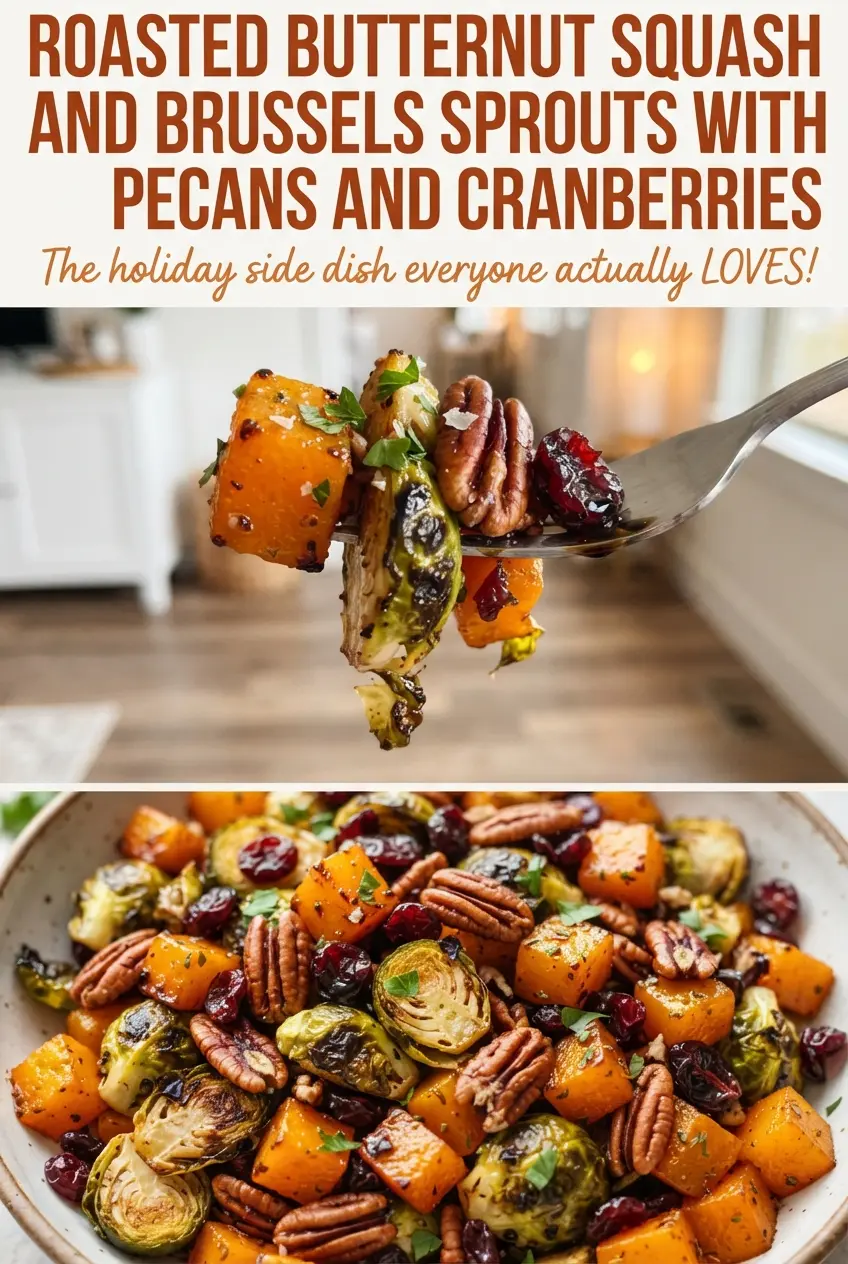
Roasted Butternut Squash and Brussels Sprouts with Pecans and Cranberries
Ingredients
Equipment
Method
- Preheat oven to 425F. Let the oven fully heat so the vegetables caramelize quickly.
- Toss butternut squash and Brussels sprouts with olive oil, salt, and black pepper on a sheet pan. Spread them in a single layer for even browning.
- Roast for 25-30 minutes, tossing halfway, until tender and caramelized. Look for browned edges on the Brussels sprouts and deep golden spots on the squash.
- Whisk maple syrup and balsamic vinegar together. Stop when the mixture looks smooth and glossy.
- Toss the roasted butternut squash and Brussels sprouts with the maple balsamic, dried cranberries, and toasted pecans. Serve warm so the pecans stay crisp and the cranberries soften slightly.