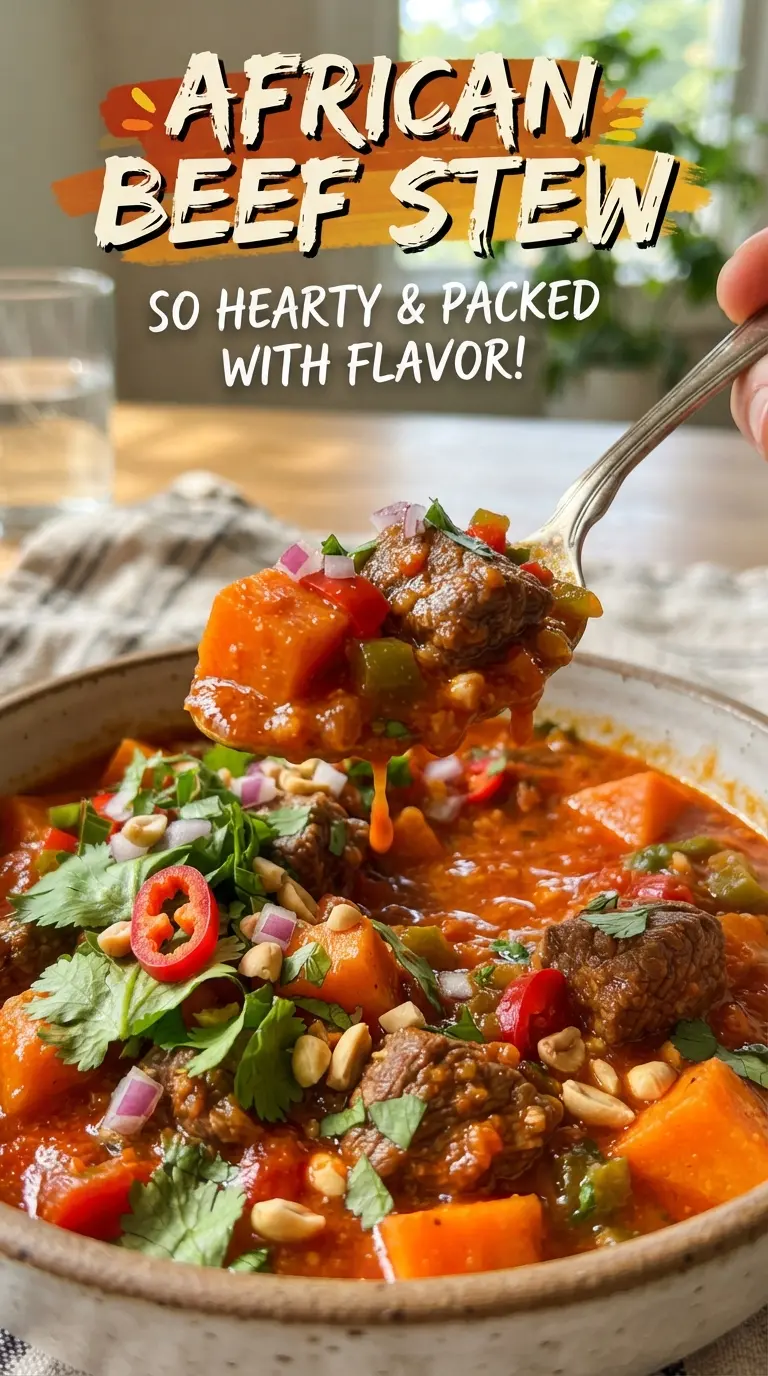
African beef stew lands somewhere between cozy comfort food and a bold peanut-tomato braise, with tender beef, sweet potato, and spinach all simmered into a sauce that clings to rice instead of sliding off it. The peanut butter doesn’t make it taste like peanut butter toast; it gives the stew body, a savory depth, and that rich, silky finish that makes every spoonful feel complete.
What makes this version work is the order. The beef browns first, which builds the base flavor before any liquid goes in, and the tomato paste cooks long enough to darken and lose its raw edge. Peanut butter gets whisked in after the long simmer, not at the beginning, so it melts into the broth instead of separating or turning grainy. Sweet potato goes in late enough to hold its shape, and the spinach finishes the pot with freshness instead of fading into nothing.
Below, you’ll find the timing that keeps the beef tender, the spot where the sauce turns from thin and brothy to glossy and rich, and a few smart swaps if you want to adjust the heat or make the pot stretch a little further.
The peanut butter melted into the broth and made the sauce silky instead of oily. I let it simmer the full time and the beef was fork-tender, not dry at all.
Save this African Beef Stew for the kind of dinner that needs a rich peanut-tomato sauce, tender beef, and one pot that finishes with spinach and sweet potato.
The Browned Beef Is What Keeps the Stew Deep, Not Flat
If you skip the browning step or crowd the pan, the stew will still taste fine, but it won’t have the kind of depth that makes the sauce taste like it simmered all afternoon. Browned beef gives you those dark bits on the bottom of the pot, and that’s where the savory backbone comes from. Work in batches and let the cubes sit until they release on their own; if you keep nudging them, they steam instead of sear.
The other place people rush is the tomato paste. Let it cook with the onion, garlic, ginger, and pepper until it darkens slightly and smells round, not sharp. That short cooking window takes away the raw tinny edge and gives the stew a fuller, more roasted taste.
What the Peanut Butter, Sweet Potato, and Spice Are Actually Doing
- Natural peanut butter — This is the ingredient that gives the stew its body and silky finish. Use a natural version with just peanuts and maybe salt; the sweetened spreadable kind can make the stew taste muddy and overly sweet. Whisk it in after the beef has already simmered, when the liquid is hot but not at a hard boil, so it dissolves smoothly.
- Beef chuck — Chuck has enough connective tissue to turn tender during the long simmer without falling apart completely. A lean cut will dry out before the sauce has enough time to deepen. Cut the cubes evenly so they finish together.
- Sweet potato — This gives the stew gentle sweetness and thickens the sauce a little as it breaks down around the edges. Add it late so it holds some shape; if it goes in too early, it disappears into the pot.
- Scotch bonnet or habanero — Optional, but it adds a clean, fruity heat that sits naturally with peanut and tomato. If you want less fire, use half a pepper or remove the seeds, but don’t replace it with a heavy smoked chili that changes the whole character of the dish.
Building the Peanut-Tomato Base Without Breaking the Sauce
Searing the Beef in Batches
Heat the oil until it shimmers, then brown the beef in a single layer without crowding the pan. You’re looking for a dark crust on a few sides, not a gray exterior all the way around. Pull the beef out once it’s browned; it finishes later in the simmer, and leaving it in now would trap moisture and soften the sear you just worked for.
Cooking Down the Aromatics
Add the onion to the same pot and cook until it turns soft and translucent, then stir in the garlic, ginger, pepper, and tomato paste. The paste should darken slightly and stop smelling sharp. If the garlic starts to brown hard, the heat is too high and the stew will taste bitter, so lower the burner before you move on.
Letting the Stew Simmer Slowly
Once the tomatoes, broth, cumin, coriander, and beef go in, bring the pot to a gentle simmer and cover it. A low simmer is the goal here; a hard boil tightens the beef and can make the broth taste thin instead of rich. After about 1 1/4 hours, the meat should be starting to give when you poke it with a spoon, not fully tender yet.
Finishing With Peanut Butter and Vegetables
Whisk the peanut butter into the hot stew until the broth turns smooth and slightly glossy, then add the sweet potato. Let it simmer until the sweet potato is tender and the beef pulls apart easily, then stir in the spinach just until wilted. If the sauce looks too thick at the end, loosen it with a splash of broth; if it looks too thin, simmer uncovered for a few minutes until it coats the back of a spoon.
Three Ways to Adjust the Pot Without Losing the Soul of the Dish
Dairy-Free and Naturally Creamy
This stew is already dairy-free as written, and the peanut butter gives it the creamy finish people usually chase with cream or coconut milk. Keep it that way by using a broth with no hidden dairy and a natural peanut butter that’s just peanuts and salt. The sauce will stay glossy and rich without any extra fat added at the end.
Lower Heat, Same Depth
If you want the flavor without the full chile burn, leave out the scotch bonnet or habanero entirely. The stew will still taste layered because the ginger, tomato paste, cumin, coriander, and peanut butter do the heavy lifting. You can also add a pinch of red pepper flakes at the table for people who want more heat in their bowl.
Stretching It for a Bigger Crowd
Add an extra sweet potato or a second handful of spinach if you want to feed more people without changing the stew’s character. The broth will look a little looser at first, but the starch from the sweet potato helps it thicken as it simmers. Serve it with plenty of rice so the sauce can do its job.
Storage and Reheating
- Refrigerator: Keep for 4 days in a covered container. The sauce thickens overnight, and the flavor gets deeper by the next day.
- Freezer: Freezes well for up to 3 months. Cool it completely first, then freeze in portions so the sweet potato doesn’t turn to mush from repeated thawing.
- Reheating: Reheat gently on the stovetop over low to medium-low heat with a splash of broth or water. Don’t boil it hard, or the beef can tighten up and the peanut sauce can separate at the edges.
Answers to the Questions Worth Asking

African Beef Stew
Ingredients
Equipment
Method
- Season the beef chuck with salt and black pepper. Heat vegetable oil in a Dutch oven over medium-high heat and brown the beef in batches until well browned.
- Return all browned beef to the Dutch oven, scraping up any browned bits. Keep the heat at medium-high so the next step can start quickly.
- Add the diced onion to the Dutch oven and cook for 4 minutes, stirring until softened. Add garlic, grated ginger, minced scotch bonnet or habanero (if using), and tomato paste, cooking for 2 minutes.
- Add the crushed tomatoes, beef broth, ground cumin, and ground coriander. Cover and simmer at a gentle simmer for 1 1/4 hours, stirring once or twice so it cooks evenly.
- Whisk in the natural peanut butter until smooth, then add the cubed sweet potato. Stir well to coat the sweet potatoes in the sauce.
- Simmer for 30-35 minutes until the beef and sweet potato are tender, stirring occasionally. Stir in baby spinach and cook just until wilted, about 1-2 minutes.
- Spoon the African beef stew over white rice. Top with roasted peanuts and fresh cilantro to serve.