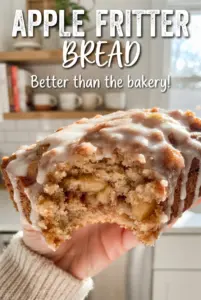
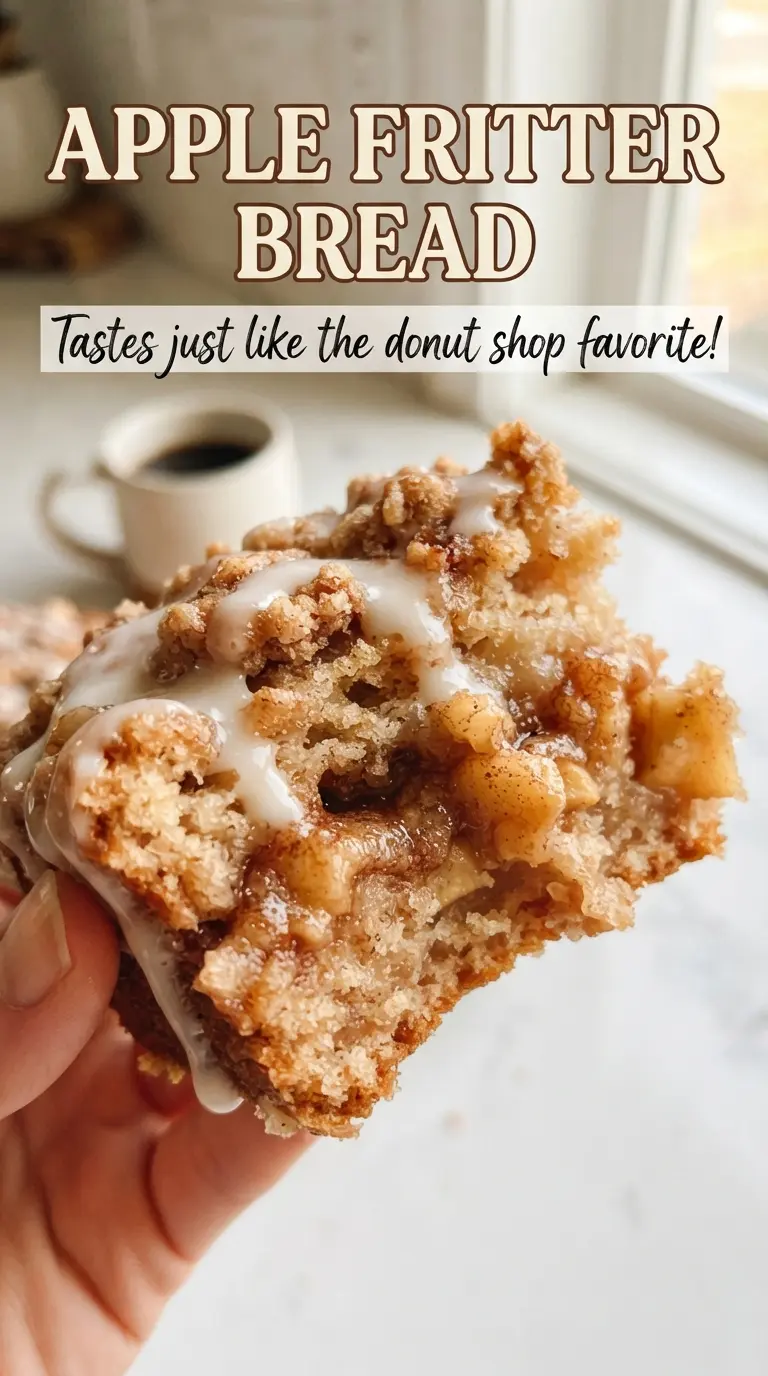
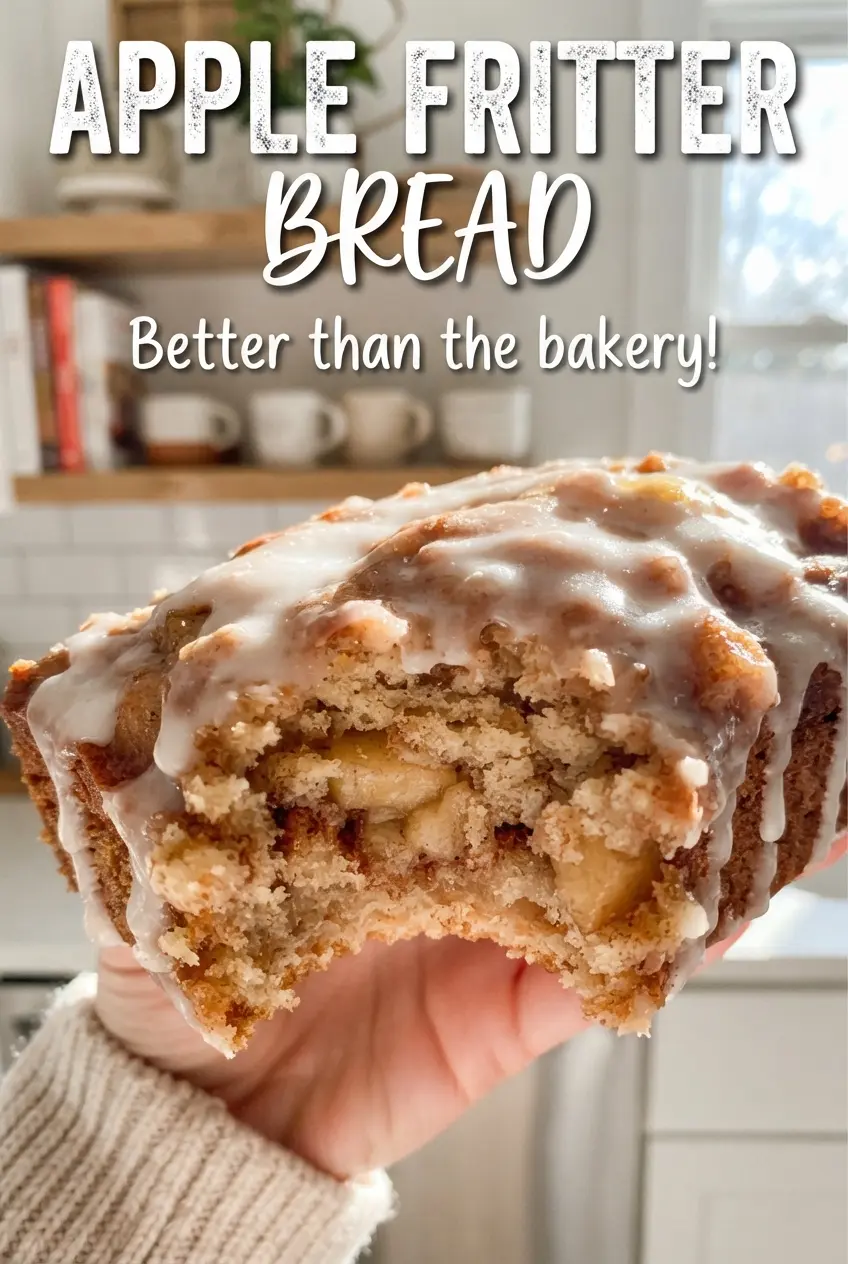
Apple fritter bread bakes up with a soft, tender crumb, pockets of juicy apple, and those ribbons of cinnamon sugar that melt into little caramelized streaks through the loaf. The glaze on top sets just enough to crack slightly when you slice it, which gives each piece that bakery-style finish without any fuss. It’s the kind of quick bread that disappears fast because every bite tastes like the best part of an apple fritter, minus the frying.
What makes this version work is the layering. Tossing part of the apples with cinnamon sugar seasons them from the inside out, and spreading the batter in two stages keeps the swirls distinct instead of muddy. The batter itself stays rich but not heavy thanks to softened butter, milk, and just enough baking powder to lift the loaf without turning it cakey.
Below, I’ve included the small details that matter most: how to keep the apples from sinking, when to stop swirling so the layers stay pretty, and the best way to glaze the loaf so it looks glossy instead of soaking in.
The cinnamon-sugar layers stayed separate and the apples baked right into the loaf instead of sinking. I used Honeycrisp and the bread came out moist with that perfect bakery-style glaze on top.
Save this apple fritter bread for the kind of morning when you want swirls of cinnamon sugar, tender apples, and a thick vanilla glaze in one loaf.
The Trick to Keeping the Apples from Disappearing Into the Loaf
The biggest mistake with apple fritter bread is folding everything together like a standard quick bread. That turns the cinnamon sugar into a blur and sends the apples to the bottom. Layering the batter, apples, and cinnamon sugar keeps the pockets of fruit and spice distinct, so every slice has a little contrast instead of tasting uniformly sweet.
The other thing that matters is the swirl. One or two gentle passes with a knife is enough. If you overdo it, the layers blend together and the loaf loses the look and texture that make it taste like an apple fritter in bread form. You want visible ribbons, not a fully mixed batter.
What Each Ingredient Is Actually Doing in This Loaf
- Apples — Use firm apples that hold their shape while baking, like Honeycrisp, Fuji, or Granny Smith. Softer apples turn mushy and disappear into the crumb.
- Brown sugar and cinnamon — This is where the fritter flavor comes from. The brown sugar melts into the apples and leaves those sticky, spiced pockets through the loaf.
- Butter — Softened butter gives the bread a tender, rich crumb. Cold butter won’t cream properly, and melted butter changes the texture into something denser and heavier.
- Milk — Milk loosens the batter just enough so it bakes up soft instead of dry. Whole milk gives the nicest texture, but 2% works fine.
- Powdered sugar — The glaze should be thin enough to drizzle but thick enough to sit on top. If it’s too runny, add more powdered sugar a spoonful at a time.
Building the Loaf Without Ending Up With a Dense Center
Creaming the Butter and Sugar
Beat the softened butter and granulated sugar until the mixture looks pale and fluffy. That step traps air, which gives the loaf lift and keeps it from baking up compact. If the butter is too cold, the mixture stays gritty and won’t hold that air, so let it soften fully before you start.
Adding the Dry Ingredients and Milk
Whisk the flour, baking powder, and salt first, then add them to the batter in alternating additions with the milk. This keeps the batter smooth and stops it from getting tough. Mix only until the flour disappears; once the batter looks uniform, stop. Overmixing is the fastest way to lose that soft quick-bread texture.
Layering the Apples and Cinnamon Sugar
Spread half the batter into the pan, add half the apples and half the remaining cinnamon sugar, then repeat. The layers need to be even so the loaf bakes consistently from edge to center. A few scattered apple pieces on top are fine, but if you pile them too high in one spot, the center can sink and stay gummy.
Baking and Finishing with Glaze
Bake until the top is deep golden and a toothpick comes out clean or with just a few moist crumbs. If the top browns too quickly, tent it loosely with foil for the last 10 to 15 minutes. Let the loaf cool for 15 minutes before glazing so the glaze stays on top instead of melting straight off the sides.
Three Ways to Change the Loaf Without Losing the Apple Fritter Feel
Make It Gluten-Free
Swap in a good 1:1 gluten-free flour blend with xanthan gum already included. The loaf will still rise and slice well, though the crumb may be slightly more delicate than the original. Let it cool completely before slicing so it sets properly.
Use Pears Instead of Apples
Firm pears can stand in for the apples if that’s what you have, but choose ones that are just barely ripe. They bring a softer, more floral sweetness and won’t hold as much shape as apples, so the texture will be a little more delicate and less tart.
Make It Dairy-Free
Use plant-based butter and an unsweetened non-dairy milk with a neutral flavor, such as almond or oat milk. The loaf will still bake up tender, but the glaze may need a touch less liquid because some non-dairy milks thin out differently than dairy milk.
Storage and Reheating
- Refrigerator: Store covered for up to 4 days. The glaze will soften a little, but the loaf stays moist.
- Freezer: Freeze slices tightly wrapped for up to 2 months. Thaw at room temperature or overnight in the refrigerator.
- Reheating: Warm slices in the microwave for 10 to 15 seconds or in a low oven. Don’t overheat it or the glaze will melt away and the crumb can dry out.
Answers to the Questions Worth Asking
Apple Fritter Bread
Ingredients
Equipment
Method
- Preheat the oven to 350°F and grease and line a 9x5-inch loaf pan.
- Mix the brown sugar with the ground cinnamon, then toss the chopped apples in 2 tablespoons of it so they’re evenly coated.
- Beat the softened butter and granulated sugar until fluffy, then beat in the eggs and vanilla extract until smooth.
- Whisk the flour, baking powder, and salt together, then add to the batter alternately with the milk just until combined.
- Spread half the batter in the pan, top with half the apples and half of the remaining cinnamon sugar, then repeat the layers with the remaining batter and apples.
- Swirl gently with a knife to create marbled cinnamon-sugar streaks through the loaf.
- Bake for 50–55 minutes at 350°F, until a toothpick comes out clean.
- Cool the loaf for 15 minutes before glazing.
- Whisk the powdered sugar with 2–3 tablespoons of milk until thick and smooth, then drizzle over the warm loaf.