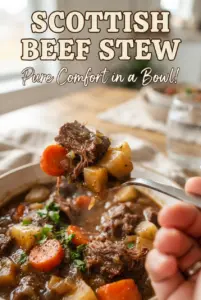
Rich, brown, and built on patient simmering, Scottish beef stew earns its place by turning a modest cut of beef into spoon-tender pieces in a thick gravy that tastes like it’s been cooking all afternoon. The barley gives the broth body without turning it heavy, and the turnip adds that earthy, old-fashioned note that makes this stew feel distinctly Scottish instead of just another beef dinner.
The key is browning the beef in batches and then using the ale to lift every bit of caramelization from the pan. That fond becomes the backbone of the broth. The other trick is timing the barley and vegetables so they keep their shape; if they go in too early, the barley can turn mushy and the carrots disappear into the pot.
Below, I’ve included the little timing details that keep the broth silky and the beef tender, plus a few smart swaps for when you don’t have Scottish ale or swede on hand.
The broth got deep and glossy, and the barley stayed intact instead of turning to paste. My husband went back for a second bowl and said the turnips were the best part.
Save this Scottish beef stew for a slow simmering supper with tender beef, pearl barley, and a deep ale-rich gravy.
The broth needs a proper sear before it gets a simmer
Beef stew can taste flat when the meat is only gray and boiled. The deep flavor comes from browning the chuck in batches so the pan has time to build those dark bits on the bottom, and from using the ale to scrape them loose before any broth goes in. That step gives the finished stew a darker, rounder flavor than you get from simmering everything at once.
Chuck is the right cut here because it has enough connective tissue to turn tender over a long simmer. Leaner beef will dry out before the broth develops that thick, glossy feel. The flour on the meat does a little more than coat it; it helps the stew thicken later, but if you dump in too much flour at once, the pan turns pasty instead of brown. Keep the pieces in a single layer and let each side sit long enough to release cleanly.
What the barley, ale, and swede are each doing
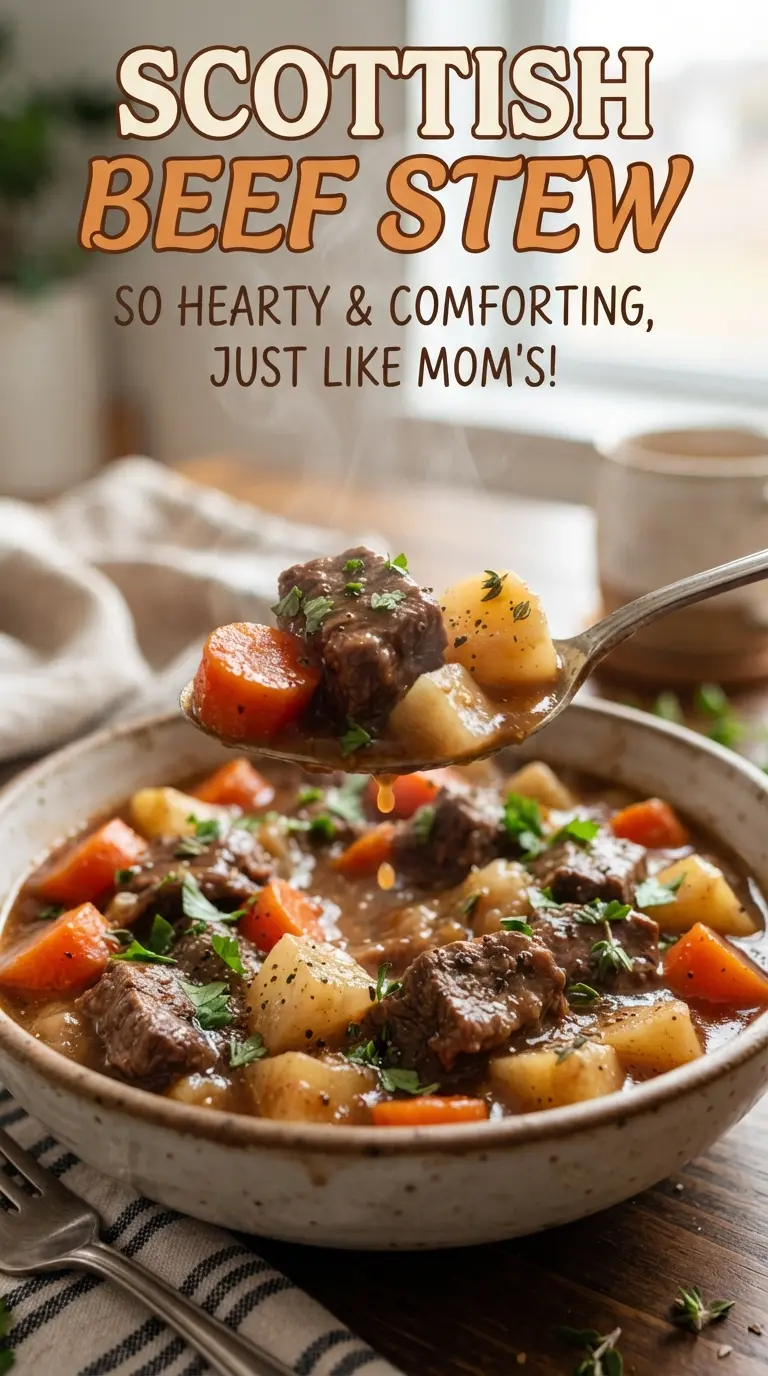
- Scottish ale — This adds malty depth and a little bitterness that keeps the stew from tasting one-note. If you can’t find it, use more beef broth, but the flavor will be cleaner and less complex.
- Pearl barley — Barley thickens the stew naturally and gives it that old-school, comforting texture. Rinse it first so the surface starch doesn’t cloud the broth more than necessary.
- Turnip or swede — This brings earthy sweetness and a slight bite that holds up through the simmer. Swede is the more traditional choice and tastes a little sweeter than turnip; either works as long as you cut it into even cubes.
- Leeks and onions — The combination gives the base a sweeter, softer background than onions alone. Slice the leeks well and rinse out any grit, because grit left in the layers will end up in the broth.
- Butter and oil — Butter brings flavor, oil raises the smoke point so the beef can brown without scorching. Using both gives you better color and less risk of burnt milk solids in the pan.
Building the stew in the right order
Browning the beef without crowding the pan
Season the beef first, then toss it lightly in flour so the surface dries into a better crust. Brown the pieces in batches in the butter and oil, leaving space around each cube so they sear instead of steam. If the meat releases before it has real color, give it another minute; pale beef means pale broth later. Move each browned batch to the pot as you go, and don’t wipe out the pan.
Softening the leeks and onions into the base
Once the beef is out, cook the onions and leeks in the same pan until they turn soft and lose their raw sharpness. Stir often and keep the heat moderate so they sweat and pick up the beef drippings without catching. If the bottom starts to darken too quickly, a splash of broth slows things down. This is where the stew starts tasting layered instead of just meaty.
Letting the liquid do the heavy lifting
Pour in the ale and scrape the bottom thoroughly; the pan should look clean before the broth goes in. Add the beef broth, Worcestershire, thyme, and beef, then cover and simmer gently for about an hour and a half. You want a few lazy bubbles, not a hard boil. Fast boiling tightens the meat and clouds the broth.
Finishing with barley and vegetables
Add the barley, turnip, and carrots after the beef has had time to soften, then simmer until the barley is tender and the vegetables still hold their shape. This is the part people rush, and it’s where texture gets lost. If the stew looks too thick, add a splash of broth; if it looks thin, keep simmering uncovered for a few minutes at the end. Finish with parsley right before serving so the top tastes fresh against the rich gravy.
How to Adapt This for Different Kitchens and Different Diets
No Scottish ale on hand
Use extra beef broth and add an extra teaspoon of Worcestershire sauce for depth. You’ll lose the malty edge the ale brings, but the stew will still be rich and balanced.
Gluten-free version
Skip the flour on the beef and use a gluten-free flour blend or a cornstarch slurry at the end to thicken the broth. Also check that your broth, Worcestershire sauce, and ale are certified gluten-free, because those are the places gluten usually hides.
Making it ahead
This stew tastes even better the next day because the barley and broth settle together overnight. If you’re planning ahead, undercook the carrots just slightly so they don’t go soft when reheated.
Freezing leftovers
This freezes well, but the barley will absorb more broth as it sits, so expect a thicker stew after thawing. Freeze in portions with a little extra liquid if you know you’ll want a looser texture later.
Storage and Reheating
- Refrigerator: 4 days. The barley continues to swell, so the stew thickens as it sits.
- Freezer: 3 months. Freeze in airtight containers, leaving a little headspace for expansion.
- Reheating: Warm gently on the stove over low heat with a splash of broth or water. High heat can make the beef tighten up and can make the barley go gluey.
Answers to the Questions Worth Asking
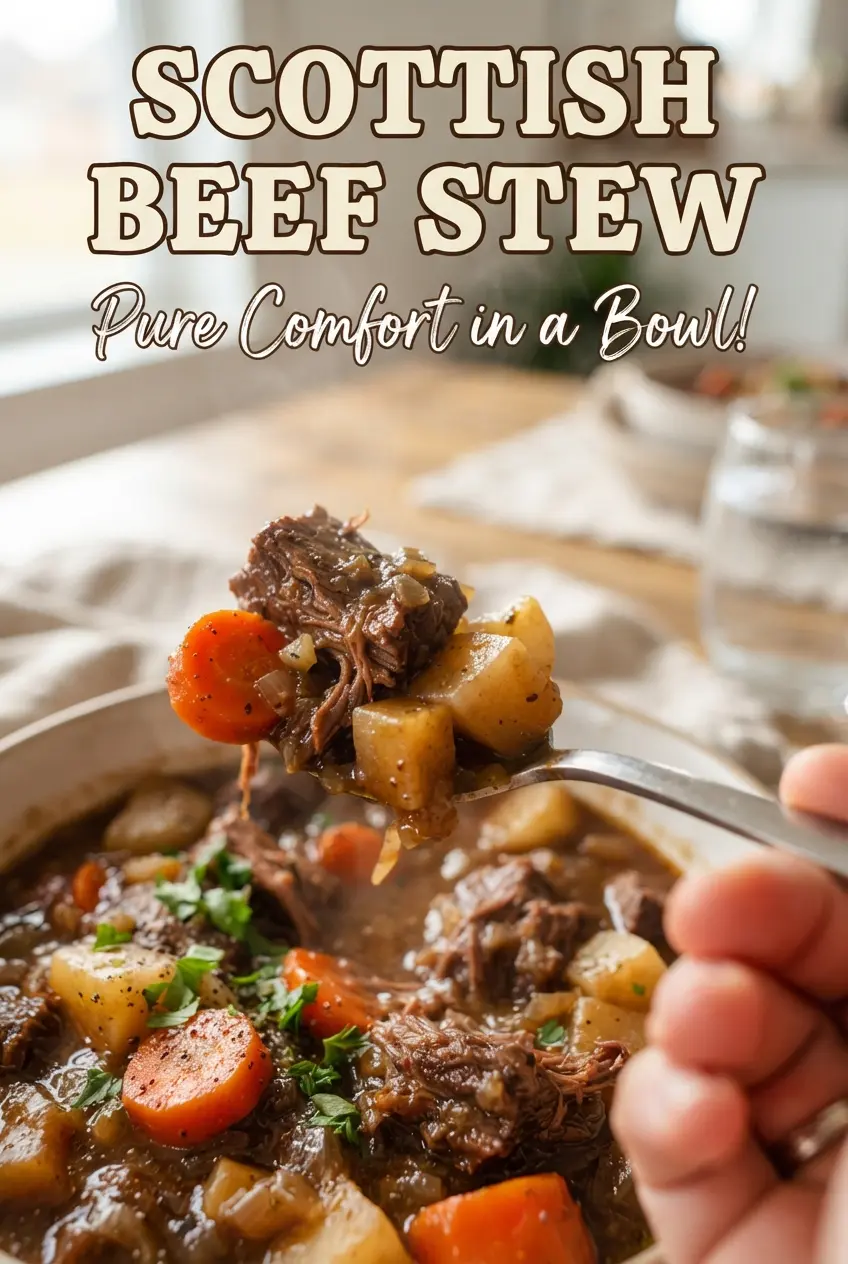
Scottish Beef Stew
Ingredients
Equipment
Method
- Season the beef cubes with salt and black pepper, then toss them with the all-purpose flour until evenly coated (no dry flour pockets).
- Heat the butter and vegetable oil in a Dutch oven over medium-high heat, then brown the beef in batches so it sears rather than steams (about 4 to 6 minutes per batch). You should see deep brown crust on the outside.
- Add the chopped onions and sliced leeks and cook for 6 minutes until soft. Scrape up any browned bits as the vegetables soften.
- Pour in the Scottish ale (or extra beef broth) and scrape the bottom of the pot thoroughly, loosening the fond (about 1 to 2 minutes). The liquid should look darker and glossy.
- Add the beef broth, Worcestershire sauce, dried thyme, and the browned beef back to the pot, then stir to combine (the mixture should be evenly colored).
- Cover and simmer on low until the flavors meld and the beef starts to break down, 1 1/2 hours. Look for gentle bubbling, not a hard boil, and check that the liquid stays at a steady simmer.
- Stir in the rinsed pearl barley, cubed turnip (or swede), and sliced carrots, making sure they are submerged. You should see the barley distribute through the broth.
- Simmer covered until the barley and beef are tender, 45 to 60 minutes. The barley should be plump and the stew should thicken slightly as it cooks.
- Taste and season to adjust salt and pepper, then top with the chopped fresh parsley. Finish with a fresh green aroma visible on the surface.