Rich, slow-simmered beef stew earns its place in the rotation when the broth turns glossy, the beef falls apart with a spoon, and the vegetables soak up every bit of that deep, savory gravy. This Whole30 version keeps all the comfort of the classic bowl, but it builds body without flour or wine, so the flavor comes from a hard sear, tomato paste, bone broth, and a long simmer instead of shortcuts.
The real payoff here is in the order of operations. Browning the beef in batches leaves the browned bits in the pot, and that fond becomes the backbone of the stew. Tomato paste gets cooked briefly with the onions and garlic so it loses its raw edge and tastes concentrated instead of sharp. Arrowroot goes in at the end, after the vegetables are tender, because it thickens fast and stays smoother when it isn’t boiled for long.
Below you’ll find the small details that matter most: how to keep the beef from steaming, why the sweet potato goes in later, and how to get a stew that tastes like it simmered all afternoon without turning the vegetables to mush.
The beef was fork-tender and the gravy thickened beautifully with the arrowroot. I loved that the sweet potatoes held their shape and didn’t turn to paste.
Save this Whole30 Beef Stew for the nights when you want a thick, cozy bowl with tender beef and no flour.
The Reason This Stew Gets Deep Flavor Without Flour
The flavor starts before the liquid ever goes in. Beef chuck needs enough heat to brown hard on the outside, and it needs space in the pot. If you crowd it, the meat gives off moisture and steams instead of searing, which leaves you with gray beef and a thin-tasting broth. Brown it in batches and leave the dark bits on the bottom of the pot; that is where the stew gets its depth.
Tomato paste does more than add color here. Cooking it for a minute with the onion and garlic takes away the raw, tinny edge and turns it into a concentrated backbone for the broth. Then the long simmer softens the chuck until the connective tissue melts, which is what gives you that silky, spoon-coating texture without any flour roux.
What Each Ingredient Is Actually Doing in the Pot
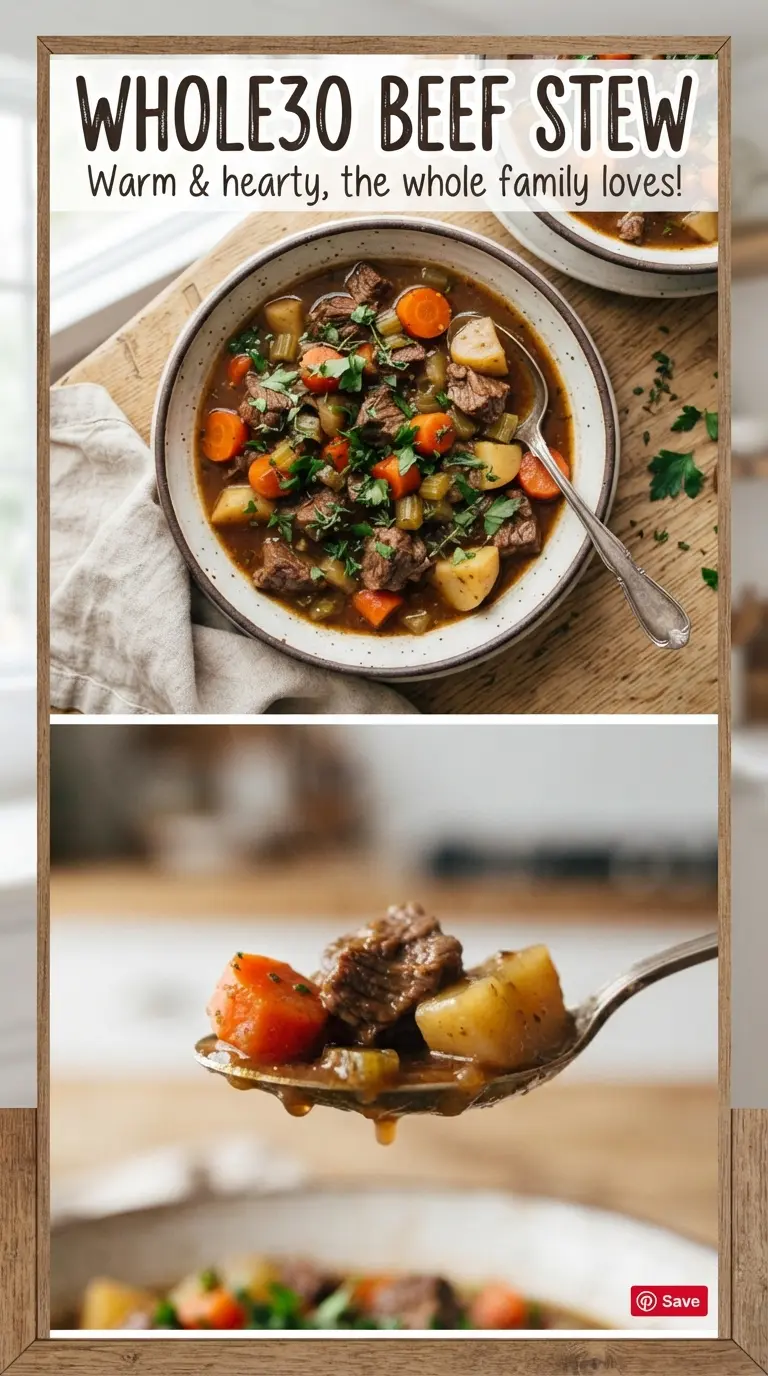
- Beef chuck — This is the cut that turns tender after a long simmer. Leaner stew meat dries out before the broth has time to do its work.
- Bone broth — Use a broth with real body, because it becomes the stew liquid. A weak broth makes a flat stew no matter how long it cooks.
- Coconut aminos and compliant Worcestershire — They bring salt, depth, and a little sweetness that rounds out the beef. If you don’t have compliant Worcestershire, balsamic vinegar gives a similar dark tang, though it reads a little brighter.
- Sweet potato — It adds gentle sweetness and thickens the stew naturally as it cooks. Cut it into even cubes so some pieces don’t disappear while others stay hard.
- Arrowroot powder — This finishes the stew with a glossy thickness. Mix it with cold water first; if it goes into the pot dry, it clumps fast.
- Cremini mushrooms — They soak up the broth and add a savory, almost meaty note. Quarter them instead of slicing so they stay substantial after the final simmer.
Building the Stew So the Vegetables Stay Intact
Getting a Dark Sear on the Beef
Season the beef first, then brown it in a hot pot with a little oil or ghee. The surface should look deeply colored and crusty before you turn it, and the meat should release from the pan without tearing when it is ready. If the pot looks crowded or the beef starts shedding liquid, pull some pieces out and work in smaller batches.
Cooking the Aromatics and Paste
After the beef comes out, the onion goes into the same pot to pick up the fond. Cook it until it softens and starts turning translucent, then add the garlic and tomato paste. The tomato paste should darken a shade and smell a little sweeter by the end of that minute; if it sticks, lower the heat instead of rushing it.
Letting the Simmer Do the Heavy Lifting
Once the broth, aminos, seasoning, bay leaf, and beef go back in, cover the pot and keep the simmer gentle. You want small bubbles, not a hard boil, because aggressive heat can tighten the meat and make the broth look greasy instead of rich. After about an hour and a half, the beef should be starting to soften enough that a spoon can break a cube apart.
Adding the Vegetables at the Right Time
The sweet potato, carrots, and mushrooms go in later so they hold their shape. Cook them just until the sweet potato is tender all the way through and the carrots still have a little backbone. If you add them at the beginning, the carrots go bland and the sweet potato disappears into the broth.
Finishing the Gravy
Stir in the arrowroot slurry at the end and let the stew bubble for just a couple of minutes. The broth should turn glossy and lightly thickened almost immediately. If you boil it hard after the slurry goes in, the thickening can loosen again, so keep the finish short and gentle.
How to Adapt This Stew for Different Kitchens and Different Needs
Make It Strictly Whole30
Use compliant Worcestershire or swap in balsamic vinegar if that’s what you have on hand, and check the broth label for added sugar or non-compliant fillers. That keeps the stew squarely within Whole30 while still giving you the deep, savory edge this dish needs.
Make It Grain-Free and Paleo-Friendly
This recipe is already grain-free, and arrowroot is the right thickener here because it keeps the gravy smooth without flour. If you want a slightly softer finish, use a little less arrowroot so the broth stays more spoonable than gravy-thick.
Swap the Sweet Potato for a Lower-Carb Version
Replace the sweet potato with turnips or more mushrooms if you want a lower-carb bowl. Turnips stay firm and soak up the broth well, but they bring a sharper edge than sweet potato, so the stew tastes a little less mellow.
Storage and Reheating
- Refrigerator: Keeps well for 4 days. The stew thickens as it chills, so expect the broth to set up a little more overnight.
- Freezer: Freezes well for up to 3 months. Cool it completely, portion it into airtight containers, and leave a little headspace so the broth can expand.
- Reheating: Warm it gently on the stovetop over medium-low heat with a splash of broth or water if needed. Don’t boil it hard, or the beef can tighten and the arrowroot-thickened gravy can lose its smooth texture.
Answers to the Questions Worth Asking
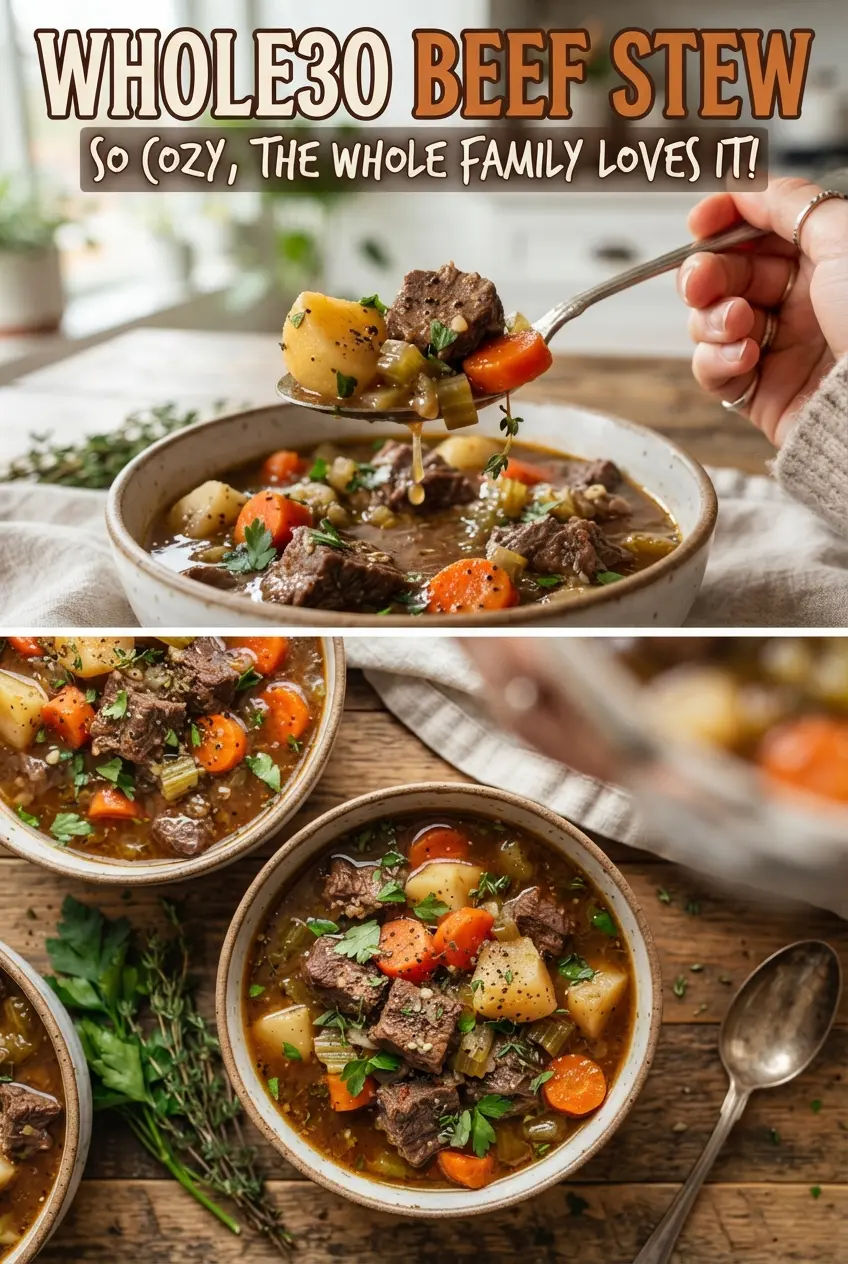
Whole30 Beef Stew
Ingredients
Equipment
Method
- Season the beef with salt and black pepper, then brown in batches in hot oil in a Dutch oven. Cook until the beef is well-browned on multiple sides, using a steady sizzle as your cue.
- Add the diced onion and cook for 4 minutes in the same Dutch oven. Stir occasionally and cook until the onion softens and turns slightly translucent, then add minced garlic and cook 1 minute.
- Stir in the tomato paste and cook for 1 minute. The visual cue is a deeper color with a fragrant, slightly darker look.
- Add the beef bone broth, coconut aminos, compliant Worcestershire sauce (or balsamic vinegar), dried thyme, and bay leaf, then return the browned beef to the pot. Cover and simmer for 1 1/2 hours until the beef is tender and the stew looks thicker than at the start.
- Add the cubed sweet potato, sliced carrots, and quartered cremini mushrooms. Cover and simmer for 40-45 minutes until the vegetables are tender when pierced.
- Stir in the arrowroot slurry (arrowroot powder mixed with water) and simmer for 2 minutes to thicken. Look for the gravy to coat a spoon and turn glossy.
- Remove the bay leaf and serve. Taste and adjust seasoning if needed before ladling into bowls.