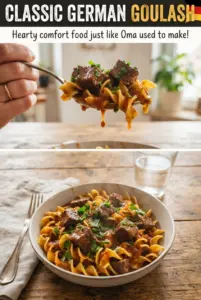
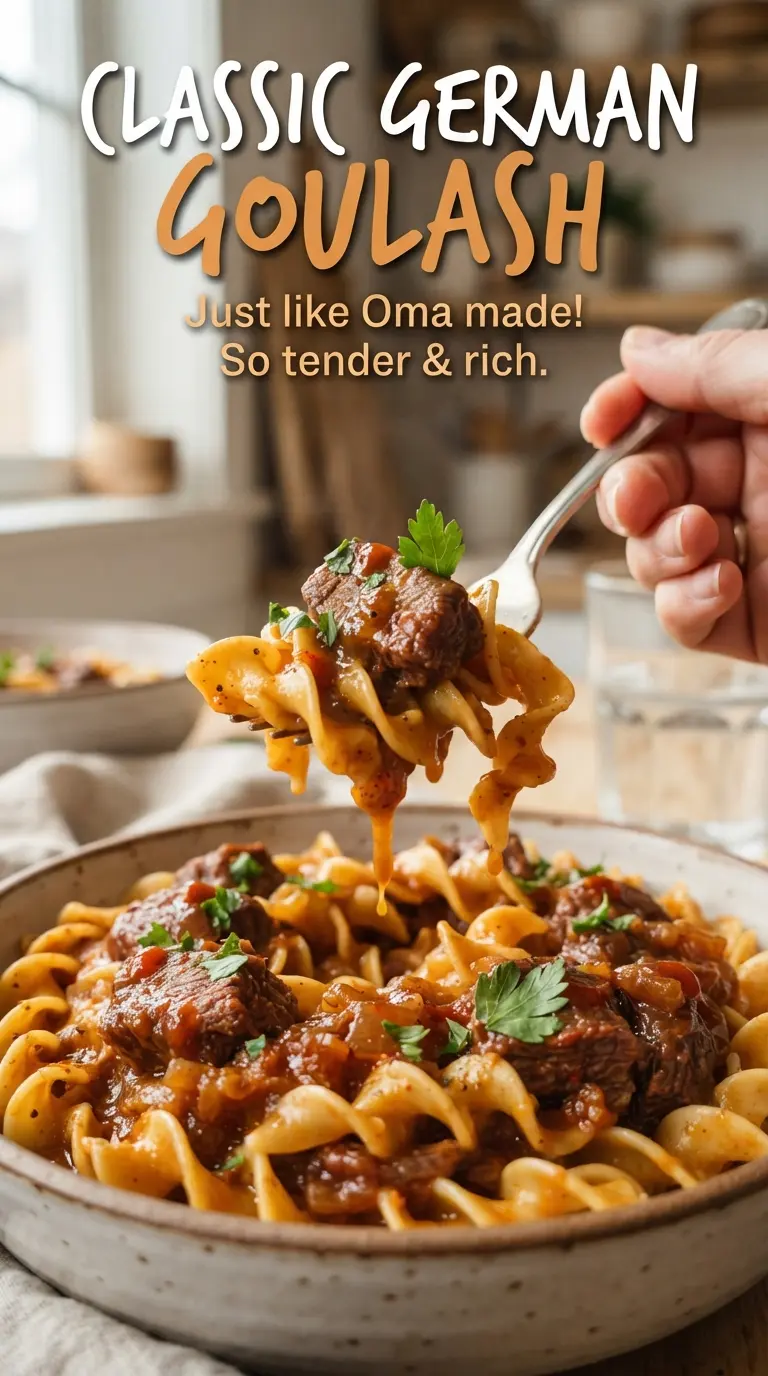
Deep, paprika-rich goulash is one of those dishes that gets better the longer it simmers. The beef turns spoon-tender, the onions melt into the gravy, and the whole pot tastes layered instead of heavy. Served over buttered spaetzle, it has that comforting, old-world finish that makes a second helping feel inevitable.
What makes this version work is the onion base. Two pounds sounds like a lot until they cook down into the sauce, lending body and sweetness without needing cream. Browning the beef in batches matters too. Those browned bits on the bottom are what give the gravy its depth, and the paprika goes in just long enough to bloom without burning, which keeps the flavor round instead of bitter.
Below, I’ve added the little things that matter most: how to keep the paprika from turning harsh, how to thicken the stew without a pasty texture, and what to swap if you need to work with what’s already in your pantry.
The gravy thickened up beautifully and the onions basically disappeared into the sauce. I followed the simmer time exactly and the beef was fall-apart tender over the spaetzle.
Save this Classic German Goulash for a slow-simmered dinner with dark paprika gravy and tender beef over spaetzle.
The Secret to Rich German Goulash Is in the Onions, Not the Broth
Most goulash problems start with impatience. If the onions stay pale, the stew tastes flat. If the paprika fries too long, it turns bitter. The sweet spot is soft, deeply golden onions that have had enough time to collapse into the sauce and enough heat to lose their raw bite. That onion base gives the gravy its body before the flour ever enters the pot.
The other thing that matters is heat control when the paprika goes in. Stir it through the onions and tomato paste for just about a minute, then get the liquid in. Paprika needs fat to bloom, but it burns fast and once it does, there’s no fixing that harsh edge. The vinegar helps wake everything up, while the marjoram and bay leaves keep the sauce savory instead of one-note.
What Each Ingredient Is Actually Doing in This Goulash
- Beef chuck — This is the cut that earns the long simmer. It starts tough and ends plush because the collagen has time to break down. Leaner stew meat won’t give you the same silky texture.
- Onions — They aren’t a background ingredient here; they’re the body of the sauce. Slice them evenly so they soften at the same pace, and let them cook all the way down until they’re sweet and jammy.
- Sweet paprika and hot paprika — Sweet paprika gives the dish its signature color and warm flavor, while the hot paprika adds a little edge. If you only have sweet paprika, use it for all of it and add a pinch of cayenne if you want heat.
- Tomato paste and red wine vinegar — Tomato paste deepens the base and helps the gravy taste cooked, not watery. The vinegar adds brightness, which is important in a long-simmered stew that can otherwise taste heavy.
- Flour slurry — This thickens the sauce at the end without leaving raw flour taste. Mix it smooth before adding it so you don’t get little lumps in the gravy.
Building the Gravy Without Breaking the Flavor
Browning the Beef in Batches
Season the beef first, then brown it in a single layer in hot oil. If you crowd the pan, the meat steams and you lose the dark fond that flavors the sauce. You want a deep brown crust on the outside, not gray meat with juices pooling underneath. Set the beef aside as it browns so the pan stays hot and the pieces don’t start simmering in their own liquid.
Cooking the Onions Down Until They Melt
Add the onions to the same pot and give them time. They’ll first pick up the browned bits, then soften, then slowly turn golden and glossy. If the pot looks dry before they’re ready, add a spoonful of oil instead of turning up the heat. High heat scorches the edges before the center has a chance to sweeten.
Blooming the Paprika
Stir in both paprikas, the caraway, and tomato paste and keep everything moving for about a minute. The mixture should smell warm and fragrant, not sharp or smoky. Once the liquid goes in, the paprika stops cooking, so this short step is where the flavor gets built. If it sits too long in dry heat, it can turn bitter fast.
The Long Simmer and Final Thickening
Add the broth, vinegar, marjoram, bay leaves, and beef, then cover and let the pot stay at a gentle simmer. You want a few lazy bubbles, not a rolling boil, because boiling hardens the beef before it has time to relax. After about two hours, the meat should pull apart with a fork. Stir in the flour slurry at the end and cook just long enough for the gravy to lose its raw edge and turn glossy.
How to Adapt It When You Need a Different Finish
Make It Gluten-Free
Skip the all-purpose flour and thicken the stew with a cornstarch slurry instead, starting with 1 tablespoon cornstarch mixed with 2 tablespoons cold water. It gives you the same glossy finish without the wheat flavor, though the gravy will look a little cleaner and less rustic than the flour-thickened version.
Use a More Flexible Beef Swap
Beef brisket works if you want a slightly richer, more shreddable result, but it needs the same long simmer. Avoid very lean stew cuts, which can dry out before the sauce has time to develop. The finished texture should still be tender cubes, not stringy shreds, so cut brisket into larger pieces.
Dial Down the Heat
Leave out the hot paprika and use all sweet paprika if you want a milder pot. The stew will still taste deeply flavored because the onions, caraway, and marjoram carry the savory side of the dish. You’ll lose a little back-end warmth, but the sauce stays balanced.
Storage and Reheating
- Refrigerator: Keeps for up to 4 days. The flavor deepens overnight, and the gravy will thicken as it chills.
- Freezer: Freezes well for up to 3 months. Cool it completely first and freeze in portions so the beef reheats evenly.
- Reheating: Warm it gently on the stovetop over low heat with a splash of broth if needed. Don’t boil it hard, or the beef can tighten up and the sauce can turn greasy.
Answers to the Questions Worth Asking
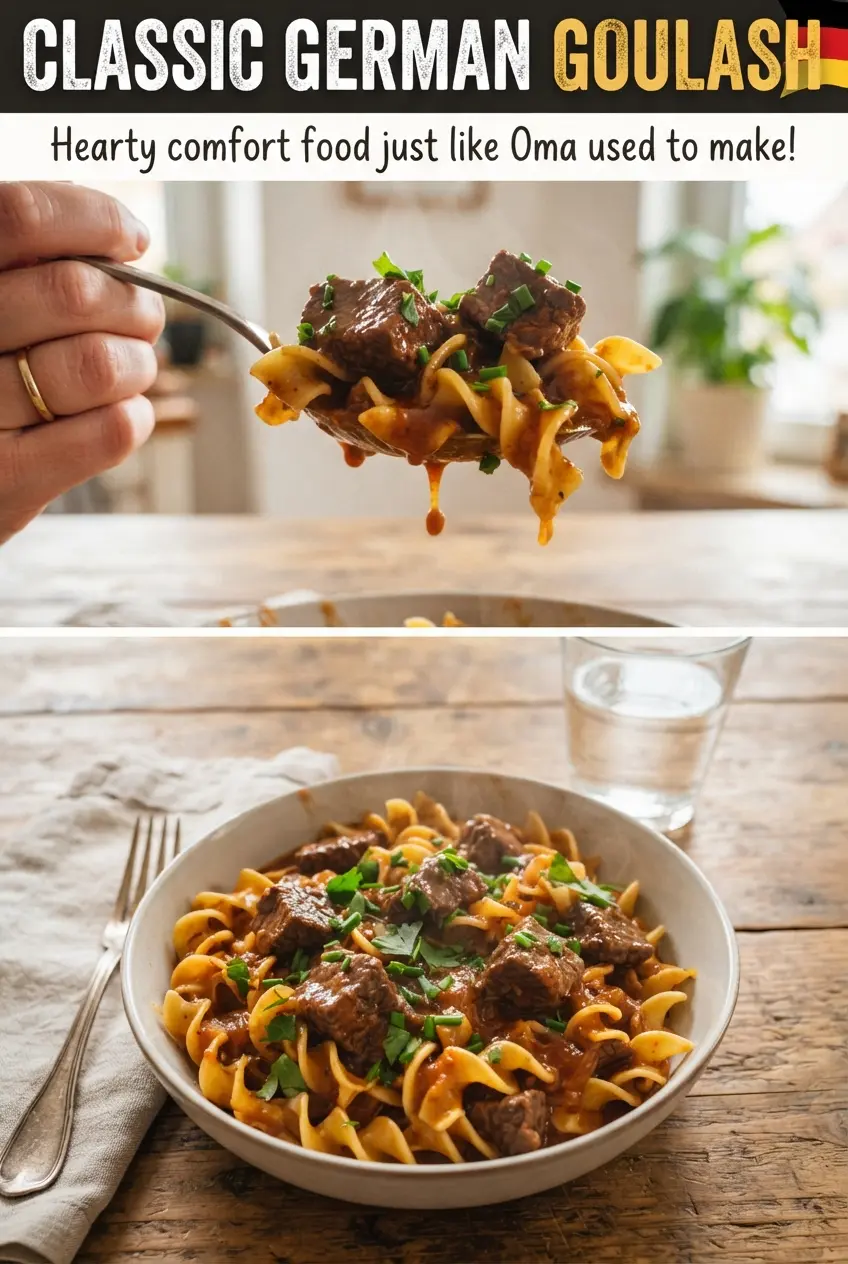
Classic German Goulash
Ingredients
Equipment
Method
- Season the beef cubes with salt and black pepper. Heat the vegetable oil in a Dutch oven over medium-high heat and brown the beef in batches, so each piece gets deep color before moving on.
- Add the sliced onions to the pot and cook for 15-20 minutes until soft and golden. Stir in the minced garlic and cook for 1 minute, stirring until fragrant.
- Stir in the sweet paprika, hot paprika, caraway seeds, and tomato paste, and cook for 1 minute. Keep the heat moving so the spices bloom without scorching.
- Add the red wine vinegar, beef broth, dried marjoram, and bay leaves, then return the browned beef to the pot. Cover and simmer for 2 hours, until the beef is tender and the sauce looks dark and cohesive.
- Stir in the flour slurry (all-purpose flour mixed with water) and simmer for 10 minutes until the gravy thickens. The surface should cling to the beef when you stir and lift.
- Remove the bay leaves and serve the goulash over buttered spaetzle or egg noodles. Spoon the thick paprika gravy over the noodles and finish with whatever parsley you like for color.