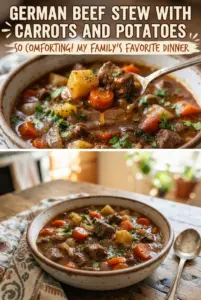
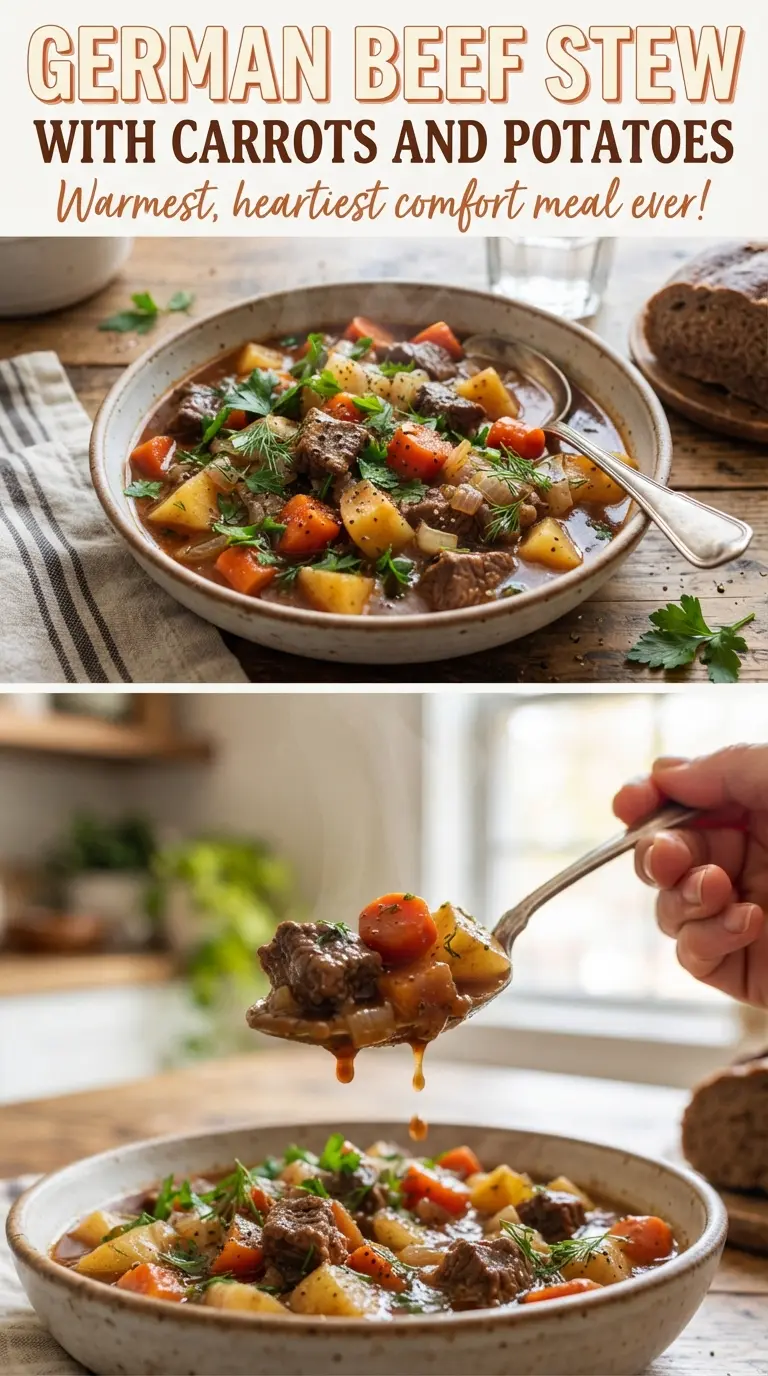
Deep, dark German beef stew earns its place at the table with beef that turns spoon-tender in a rich beer gravy and vegetables that hold their shape without going mushy. The broth cooks down into something savory and layered, with just enough tang from mustard and vinegar to keep the whole pot from tasting heavy. It’s the kind of stew that tastes even better after it sits for a few minutes, when the sauce settles into the meat and potatoes.
The key is building flavor in stages. Browning the flour-dusted beef gives the pot a base, but the onions, tomato paste, paprika, and caraway are what make this taste distinctly German rather than just generic beef stew. Dark beer adds depth and a little bitterness, while beef broth keeps the sauce from becoming too thick or sweet. The vinegar and mustard might look small on paper, but they keep the finished stew bright enough to stay interesting through the last bite.
Below, I’ll walk through the browning step that matters most, the ingredient choices that make the sauce taste balanced, and a few smart swaps if you need to work with what’s already in your kitchen.
The sauce came out glossy and the beef was fall-apart tender after the full simmer. I loved that the potatoes held their shape and soaked up all that beer-and-paprika gravy.
Save this German beef stew for a rich beer-braised dinner with tender beef, potatoes, and carrots.
The Browning Step That Gives This Stew Its Real Depth
Beef stew can taste flat when the meat goes into the pot pale and the onions never get a chance to caramelize. Here, the flour-dusted beef needs to brown in batches, not crowd the pan, because that crust is what gives the sauce body and the deep savory note that makes the whole pot taste like it cooked longer than it did. If the pot looks crowded, the meat steams instead of browning, and that’s the difference between a good stew and one that tastes muddy.
The onions matter just as much. Cook them until they pick up real color, then add the tomato paste, paprika, and caraway briefly so they bloom in the fat and lose their raw edge. That short minute wakes everything up. Once the beer goes in, scrape the bottom until the browned bits release completely; those bits are the backbone of the gravy.
What Each Ingredient Is Actually Doing In This Pot
- Beef chuck — This cut has enough connective tissue to turn silky during the long simmer. Lean stew meat won’t give you the same tender, brothy result.
- German dark beer — This is the flavor anchor. It brings malt, bitterness, and color that plain broth can’t replace. A dunkel or other dark lager works best.
- Sweet paprika and caraway — Paprika gives the stew warmth and color, while caraway adds that unmistakable German note. Don’t skip the brief bloom in fat; that’s what keeps them from tasting dusty.
- Dijon mustard and red wine vinegar — These keep the sauce from going heavy. If you need a swap, use whole-grain mustard and a little extra vinegar, but keep the tang in the pot.
- Potatoes and carrots — Add them late so they stay intact. If they go in from the start, they break down before the beef is tender.
Letting the Pot Simmer Until the Beef Gives In
Brown the Beef First, Then Build the Base
Toss the beef with flour, salt, and pepper, then brown it in batches in the hot fat. The flour helps the sauce thicken later, but it also burns fast if the heat is too high, so keep the pieces moving once a crust forms. Pull each batch when it’s deeply browned on more than one side and set it aside; the pot should have fond stuck to the bottom, not blackened bits.
Cook the Onions Until They Turn Sweet
Onions need real time here. Give them 8 to 10 minutes until they soften and pick up golden edges, because that sweetness balances the beer and vinegar later. Stir in the garlic, tomato paste, paprika, and caraway for just a minute, long enough to smell the spices bloom. If the garlic starts to brown hard, the heat is too high and the stew will pick up bitterness.
Simmer Low and Slow Until the Meat Softens
After the beer and broth go in, scrape the pot clean and return the beef with the mustard, vinegar, and bay leaves. Bring it to a gentle simmer, then lower the heat so the surface barely blips. A hard boil tightens the meat and makes the sauce greasy; a slow simmer gives you beef that eventually yields to a fork. Cover the pot and let time do the work.
Add the Potatoes and Carrots at the End
The vegetables go in only after the beef has had its long head start. Forty-five to 60 minutes is enough for potatoes and carrots to turn tender without collapsing into the sauce. You’re looking for potatoes that cut cleanly with a spoon and carrots that still have shape at the center. Pull the bay leaves before serving and finish with parsley so the stew tastes fresh, not heavy.
How to Change the Pot Without Losing What Makes It German
Make It Gluten-Free
Swap the all-purpose flour for a gluten-free 1:1 blend or skip dredging and thicken the stew at the end with a cornstarch slurry. You’ll lose a little of the browned coating on the beef, but the stew will still thicken well if you simmer it uncovered for the last 15 minutes.
Use Wine Instead of Beer
If you don’t have dark beer, replace it with more beef broth plus 1/2 cup dry red wine. The stew will taste a little less malty and a little sharper, so don’t skip the mustard and vinegar; they help keep the flavor balanced.
Add Root Vegetables for a Heartier Pot
Parsnips, celery root, or turnips can stand in for part of the potatoes if you want a more rustic finish. Cut them into similar-size chunks so they cook at the same pace, and add them with the potatoes rather than at the beginning.
Storage and Reheating
- Refrigerator: Keeps for 4 days. The flavor deepens overnight, and the sauce thickens as it chills.
- Freezer: Freezes well for up to 3 months. Cool it completely first, then freeze in airtight containers; the potatoes may soften a little after thawing, but the stew still reheats well.
- Reheating: Warm it gently on the stove over low heat with a splash of broth or water if needed. Don’t boil it hard or the beef can toughen and the potatoes can start to break apart.
Answers to the Questions Worth Asking
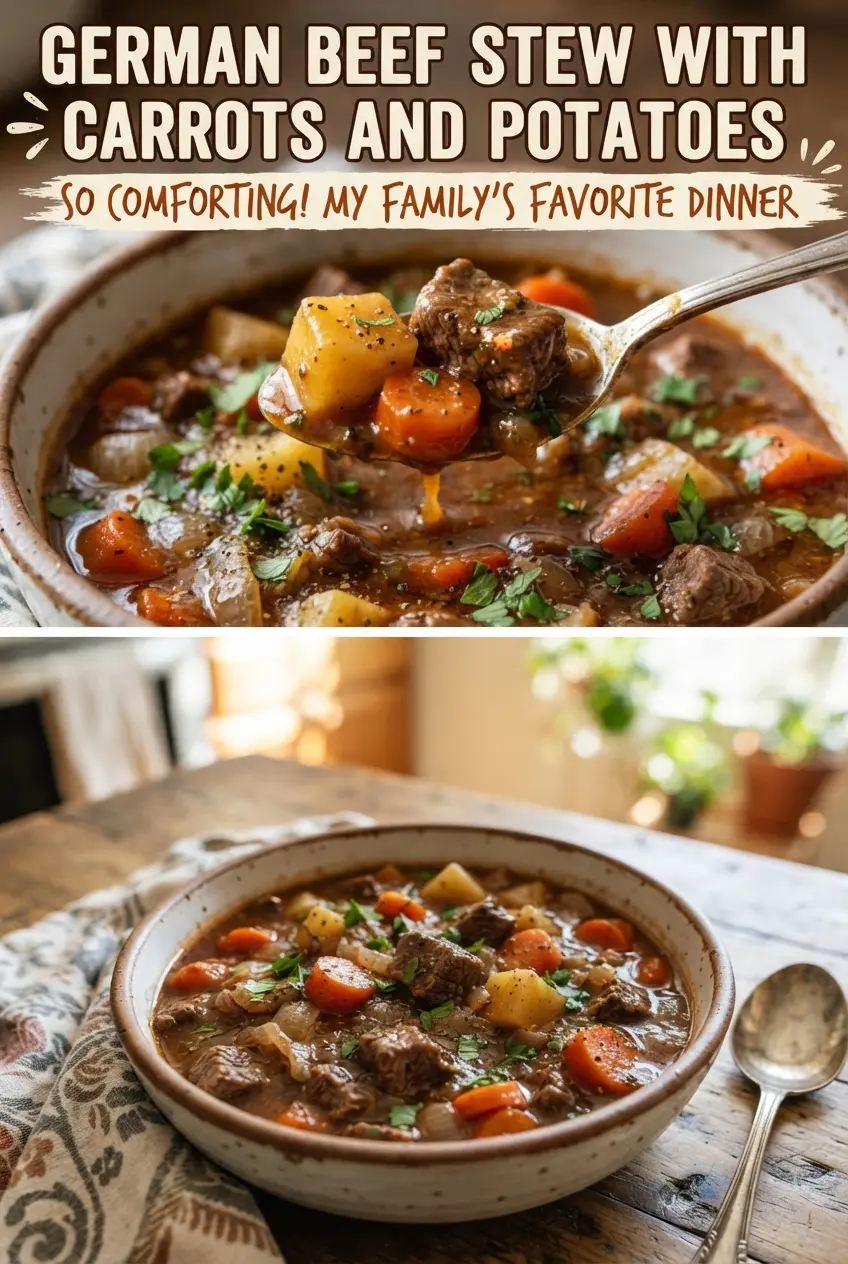
German Beef Stew with Carrots and Potatoes
Ingredients
Equipment
Method
- Season the beef with salt and black pepper, then toss it with all-purpose flour until lightly coated.
- Heat the butter or oil in a Dutch oven and brown the beef in batches over medium-high heat until deeply browned on the surface, 6-8 minutes total (do not crowd the pan).
- Add the sliced onions to the Dutch oven and cook until golden, 8-10 minutes, stirring as they soften.
- Add the minced garlic, tomato paste, sweet paprika, and caraway seeds and cook for 1 minute, stirring to coat and toast the spices.
- Pour in the German dark beer, scraping up the browned bits from the bottom of the pot.
- Add the beef broth, Dijon mustard, red wine vinegar, and bay leaves, then return the beef to the pot.
- Cover and simmer until the beef is tender, maintaining a steady simmer, about 1 1/2 hours.
- Add the cubed potatoes and thick-sliced carrots, stir to distribute, and cover again.
- Simmer until the potatoes and carrots are tender, 45-60 minutes, stirring occasionally to prevent sticking.
- Remove the bay leaves and discard them.
- Top the stew with chopped fresh parsley and serve hot.