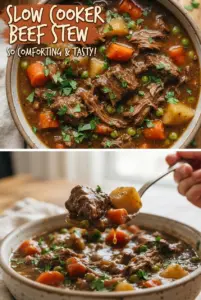
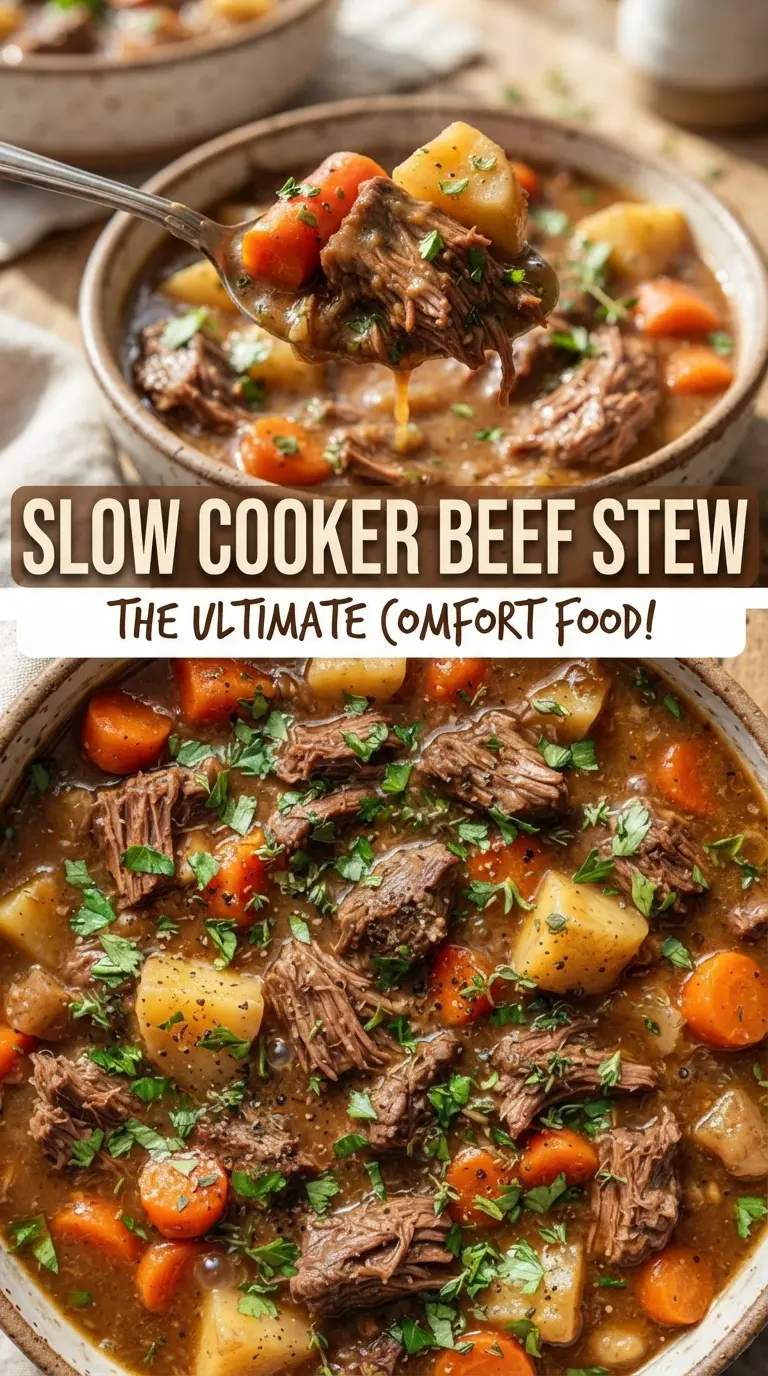
Tender beef, soft potatoes, and a broth that turns thick and savory after hours in the slow cooker make this beef stew the kind of dinner that disappears fast. The meat stays in hearty chunks instead of shredding apart, the vegetables hold their shape, and the whole pot tastes like it simmered all day because it did — just without hovering over the stove.
The key is giving the beef a quick flour coating and a proper sear before it goes into the slow cooker. That step does two jobs: it deepens the flavor and helps the broth turn glossy instead of thin. The tomato paste, Worcestershire, and browned bits from the pan build the base, while the potatoes and carrots cook slowly enough to soak it all in without turning bland.
You’ll find the timing that keeps the peas bright, the best way to layer the ingredients, and a few practical swaps if you need to work with what’s already in the pantry. The result is a stew that feels old-fashioned in the best way, but cooks with almost no effort once the prep is done.
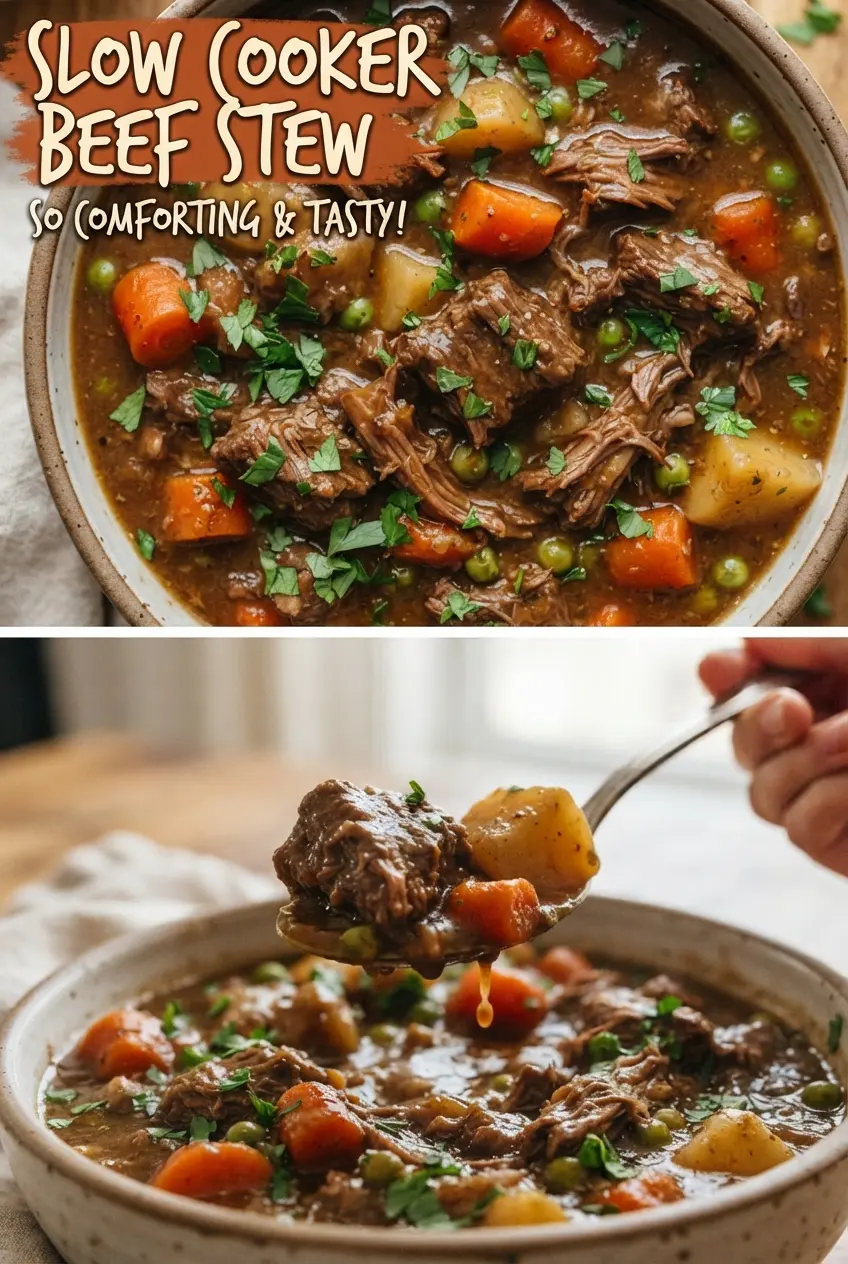
The gravy turned out thick and rich, and the beef was fall-apart tender after 8 hours on low. Even the potatoes held together and soaked up all that flavor.
Love a stew with thick broth and fork-tender beef? Save this slow cooker beef stew for the nights when you want a hearty pot dinner without babysitting the stove.
The Browning Step That Gives This Stew Its Depth
The slow cooker does the long work, but the flavor starts in the skillet. Coating the beef with flour, salt, and pepper before browning gives each piece a thin crust that helps the stew thicken naturally later. If you skip that step and dump everything in raw, the broth can taste flat and the meat never gets that roasted, beefy edge that makes a stew worth the time.
Brown the meat in batches instead of crowding the pan. If the cubes sit too close together, they steam and turn gray before they ever caramelize. You want a dark fond on the bottom of the pan, then onion, garlic, and tomato paste cooked right through it so the base tastes layered instead of muddy.
What the Beef, Potatoes, and Tomato Paste Are Each Doing Here
- Beef chuck roast — Chuck is the cut that turns tender after a long, low cook without drying out. Leaner stew meat can work, but it gets stringy before it gets silky. Cut the cubes a little larger than you think you need; they shrink as they cook.
- Flour — The flour on the beef helps create that thick, stew-like broth. Cornstarch at the end can thicken liquid, but it won’t give the same full-bodied texture from the start. If you need gluten-free, use a 1:1 gluten-free flour blend and brown the beef the same way.
- Tomato paste — This is the quiet depth-builder. Cooking it for a minute with the onions and garlic takes away the raw edge and adds a subtle richness that makes the broth taste slow-cooked even before the lid goes on.
- Yukon gold potatoes — They hold their shape better than russets and give the stew a creamy bite without falling apart. If you use russets, they’ll soften more and can thicken the stew a bit, which is fine if you want a looser, more broken-down texture.
- Frozen peas — They go in at the very end because they only need a few minutes. Add them earlier and they turn dull and mealy instead of staying sweet and bright.
Building the Pot So the Vegetables Stay Tasty, Not Mushy
Getting the Beef Browned
Toss the beef with the flour, salt, and pepper first, then brown it in hot oil in batches. You’re looking for deep color on the outside, not a cooked-through center. If the pan cools down or the pieces are crowded, the beef releases moisture and you lose the fond that makes the sauce taste rich.
Cooking the Onion Base
Use the same pan after the beef comes out. The onion should soften and pick up the browned bits, then the garlic and tomato paste go in just long enough to smell sweet and concentrated. If the paste sticks too hard, splash in a little broth and scrape; that stuck layer is flavor, not a mistake.
Slow Cooking to Fork-Tender
Once everything is in the slow cooker, leave it alone. The low setting gives you the best texture because the beef breaks down gradually instead of tightening up. The stew is ready when a fork slides into the beef with no resistance and the potatoes are tender at the center but still intact around the edges.
Finishing with Peas and Parsley
Stir in the peas during the last 10 minutes so they stay green and sweet. Pull out the bay leaves before serving, then top with parsley for a fresh finish. If the stew looks a little loose at the end, let it sit uncovered for a few minutes; it thickens as it rests.
Three Ways to Adjust This Without Losing What Makes It Good
Gluten-Free Beef Stew
Swap the all-purpose flour for a gluten-free 1:1 blend. You still get the same light coating on the beef and the same body in the broth, though the texture may be a touch less silky than the wheat version.
No Wine, No Problem
This recipe already leans on broth and Worcestershire, so it doesn’t need wine to taste deep. If you want a little extra brightness, add a teaspoon of red wine vinegar at the end instead of building that acidity into the base.
Extra Vegetable Version
Add mushrooms or parsnips with the potatoes and carrots if you want a more vegetable-forward stew. Mushrooms bring more umami, while parsnips add sweetness that plays well against the beef.
Storage and Reheating
- Refrigerator: Keeps well for 4 days. The broth thickens as it chills, and the vegetables soften a little more overnight.
- Freezer: Freezes well for up to 3 months. Cool it completely, portion it into airtight containers, and leave a little space at the top for expansion.
- Reheating: Warm it gently on the stove or in the microwave until hot all the way through. Don’t blast it on high heat or the beef can tighten up and the potatoes can break apart.
Answers to the Questions Worth Asking
Slow Cooker Beef Stew
Ingredients
Equipment
Method
- Toss the beef with flour, salt, and black pepper until evenly coated, then add the oil to a hot Dutch oven. Brown the beef in batches for 4-5 minutes per batch, turning so the outside is deep brown, then transfer to the slow cooker with a visible caramelized crust on the pieces.
- Cook the diced onion in the same Dutch oven for 4 minutes, stirring, until softened and glossy. Add the minced garlic and tomato paste and cook for 1 minute, scraping up any browned bits so the tomato paste darkens slightly.
- Pour in 1 cup of beef broth and scrape up the browned bits from the pan until smooth, then pour the mixture into the slow cooker.
- Add the remaining beef broth, Worcestershire sauce, potatoes, carrots, celery, dried thyme, and bay leaves to the slow cooker. Cover and cook on LOW for 8 hours (or HIGH for 4-5 hours) until the beef is fork-tender and the vegetables are easily pierced.
- Stir in the frozen peas and cook for 10 minutes more, just until bright green and tender-crisp. Remove the bay leaves and top with chopped fresh parsley for a fresh, green finish before serving.