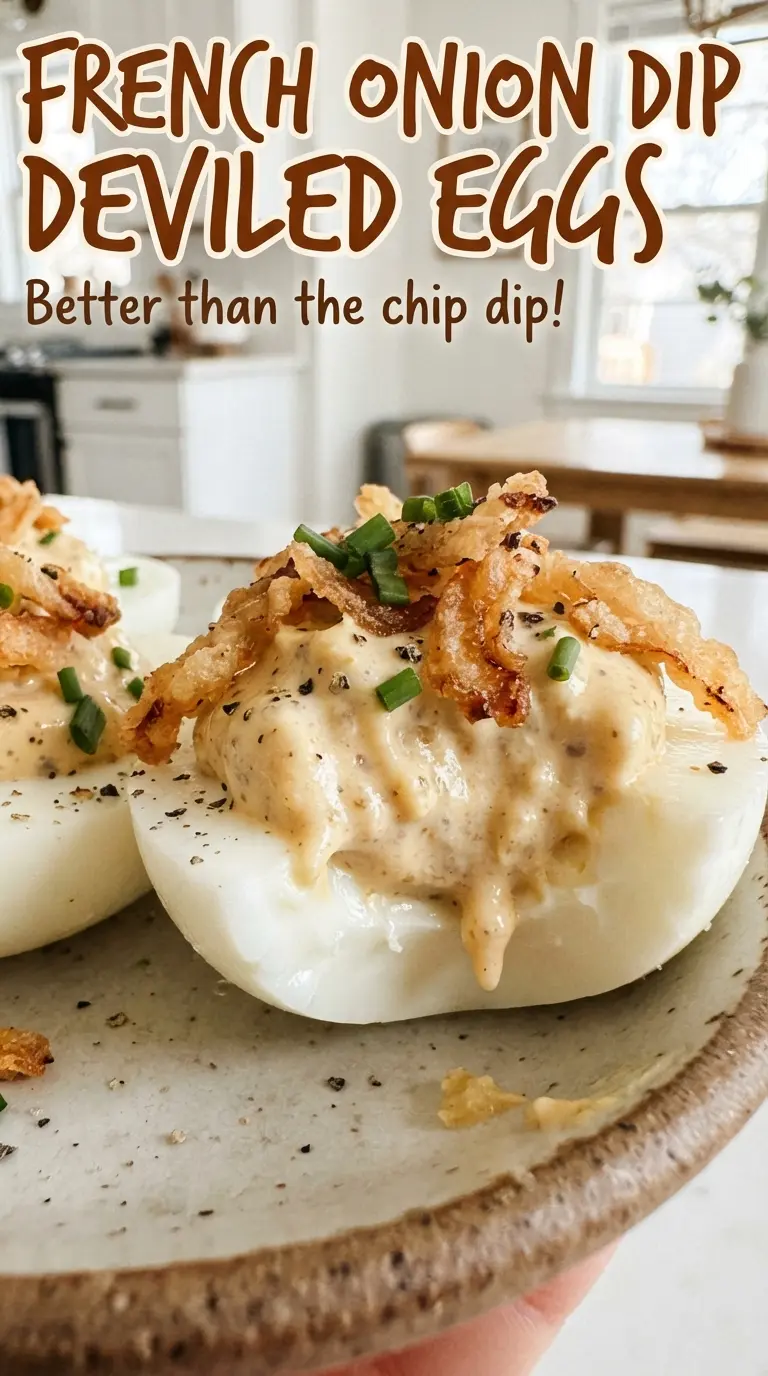
French onion dip deviled eggs bring together two party favorites in one bite: creamy yolk filling, slow-cooked sweet onions, and that salty-crunchy finish from crispy fried onions. The first thing you notice is the contrast. The filling stays smooth and tangy, while the topping adds the same kind of crackly bite you want from a good dip-and-chip situation.
The caramelized onions are what make this version taste deliberate instead of just dressed up. Cooking them low and slow pulls out their sweetness and gives the eggs that deep, savory onion flavor without turning the filling sharp or heavy. Sour cream keeps the yolks lighter than all-mayo filling, and a little Worcestershire sauce adds the background savoriness that makes people keep reaching for another egg.
Below, I’ve included the timing cue that keeps the onions from burning, plus a couple of practical swaps if you need to adjust for what’s in the fridge. The filling is straightforward, but the order matters here, and that’s what keeps the texture clean and the flavor balanced.
The onions turned deep sweet and jammy, and the crispy fried onions on top kept every bite from feeling soft. I made them a few hours ahead and they held up perfectly in the fridge.
Save these French onion dip deviled eggs for the appetizer spread when you want creamy filling, jammy onions, and a crunchy topping.
The Trick to Keeping Deviled Egg Filling Creamy After the Onion Goes In
Caramelized onions add moisture as well as flavor, and that is where a lot of deviled egg fillings go wrong. If the onions are still wet or hot, the filling loosens and turns pasty instead of fluffy. Cooling them completely before folding them in keeps the yolk mixture thick enough to pipe and helps the onion flavor stay concentrated instead of washing out the sour cream and mayo.
The other thing to watch is the yolk base itself. Sour cream gives the filling a lighter tang than using mayonnaise alone, but it needs the yolks to be mashed smooth first. If you leave chunks behind, the onions cling unevenly and the texture feels gritty. A fork works fine here, but you want the yolks broken down until they look like fine crumbs before any wet ingredients go in.
What the Onion Topping Is Doing Besides Looking Good
- Yellow onion — This is the backbone of the recipe. A yellow onion has enough natural sugar to turn sweet and jammy when cooked low and slow, which is what gives these eggs their French onion dip flavor. A white onion can work in a pinch, but it tastes sharper and needs a little more time to mellow.
- Sour cream — This adds tang and loosens the yolks without making them greasy. It gives the filling that dip-like taste you expect here. Greek yogurt can stand in, but it will taste a little more tart and less plush.
- Mayonnaise — Mayo gives the filling body and helps it pipe cleanly. I wouldn’t swap it out completely, because the texture gets thinner and the yolk flavor gets less rounded. If you need to cut back, replace only part of it with extra sour cream.
- Worcestershire sauce — Just a small amount adds depth that keeps the filling from tasting flat. It blends into the background, but you miss it if it isn’t there. Don’t skip it unless you have to; there isn’t another single ingredient that does the same job.
- Crispy fried onions — These are the crunch. They should go on at the end so they stay crisp instead of softening in the filling. If you only have onion rings or breadcrumbs, you’ll get texture, but not the same salty, savory finish.
How to Cook the Onions and Eggs So the Filling Stays Clean
Slowly Turning the Onion Sweet
Melt the butter over medium-low heat and cook the diced onion until it turns deep golden and soft enough to almost disappear into itself. Stir often and don’t rush the color; high heat gives you browned edges and raw centers instead of that sweet, jammy onion base. If the pan starts looking dry before the onions are fully tender, add a small splash of water to keep them from scorching.
Cooking and Chilling the Eggs
Start the eggs in cold water, bring them to a boil, then cover the pot, take it off the heat, and let them stand for 12 minutes. That method sets the whites cleanly without giving you chalky yolks or the gray ring that shows up when eggs cook too long. Move them straight into ice water so they stop cooking fast; warm eggs are harder to peel and can make the whites tear.
Building the Filling
Mash the yolks with the sour cream, mayonnaise, Worcestershire sauce, onion powder, garlic powder, and salt until the mixture looks smooth and pale. Fold in half of the cooled caramelized onions after the base is already creamy. If you add the onions too early, the filling can turn loose before it’s fully mixed, and then it won’t hold a neat pipe shape.
Finishing With Crunch
Pipe the filling into the egg whites so each half gets a generous mound. Spoon the remaining onions over the top, then finish with crispy fried onions and chives. The onions on top should stay distinct, not buried, because the contrast between creamy filling and crisp garnish is what makes these taste like French onion dip instead of just another deviled egg.
How to Adapt These Eggs When You Need a Different Finish
Make Them Dairy-Free
Use a good dairy-free sour cream and swap the butter for olive oil or dairy-free margarine. The filling will still be tangy and creamy, but the finish is a little less rich than the original. Keep the onion topping and crispy fried onions, since that crunch matters even more when the filling is lighter.
Lower the Mayo Without Losing Body
Replace half the mayonnaise with extra sour cream if you want a tangier filling that still pipes well. Go all sour cream and the mixture softens a little too much, especially once the onions go in. Keeping some mayo gives you the plush texture that makes deviled eggs taste finished.
Make Them Ahead for a Party Tray
Cook the onions and eggs a day ahead, then keep the whites, filling, and topping separate until you’re close to serving. The filling can be piped a few hours in advance, but the fried onions stay crisp only if they go on at the end. If you assemble everything too early, the topping softens and you lose the best part.
Storage and Reheating
- Refrigerator: Store assembled deviled eggs in a covered container for up to 2 days. The filling stays good, but the fried onion topping softens after the first day.
- Freezer: Don’t freeze these. Egg whites turn rubbery and watery after thawing, and the filling breaks down.
- Reheating: These are meant to be served cold. If they’ve been in the fridge, let them sit out for 10 to 15 minutes before serving so the filling loses its chill and the onion flavor comes through.
Answers to the Questions Worth Asking
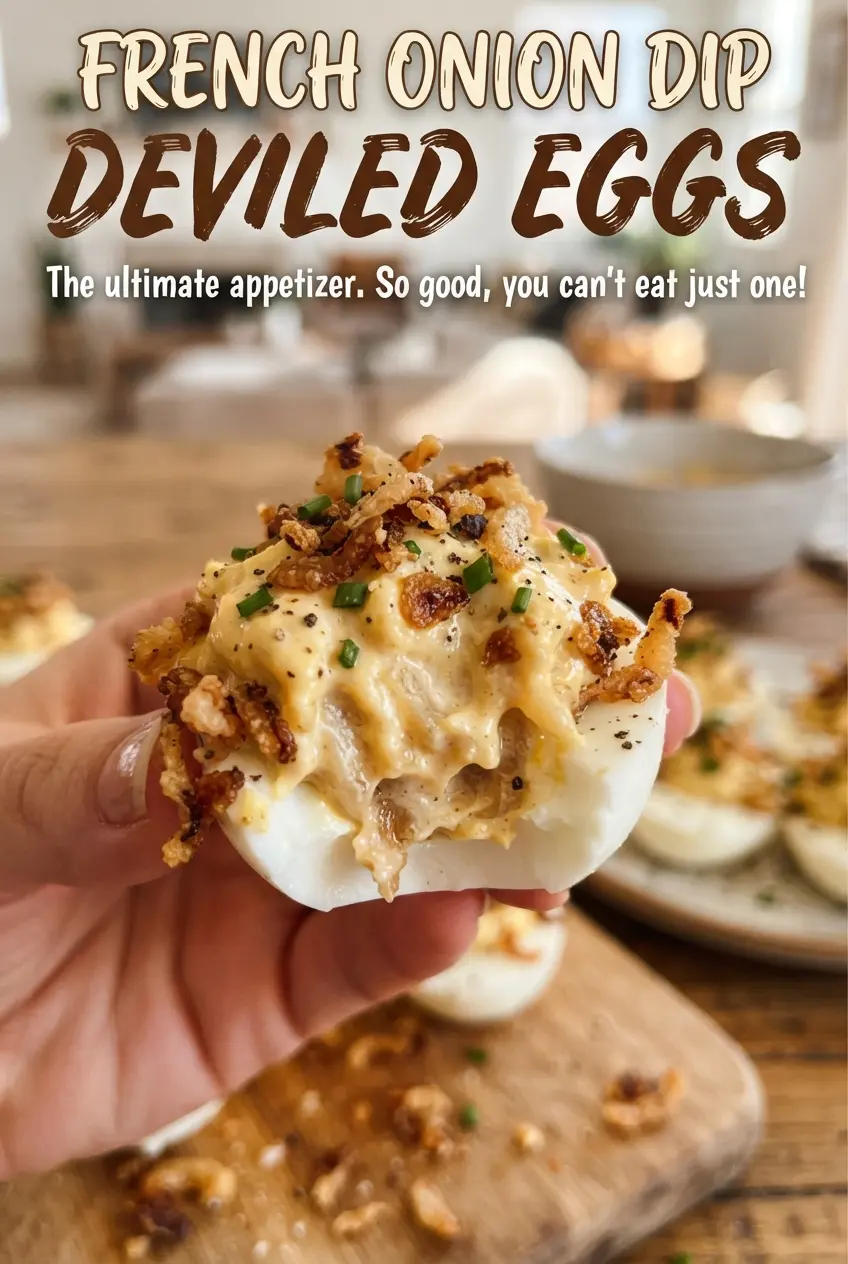
French Onion Dip Deviled Eggs
Ingredients
Equipment
Method
- Melt the butter in a cast iron skillet over medium-low heat, then add the finely diced onion. Cook for 20-25 minutes, stirring occasionally, until deep golden and jammy, then cool completely.
- Place the eggs in a pot and cover with cold water. Bring to a boil, then cover the pot, remove from heat, and let stand for 12 minutes.
- Chill the eggs, then peel them and halve them lengthwise. Keep the yolks for the filling.
- In a mixing bowl, mash the yolks with sour cream, mayonnaise, Worcestershire sauce, onion powder, garlic powder, and salt until smooth. Fold in half the cooled caramelized onions.
- Pipe the filling into the egg white halves. Top with the remaining caramelized onions, crispy fried onions, and fresh chives.