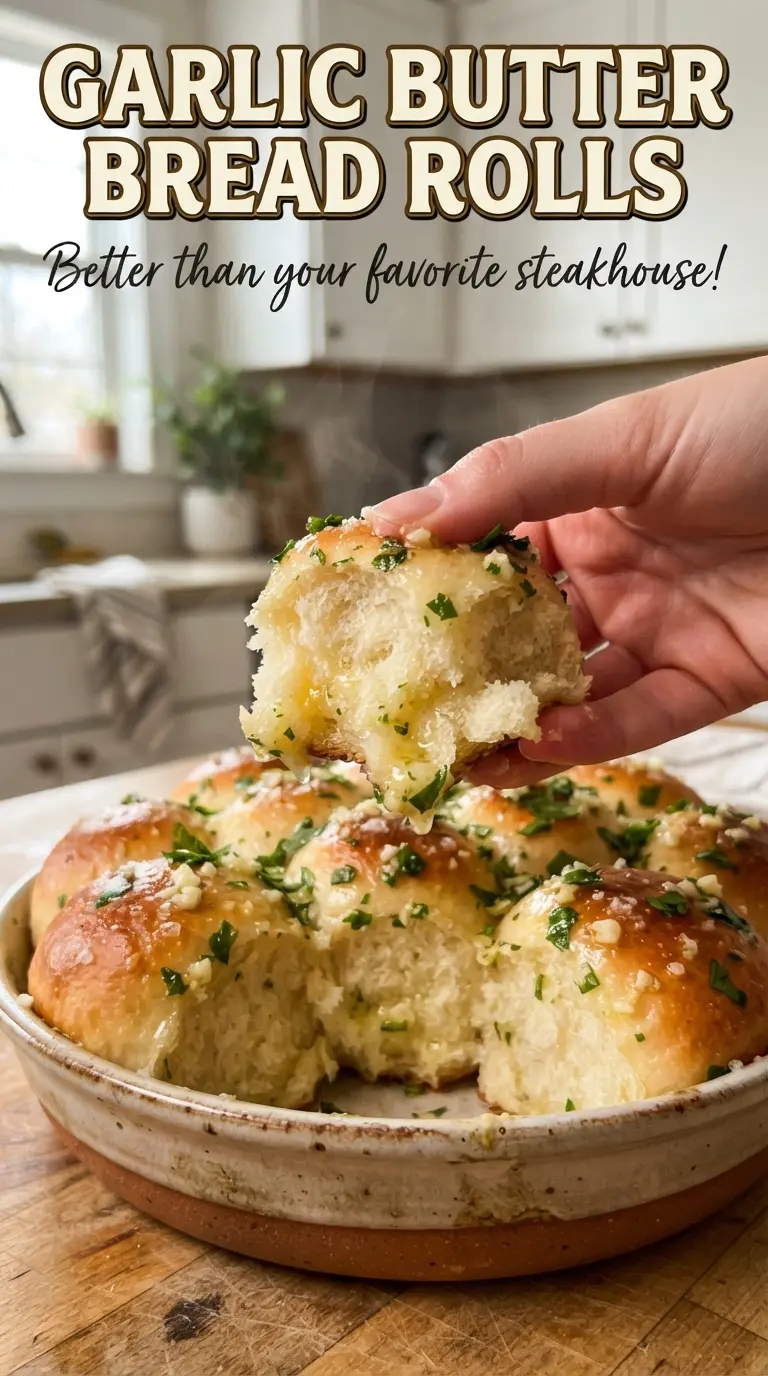
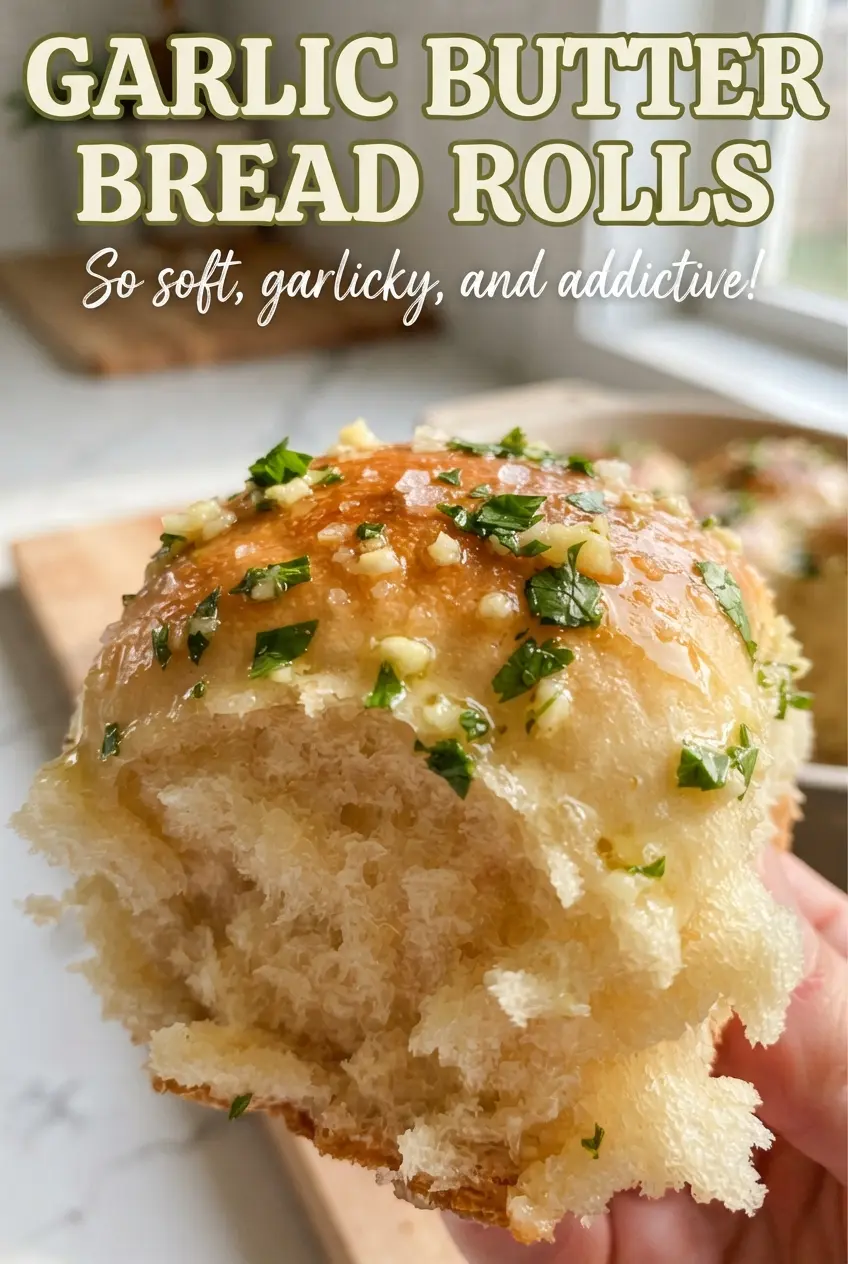
Garlic butter bread rolls come out soft in the middle, lightly chewy at the edges, and glossy with enough garlicky butter to make the whole pan disappear faster than you planned. The best part is the pull-apart texture. Each roll bakes into the next one just enough to stay pillowy, but the tops still turn deeply golden, so you get that contrast between fluffy crumb and buttery crust in every bite.
This version uses instant yeast for a quick, dependable rise, and the dough is rich without being heavy. Warm milk gives the rolls a tender texture, melted butter keeps the dough easy to mix, and the second rise in the pan helps the rolls puff up into each other instead of spreading out. The garlic butter goes on after baking, which matters. If you brush it on too early, the garlic can dull in the oven and the butter can soak in before the tops have a chance to brown.
Below, I’ll walk through the small details that make these rolls turn out light instead of dense, plus a few smart swaps and storage notes so you can make them ahead without losing that fresh-from-the-oven feel.
The rolls came out incredibly soft, and the garlic butter soaked into the tops without making them soggy. I loved that the center stayed fluffy even the next day after reheating.
Save these golden garlic butter bread rolls for the nights when you want a soft pull-apart side with a glossy, garlicky finish.
The Trick to Rolls That Stay Fluffy Instead of Tight
The dough needs enough kneading to build structure, but not so much that it turns stiff. After 6 to 8 minutes, it should feel smooth, slightly tacky, and elastic when you press it. If the dough tears easily or feels rough, it needs more time. If it looks dry before the kneading is finished, add flour one tablespoon at a time; too much flour is the fastest way to end up with rolls that bake up dense.
The second rise in the pan is just as important as the first. That’s what helps the rolls expand upward and touch each other before they go into the oven. If they go in underproofed, they’ll spring a little in the oven but stay tighter and less airy. You want them puffy enough that the balls are almost kissing, with the tops looking rounded and soft.
What Each Ingredient Is Actually Doing in These Rolls
- Warm milk — Gives the dough a tender crumb and helps the yeast wake up. It should be warm, not hot; anything much above 110°F can slow or damage the yeast.
- Instant yeast — Keeps the rise predictable and quick. If you only have active dry yeast, bloom it in the warm milk and sugar for a few extra minutes until foamy before adding the rest of the ingredients.
- Melted butter — Adds richness without making the dough hard to mix. The butter in the dough makes the rolls soft, while the melted butter brushed on top gives them that glossy finish.
- All-purpose flour — Works well here because it gives enough structure without making the rolls bready or tough. Add it gradually and stop as soon as the dough is smooth and elastic.
- Garlic and parsley — The garlic butter topping is what turns plain dinner rolls into something you’ll want to eat straight from the pan. Fresh parsley matters for brightness; dried parsley won’t give the same fresh finish.
Building the Dough, Shaping the Rolls, and Finishing Them Hot
Waking Up the Yeast
Whisk the warm milk, yeast, and sugar together and let the mixture sit until it looks foamy on top. That foam tells you the yeast is active and the rolls have a good chance of rising evenly. If nothing happens after 5 to 10 minutes, the milk was likely too hot or too cold, or the yeast is old. Start over before adding the flour.
Kneading Until the Dough Springs Back
Add the egg, melted butter, salt, and flour, then knead until the dough turns smooth and elastic. It should pull away from the bowl and spring back slowly when you poke it. If it clings to your hands in a thick paste, keep kneading before adding more flour. The dough should be soft enough to feel alive, not stiff enough to fight you.
Letting the Pan Rise Do the Work
After the first rise, divide the dough into 12 even pieces and shape them into tight balls. Place them in a greased 9×13-inch pan with just a little space between each one, then cover and let them rise until puffy. This stage is what gives you those pull-apart edges. If the dough is shoved too tightly, the centers can bake gummy; if it’s too loose, the rolls won’t bake into that classic soft cluster.
Baking Until Golden, Then Brushing Fast
Bake the rolls until the tops are deeply golden and the edges look set. The color matters more than the clock because underbaked rolls can look pale even when the timer says they’re done. As soon as they come out, stir the melted butter with garlic and parsley and brush it over the hot tops. The heat helps the butter soak in without making the crumb greasy, and the flaky salt gives each bite a little snap.
How to Adapt These Garlic Butter Bread Rolls Without Losing the Soft Texture
Dairy-Free Version That Still Tastes Rich
Use unsweetened non-dairy milk and swap in a plant-based butter that melts cleanly. The rolls will still be soft, but the flavor will be a little less rich and the garlic topping won’t have the same dairy sweetness. Use a good butter-style substitute here, not a hard margarine.
Make Them a Little More Savory
Add a pinch of onion powder to the dough or a little extra parsley to the topping if you want a more pronounced savory side roll. Keep the garlic amount where it is unless you want the topping to turn sharp and aggressive. These rolls are at their best when the garlic supports the butter instead of taking over.
Whole Wheat Swap for a Heartier Roll
Replace up to half the all-purpose flour with whole wheat flour for a nuttier, slightly denser roll. Beyond that, the texture starts to lose the light pull-apart crumb that makes this recipe work. If the dough feels dry, add a splash more warm milk because whole wheat absorbs more liquid.
Storage and Reheating
- Refrigerator: Store in an airtight container for up to 3 days. The rolls soften a bit more in the fridge but stay usable.
- Freezer: Freeze baked rolls for up to 2 months, tightly wrapped and sealed. Thaw at room temperature before reheating.
- Reheating: Warm in a 300°F oven for 8 to 10 minutes, covered loosely with foil so the tops don’t overbrown. The biggest mistake is microwaving too long, which turns the crumb rubbery fast.
Questions I Get Asked About This Recipe
Garlic Butter Bread Rolls
Ingredients
Equipment
Method
- Whisk warm milk, instant yeast, and sugar together, then let sit for 5 minutes until foamy and active.
- If the mixture does not foam after 5 minutes, discard and start over with fresh yeast.
- Add the egg, melted butter, salt, and flour, then knead for 6-8 minutes until the dough turns smooth and elastic.
- When kneading is done, the dough should spring back lightly when pressed.
- Cover and let the dough rise for 1 hour until doubled in size.
- Press a finger lightly into the dough—if the indentation stays, it is ready.
- Divide the dough into 12 balls and place them in a greased 9x13-inch pan.
- Cover and let the rolls rise for 30 minutes until puffy and nearly touching.
- Preheat the oven to 375F, then bake the rolls for 18-20 minutes until golden brown.
- The finished rolls should sound slightly hollow when tapped and look glossy at the edges.
- Stir melted butter with minced garlic and chopped parsley.
- Brush generously over the hot rolls so the butter soaks in and turns glossy.
- Sprinkle with flaky sea salt, then serve warm.