Gnocchi chicken pot pie brings all the comfort of a classic pot pie, but the tender gnocchi give every spoonful a little extra body and chew. The filling turns creamy and rich in the oven, and the golden top cracks into the sauce underneath without turning the whole dish heavy or pasty. It lands in that sweet spot where it feels cozy enough for Sunday dinner but practical enough to pull together on a weeknight.
The trick is treating the gnocchi like part of the filling instead of boiling it first. It cooks right in the sauce, which keeps it from getting waterlogged and lets it soak up all that chicken broth and cream. I also like building the sauce on the stove until it just coats a spoon before it goes into the oven; that keeps the final bake from turning loose or soupy.
Below, you’ll find the one timing detail that keeps the gnocchi tender, plus a couple of smart swaps if you want to use biscuits instead of puff pastry or make the filling a little lighter.
The sauce thickened up beautifully and the gnocchi stayed tender instead of turning mushy. My husband went back for seconds and asked if I could put this in the regular dinner rotation.
Save this gnocchi chicken pot pie for the nights when you want a creamy filling, tender gnocchi, and a golden pastry top in one pan.
The Gnocchi Trick That Keeps This Pot Pie from Turning Heavy
The mistake most people make with pot pie filling is overbuilding it before it goes into the oven. Once the sauce gets too thick on the stove, the baked version can turn gluey after the pastry traps in the steam. For this dish, the filling should look creamy and loose enough to spread, not stiff. The oven finishes the job.
Uncooked gnocchi is the piece that changes the texture in a good way. It softens in the sauce and gives you little bites of potato comfort without the extra step of boiling and draining. If the gnocchi sits in simmering liquid too long before baking, though, it can swell too much, so add it near the end and get the whole pan into the oven promptly.
- Butter — This is what carries the vegetables at the start and gives the sauce its rich base. If you use salted butter, reduce the added salt until the end.
- Flour — It thickens the broth and cream into a filling that clings to the chicken and gnocchi. Cook it for a full minute after stirring it in so the sauce doesn’t taste raw.
- Heavy cream — This gives the pot pie its plush texture. Half-and-half works in a pinch, but the filling will be a little thinner and less luxurious.
- Puff pastry or biscuits — Puff pastry gives a flaky, shattering top, while biscuits make the dish more rustic and hearty. Either works, but puff pastry needs the egg wash to brown evenly.
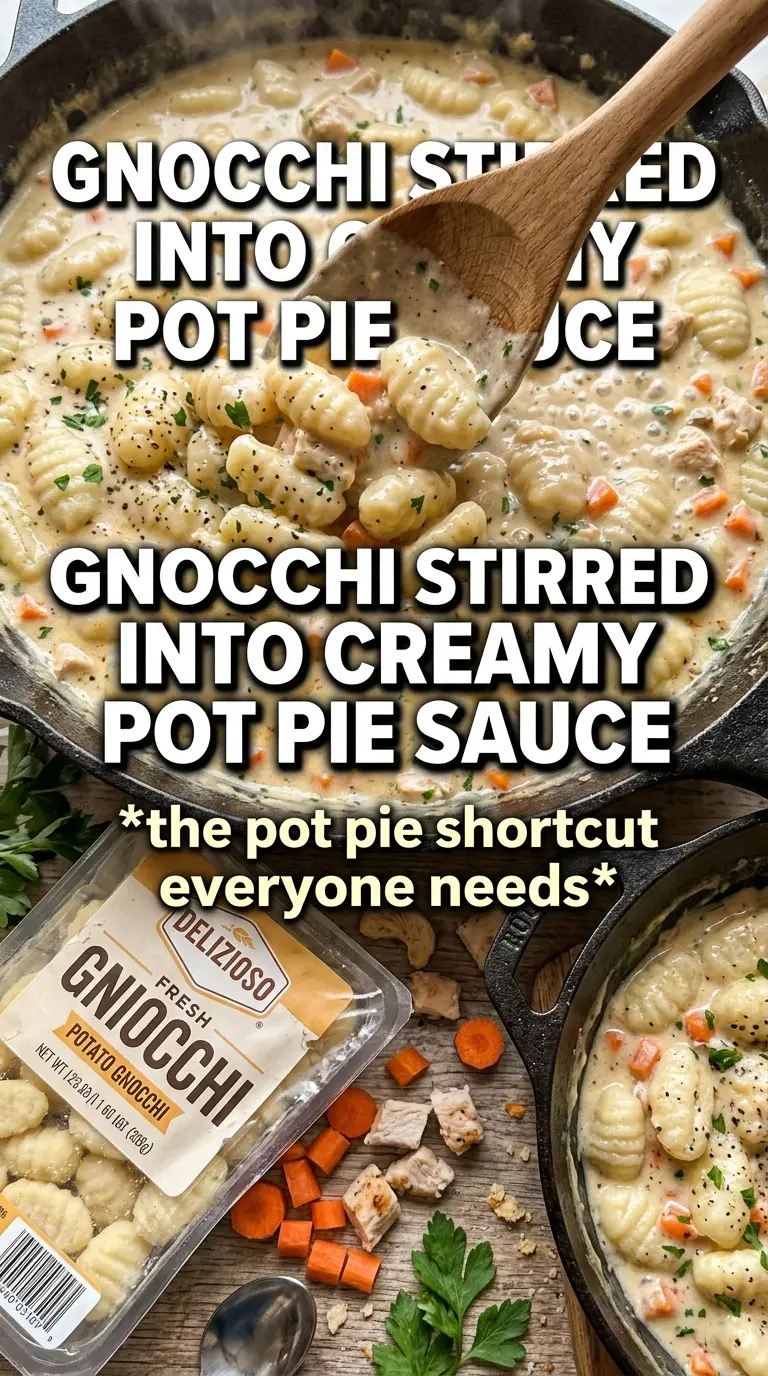
- Potato gnocchi — Shelf-stable or refrigerated gnocchi both work well here. Don’t boil it first; it goes in uncooked so it can finish in the sauce and hold its shape.
What Each Ingredient Is Actually Doing in This Recipe
- Primary ingredient (the star) — Quality matters most. Choose the best you can find.
- Cooking medium (oil, butter, or broth) — This carries flavors and prevents dryness.
- Seasonings (salt, pepper, spices, herbs) — Layer flavors so nothing overpowers. Build depth gradually.
- Aromatics (garlic, onion, herbs) — Cook with fat to bloom flavors. Become the foundation.
- Supporting ingredients — Complement the main ingredient without overpowering it.
- Sauce or liquid (if applicable) — Brings flavors together. Balance richness with acid.
- Acid (lemon, vinegar, wine, or other) — Brightens and prevents flat-tasting results.
- Final finish (garnish, glaze, or sauce) — Prevents one-dimensional taste and adds visual appeal.
Building the Filling So the Sauce Stays Creamy
Softening the Vegetables First
Start by cooking the onion, carrots, and celery in butter until the onion turns translucent and the carrots just begin to soften. This first stage matters because raw vegetables stay crunchy in the finished pot pie and can make the filling taste thin. You want the pan to smell sweet and savory, not browned or toasted.
Turning the Pan into a Sauce Base
Once the garlic and thyme go in, sprinkle over the flour and stir until it disappears into the butter and vegetables. Let it cook for about a minute, just long enough to lose the raw flour smell. Then add the broth and cream gradually, whisking as you go, so the sauce stays smooth instead of turning lumpy.
Finishing with Chicken, Peas, and Gnocchi
Fold in the chicken, peas, and uncooked gnocchi after the sauce thickens enough to coat a spoon. At this point it should still look a little looser than you want it to look on the plate, because the bake will thicken it more. Season it well; once the top goes on, the filling won’t need much adjustment.
Baking Until the Top Is Deep Gold
Pour the filling into the baking dish and cover it with puff pastry or biscuits, then brush the top with egg wash. Bake until the crust is deeply golden and the filling is bubbling at the edges and through any vent you cut in the top. If the crust browns before the center bubbles, lay a piece of foil loosely over the top and keep baking until the sauce is hot all the way through.
How to Adapt This Gnocchi Pot Pie for Different Kitchens
Use biscuits instead of puff pastry for a more rustic finish
Biscuits give you a thicker, softer top and a more casserole-style feel. Arrange them over the filling so they bake through without sinking, and expect a little less flakiness but a more substantial bite.
Make it gluten-free with one smart swap
Use a gluten-free flour blend for the sauce and pair it with gluten-free gnocchi. The filling will still thicken well, but it may need an extra minute on the stove to lose any gritty flour texture before baking.
Swap in turkey or rotisserie chicken for a faster dinner
Leftover turkey works exactly like chicken here, and rotisserie chicken saves time without changing the texture much. Just keep the meat already cooked so it warms through in the sauce instead of drying out in the oven.
Storage and Reheating
- Refrigerator: Store leftovers covered for up to 4 days. The gnocchi will absorb more sauce as it sits, so the filling gets thicker.
- Freezer: This freezes, but the cream sauce and gnocchi soften after thawing. For the best texture, freeze the baked filling without the top and add fresh pastry or biscuits when reheating.
- Reheating: Warm covered in a 350F oven until hot in the center. The common mistake is blasting it in the microwave, which makes the pastry soggy and can split the cream sauce.
Questions I Get Asked About This Recipe
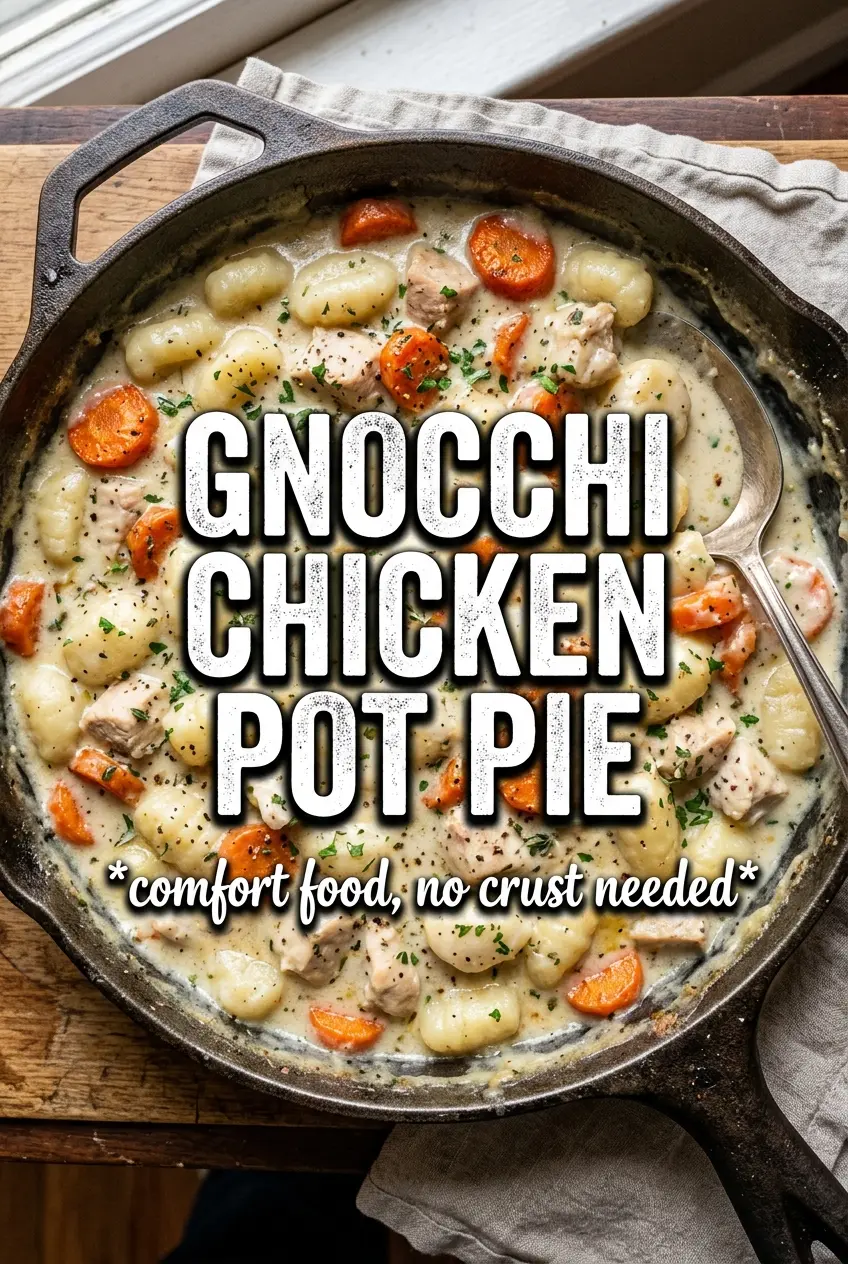
Gnocchi Chicken Pot Pie
Ingredients
Equipment
Method
- Preheat the oven to 400°F. Heat butter and sauté the onion, carrots, and celery for 5 minutes until they soften and smell fragrant.
- Add the garlic and fresh thyme, then whisk in the flour and cook for 1 minute. This should form a smooth paste that lightly toasts.
- Gradually add the chicken broth and heavy cream while whisking. Simmer until thickened and glossy, then keep it hot while you assemble.
- Fold in the shredded chicken, frozen peas, and uncooked potato gnocchi, then season with salt and pepper to taste. Stir until the gnocchi is evenly distributed through the creamy filling.
- Pour the filling into a baking dish. Top with a sheet of puff pastry or spoon on the refrigerated biscuits so they cover the filling.
- Brush the top with egg wash. Bake at 400°F for 25-30 minutes until the crust is golden and bubbly, with steam rising from a vent.