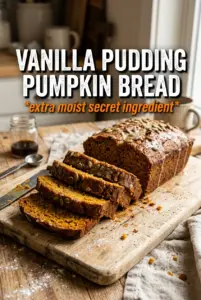
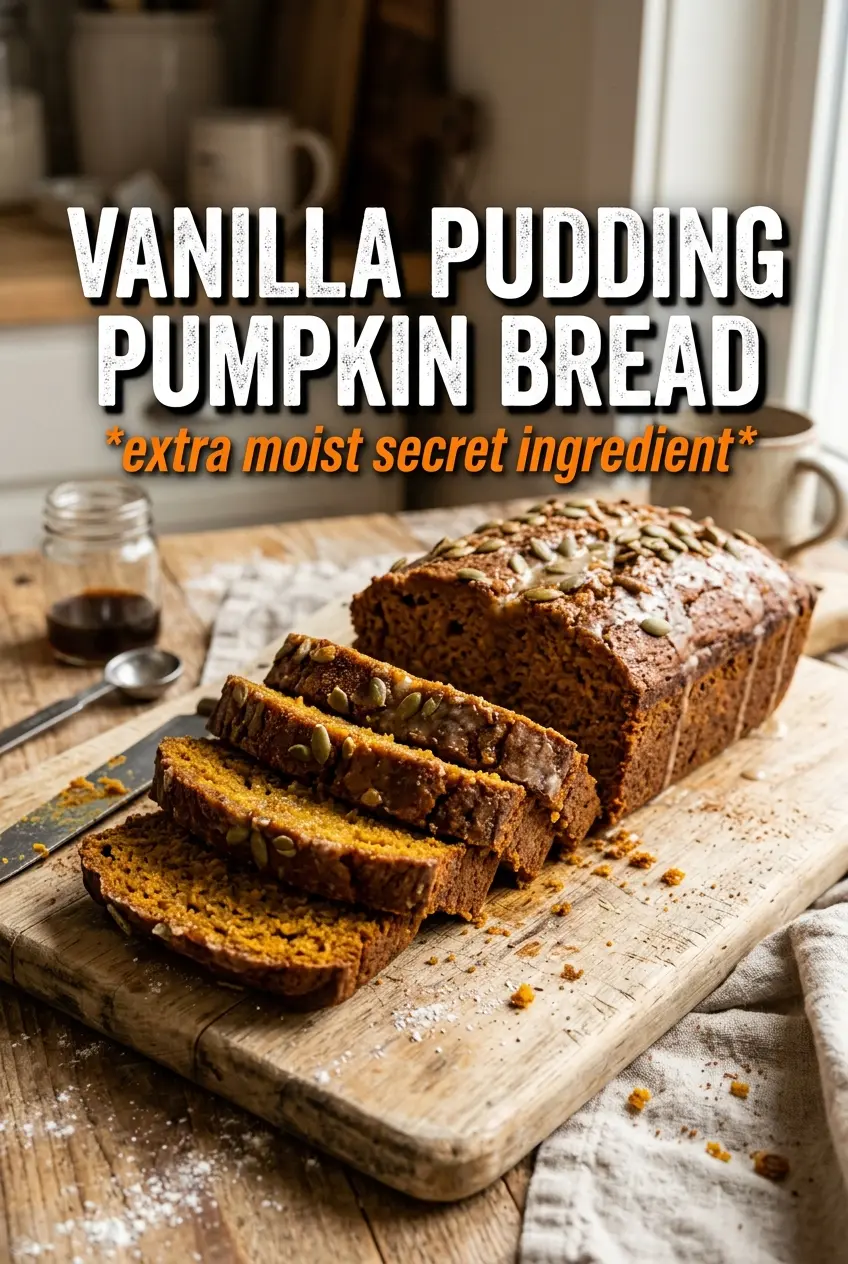
Vanilla pudding pumpkin bread bakes up with a dense, plush crumb that stays soft for days, and the vanilla pudding mix gives it a tenderness you can taste in every slice. The pumpkin comes through warmly, not aggressively, so the bread feels comforting and balanced instead of heavy or overly spiced.
What makes this version work is the combination of pumpkin puree, sour cream, and dry instant pudding mix. That pudding doesn’t just add vanilla flavor; it holds moisture in the loaf so the texture stays rich without turning gummy. The brown sugar deepens the flavor, while the pumpkin pie spice and cinnamon give the bread enough warmth to taste like fall without overpowering the vanilla.
Below, I’ll walk through the one mixing habit that keeps the loaf tender, the ingredient swaps that still give good results, and the best way to glaze it so the topping sets in thin ribbons instead of disappearing into the crust.
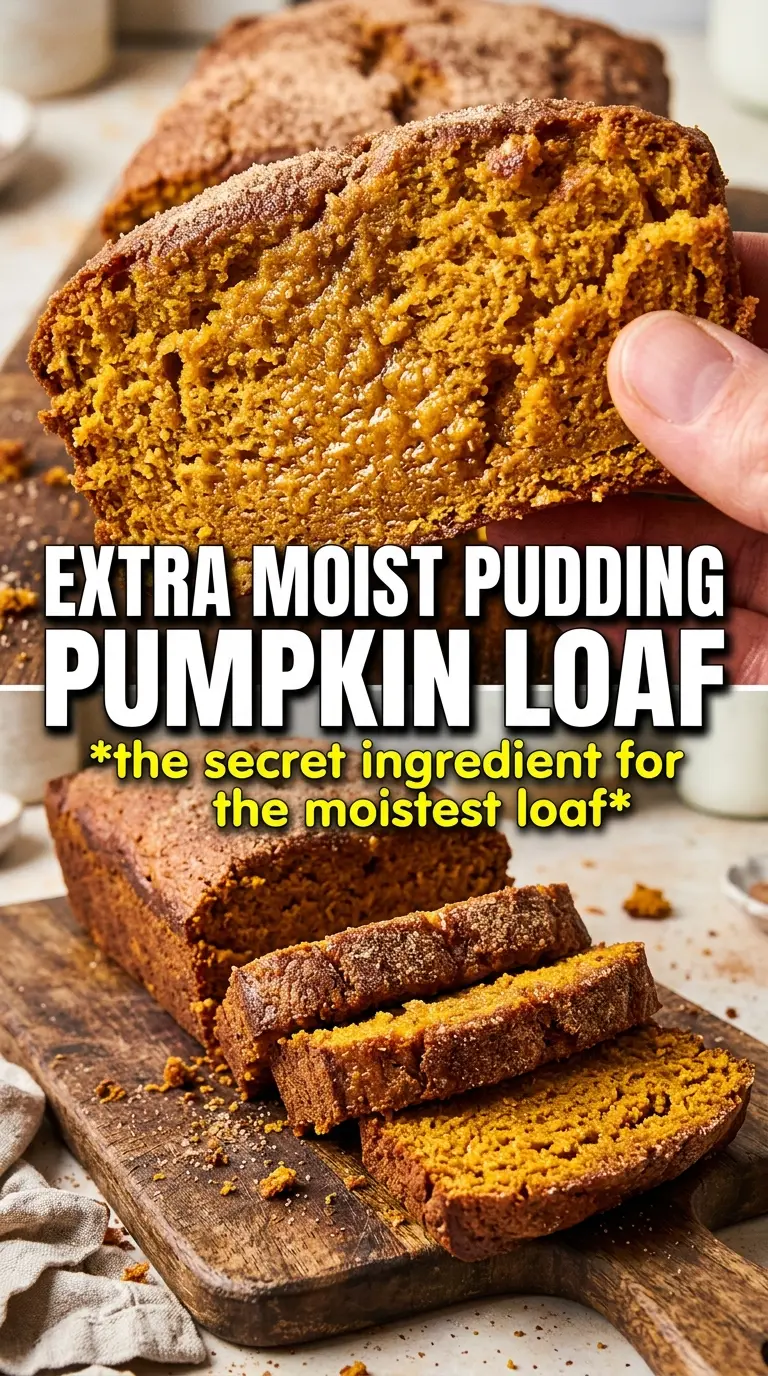
The loaf came out incredibly moist and sliced cleanly after cooling. I loved that the vanilla pudding gave it a softer, more tender crumb without making it taste like boxed mix, and the glaze set up perfectly on top.
Save this vanilla pudding pumpkin bread for the days when you want a tender loaf with a soft orange crumb and a light powdered sugar glaze.
The Trick That Keeps This Pumpkin Bread Tender Instead of Dense
Most quick breads turn heavy when they’re overmixed or when the batter gets too dry. This loaf avoids both problems by leaning on pumpkin puree, sour cream, and instant vanilla pudding mix, which all bring moisture in different ways. The pudding mix is the quiet advantage here. It helps the bread stay plush after baking, even after a day or two on the counter.
The other detail that matters is how gently the dry ingredients go into the wet mixture. Once the flour hits the bowl, the batter only needs a few folds. If you beat it smooth, the loaf will bake up tighter and less tender. You want a thick batter with no dry flour streaks, not a glossy cake batter.
- Instant vanilla pudding mix — Use the dry mix straight from the packet. Don’t prepare it first. The starches in the mix help lock in moisture and give the loaf its soft, almost silky crumb.
- Sour cream — This adds richness and a slight tang that keeps the sweetness in check. Plain Greek yogurt works in a pinch, but sour cream gives a softer texture and a more forgiving batter.
- Pumpkin puree — Use pure pumpkin, not pumpkin pie filling. Pie filling is already sweetened and spiced, which throws off the flavor and can make the loaf too loose.
- Oil — Vegetable oil keeps the crumb moist in a way butter doesn’t quite match here. Butter adds flavor, but oil gives this style of bread the stay-soft texture people notice the next day.
What Each Ingredient Is Doing in the Loaf
- All-purpose flour — This gives the loaf structure without making it tough. Bread flour would make it chewier and less tender, which is the opposite of what this recipe wants.
- Pumpkin pie spice and cinnamon — The spice blend brings warmth, while extra cinnamon sharpens the pumpkin flavor. If you only have pumpkin pie spice, you can use a little more of it, but the loaf will taste rounder and less defined.
- Brown sugar — This adds a little molasses depth and helps the bread stay moist. Granulated sugar alone would make the flavor flatter and the crumb slightly drier.
- Eggs — They bind the batter and help the loaf rise evenly. Use room-temperature eggs if you can, because they whisk into the pumpkin mixture more smoothly.
- Powdered sugar glaze — This is optional, but it adds a clean sweet finish that works well with the warm spices. Add the milk a little at a time so the glaze stays thick enough to drizzle instead of soaking in.
Mixing the Batter Without Losing the Soft Crumb
Whisk the dry ingredients first
Start by whisking the flour, pudding mix, baking soda, spices, and salt together until the mixture looks evenly speckled. This keeps the pudding mix from clumping and spreads the leavening evenly through the batter. If you skip this step, you can end up with pockets of sweet, sticky mix in the loaf. A quick whisk now saves you from a patchy texture later.
Build the wet base until it’s smooth
In a separate bowl, whisk the pumpkin puree, both sugars, oil, eggs, vanilla, and sour cream until the mixture looks thick and smooth. It should look glossy and a little loose, not curdled or streaky. If the eggs are cold, the oil can look separated at first, but keep whisking and it will come together. This base should smell like pumpkin spice and vanilla before the flour ever goes in.
Fold just until the flour disappears
Add the dry ingredients to the wet bowl and fold with a spatula until you no longer see dry flour. A few small streaks are better than an overmixed batter, because the loaf keeps baking once it hits the oven. The finished batter will be very thick, almost like a heavy cake batter. Scrape it into the pan, level the top, and stop fussing with it.
Bake until the center sets
Bake at 350°F for 60 to 65 minutes, and start checking near the end of that window. The top should be domed, deeply golden, and split slightly in the center, while a toothpick inserted in the middle comes out clean or with a few moist crumbs. If the top browns too fast, tent it loosely with foil for the last 10 to 15 minutes. Let it cool completely before glazing, or the glaze will melt off the sides.
How to Adapt It When You Need a Different Version
Dairy-Free Version
Swap the sour cream for an unsweetened dairy-free yogurt with a thick texture. Use an unsweetened plant milk in the glaze or skip the glaze entirely and dust the cooled loaf with powdered sugar. The bread still bakes up tender, but the crumb will be a touch less rich than the original.
Gluten-Free Swap
Use a 1:1 gluten-free baking blend that already includes xanthan gum. The pudding mix and pumpkin help with moisture, but gluten-free flour can still make the loaf a little more delicate, so let it cool fully before slicing. The texture will be slightly more tender and less bouncy, but still good for breakfast.
Make It Less Sweet
Cut the granulated sugar to 1/2 cup if you want a more breakfast-style loaf. The brown sugar keeps enough depth in the batter that it won’t taste flat, and the glaze can stay on the side instead of going over the top. The pumpkin and vanilla still carry plenty of flavor.
Storage and Reheating
- Refrigerator: Store tightly wrapped for up to 5 days. The crumb stays moist, but the loaf gets a little firmer when chilled.
- Freezer: This freezes well. Wrap the cooled loaf or individual slices in plastic and then foil, and freeze for up to 3 months.
- Reheating: Warm slices in the microwave for 10 to 15 seconds or in a low oven until just heated through. Don’t overheat it, or the bread can dry at the edges and lose that soft pudding texture.
Answers to the Questions Worth Asking
Vanilla Pudding Pumpkin Bread
Ingredients
Equipment
Method
- Preheat oven to 350F, then grease a 9x5 loaf pan with a light coating so the loaf releases easily.
- Whisk all-purpose flour, instant vanilla pudding mix (dry, not prepared), baking soda, pumpkin pie spice, cinnamon, and salt until the dry spices are evenly distributed, with no visible clumps.
- In a separate bowl, whisk pumpkin puree, granulated sugar, brown sugar, vegetable oil, eggs, vanilla extract, and sour cream until smooth and fully blended.
- Fold the dry ingredients into the wet ingredients just until combined, then pour the thick batter into the prepared loaf pan.
- Bake at 350F for 60-65 minutes, checking around 60 minutes, until a toothpick comes out clean.
- Cool the loaf completely in the pan before glazing so the topping doesn’t melt.
- Drizzle powdered sugar glaze made from powdered sugar and milk over the top, then slice to serve.