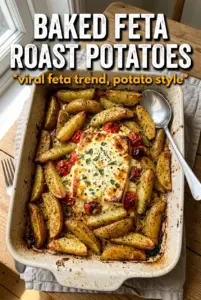
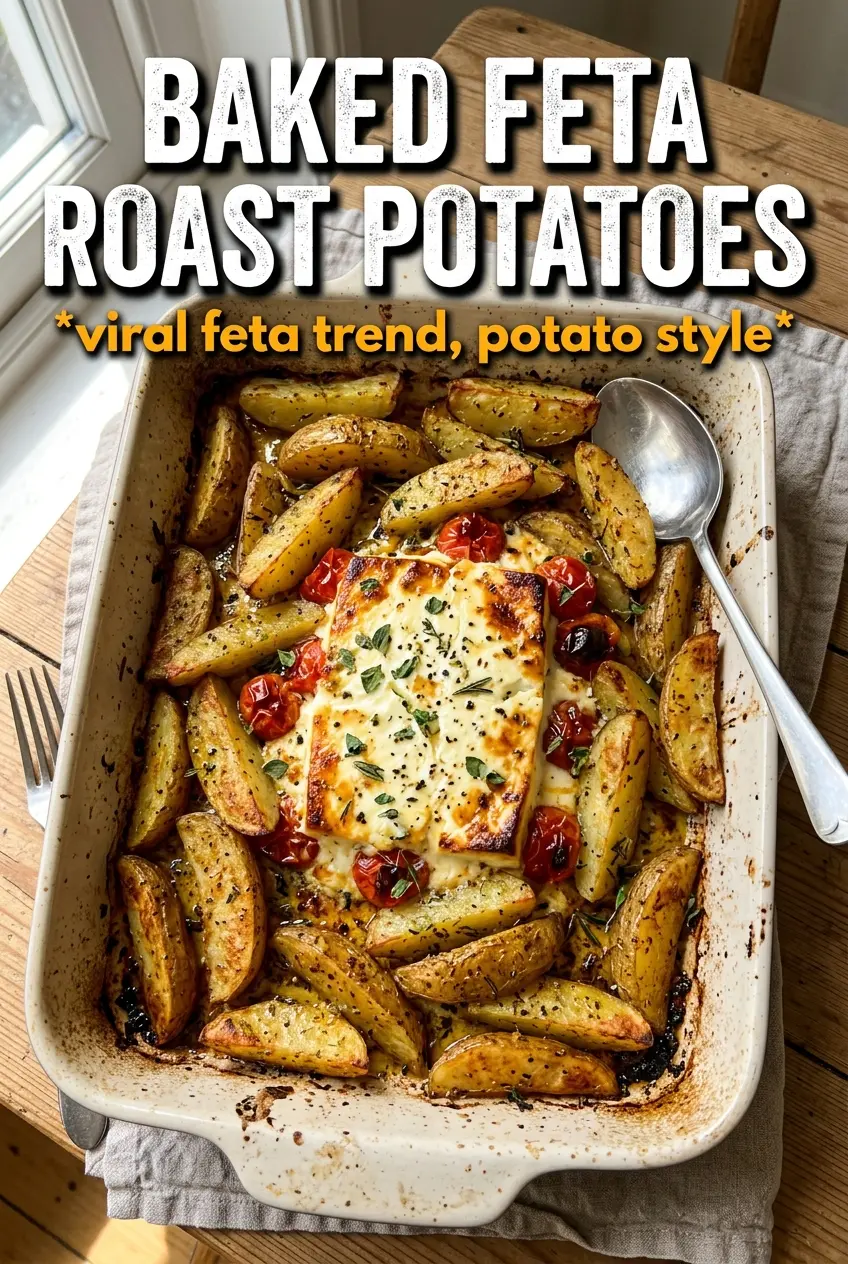
Golden roast potatoes with a soft feta center land on the plate with the kind of contrast that keeps people going back for another forkful. The potatoes crisp at the edges, the tomatoes collapse into a light, savory sauce, and the feta turns warm and spoonable without losing its salty tang. It’s the kind of side dish that eats like something much more intentional than “just potatoes.”
The trick is giving everything enough space and enough heat. Baby potatoes roast best when their cut sides face down for part of the bake, which helps them brown instead of steam, while the feta sits in the middle and mellows as the tomatoes burst around it. A good drizzle of olive oil matters here because it carries the herbs, helps the potatoes color, and keeps the finished dish from tasting dry after the feta is broken through.
Below, I’ve included the part that matters most: how to keep the potatoes from turning pale, how to avoid a grainy feta finish, and a few swaps that still keep the dish bright and balanced.
The potatoes got crisp around the edges and the feta melted just enough to coat everything without disappearing. I added a little extra lemon at the end and it tasted like something from a good Mediterranean restaurant.
Save these baked feta roast potatoes for the night you want crisp potatoes, juicy tomatoes, and a salty feta finish in one pan.
The Reason These Potatoes Brown Instead of Steam
The difference comes down to moisture management and pan contact. Baby potatoes hold a lot of water, so if they’re crowded too tightly, they soften before they ever get the chance to crisp. A single layer in a baking dish gives the cut sides room to roast, while the olive oil coats each piece and helps the hot surface do its work.
Feta changes the rhythm of the dish. It doesn’t melt into a smooth sauce like mozzarella or cream cheese; it softens, loosens, and breaks into the potatoes in salty crumbles. That’s what keeps the final dish bright instead of heavy. If your potatoes seem soft but not browned at the end, the dish probably needs a little more surface exposure, not more time buried under toppings.
What Each Ingredient Is Actually Doing Here
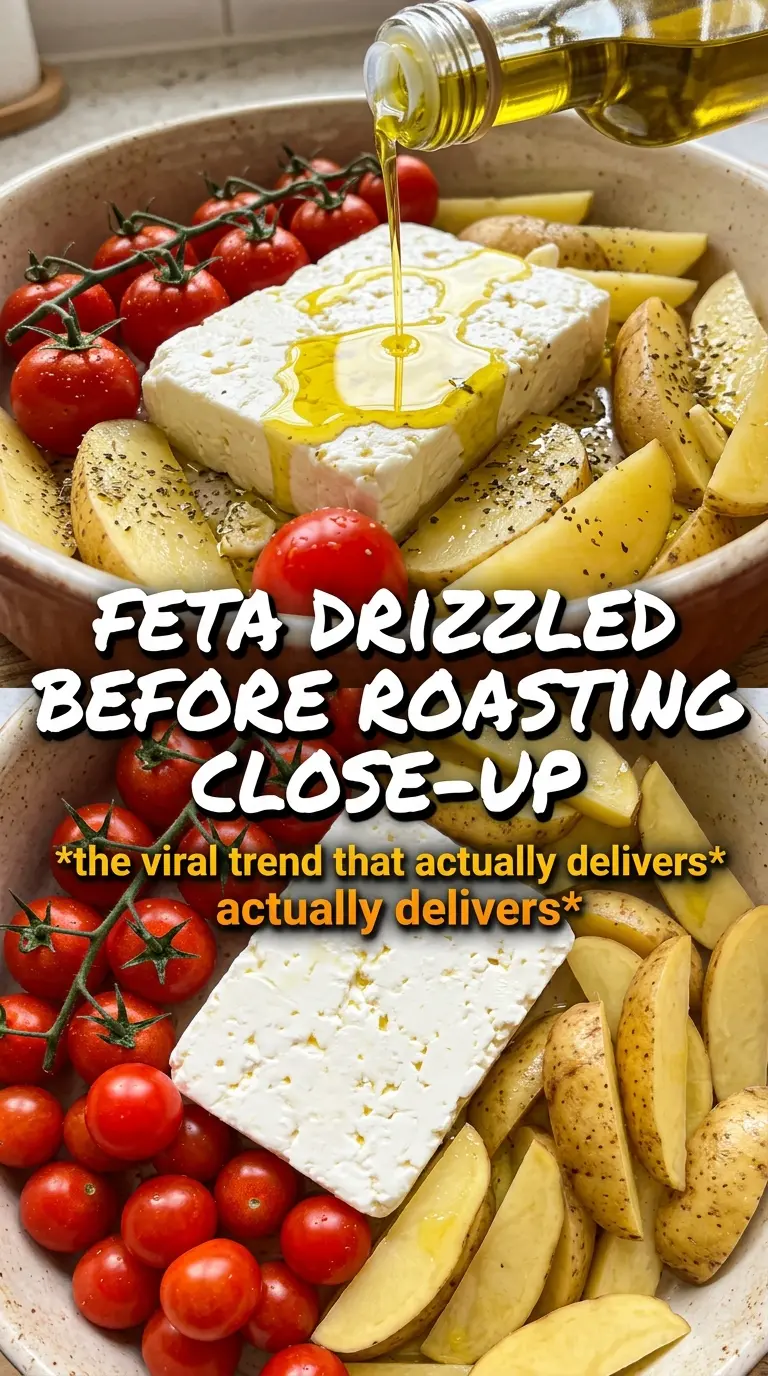
- Baby potatoes — These are the backbone of the dish because they turn creamy inside while the cut sides brown. Larger potatoes work too, but cut them into even chunks so they roast at the same pace.
- Block feta — Use a block, not crumbles. The block softens in place and holds its shape long enough to create those pockets of salty, creamy richness before it gets stirred through.
- Cherry tomatoes — They burst in the oven and create the light sauce that keeps the potatoes from tasting one-note. Grape tomatoes work if that’s what you have, but cherry tomatoes usually give a juicier finish.
- Olive oil — This is what helps the herbs cling and the potatoes brown. Don’t cut it too much or the dish will roast up dry and the feta will feel harsh instead of balanced.
- Lemon zest and juice — The zest gives the dish its clean top note, while the juice wakes up the feta at the end. Add both after roasting so the flavor stays fresh and doesn’t turn dull in the oven.
- Fresh herbs — Basil gives a softer, sweeter finish; parsley keeps it crisp and green. Either one works, but add it at the end so the herbs stay vivid.
How to Roast Everything So the Feta Stays Creamy and the Potatoes Crisp
Set Up the Pan for Browning
Use a baking dish that gives the potatoes room to spread out without piling up. Put the feta in the center so the tomatoes and potatoes can roast around it and release their juices into the middle of the pan. If the dish is too small, the vegetables will steam and the potatoes will lose that roasted edge before the feta has time to soften properly.
Season Before the Oven Does the Work
Toss the potatoes, tomatoes, and garlic with the olive oil, oregano, thyme, red pepper flakes, salt, and pepper before roasting. The oil should coat everything in a thin sheen, not pool heavily at the bottom. If the potatoes look dry going in, they’ll come out patchy and pale.
Roast Until the Edges Turn Deep Gold
Leave the dish alone while it roasts. The potatoes need uninterrupted heat to develop color, and the tomatoes need time to burst and collapse around the feta. At the end, the potatoes should be tender all the way through, the feta should look softened and lightly golden on top, and the oil in the pan should smell savory and herbal.
Finish With Lemon and Herbs
Add the lemon juice, zest, and fresh herbs after the pan comes out of the oven. That keeps the flavor bright and stops the herbs from going muddy. Then break the feta into the potatoes and toss gently so you get creamy pockets of cheese instead of a fully blended mash.
Three Ways to Adapt These Baked Feta Roast Potatoes
Make it dairy-free
Swap the feta for a dairy-free feta-style block if you have one that softens in the oven. The flavor will be a little less tangy and less salty, so the lemon at the end matters more. Crumbled vegan feta won’t give the same creamy center, so a block-style substitute works best.
Make it more filling with chickpeas
Add one drained can of chickpeas to the pan with the potatoes. They’ll roast in the olive oil and herbs, picking up the tomato juices and giving the dish more substance. Pat them dry first or they’ll soften instead of crisping at the edges.
Use rosemary instead of thyme
Rosemary brings a piney, more rustic note that stands up well to the feta and tomatoes. Use a little less than the thyme amount because rosemary can dominate fast. It’s a good swap when you want the dish to lean more savory and less soft around the edges.
Storage and Reheating
- Refrigerator: Store leftovers in an airtight container for up to 3 days. The potatoes will soften a bit as they sit, but the flavor stays good.
- Freezer: Freezing isn’t ideal here. The potatoes can turn mealy and the feta changes texture after thawing, so this dish is best made fresh.
- Reheating: Warm leftovers in a 375F oven until hot and the edges start to crisp again. The microwave will heat it faster, but it turns the potatoes soft and flattens the feta’s texture.
Questions I Get Asked About This Recipe
Baked Feta Roast Potatoes
Ingredients
Equipment
Method
- Preheat the oven to 400F and place the feta block in the center of a baking dish.
- Arrange the halved baby potatoes, cherry tomatoes, and smashed garlic around the feta.
- Drizzle everything with the olive oil, then sprinkle oregano, fresh thyme, red pepper flakes, salt, and black pepper.
- Roast for 40-45 minutes until the potatoes are golden and tender and the feta is softened and golden.
- Squeeze the lemon juice over the hot roasted potatoes and scatter the lemon zest over the top.
- Break the feta into the potatoes and toss everything together, then serve with fresh basil or parsley.