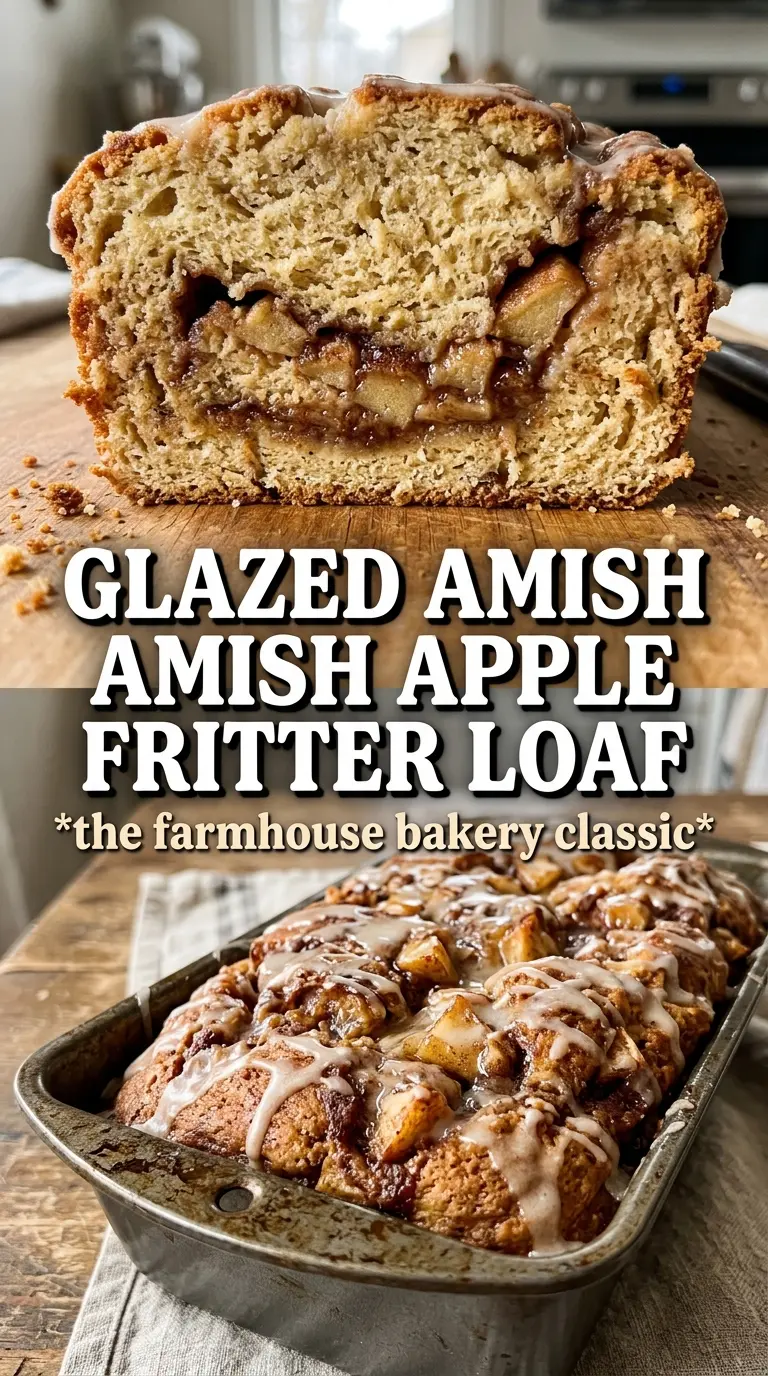
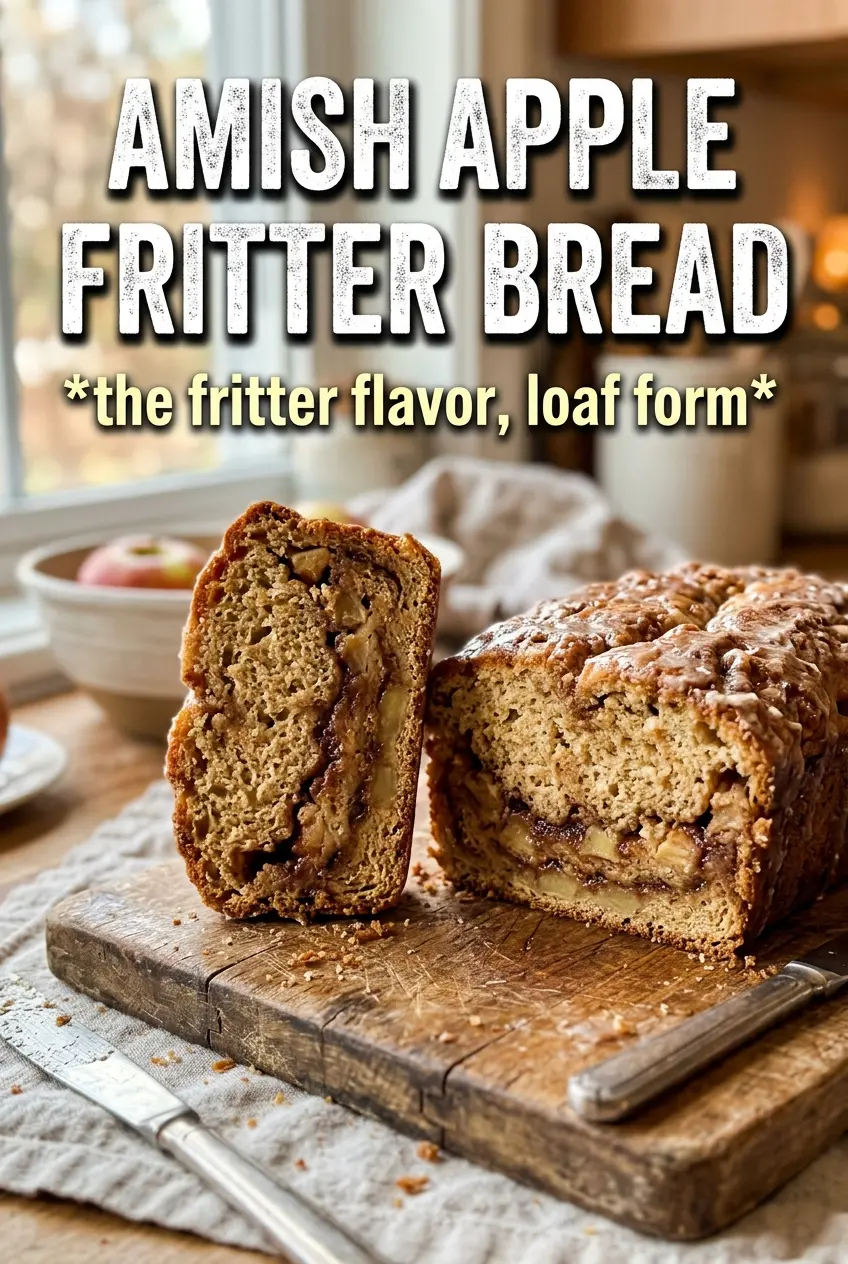
Amish apple fritter bread bakes up with a tender, cake-like crumb, a ribbon of cinnamon-sugar apples through the middle, and a glossy glaze that settles into the cracks while it’s still warm. The top gets a little crackly, the edges caramelize, and every slice tastes like the best part of a bakery fritter without the frying.
What makes this loaf work is the layering. Tossing the diced apples with part of the cinnamon sugar pulls out a little juice and helps create those soft, jammy pockets instead of watery chunks. Creaming the butter and sugar first gives the bread lift, while the milk keeps the crumb moist enough to stay tender for days.
Below, I’ve included the one step that keeps the loaf from sinking in the center, plus a few smart swaps if you want to use different apples or make it a little more pantry-friendly.
The cinnamon sugar sank into the apples just enough to make little pockets of caramel flavor, and the glaze set up perfectly without making the loaf soggy.
Save this Amish Apple Fritter Bread for the mornings when you want a soft cinnamon-apple loaf with a sticky glaze on top.
The Secret to Keeping the Apple Layers From Sinking
Most apple quick breads go heavy because the fruit gets mixed straight into the batter all at once. That sounds harmless, but it usually means the apples slide to the bottom and leave you with a dense base and a bare top. This loaf avoids that by splitting the filling into two layers and tucking plain cinnamon sugar in between, which gives you more even distribution and a better swirl when you slice it.
The batter itself needs to be thick enough to hold the fruit, but not so stiff that it turns dry in the oven. That’s why the milk is added alternately with the dry ingredients instead of all at once. If you dump in the flour and liquid together, the batter can turn lumpy or overmixed fast, and that’s when the crumb gets tough.
- The diced apples should be small and evenly cut. Big chunks create gaps in the loaf and can make the center bake unevenly.
- The brown sugar and cinnamon do more than flavor the fruit. They pull a little moisture from the apples and help make that sticky, fritter-style ribbon inside the bread.
- The butter needs to be soft, not melted. Soft butter traps air when you beat it with the sugar, which gives the loaf a lighter rise.
- The glaze goes on while the bread is still warm so it settles into the top instead of sitting in a hard shell on the surface.
What Each Ingredient Is Actually Doing in This Loaf
- Apples bring the texture and the whole point of the bread. A firm baking apple like Honeycrisp, Granny Smith, or Fuji holds its shape better than a mealy apple, which can disappear into the crumb.
- Brown sugar gives the filling that deep caramel note you want in an apple fritter. If you only have light brown sugar, use it. Dark brown sugar will taste a little richer and molasses-like.
- Unsalted butter gives you control over the salt level and creates the best creamed base. Salted butter works in a pinch, but reduce the added salt slightly.
- Whole milk adds moisture without thinning the batter too much. Lower-fat milk will work, but the loaf won’t taste quite as plush.
- Powdered sugar glaze is the finish that makes this bread feel like a fritter. It should be thin enough to drizzle, not so thin that it disappears completely.
Building the Batter and Swirl Without Overworking It
Cream the base until it looks pale and fluffy
Beat the softened butter and granulated sugar until the mixture lightens in color and looks a little airy. That step matters because it gives the loaf its lift before the flour ever goes in. If the butter is too cold, the mixture stays grainy and the bread bakes up heavier. If it’s melted, you lose the air and the texture turns greasy.
Keep the dry and wet additions alternating
Whisk the flour, baking powder, baking soda, and salt together first, then add the dry ingredients and milk in alternating additions. Stop mixing as soon as the batter comes together. Overmixing after the flour goes in develops gluten and gives you a tighter, chewier loaf instead of a tender crumb.
Layer the apples instead of stirring them through
Pour half the batter into the pan, add half the apple mixture, and sprinkle over the remaining cinnamon sugar before adding the rest of the batter. Finish with the last of the apples on top. That layering keeps the fruit from settling and gives you those visible pockets of cinnamon apple all the way through the loaf.
Bake until the center tests clean, then glaze while warm
The top should be deeply golden and set, and a toothpick inserted into the center should come out with a few moist crumbs, not wet batter. If the top browns too quickly, tent it loosely with foil for the last 15 minutes. Let the loaf cool just long enough to hold together, then drizzle on the glaze while it’s still warm so it melts slightly into the crust.
Ways to Adapt This Apple Bread Without Losing the Good Part
Use Granny Smith for a sharper finish
Granny Smith apples keep their shape well and give the loaf a brighter, more tart bite. The bread tastes a little less candy-sweet and a little more like a true apple fritter, especially if you like contrast against the glaze.
Make it dairy-free with plant milk and a butter substitute
Use a neutral dairy-free butter and unsweetened almond or oat milk in the batter. The loaf still bakes up tender, though the flavor will be a little less rich than the original because butter is carrying some of the background flavor here.
Swap the glaze for a thicker icing
Use less milk in the glaze if you want a more bakery-style icing that sits on top instead of dripping down the sides. That gives the loaf a sweeter finish and a little more visual contrast, but it also makes the top less sticky.
Storage and Reheating
- Refrigerator: Store covered for up to 4 days. The crumb stays moist, though the glaze may soften a little.
- Freezer: This loaf freezes well. Wrap slices individually, then place them in a freezer bag for up to 2 months.
- Reheating: Warm slices in the microwave for 10 to 15 seconds or in a low oven. Don’t overheat it or the bread will dry out and the glaze can turn sticky in a bad way.
Questions I Get Asked About This Recipe
Amish Apple Fritter Bread
Ingredients
Equipment
Method
- Preheat oven to 350°F and grease a 9x5 loaf pan.
- Mix brown sugar and cinnamon, then toss half with the diced apples until coated and glossy.
- Beat softened butter and granulated sugar until fluffy, about 1-2 minutes.
- Add eggs and vanilla to the butter mixture and beat until smooth.
- Whisk all-purpose flour, baking powder, baking soda, and salt together in a bowl.
- Alternate adding the dry mixture and whole milk to the butter mixture, mixing just until combined after each addition. Stop when no dry streaks remain.
- Pour half the batter into the loaf pan and spread it into an even layer.
- Layer half the apple mixture over the batter, then sprinkle the remaining plain cinnamon sugar on top.
- Pour the remaining batter over the apples and top with the remaining apples, spreading evenly.
- Bake at 350°F for 55-60 minutes, until a toothpick comes out clean with no wet batter clinging.
- Drizzle with the powdered sugar glaze while warm, letting it sink slightly into the top for a thick sheen.