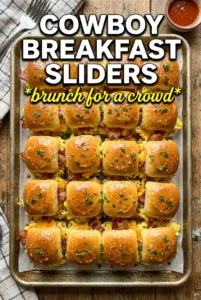
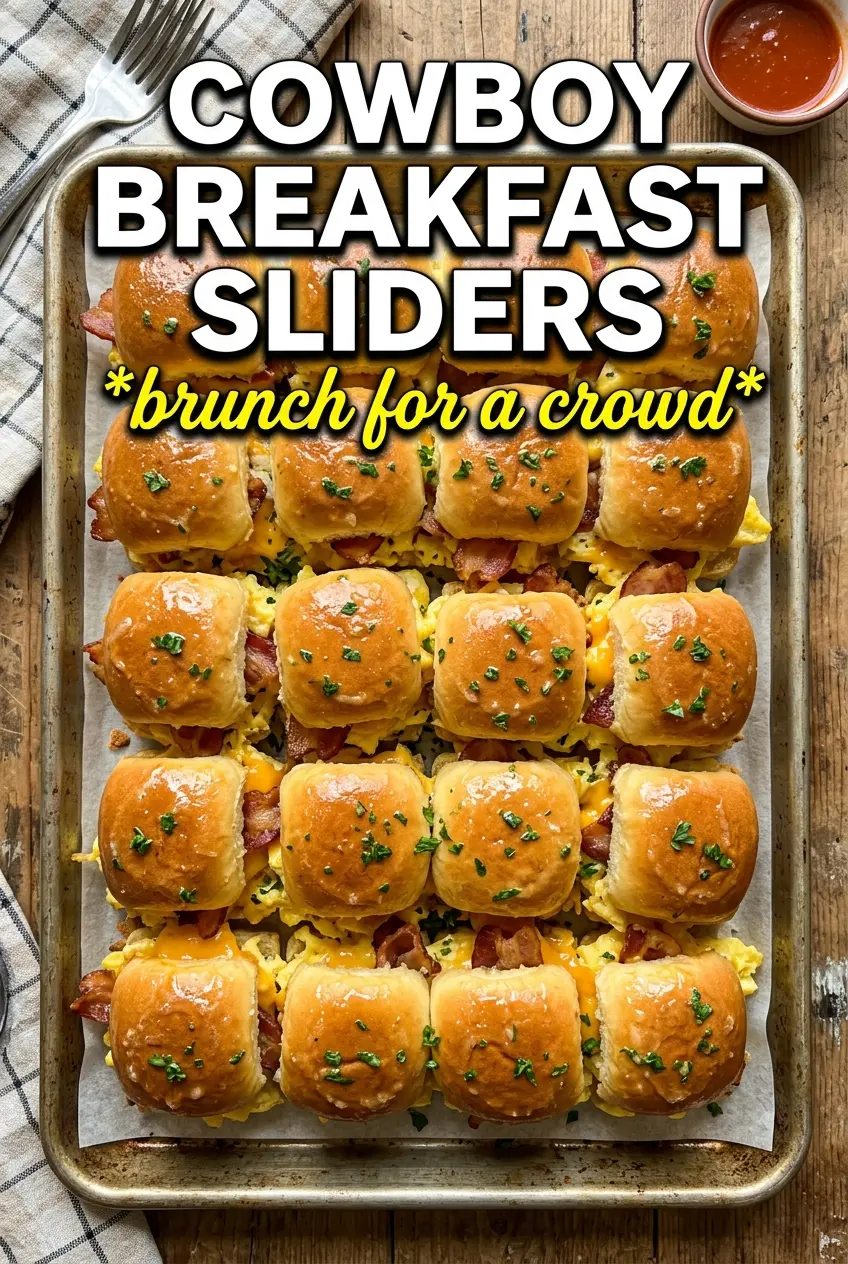
Cowboy breakfast sliders come out warm, cheesy, and sturdy enough to feed a hungry table without falling apart in your hands. The soft Hawaiian rolls soak up just enough butter glaze to turn the tops bronzed and savory, while the eggs, sausage, bacon, and cheddar stay tucked into neat little layers that eat like a proper breakfast sandwich instead of a messy casserole.
What makes this version work is the balance: the rolls are cut as one connected slab so the sliders bake together, and the butter-Dijon glaze keeps the tops from tasting plain while the everything bagel seasoning adds salt, crunch, and a little onion bite. I like to cook the sausage and eggs a touch ahead of time so the filling goes into the pan hot but not wet, which helps the bottoms stay tender instead of soggy.
Below you’ll find the exact layering order that keeps these sliders easy to serve, plus the small timing detail that gives you melted cheese and golden tops at the same moment.
The glaze on top kept the rolls from drying out, and the jalapeños gave just enough heat without overpowering the eggs. Mine baked up with the cheese fully melted and the bottoms stayed soft, not mushy.
Save these cowboy breakfast sliders for mornings when you want a hot, cheesy breakfast that bakes in one pan.
The Trick That Keeps the Bottoms Soft, Not Soggy
Most slider recipes fail in the same place: too much moisture trapped under the top bun. Here, the eggs and sausage need to be cooked before they go into the dish, and the cheese belongs between warm fillings, not buried under raw wet ingredients. That way the rolls absorb flavor without turning gummy.
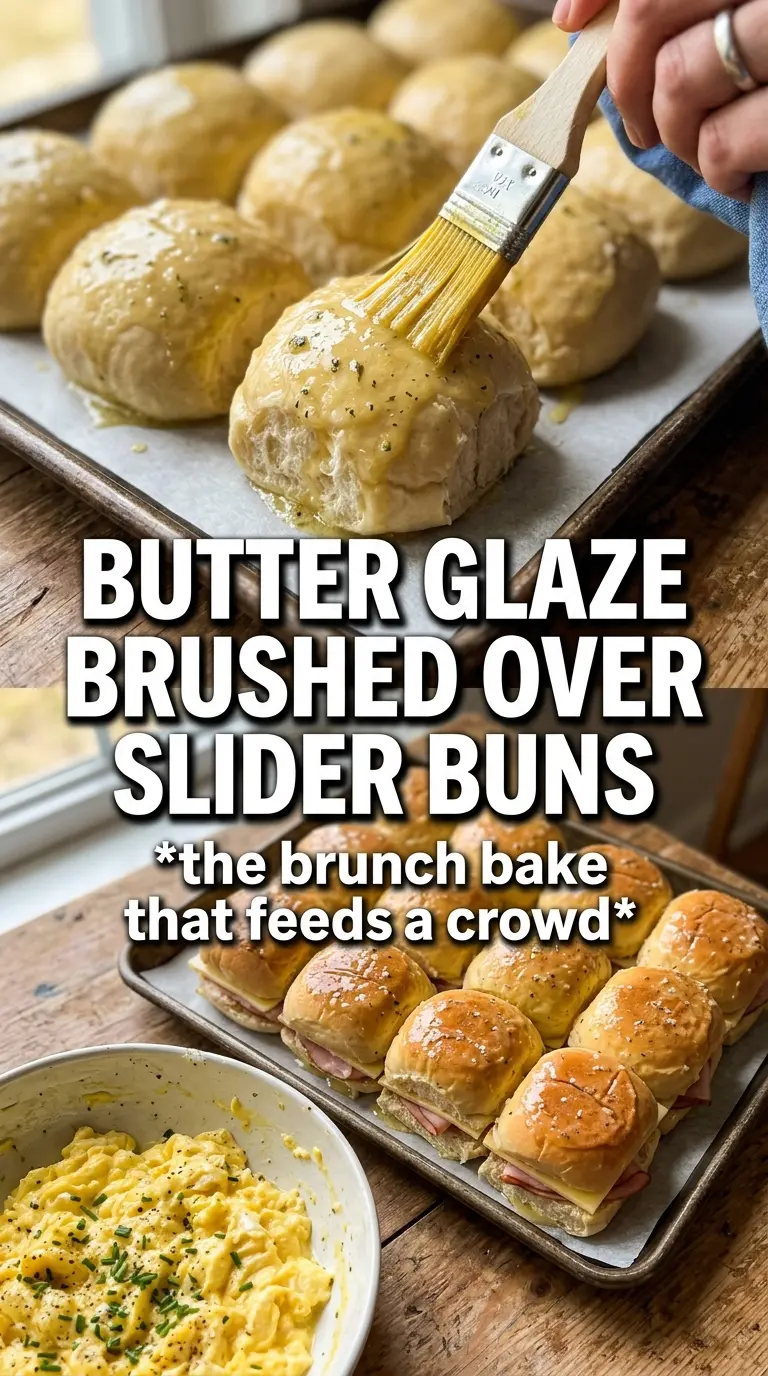
The other detail that matters is the butter glaze on the tops. It does more than add shine. It helps the rolls brown evenly, carries the Dijon and Worcestershire into every bite, and gives the seasoning something to cling to so the top tastes as good as the filling.
- Hawaiian rolls — Their sweetness is part of the appeal here, and their soft crumb bakes into a pull-apart texture that regular sandwich bread can’t match. Slider buns work too, but the result won’t be as rich or plush.
- Breakfast sausage — Cook it fully and crumble it fine so it distributes through the sliders instead of falling out in chunks. Mild or hot both work, depending on how much heat you want.
- Eggs — Scramble them softly and stop while they still look a little glossy. They finish cooking in the oven, and overcooked eggs turn dry fast once the sliders are baked.
- Sharp cheddar — This is the cheese that gives the filling its backbone. A milder cheese melts fine, but it won’t cut through the richness of the sausage and glaze the same way.
- Bacon — Optional, but it adds a smoky crunch that makes the sliders taste more complete. Cook it crisp enough that it won’t go limp under the cheese.
- Dijon, Worcestershire, and everything bagel seasoning — The glaze is what turns the tops from plain to memorable. Dijon brings tang, Worcestershire adds depth, and the seasoning gives the final bite a salty crunch.
What Each Ingredient Is Actually Doing in This Recipe
- Primary ingredient (the star) — Quality matters most. Choose the best you can find.
- Cooking medium (oil, butter, or broth) — This carries flavors and prevents dryness.
- Seasonings (salt, pepper, spices, herbs) — Layer flavors so nothing overpowers. Build depth gradually.
- Aromatics (garlic, onion, herbs) — Cook with fat to bloom flavors. Become the foundation.
- Supporting ingredients — Complement the main ingredient without overpowering it.
- Sauce or liquid (if applicable) — Brings flavors together. Balance richness with acid.
- Acid (lemon, vinegar, wine, or other) — Brightens and prevents flat-tasting results.
- Final finish (garnish, glaze, or sauce) — Prevents one-dimensional taste and adds visual appeal.
Building the Sliders So Every Layer Bakes Right
Set Up the Roll Base
Grease the baking dish well and keep the rolls attached when you slice them in half. That single connected top and bottom makes the whole tray easier to assemble and helps the sliders bake into one cohesive slab. If the rolls separate too much, the filling shifts and the edges dry out faster than the center.
Layer the Filling While It’s Warm
Spread the scrambled eggs across the bottom half first, then add the sausage, bacon, jalapeños if you’re using them, and finally the cheddar. The eggs act like a cushion and help anchor the meat, while the cheese melts down through everything and holds the layers together. If the filling is piping hot and wet, the bread steams instead of baking, so let the sausage drain briefly and keep the eggs soft, not runny.
Glaze, Season, and Bake Until the Tops Turn Gold
Whisk the butter glaze until the Dijon and Worcestershire are fully blended, then brush it generously over the rolls. Don’t rush this part; a thin swipe leaves the tops patchy, while a thorough coat gives you that deep glossy finish. Bake until the cheese is melted and the tops are golden brown, usually 20 to 25 minutes, and pull the pan as soon as the rolls feel set and the edges have taken on color.
How to Change These Sliders Without Losing What Makes Them Good
Make Them Spicier
Use hot breakfast sausage, add extra jalapeños, and finish with hot sauce inside the sliders instead of only at the table. The heat lands better when it’s layered with the cheese and eggs, and the buttery tops keep it from tasting sharp.
Go Bacon-Forward
Cut the sausage back a little and add more bacon for a smokier, saltier result. Just keep the bacon crisp so it doesn’t disappear into the eggs, and expect a slightly less juicy filling.
Make Them Gluten-Free
Swap in sturdy gluten-free slider rolls that are meant to be baked, not soft sandwich bread that falls apart under the glaze. The texture won’t be as pillowy as Hawaiian rolls, but the same layering method still works if the buns can hold their shape.
Storage and Reheating
- Refrigerator: Store leftovers covered for up to 3 days. The rolls soften a bit as they sit, but the flavor stays good.
- Freezer: These freeze well if you wrap individual sliders tightly and place them in a freezer bag. Thaw in the fridge before reheating so the center doesn’t stay cold while the top dries out.
- Reheating: Warm in a 325F oven, covered loosely with foil, until heated through. The biggest mistake is blasting them uncovered in the microwave, which makes the bread tough and the eggs rubbery.
Questions I Get Asked About This Recipe
Cowboy Breakfast Sliders
Ingredients
Equipment
Method
- Preheat the oven to 350°F, then grease a 9x13 baking dish. Keep the dish ready for quick assembly once the rolls are sliced.
- Slice all Hawaiian rolls in half horizontally, keeping the tops and bottoms together. Arrange the halves so the bottom layers can go into the dish first.
- Place the bottom halves in the greased dish and layer with scrambled eggs, cooked and crumbled breakfast sausage, cooked and crumbled bacon, sliced jalapeños and hot sauce (optional), and shredded sharp cheddar. Spread everything evenly to reach the edges.
- Set the top halves over the filling to create slider sandwiches. Press very lightly so the layers stay together during baking.
- Whisk the butter glaze (melted butter, Dijon, garlic powder, and Worcestershire) until smooth. Brush generously over the tops so the rolls brown evenly.
- Sprinkle everything bagel seasoning over the tops. Make sure the seasoning covers the entire surface for a consistent look.
- Bake at 350°F for 20 to 25 minutes, until golden and the cheese is melted. Let cool for a couple minutes before serving so the sliders set.