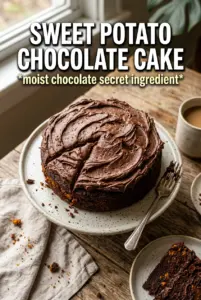
Moist, deeply chocolatey layers and a silky ganache frosting make this sweet potato chocolate cake the kind of dessert people remember after the plates are cleared. The sweet potato doesn’t make the cake taste like pie filling or turn it earthy. It gives the crumb a plush, tender texture and keeps the chocolate flavor full and rich instead of dry or chalky.
This is the kind of cake that bakes up sturdy enough to stack but still stays soft for days, which is exactly why I like it for birthdays and dinner parties. The sweet potato puree blends right into the batter, and the buttermilk keeps the crumb fine and light while the cocoa brings the depth. You get a cake that tastes like a classic chocolate layer cake, just with more moisture and a little extra body.
Below, I’ve included the details that matter most: how to keep the batter from turning heavy, what the ganache needs before you beat it into frosting, and the one texture cue that tells you the cake is done without overbaking it.
The cake layers stayed unbelievably moist for three days, and the ganache frosting whipped up smooth instead of greasy. I used roasted sweet potato puree and the chocolate flavor still came through loud and clear.
Save this sweet potato chocolate cake for a moist layer cake with ganache frosting that stays tender for days.
The Trick to Keeping Sweet Potato Chocolate Cake from Turning Heavy
Sweet potato adds moisture, but it can also weigh a cake down if the puree is too loose or the batter gets overmixed. That’s the part people usually miss. You want a smooth puree that looks thick and spoonable, not watery, because extra liquid changes the structure of the batter and can leave the middle dense even when the edges look done.
The other thing that matters here is how you handle the dry ingredients. Cocoa powder, flour, and baking soda all need to be fully combined before they go into the butter mixture, but once they’re in, stop mixing as soon as the batter comes together. Overworking this batter builds toughness fast, and with a rich cake like this, you want a soft crumb that slices cleanly without falling apart.
What Each Ingredient Is Actually Doing in This Cake
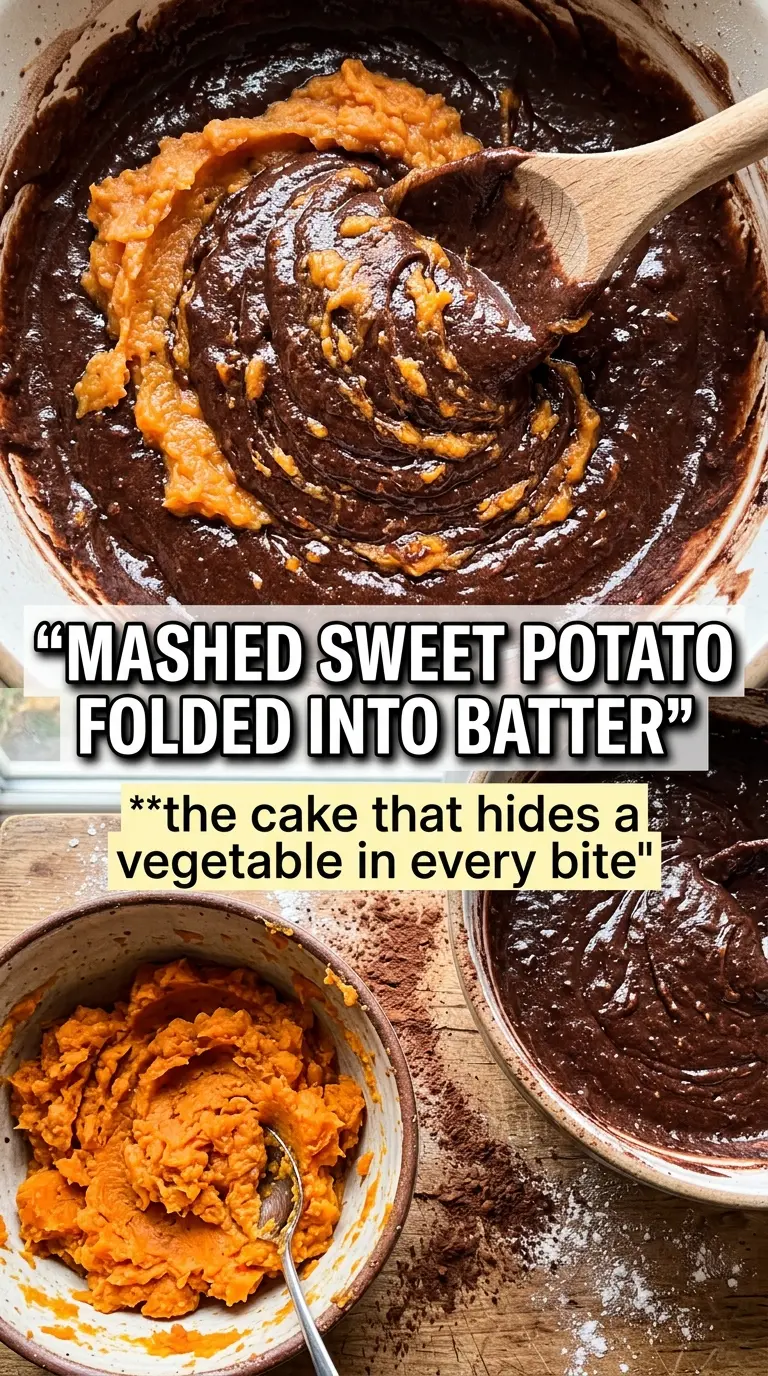
- Sweet potato puree — This is the moisture engine in the cake. It keeps the crumb tender and helps the cake stay soft after chilling, which matters because the frosting is rich. Use a thick puree, not a thin mashed-sweet-potato mixture with extra liquid.
- Buttermilk — It lightens the batter and reacts with the baking soda for lift. If you don’t have it, use whole milk mixed with 1 tablespoon lemon juice or vinegar per cup, then let it sit for 5 minutes. The texture won’t be quite as tangy, but it still works.
- Cocoa powder and dark chocolate chips — The cocoa builds flavor in the cake itself, while the chips create the ganache frosting. Use a good cocoa if you can; the chocolate flavor is only as strong as the cocoa you put in. For the chips, darker is better here because the sweet potato already adds a little sweetness.
- Butter — It gives the cake richness and helps the frosting set with a smoother finish. In the frosting, the butter also keeps the ganache from tasting too sharp once it cools. Don’t swap in oil here unless you’re okay losing some of that classic cake flavor.
Building the Batter and Frosting So They Stay Smooth
Start by Creaming for Air, Not Just Color
Beat the butter and sugar until the mixture looks pale and a little fluffy. That step creates the tiny pockets of air that help the cake rise instead of baking up tight. Add the eggs one at a time so the batter stays smooth, then mix in the sweet potato puree, buttermilk, and vanilla until everything looks combined. If the batter looks slightly curdled after the liquids go in, that’s fine; it comes back together once the dry ingredients are added.
Fold in the Dry Ingredients Without Beating the Batter
Add the flour, cocoa, baking powder, baking soda, cinnamon, and salt, then mix just until the last streaks disappear. The batter should look thick and glossy, not whipped and airy. Overmixing at this stage is what turns a tender layer cake into something bready. Divide the batter evenly between the pans so the layers bake at the same rate and you don’t end up trimming one to match the other.
Watch the Cake, Not the Timer
Bake until the tops spring back lightly when touched and a tester comes out with a few moist crumbs, not wet batter. The center should be set, but you don’t want to wait for the cake to pull hard from the sides or it will bake too far and lose that plush texture. Let the layers cool completely before frosting them. If they’re even a little warm, the ganache softens and slides.
Turn the Ganache Into a Spreadable Frosting
Heat the cream just until it’s steaming and pour it over the chocolate chips and butter. Let it sit for two minutes before stirring, because that pause gives the chocolate time to melt evenly. Once smooth, cool the ganache until it thickens to a spreadable consistency, then beat in the powdered sugar and vanilla. If it’s too warm, it will be loose and shiny; if it’s too cold, it turns stiff and grainy.
Ways to Adjust It for Different Kitchens and Different Eaters
Dairy-Free Version
Use a plant-based butter and full-fat coconut milk in place of the cream for the ganache. The cake itself still needs the right fat and liquid balance, so keep the texture of the sweet potato puree thick. The frosting will taste a little different, but it still spreads well and sets nicely once chilled.
Gluten-Free Swap
A 1:1 gluten-free baking blend can work here, but use one with xanthan gum already included. That keeps the layers from crumbling when you slice them. Let the batter rest for 10 minutes before baking so the flour blend can hydrate, which helps the crumb hold together better.
Cupcakes Instead of Layers
This batter bakes well as cupcakes if you want an easier serve. Fill the liners about two-thirds full and start checking a few minutes early. You lose the tall layer cake look, but you gain faster bake time and cleaner portions.
Storage and Reheating
- Refrigerator: Store covered for up to 5 days. The crumb actually stays moist, but the frosting firms up in the fridge.
- Freezer: Freeze unfrosted layers tightly wrapped for up to 2 months. Frosted slices can freeze too, but the ganache may lose a little of its smooth finish after thawing.
- Reheating: Let chilled slices sit at room temperature for 20 to 30 minutes before serving. If you want the frosting softer, a short rest matters more than heat; the microwave can make the ganache greasy.
Questions I Get Asked About This Recipe
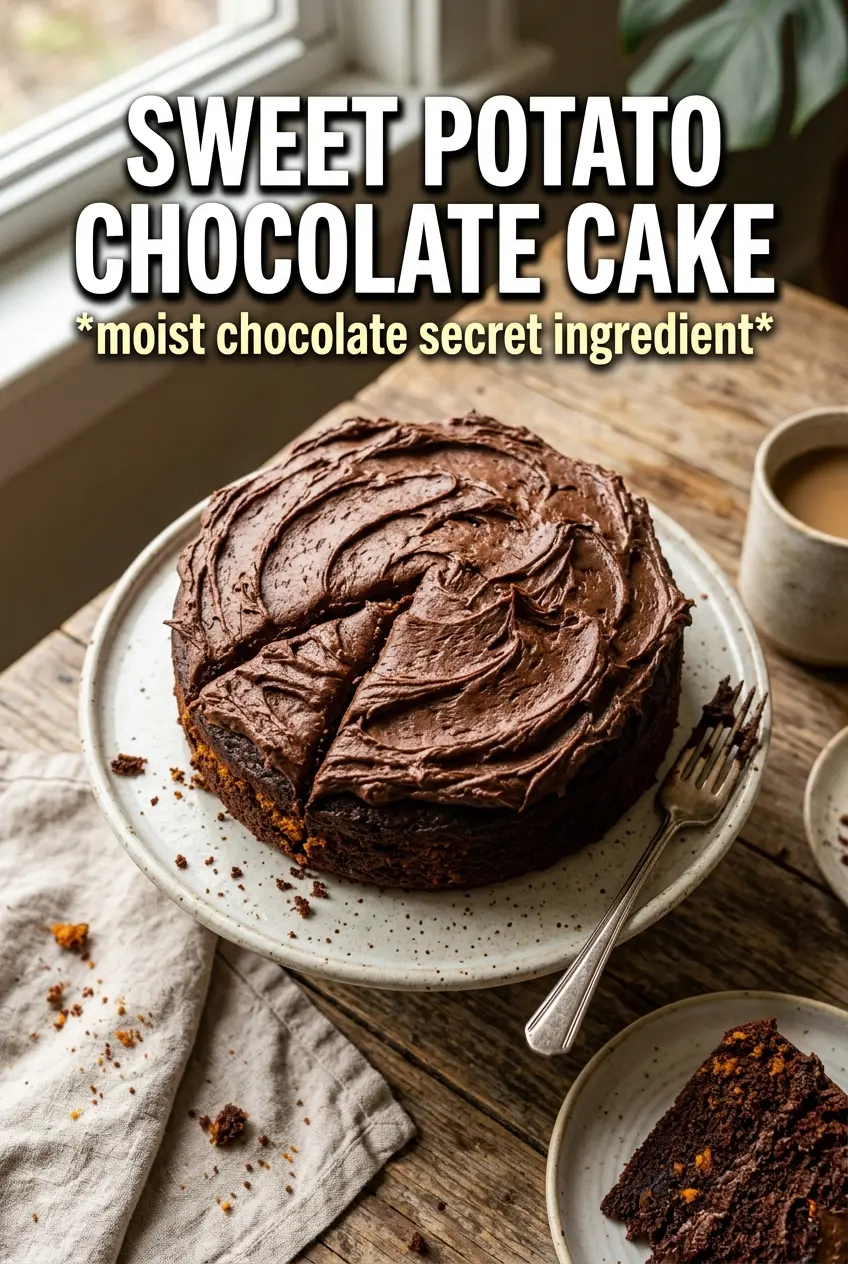
Sweet Potato Chocolate Cake
Ingredients
Equipment
Method
- Preheat oven to 350F and grease two 9-inch round pans. Set them aside so the batter can go in immediately.
- Beat butter and sugar until light and creamy. Keep beating to fully dissolve the sugar for a smooth crumb.
- Add eggs one at a time, then beat in sweet potato puree, buttermilk, and vanilla. Mix just until the batter looks uniform.
- Fold in flour, cocoa powder, baking powder, baking soda, cinnamon, and salt until no dry streaks remain. The batter should be thick and glossy with a dark color.
- Divide the batter between the two pans and smooth the tops. Aim for even layers so the cake bakes flat.
- Bake for 35-40 minutes at 350F until a toothpick in the center comes out clean or with a few moist crumbs. Remove and cool completely before frosting.
- Heat heavy cream until steaming, then pour over dark chocolate chips and unsalted butter. Make sure all chocolate is submerged for an even melt.
- Rest the mixture for 2 minutes, then stir until smooth. The ganache should look shiny and dark with no lumps.
- Cool the ganache until spreadable, about room temperature, then beat with powdered sugar and vanilla until fluffy. Stop when it holds soft peaks and is thick enough to frost.
- Frost between layers and then all over the cake. Use a spatula to drag frosting down the sides for a clean, even finish.