Pumpkin cream cheese bread bakes up with a soft, spiced crumb, a tangy ribbon of cream cheese through the middle, and a cinnamon sugar top that cracks a little when you slice into it. The contrast is what keeps this loaf interesting from the first bite to the last: sweet pumpkin bread around the edges, cool cream cheese in the center, and enough spice to make the whole thing taste like it came from a bakery case.
The trick is keeping the batter and filling separate enough that the swirl stays distinct but not so fussy that the loaf becomes complicated. Pumpkin puree brings moisture, brown sugar deepens the flavor, and the oil keeps the crumb tender even after a day on the counter. The cream cheese layer needs to be smooth and cold before it goes in, so it bakes into a clean stripe instead of melting away into the loaf.
Below, I’ve included the timing detail that keeps the center from collapsing, plus a few smart swaps if you need to work around what’s in the pantry. The loaf is straightforward, but a couple of small choices make the difference between an okay pumpkin bread and one you’ll want to slice thick.
The cream cheese layer stayed right in the middle and didn’t sink, and the loaf was still moist the next day. I baked it for 62 minutes and the toothpick at the edge came out clean just like you said.
Save this pumpkin cream cheese bread for a tender loaf with a tangy swirl and cinnamon sugar top.
The Part That Keeps the Cream Cheese Swirl from Disappearing
Pumpkin bread batters are naturally heavy and wet, and that’s exactly why the cream cheese layer can turn messy if you pour everything in at once. The filling needs to be thick enough to sit in the middle, and the batter underneath has to be spread in an even layer so the loaf rises around it instead of swallowing it whole. If the filling is loose, it will sink. If the batter is overmixed, the loaf turns dense and the swirl looks muddy instead of defined.
The other thing that matters here is where you test for doneness. The cream cheese center stays soft long after the bread around it sets, so a toothpick stabbed through the middle will lie to you. Test at the edge, then look for a loaf that springs back lightly in the center and pulls just a touch from the sides of the pan.
What Each Ingredient Is Actually Doing in This Loaf
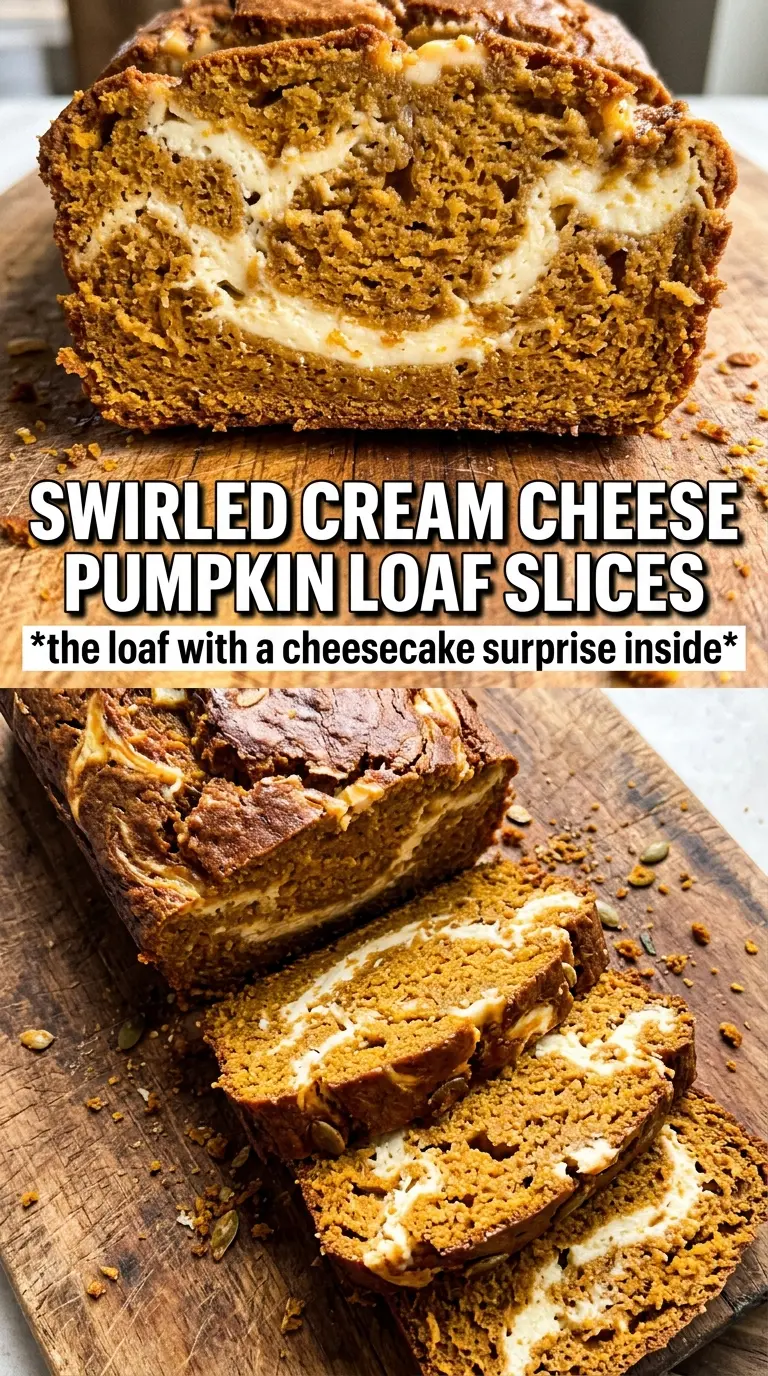
- Pumpkin puree — This brings moisture, color, and that deep pumpkin flavor without thinning the batter. Use canned puree, not pumpkin pie filling, or the loaf will be oversweetened and spiced in a way you can’t control.
- Brown sugar + granulated sugar — The mix gives you both warmth and structure. Brown sugar adds a little molasses note that works beautifully with the spices, while granulated sugar helps keep the crumb lighter.
- Vegetable oil — Oil is what keeps this bread soft for days. Melted butter can work in a pinch, but the texture will be a little firmer once cooled.
- Cream cheese — Full-fat cream cheese is worth using here. Low-fat versions can turn watery and don’t bake into the same smooth, tangy layer.
- Eggs — The eggs hold both the batter and the filling together. If you need to swap in an egg substitute, the bread will still bake, but the cream cheese layer won’t set as cleanly.
Building the Loaf So the Center Bakes Cleanly
Mix the Filling First
Beat the cream cheese, sugar, egg, vanilla, and cinnamon until the mixture is completely smooth with no lumps at all. It should look glossy and thick, almost like a soft cheesecake batter. Chill it while you finish the bread batter so it stays a little firm when you spoon it into the pan. If the filling is room temperature and loose, it spreads too fast and disappears into the pumpkin layer.
Keep the Pumpkin Batter Just Barely Mixed
Whisk the dry ingredients in one bowl and the wet ingredients in another, then fold them together only until no dry streaks remain. A few lumps are fine. Overmixing builds too much gluten and gives you a tight, rubbery loaf instead of a tender one. The batter should be thick but spreadable, not pourable like cake batter.
Layer, Swirl, and Leave It Alone
Spoon half the batter into the pan and spread it to the corners, then add the cream cheese filling down the center. Top with the rest of the batter and use a knife for just one or two gentle swirls. Don’t chase a perfect pattern; too much swirling blurs the layers and pushes the filling too close to the edges. Finish with the cinnamon sugar so the top bakes into a crisp, crackly crust.
Bake Until the Edges Set
The loaf needs about 60 to 65 minutes at 350°F, but ovens vary, so watch for visual cues. The top should be domed and golden, the edges should pull slightly from the pan, and a toothpick inserted at the edge should come out clean or with a few moist crumbs. If the center still looks wet, give it more time in five-minute bursts. Cover loosely with foil if the top starts to darken before the middle is done.
Three Ways to Tweak This Bread Without Losing the Swirl
Gluten-Free Version
Use a 1:1 gluten-free flour blend that includes xanthan gum. The loaf will still be moist, but it may rise a little less and need the full bake time, so trust the edge test instead of the center. Don’t use almond flour here; the batter is too wet for it to hold the cream cheese layer properly.
Dairy-Free Adaptation
Swap in a plant-based cream cheese that firms up well when baked. The filling won’t taste exactly the same, but it still gives you that tangy center and creamy contrast. Choose one with a thick texture out of the tub, not a spread that turns loose as it warms.
Less Sweet, More Spiced
Cut the granulated sugar in the bread by 2 tablespoons if you want a loaf that leans more pumpkin-forward. Keep the cinnamon sugar topping as written so the crust still has contrast. The texture stays good, but the loaf tastes a little less like dessert and a little more like breakfast bread.
Storage and Reheating
- Refrigerator: Store covered for up to 5 days. The cream cheese filling means this loaf keeps best chilled after the first day.
- Freezer: Freeze slices wrapped tightly and placed in a freezer bag for up to 2 months. Thaw in the fridge so the center doesn’t get soggy.
- Reheating: Warm slices in the microwave for 10 to 15 seconds or in a low oven. Heat just until the bread takes the chill off; too much heat softens the filling and makes the crumb gummy.
Answers to the Questions Worth Asking
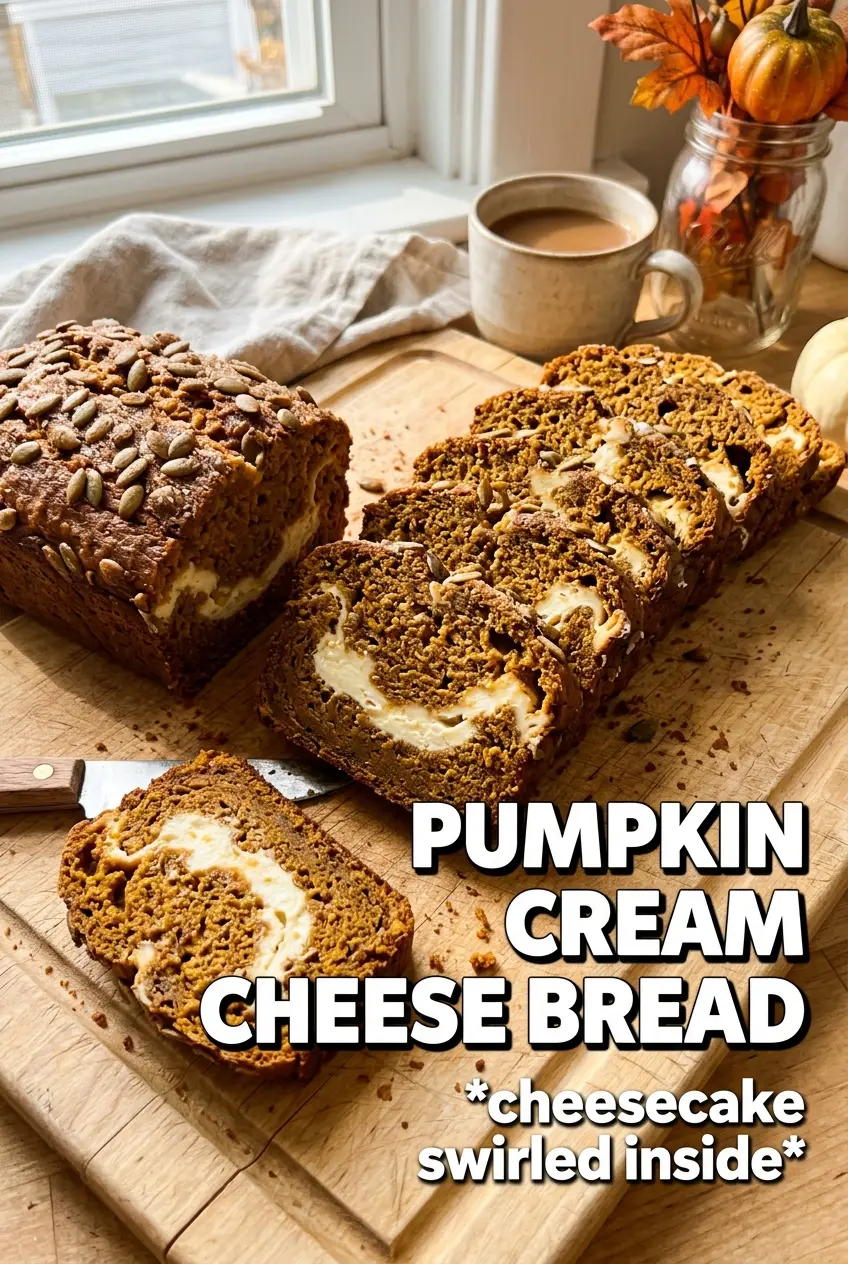
Pumpkin Cream Cheese Bread
Ingredients
Equipment
Method
- Preheat the oven to 350°F and grease a 9x5 loaf pan.
- Beat the cream cheese filling until smooth, then refrigerate while you mix the batter.
- Whisk together the pumpkin bread dry ingredients until evenly combined.
- Whisk the pumpkin bread wet ingredients in a separate bowl until smooth and glossy.
- Fold the wet mixture into the dry mixture until just combined, avoiding overmixing.
- Pour half the batter into the prepared pan.
- Spoon the cream cheese filling down the center, keeping it as a single stripe.
- Top with the remaining batter, then swirl gently with a knife for marbled streaks.
- Sprinkle the cinnamon sugar topping evenly over the surface.
- Bake for 60–65 minutes, until a toothpick inserted at the edge (not through the cream cheese center) comes out clean.