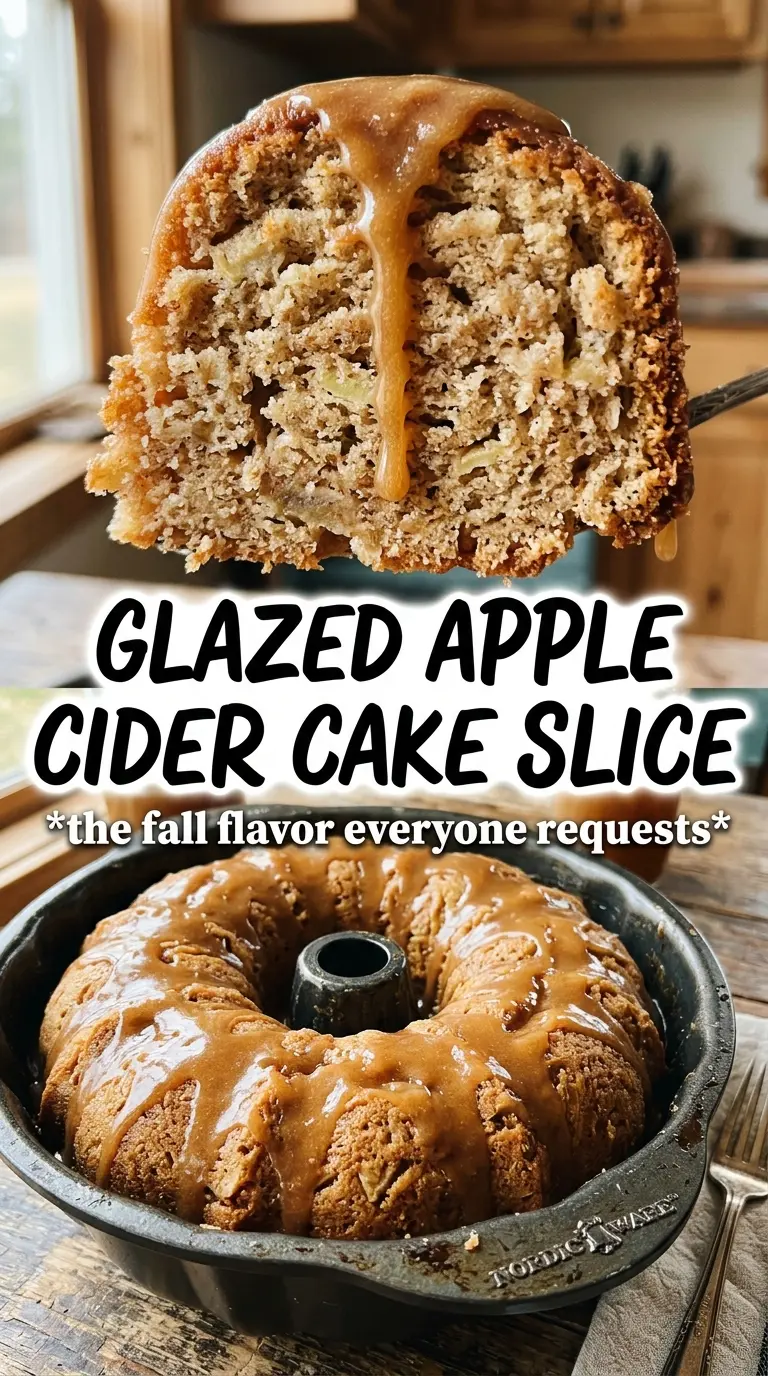
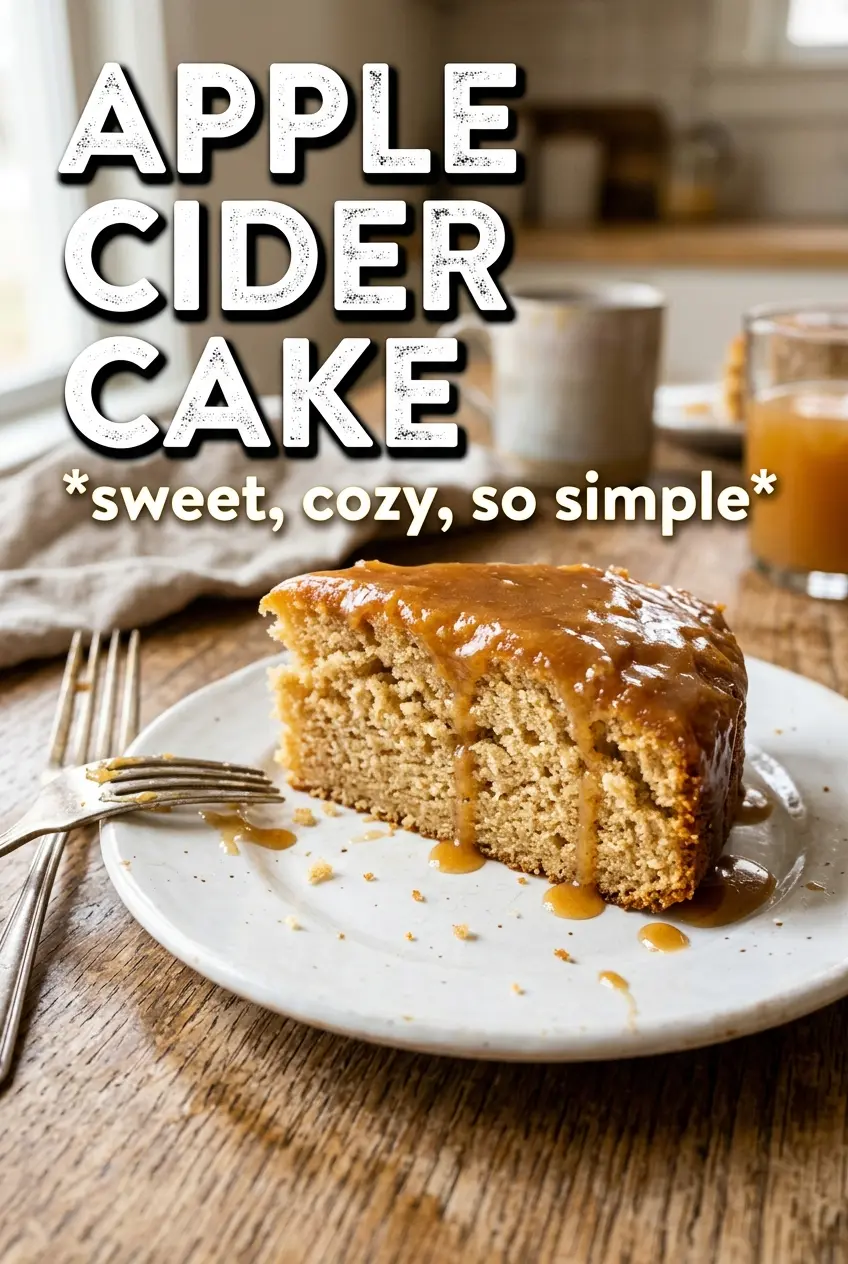
Apple cider cake has the kind of soft, plush crumb that makes people linger over a second slice. The cider gives the cake a gentle apple note without tasting like pie filling, and the warm spices keep it grounded instead of sweet and one-note. With cream cheese frosting and a caramel drizzle, it lands right in that sweet spot where the layers taste cozy, rich, and balanced.
What makes this version work is the reduced cider. Cooking it down concentrates the flavor before it ever hits the batter, which keeps the cake from tasting thin. The other trick is using sour cream for moisture and tang; it gives the crumb enough body to hold up to stacking without turning dense. I also like to beat the butter and brown sugar until the mixture is genuinely fluffy, because that adds air the cake needs for a light, even rise.
Below, I’ve included the small details that matter most: how to avoid a gummy center, why the frosting needs to be cool enough to hold its shape, and how to finish the cake so the caramel drizzle actually stays where you want it.
The reduced cider gave the cake a real apple flavor, not just spice, and the crumb stayed tender even after I frosted it the night before. My guests kept asking what made it taste so different.
Save this apple cider cake for a spiced layer cake with reduced cider, cream cheese frosting, and a caramel finish.
The Trick to Keeping Apple Flavor from Getting Lost in the Crumb
Most apple cakes lean on fresh fruit alone, and that can leave you with good spice but faint apple flavor. Reducing the cider first changes that. It concentrates the sugars and the fruit note, so the cake tastes like cider even after it’s baked into a rich butter batter.
The other place people lose flavor is in the frosting. A cream cheese frosting that’s too sweet or too loose can bury the cake instead of finishing it. This one stays thick enough to stack because the cream cheese and butter are beaten until smooth before the powdered sugar goes in, which keeps the texture light instead of heavy.
- Reduced apple cider — This is the backbone of the cake’s flavor. Unreduced cider tastes diluted once it’s baked; reducing it to half gives you a stronger, cleaner apple note.
- Sour cream — It keeps the crumb tender and adds enough acidity to support the baking soda. Plain Greek yogurt works in a pinch, but the cake will be a little tangier and slightly less rich.
- Brown sugar — It brings moisture and a deeper molasses note that plays well with the spices. Light brown sugar is fine here; dark brown sugar will push the cake more toward caramel.
- Cream cheese frosting — Full-fat cream cheese matters. Low-fat versions can go slack and grainy, especially once the caramel drizzle hits the top.
What Each Ingredient Is Actually Doing in This Recipe
- Primary ingredient (the star) — Quality matters most. Choose the best you can find.
- Cooking medium (oil, butter, or broth) — This carries flavors and prevents dryness.
- Seasonings (salt, pepper, spices, herbs) — Layer flavors so nothing overpowers. Build depth gradually.
- Aromatics (garlic, onion, herbs) — Cook with fat to bloom flavors. Become the foundation.
- Supporting ingredients — Complement the main ingredient without overpowering it.
- Sauce or liquid (if applicable) — Brings flavors together. Balance richness with acid.
- Acid (lemon, vinegar, wine, or other) — Brightens and prevents flat-tasting results.
- Final finish (garnish, glaze, or sauce) — Prevents one-dimensional taste and adds visual appeal.
Building the Batter So the Cake Rises Evenly
Reducing the Cider First
Pour the cider into a small saucepan and simmer it until it measures 1/2 cup. It should smell stronger and look a little deeper in color, not just warm. Cool it before adding it to the batter, because hot cider can melt the butter and flatten the texture before the cake even goes into the oven.
Whipping the Butter and Sugar
Beat the butter and brown sugar until the mixture looks pale and fluffy. This step traps air, which is what gives the cake lift before the baking powder takes over. If you rush it and the mixture still looks gritty and dense, the cake will bake up heavier and tighter.
Adding the Dry and Wet Ingredients in Alternating Turns
Add the flour mixture and sour cream in batches, starting and ending with flour. That order helps the batter stay smooth and keeps the emulsion stable. Once the flour disappears, stop mixing; overbeating at this point can make the crumb tough and slightly rubbery.
Baking Until the Center Springs Back
Divide the batter evenly between the pans and bake until the tops are set and a toothpick comes out with a few moist crumbs. The cake should spring back lightly when touched in the center. If the middle still looks shiny, give it more time; pulling it too soon is the fastest way to end up with layers that sink after cooling.
Make It Without Dairy
Use plant-based butter, dairy-free cream cheese, and an unsweetened dairy-free yogurt in place of the sour cream. The cake will still be moist, but the frosting may be a little softer, so chill it before stacking if your kitchen is warm.
Turn It into a One-Layer Snack Cake
Bake the batter in a 9×13-inch pan and reduce the baking time a bit. You lose the stacked-cake look, but you gain a cake that’s easier to serve for a crowd and still holds the cider-spice balance beautifully.
Gluten-Free Version
Swap in a 1:1 gluten-free baking flour that contains xanthan gum. The batter should look the same, but let the cakes cool completely before moving them, because gluten-free layers are more delicate when warm.
Storage and Reheating
- Refrigerator: Store covered for up to 4 days. The frosting firms up in the fridge, but the cake stays tender.
- Freezer: Freeze the unfrosted cake layers wrapped tightly for up to 2 months. Frosting and caramel are better added after thawing so the finish stays clean.
- Reheating: Bring slices to room temperature before serving. If you want a slightly softer crumb, microwave a slice for 10 to 15 seconds, but don’t heat it long enough to melt the frosting.
Questions I Get Asked About This Cake
Apple Cider Cake
Ingredients
Equipment
Method
- Reduce the apple cider to 1/2 cup and cool completely before using.
- Preheat the oven to 350F and grease two 9-inch pans.
- Whisk together the all-purpose flour, baking powder, baking soda, cinnamon, nutmeg, allspice, and salt.
- Beat the unsalted butter and brown sugar until very fluffy.
- Add the eggs and vanilla and mix until smooth, then beat in the reduced apple cider.
- Alternate adding the flour mixture and the sour cream, mixing just until combined, then divide the batter between the two pans.
- Bake at 350F for 35-40 minutes, until the centers spring back when lightly touched.
- Cool the cakes completely before frosting.
- Beat the cream cheese frosting ingredients until fluffy.
- Frost and stack the cooled layers, spreading frosting between them and over the outside.
- Drizzle caramel over the top and down the sides for a flowing finish.