Caramel apple cake has a way of tasting like a bakery special without asking for anything fussy from the cook. The crumb stays tender and moist, the apples bake down just enough to turn soft and juicy, and the caramel cream cheese frosting brings that tangy-sweet finish that keeps each slice from feeling heavy. It’s the kind of layer cake that gets passed around the table in silence because everyone is too busy going back for another bite.
What makes this version work is the balance. Brown sugar and sour cream keep the cake plush, while the diced apples are folded in at the end so they stay evenly scattered instead of sinking into the bottom. The frosting leans on cream cheese for structure and a little sharpness, which matters when you’re drizzling caramel over the top. Without that tang, the whole cake can slide into one-note sweetness. Here, every layer has a job.
Below you’ll find the small details that matter most: how to keep the cake from turning dense, why the apples should be diced fine, and how to frost it cleanly so the caramel stays where it belongs.
The cake layers baked up so soft and the diced apples stayed evenly suspended instead of sinking. The caramel frosting was thick enough to stack cleanly, and the whole cake tasted even better the next day.
Save this caramel apple cake for the days when you want soft cinnamon-apple layers and a thick caramel cream cheese frosting.
The Trick to Keeping the Apples From Dropping to the Bottom
The biggest problem with apple layer cakes is separation. If the batter is too thin or the apple pieces are too large, they slide down as the cake bakes and leave you with a dense layer at the bottom and bare cake on top. Here, the sour cream gives the batter enough body to hold the fruit, and the apples are diced small enough to stay suspended without turning mushy.
The other thing that matters is how you mix. Once the flour goes in, stop as soon as the batter comes together. Overmixing develops the gluten in the flour and makes a cake like this tight instead of tender. You want a thick, spoonable batter that looks studded with apples, not a loose batter that pours like pancake mix.
What the Brown Sugar, Sour Cream, and Apples Are Each Doing
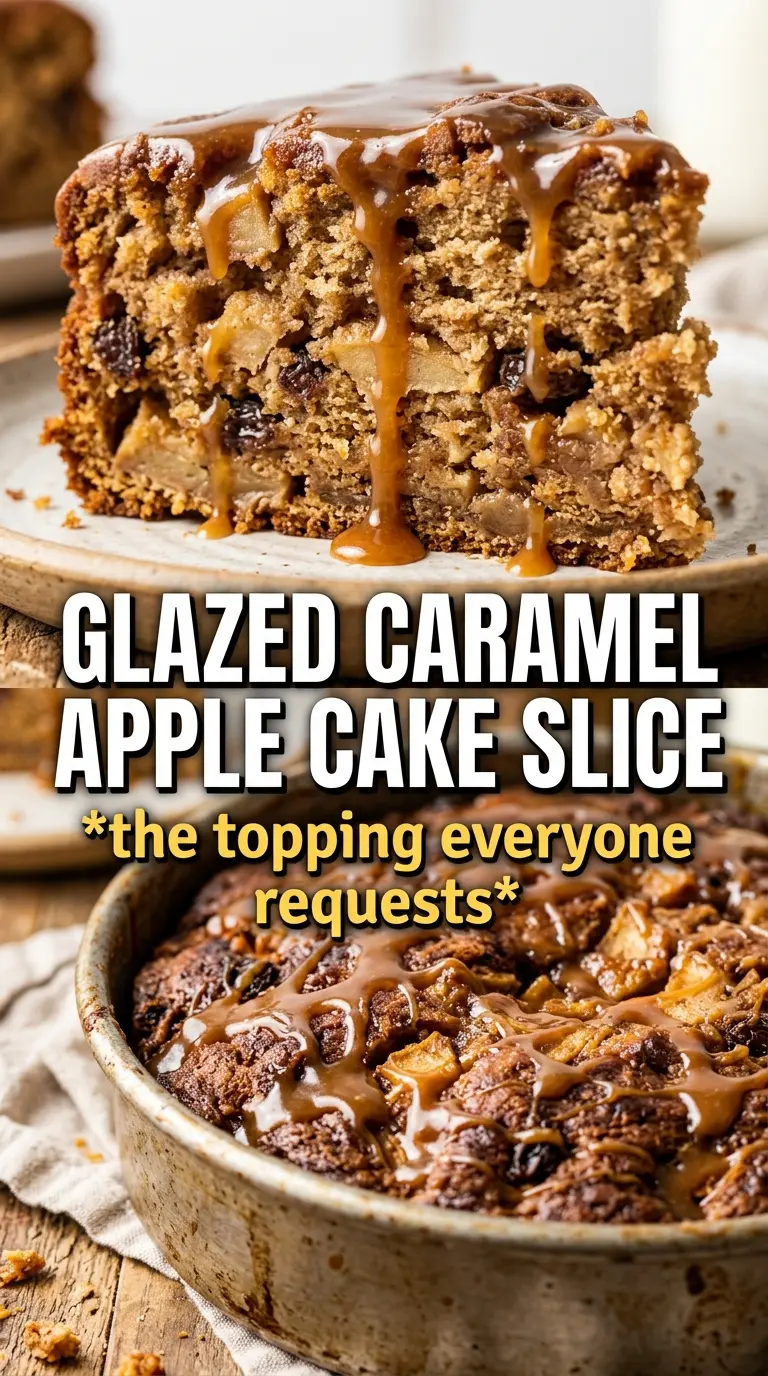
- Brown sugar — This brings deeper flavor than white sugar and helps the cake stay soft. Light or dark brown sugar both work, but dark brown gives a little more molasses character.
- Sour cream — This is what keeps the crumb rich and tender. Plain Greek yogurt can stand in, but the texture comes out a touch less lush.
- Apples — Dice them finely so they bake into the cake instead of sinking or leaving wet pockets. A firm baking apple holds its shape better than a mealy one.
- Cream cheese — The frosting needs it for tang and structure. If you swap in all butter, the frosting gets sweeter and softer, which makes the caramel drape instead of spread.
- Caramel sauce — Use a thick sauce, not a thin ice cream topping. A runny caramel will loosen the frosting and make it harder to stack and drizzle.
Building the Batter and Frosting Without Losing the Texture
Whipping the Base Until It’s Pale and Fluffy
Beat the butter and brown sugar long enough for the mixture to turn noticeably lighter in color and fluffy around the edges of the bowl. That step is what gives the cake lift before any flour goes in. If the butter is only softened on the outside but cold in the center, the mixture stays grainy and never traps enough air, so let it sit out until it presses cleanly under your finger.
Alternating the Dry Ingredients and Sour Cream
Add the flour mixture in batches, alternating with the sour cream, and stop mixing as soon as the last streaks disappear. This keeps the batter emulsified without beating too much air out of it. The batter should look thick and smooth, and it will be heavier than a standard cake batter. That’s exactly what you want when apples are going in next.
Folding in the Apples and Baking to the Right Point
Fold the diced apples in by hand so they stay evenly distributed. Scrape the batter into the pans and smooth the tops just enough to level them. Bake until a toothpick comes out with a few moist crumbs, not wet batter, and the centers spring back lightly when touched. If the top browns before the middle is done, tent the pans loosely with foil for the last part of baking.
Cooling and Frosting for Clean Layers
Let the cakes cool completely before you even think about frosting them. Warm cake will melt the cream cheese frosting and send the caramel sliding off the sides. Beat the frosting until smooth, spread it between the layers, then work quickly on the outside so you get a clean finish before the cake softens the frosting.
How to Adapt This Cake for Different Kitchens and Different Schedules
Make it dairy-free
Use a plant-based butter, dairy-free sour cream, and a dairy-free cream cheese that firms up well when beaten. The texture stays close, but the frosting may be a little softer, so chill the cake before slicing if the room is warm.
Swap the apples based on what’s on hand
Firm apples like Granny Smith or Honeycrisp hold their shape best. If you use a softer apple, the cake will still work, but the fruit will melt more into the crumb and give you less defined pieces in each slice.
Turn it into cupcakes
This batter bakes well as cupcakes, though the apple pieces should be diced a touch smaller so they don’t weigh down the centers. Start checking them early, since cupcakes bake faster and can dry out if you wait for a deep golden top.
Storage and Reheating
- Refrigerator: Store covered for up to 4 days. The frosting firms up in the fridge, but the cake stays moist.
- Freezer: Freeze unfrosted layers tightly wrapped for up to 2 months, or freeze frosted slices on a tray first, then wrap. The caramel drizzle is best added after thawing.
- Reheating: Let refrigerated slices sit at room temperature for 20 to 30 minutes. If you want the cake slightly warm, microwave a slice for 10 to 15 seconds. Too much heat melts the frosting and makes the layers slide.
Questions I Get Asked About This Recipe
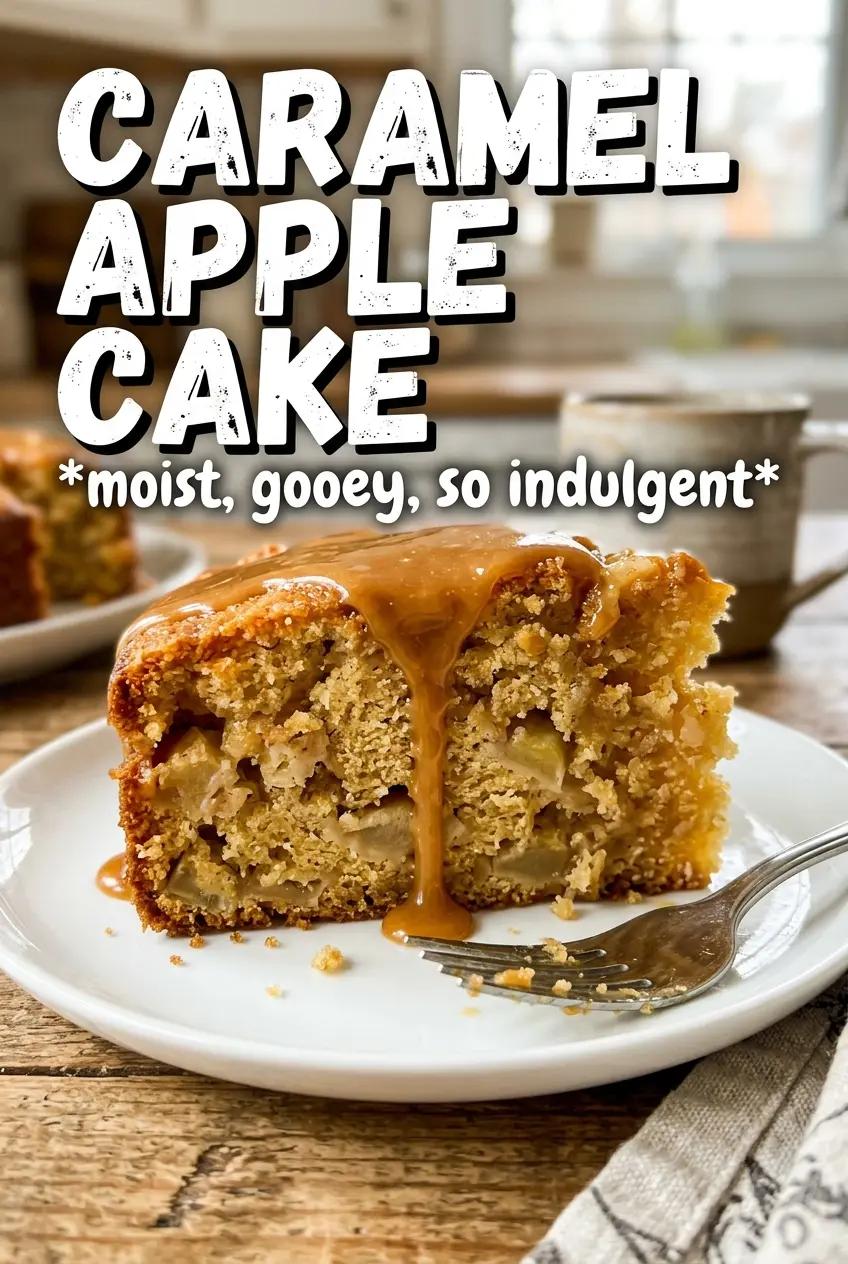
Caramel Apple Cake
Ingredients
Equipment
Method
- Preheat the oven to 350F and grease two 9-inch round pans.
- Whisk together flour, baking powder, baking soda, cinnamon, nutmeg, and salt.
- Beat butter and brown sugar until very fluffy, then beat in the eggs and vanilla.
- Alternate adding the flour mixture and sour cream, then fold in the diced apples.
- Divide the batter between the pans and bake 50-55 minutes, until a toothpick comes out clean.
- Cool the cakes completely, then beat frosting ingredients until smooth.
- Frost between the layers and over the top, then drizzle with extra caramel for finishing.