Roasted tomato basil soup has the kind of deep, slow-cooked flavor that tastes like it took all day, even though the work is mostly done by a hot oven. Roasting the tomatoes, onion, and garlic first gives the soup a richer, sweeter base than simmering raw vegetables ever can, and that little bit of char around the edges brings out a savory note that keeps the soup from tasting flat.
The balsamic vinegar sharpens the tomatoes, the cream softens the acidity, and the basil goes in at the end so it stays bright instead of muddy. That balance is what makes this version worth keeping on repeat. It’s smooth, bold, and finished in a way that feels deliberate, not heavy.
Below, I’ve included the small details that make the biggest difference: how dark the vegetables should get in the oven, when to blend for the silkiest texture, and a few ways to make it work with what you already have on hand.
The roasted garlic made this taste like it came from a restaurant, and the soup blended up silky without needing any flour or thickeners. I served it with grilled cheese croutons and my kids asked for seconds right away.
Save this roasted tomato basil soup for the nights when you want a silky blended soup with deep caramelized flavor and grilled cheese croutons on the side.
The Reason Roasting Tomatoes Before Blending Changes Everything
Tomatoes that go straight into a pot can make soup taste bright, but often a little thin and one-note. Roasting them first concentrates the juices, dries off some excess water, and coaxes out sweetness from the onions and garlic, which gives the finished soup a deeper body without needing extra starch or simmer time.
The other thing roasting does is build color. You want browned edges and a few charred spots, not pale, soft vegetables. That slight bitterness balances the cream later and keeps the soup from tasting like tomato puree with dairy stirred in.
If your vegetables are steaming instead of caramelizing, the pan is crowded or the oven isn’t hot enough. Give them space and let the heat do the work.
What Each Ingredient Is Actually Doing In This Soup
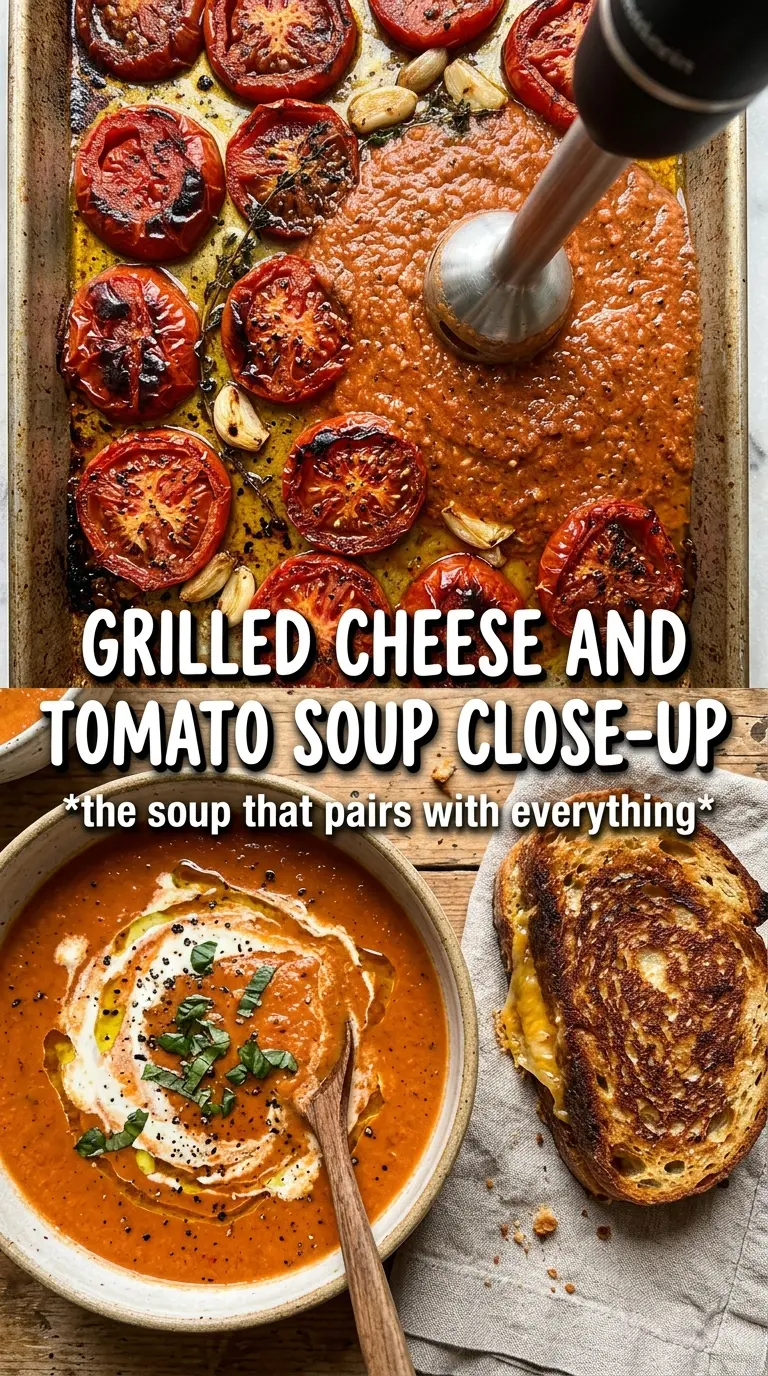
- Roma or vine tomatoes — Roma tomatoes are a little meatier and usually give you a thicker soup, but vine tomatoes work well if they’re ripe and fragrant. If your tomatoes are bland to begin with, no amount of roasting will fully fix that, so start with the best tomatoes you can find.
- Garlic and onion — These turn sweet and mellow in the oven, which is what gives the soup its round, savory base. Don’t skip the halved garlic head; squeezing the roasted cloves straight into the pot adds a soft, almost buttery garlic flavor you can’t get from raw minced garlic.
- Olive oil — This helps the vegetables brown instead of drying out. A good olive oil gives the soup a smoother finish, but it doesn’t need to be the expensive bottle reserved for dipping bread.
- Balsamic vinegar — This is the small ingredient that wakes everything up. It adds a dark, tangy edge that makes the tomatoes taste more like themselves.
- Heavy cream — Cream rounds out the acidity and gives the soup that silky, spoon-coating finish. Half-and-half works in a pinch, but the soup will be a little lighter and less lush.
- Fresh basil — Add it at the end so it stays green and fragrant. Dried basil won’t give you the same fresh finish here.
Getting the Roast, Blend, and Finish in the Right Order
Building color on the baking sheet
Arrange the tomatoes, onion, and garlic cut-side up on a rimmed baking sheet so the juices stay with the vegetables as they roast. Drizzle with olive oil, season well, and let them cook until the tomatoes collapse and the edges pick up color. If the pan looks wet and pale after 35 minutes, keep roasting; the soup needs that concentrated sweetness.
Pulling every bit of flavor into the pot
Squeeze the roasted garlic out of its skins and scrape every bit of the tomatoes and onions into a large pot, including the browned bits on the pan. Those sticky caramelized spots dissolve into the broth and carry a lot of the roasted flavor. Add the broth and balsamic vinegar now so the vegetables have enough liquid to blend smoothly.
Blending until the texture turns velvety
Use an immersion blender and keep it submerged so the soup doesn’t splatter. Blend until the mixture looks completely smooth, with no visible tomato skins or onion pieces. If you’re using a countertop blender, work in batches and leave the lid vented slightly so steam can escape; hot soup can force the lid off if you overfill it.
Finishing with cream and basil
Stir in the cream and basil over low heat, then let the soup simmer gently for about 10 minutes. Don’t boil it hard once the cream is in, or the texture can turn grainy and lose that glossy finish. Taste at the end, then add the sugar only if the tomatoes still need a little roundness.
How to Adapt This Soup Without Losing the Good Part
Make It Dairy-Free
Swap the heavy cream for full-fat coconut milk or an unsweetened plain oat cream. Coconut milk gives the soup a softer, slightly sweeter finish, while oat cream keeps the tomato flavor more neutral. Use the full can only if you don’t mind a faint coconut note.
Make It Vegetarian
Use vegetable broth instead of chicken broth and the soup stays fully vegetarian without losing body. Choose a broth with real depth, because a thin vegetable broth can make the whole pot taste flat after the cream goes in.
Turn Up the Smoky Side
Roast the tomatoes a few minutes longer until the edges are deeply browned, then finish each bowl with a little smoked olive oil or a pinch of smoked paprika. This pushes the soup toward a more robust, almost fire-roasted flavor without changing the basic method.
Storage and Reheating
- Refrigerator: Store for up to 4 days. The flavor gets even deeper overnight, though the soup may thicken a bit as it chills.
- Freezer: Freeze without the cream for the best texture, then stir in the cream after thawing and reheating. Cream-based soups can separate a little if frozen finished.
- Reheating: Warm gently over low heat, stirring often. A hard boil can break the cream and dull the basil, so keep it at a bare simmer.
Questions I Get Asked About This Soup
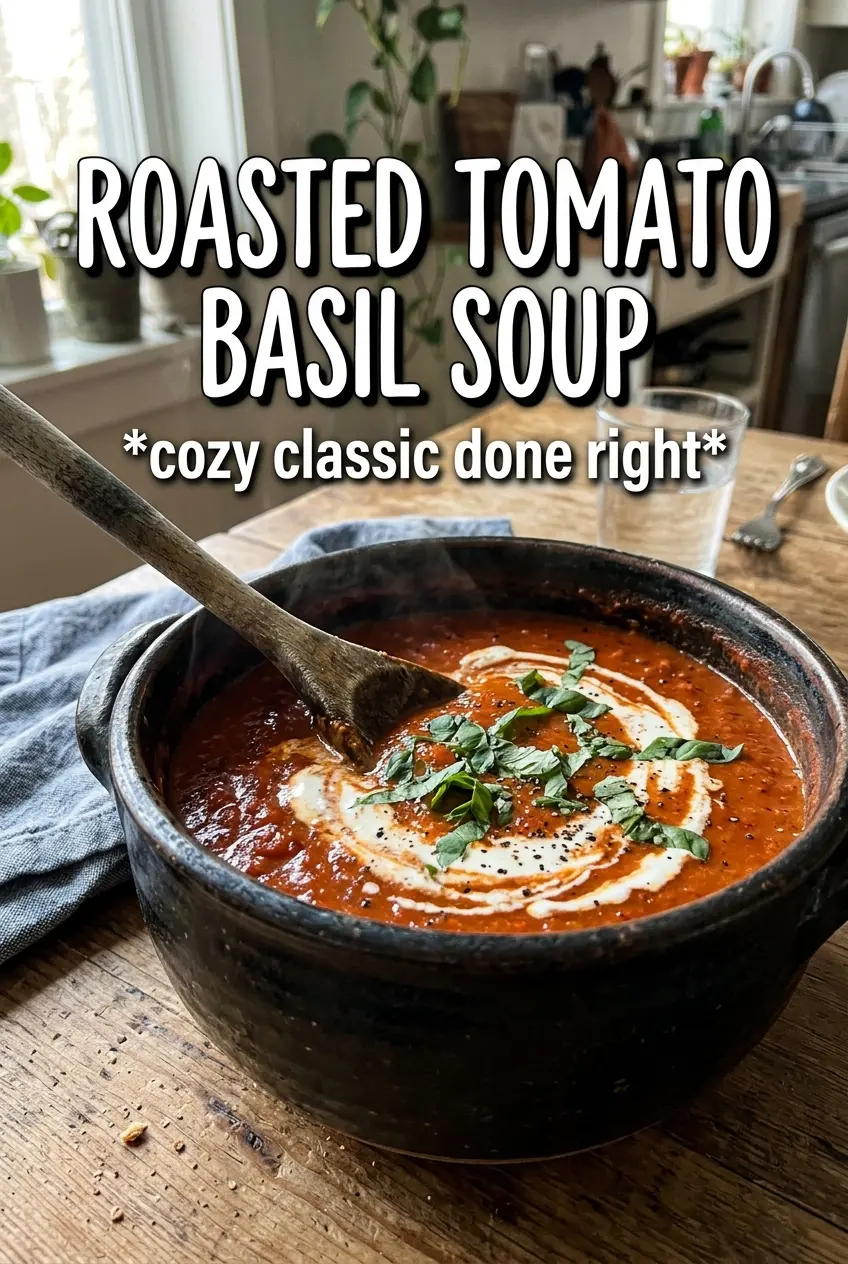
Roasted Tomato Basil Soup
Ingredients
Equipment
Method
- Preheat oven to 425F and arrange the tomatoes, garlic, and onion on a rimmed baking sheet.
- Drizzle with 1/4 cup olive oil, then season with salt, pepper, and dried oregano.
- Roast for 35-40 minutes, until the tomatoes are caramelized and the edges are slightly charred.
- Squeeze the roasted garlic from its skins, then transfer all roasted vegetables to a large pot.
- Add the broth and balsamic vinegar, then blend smooth with an immersion blender.
- Stir in the heavy cream and fresh basil, then simmer for 10 minutes.
- Add the sugar and season with salt and pepper to taste.
- Serve hot with grilled cheese croutons or crusty bread.