Smoked sausage and cabbage turn into something far better than the sum of their parts when the sausage gets a hard sear and the cabbage is given time to pick up a little color before the sauce goes in. The finished skillet lands in that sweet spot between hearty and bright: buttery, savory, a little tangy from Dijon and apple cider vinegar, with caramelized edges on the cabbage that keep every bite interesting.
The trick here is timing. The sausage browns first so it can leave behind those flavorful bits in the pan, then the onion softens in the same buttered skillet before the cabbage goes in. That order matters. If the cabbage goes in too early or the pan is crowded, it steams instead of caramelizing, and you lose the texture that makes this dish worth repeating. The Dijon, vinegar, and brown sugar make a quick glaze that coats everything without turning the whole thing heavy.
Below you’ll find the searing cue that keeps the sausage from turning rubbery, the one step that helps cabbage stay tender-crisp at the edges, and a few smart swaps if you want to change the sausage or make it fit what you have on hand.
The sausage got a great caramelized edge and the cabbage stayed tender with just enough bite. That Dijon and apple cider vinegar glaze tied everything together, and the leftovers reheated without getting soggy.
Love the caramelized sausage and tangy cabbage in this skillet dinner? Save this Sausage and Cabbage Stir Fry for the nights when you need one pan, fast cleanup, and big flavor.
The Trick to Keeping the Cabbage Tender, Not Watery
The biggest mistake in a cabbage skillet is treating it like a quick wilt vegetable. Cabbage needs enough heat and space to lose moisture before it can brown. If the pan is crowded, the cabbage steams in its own water and the whole dish turns soft and dull instead of savory and edged with caramelization.
The sausage should come out after browning so the skillet stays hot and the fond stays in the pan. That brown residue is what makes the glaze taste like more than mustard and vinegar. Once the cabbage goes in, stir it occasionally instead of constantly. Letting it sit for a minute or two at a time is what gives you those golden bits on the edges.
What Each Ingredient Is Actually Doing in This Skillet
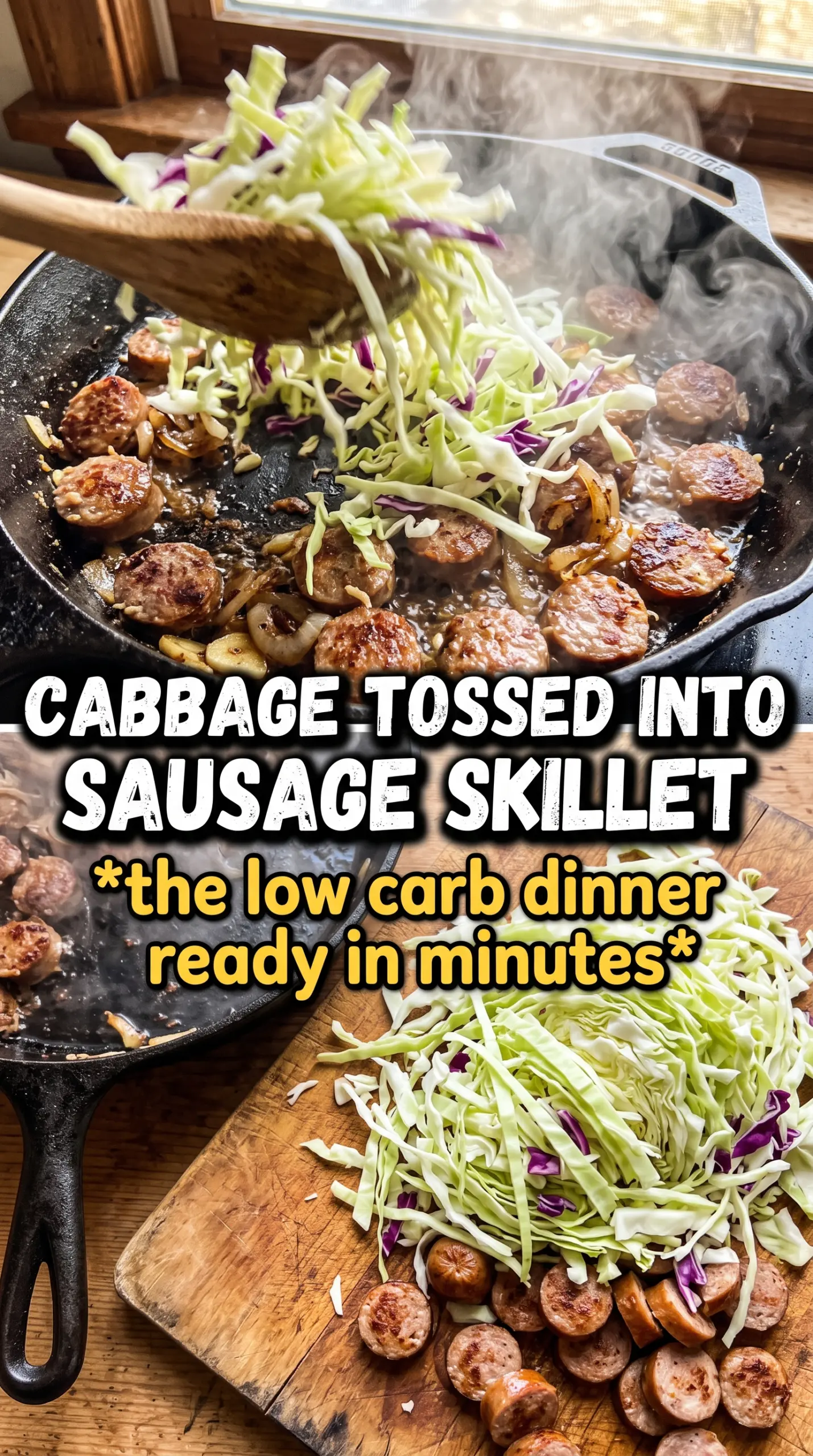
- Smoked kielbasa or andouille — This brings salt, fat, and built-in seasoning, which is why it can carry the whole dish. Kielbasa gives you a milder, rounder flavor; andouille leans spicier and more assertive. Any fully cooked smoked sausage works here, but raw sausage needs a different cooking approach and more time.
- Green cabbage — Green cabbage holds up best because it softens without collapsing. Savoy will work in a pinch, but it cooks a little faster and won’t give the same sturdy texture. Cut it into rough, bite-size pieces so the edges can char without the pieces disappearing into ribbons.
- Dijon mustard, apple cider vinegar, and brown sugar — This trio makes the glaze. Dijon gives body, vinegar cuts through the sausage fat, and brown sugar rounds out the sharpness just enough to cling to the cabbage. Don’t skip the mustard; it’s what helps the sauce emulsify instead of tasting thin.
- Butter — Butter carries the onion and garlic and gives the skillet a richer finish than oil alone. If you need dairy-free, use olive oil and add a small knob of plant butter at the end if you want that same rounded finish. The dish still works without it, but it won’t taste quite as lush.
- Caraway seeds — Optional, but they echo the cabbage in a way that feels natural and a little old-school. Use them lightly; too much and they take over. If you don’t like caraway, skip it rather than substituting something sweet or strongly herbaceous.
Building the Skillet in the Right Order
Getting the Sausage Browning First
Lay the sausage slices in a hot skillet in a single layer and let them sit long enough to take on color before you start stirring. You’re looking for deep brown edges, not just warmed-through slices. If the pan looks crowded, brown in batches; otherwise the sausage will steam and you’ll lose that crisp, savory surface that seasons the whole dish.
Softening the Onion in the Leftover Fat
Once the sausage is out, the onion goes into the same pan with the butter. Cook it until it softens and starts to turn golden at the edges, which usually takes about five minutes. If the onion starts browning too fast, the heat is too high; drop it a little so it turns sweet instead of bitter.
Letting the Cabbage Pick Up Color
Add the cabbage and give it time. Stir every minute or two, but don’t keep it moving nonstop. You want the leaves to wilt, then catch a little color on the edges, and that only happens when they sit against the pan long enough to dry out. If there’s a pool of liquid at the bottom, the heat is too low or the skillet is overcrowded.
Glazing and Finishing the Dish
Whisk the Dijon, vinegar, and brown sugar together, then pour it over the cabbage so it coats the pan evenly. The sauce should turn glossy almost immediately as it hits the heat. Add the sausage back in just long enough to warm through and coat in the glaze, then finish with salt, pepper, and parsley. If the sauce tastes sharp, let it cook for another minute; the vinegar needs a little heat to mellow.
How to Change This Without Losing the Point
Make it dairy-free
Swap the butter for olive oil or avocado oil. The dish will still brown well, but the finish will be a little leaner, so use a touch more salt and don’t skip the parsley. If you want extra richness, stir in a small pat of dairy-free butter right at the end.
Use a different sausage
Turkey sausage works if you want something lighter, but it won’t leave the same amount of fat behind, so the skillet will taste a little less rich. If you use a spicy sausage, cut back slightly on the mustard or vinegar if you know you’re sensitive to heat. The key is still a fully cooked sausage that can brown quickly.
Make it lower carb
This recipe is already naturally low in carbs as written, so the main thing is to keep the brown sugar minimal or replace it with a keto-friendly sweetener that measures like sugar. The glaze will still need a touch of sweetness to balance the vinegar. Without it, the dish can taste too sharp.
Add more vegetables
A handful of sliced bell pepper or mushrooms fits well, but add them after the onion and before the cabbage so they have time to release moisture and brown. Don’t load the pan too heavily or the cabbage will stop caramelizing. If you want to stretch the dish further, serve it over rice, mashed potatoes, or buttered noodles.
Storage and Reheating
- Refrigerator: Store in an airtight container for up to 4 days. The cabbage softens a bit as it sits, but the flavor holds up well.
- Freezer: It freezes, but the cabbage will be softer after thawing. Freeze in portions for up to 2 months if you don’t mind a more tender texture.
- Reheating: Reheat in a skillet over medium-low heat with a splash of water if needed. The common mistake is blasting it in the microwave until the sausage tightens and the cabbage turns limp; gentle heat keeps the texture closer to the original.
Questions I Get Asked About This Recipe
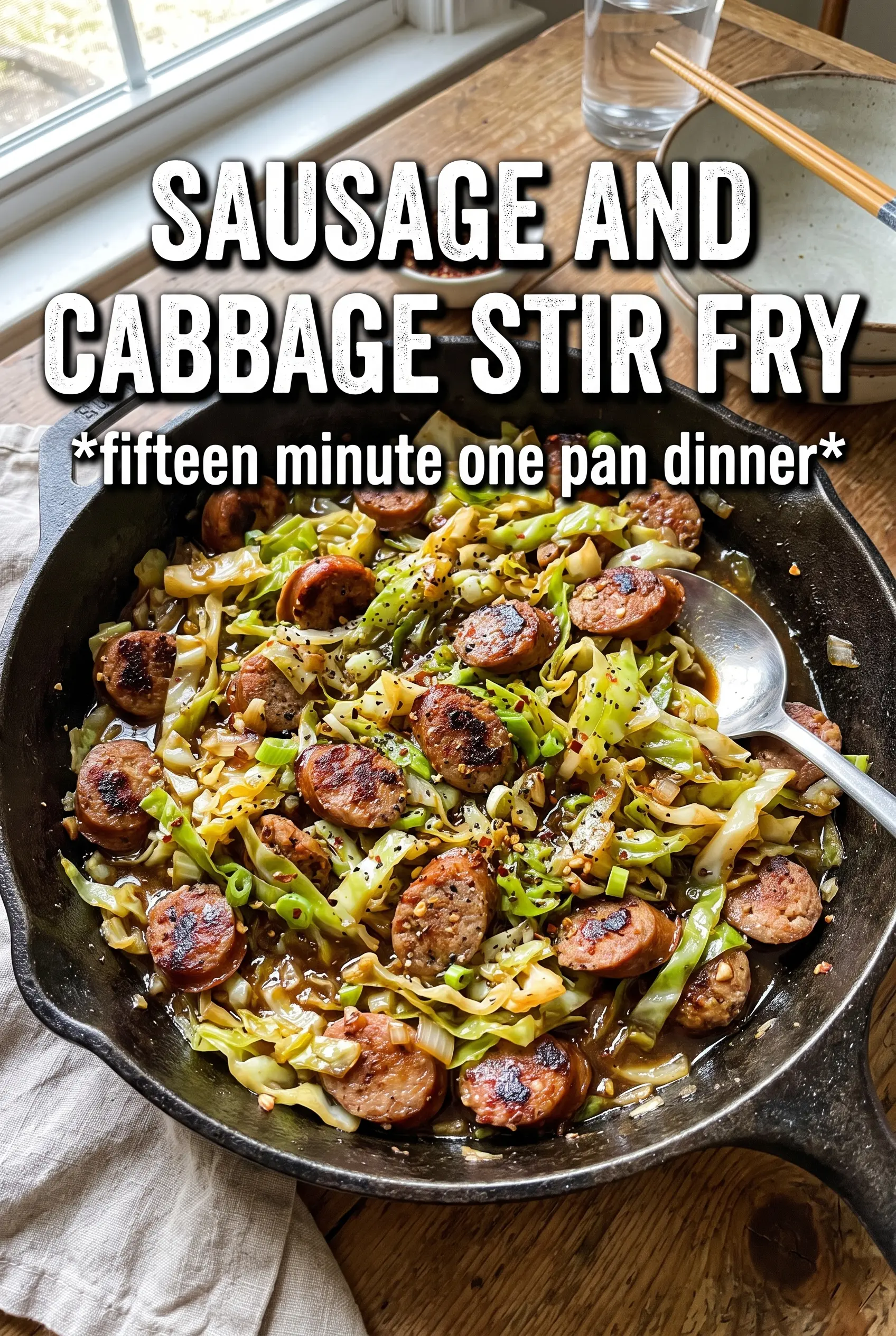
Sausage and Cabbage Stir Fry
Ingredients
Equipment
Method
- Brown sausage slices in a large skillet until caramelized, then remove and set aside.
- Melt butter in the same pan, using the browned bits as flavor.
- Sauté onion for 5 minutes until softened and golden.
- Add garlic (and caraway seeds, if using) and cook for 1 minute.
- Add cabbage and cook for 8-10 minutes, stirring occasionally, until wilted and slightly caramelized at the edges.
- Whisk Dijon, apple cider vinegar, and brown sugar, then pour over the cabbage.
- Return sausage to the pan and toss everything together until evenly coated.
- Season with salt and pepper, then top with fresh parsley before serving.