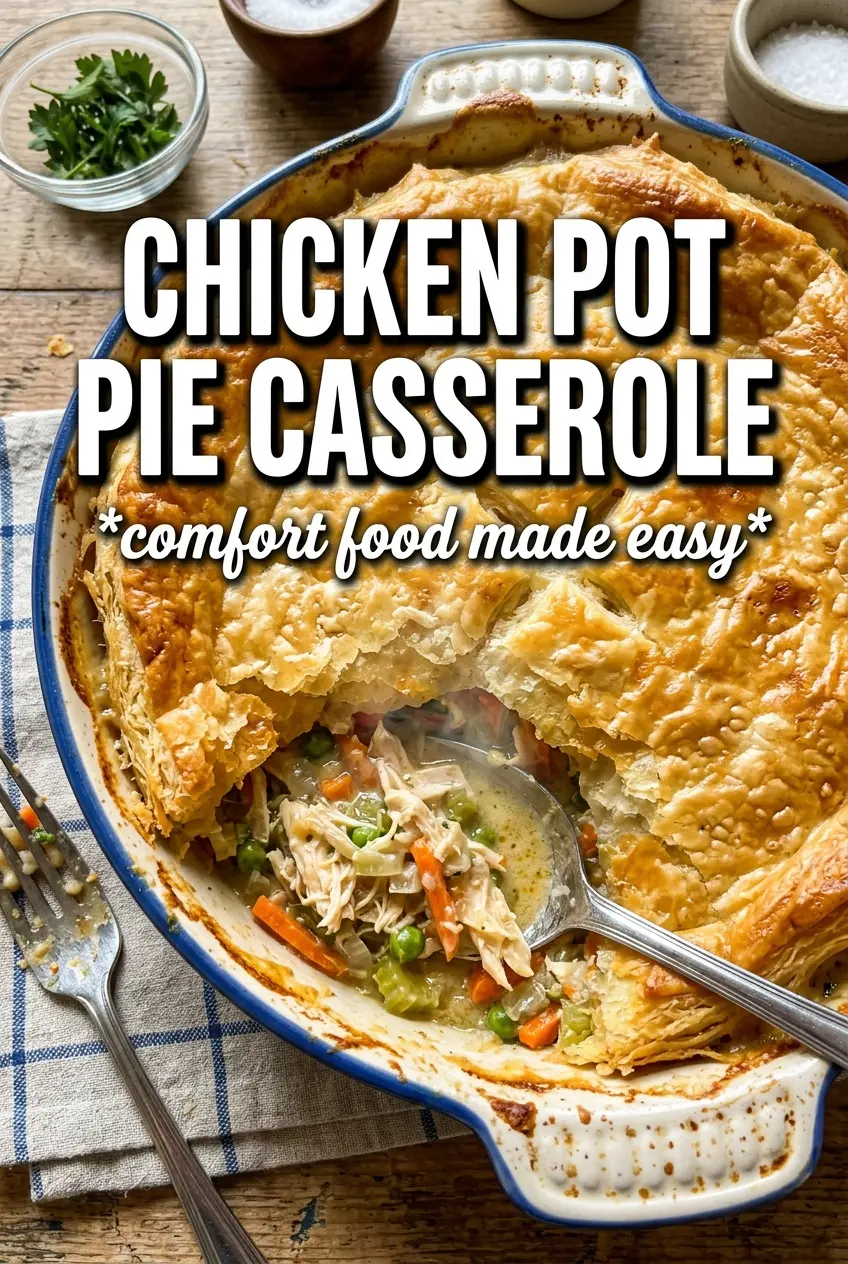
Chicken pot pie casserole brings all the comfort of the classic pie without the fuss of rolling a crust or worrying about a soggy bottom. The filling turns creamy and rich in the oven, the vegetables stay tender, and the biscuit topping bakes into a golden, craggy lid that soaks up just enough gravy underneath. It’s the kind of dinner that disappears fast because every bite gets a little bit of everything.
What makes this version work is the balance between a cooked-down vegetable base and a sauce that thickens before it ever goes into the oven. The butter and flour need that full minute together so the filling doesn’t taste pasty, and the broth plus cream should simmer until it lightly coats a spoon. That keeps the casserole hearty instead of soupy, which matters once the biscuits or puff pastry go on top.
Below, I’ll walk through the part that keeps the filling from breaking, the ingredient swaps that still give you a good result, and the storage notes that help this casserole hold up for leftovers.
The filling thickened up perfectly and the biscuit topping stayed crisp instead of getting soggy. I used puff pastry like suggested and my husband kept going back for a second scoop.
Save this chicken pot pie casserole for the nights when you want a creamy filling and a golden biscuit topping with almost no cleanup.
The Trick to a Thick Filling That Stays Creamy After Baking
The biggest mistake with chicken pot pie casserole is stopping the sauce too soon. If the filling looks thin on the stove, it will be thinner in the oven, because the vegetables release a little moisture and the biscuits don’t absorb enough to rescue it. You want the broth and cream to simmer until the sauce clings lightly to a spoon and the bubbles look slow and glossy, not watery.
The other point that matters is the flour step. Cooking the flour in butter for a full minute knocks out that raw taste and gives the sauce enough structure to hold the chicken and vegetables without turning gluey. Pull the pan off the heat before you stir in the chicken so the dairy doesn’t get overworked or grainy.
What Each Ingredient Is Actually Doing in This Dish

- Cooked chicken — Use shredded rotisserie chicken or leftover roasted chicken for the best texture. It holds up better than very finely chopped chicken breast, which can disappear into the sauce. You want the chicken to have some bite so the casserole eats like a meal, not a soup.
- Butter and flour — This is the base of the gravy, and there isn’t a true substitute if you want the same creamy body. Whisk them together until they smell a little nutty and look paste-like. That short cooking time is what keeps the finished sauce smooth.
- Heavy cream — This gives the filling its rich, velvety finish. Half-and-half works in a pinch, but the sauce will be looser and a little less luxurious. If you use milk, simmer the sauce a touch longer so it thickens enough before baking.
- Biscuits or puff pastry — Biscuits give you a rustic, sturdy topping that soaks up gravy around the edges. Puff pastry bakes up flakier and lighter, but it needs the filling thick enough to support it. Either one works, but don’t let the topping fully bury the filling; those exposed edges help everything brown.
- Thyme — Fresh thyme makes the filling taste like actual pot pie instead of plain cream sauce. Dried thyme can stand in, but use less because it comes on stronger. Add it near the end so it stays fragrant.
Building the Filling Before the Topping Goes On
Softening the Vegetables
Start by cooking the onion, carrots, and celery in butter until the onion turns translucent and the celery loses its raw edge. You’re not looking for browning here; you want sweetness and a little softness so the vegetables blend into the sauce instead of crunching stubbornly under the topping. If the pan looks dry before the vegetables soften, the heat is too high or the pieces are cut too large. Keep them moving so nothing scorches on the bottom.
Thickening the Sauce
Sprinkle the flour over the vegetables and stir until every bit looks coated. Let it cook for a minute, then add the broth gradually while whisking so the sauce starts smooth instead of lumpy. Once the cream goes in, let it simmer until it thickens enough to coat the back of a spoon. If you rush this part, the casserole bakes up loose and the biscuit topping floats instead of resting on a rich filling.
Finishing and Baking
Stir in the chicken, peas, corn, thyme, and garlic powder once the sauce has thickened. Taste it before it goes in the baking dish; the filling should taste a little more seasoned than you think it needs because the biscuit topping softens the saltiness a bit. Top with biscuits or puff pastry, then bake until the top is deeply golden and the filling is bubbling at the edges. Those bubbles tell you the center has heated through.
How to Adapt This for Bigger, Smaller, or Different Tables
Make It Gluten-Free Without Losing the Creamy Texture
Use a gluten-free all-purpose flour blend in place of the flour and choose a gluten-free biscuit or pastry topping. The filling still thickens well as long as you cook the flour in butter first and simmer the sauce until it looks glossy. The texture is a little softer, but the flavor stays the same.
Use Puff Pastry for a Flakier, Less Rustic Top
Puff pastry gives you a lighter, crispier lid than biscuits, especially if you like the contrast between a creamy filling and a shattery top. Cut steam vents in the pastry so it doesn’t balloon and stay doughy in the middle. This version looks a little more elegant, but it needs the filling to be thick before baking.
Swap the Chicken for Turkey After a Holiday Meal
Cooked turkey works almost exactly the same way, especially if it’s white and dark meat mixed together. Because turkey can be a little leaner, don’t skip the cream or the full simmering time on the sauce. The result tastes like a natural second-night dinner, not a leftover remake.
Storage and Reheating
- Refrigerator: Store covered for 3 to 4 days. The topping softens a bit, but the filling stays creamy.
- Freezer: Freeze the filling without the biscuit or pastry topping for best results. The dairy sauce holds up well, but the topping is best added fresh before baking.
- Reheating: Warm individual portions in the oven at 350F until hot in the center, or reheat larger portions covered with foil so the top doesn’t dry out. The most common mistake is blasting it in the microwave, which makes the sauce separate and the topping rubbery.
Questions I Get Asked About This Recipe
Chicken Pot Pie Casserole
Ingredients
Equipment
Method
- Preheat the oven to 400°F, then sauté the onion, carrots, and celery in the butter for 5 minutes until softened.
- Whisk in the flour and cook for 1 minute, stirring until the mixture looks slightly thicker.
- Gradually add the chicken broth and heavy cream, then simmer until the sauce thickens and coats the back of a spoon.
- Stir in the shredded chicken, frozen peas, frozen corn, fresh thyme, and garlic powder, then season with salt and pepper to taste.
- Pour the filling into a 9x13 dish and top with the refrigerated biscuits or puff pastry.
- Bake for 25-30 minutes at 400°F until the topping is golden and the filling is bubbling around the edges (steam should rise when you open the oven).