Golden, caramelized honey mustard potatoes hit that sweet spot between tangy, savory, and crisp at the edges. The potatoes roast up with sticky little glazed corners, while the centers stay tender and fluffy. It’s the kind of side dish that quietly takes over the plate and somehow disappears first.
The trick is keeping the mustard mixture balanced enough to coat without turning watery. Dijon brings sharpness, whole grain mustard adds texture, and the honey helps the potatoes pick up color in the oven. A hot baking sheet and a single layer matter here too; crowd the pan and you’ll steam the potatoes instead of getting those browned, sticky edges.
Below, I’ve included the little details that make a difference, from which potatoes roast best to how to keep the glaze from burning before the centers are done. If you’ve ever had roasted potatoes that looked promising but never quite got there, this version fixes that.
The glaze caramelized in the oven instead of sliding off, and the potatoes had crisp edges with a tender middle. I used baby Yukon golds and the rosemary really made the whole pan smell amazing.
Save these honey mustard potatoes for the nights when you want crispy roasted potatoes with a sticky, tangy glaze.
The Reason These Potatoes Caramelize Instead of Going Soft
Roasted potatoes usually miss in one of two ways: they dry out before they brown, or they sit in a wet coating and steam on the pan. This version avoids both. The honey mustard mixture is thick enough to cling, but it still spreads thinly once the potatoes hit the heat, so the surface can roast instead of pooling.
The other piece that matters is spacing. Give the potatoes room and they’ll develop those sticky, browned edges from direct contact with the hot pan. Tossing halfway through matters too, because the underside that starts out against the sheet pan is the part that picks up the deepest color.
- Baby potatoes or Yukon golds — These hold their shape and roast into creamy centers. Waxy potatoes like red potatoes work too, but russets turn softer and a little less defined in this style.
- Honey — It helps the glaze caramelize and gives the potatoes that glossy finish. Maple syrup can work in a pinch, but it tastes darker and less sharp.
- Dijon and whole grain mustard — Dijon gives the sauce its backbone, while whole grain mustard adds little pops of texture. Using only one makes the coating flatter and less interesting.
- Apple cider vinegar — This keeps the glaze from tasting heavy. White vinegar works if that’s what you have, but cider vinegar brings a softer edge.
What Each Ingredient Is Actually Doing in the Glaze
- 2 pounds baby potatoes or Yukon golds — These are the best choice because they roast up with creamy insides and sturdy edges. Cut them into even halves so they finish at the same time.
- Dijon mustard — This is the sharp, smooth base of the glaze. It emulsifies well with the oil and honey, which helps the coating stick instead of separating.
- Whole grain mustard — This adds texture and a little bite. If you skip it, the potatoes still work, but the sauce tastes smoother and less layered.
- Honey — It gives the glaze its caramelized sheen. Don’t overdo it, or the sugars can brown too quickly before the potatoes are tender.
- Olive oil — It helps the potatoes roast instead of drying out. A neutral oil is fine here, but olive oil adds a roundness that fits the mustard.
- Apple cider vinegar — This sharpens the glaze and balances the sweetness. It also helps keep the coating from tasting flat after roasting.
- Garlic and rosemary — Garlic perfumes the pan and rosemary gives the dish that savory roast-potato edge. Fresh rosemary is best; dried rosemary can taste a little woody unless you crush it finely.
- Smoked paprika — This is subtle, but it adds warmth and a deeper roasted note. If you want a cleaner mustard flavor, leave it out.
The Pan, the Toss, and the Timing That Matter Most
Building the glaze first
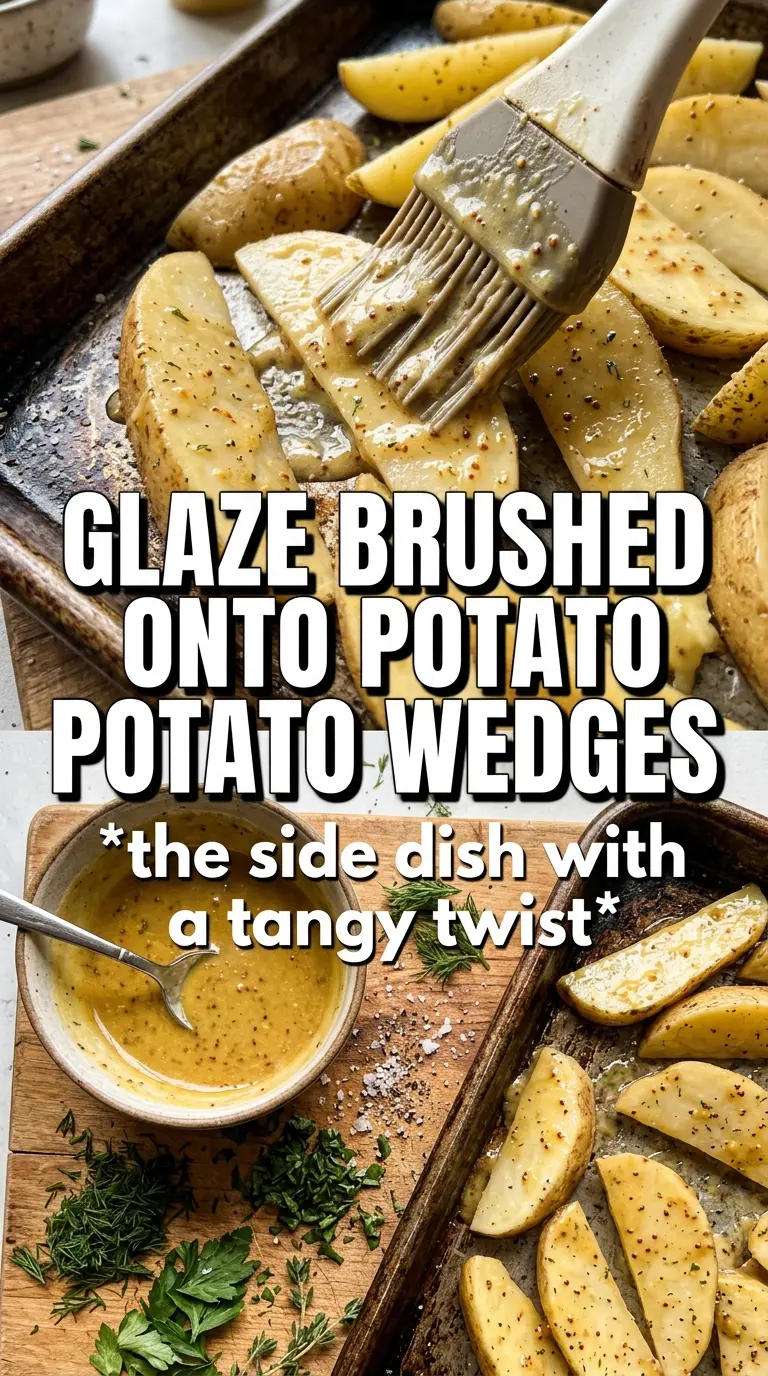
Whisk the mustard, honey, oil, vinegar, garlic, rosemary, paprika, salt, and pepper until smooth and glossy. The mixture should look thick enough to cling to a spoon. If it looks broken or oily at this stage, keep whisking; it comes together once the honey and mustard fully emulsify.
Coating the potatoes evenly
Add the cut potatoes and toss until every surface is coated. The goal is a thin, even film, not a puddle at the bottom of the bowl. If there’s a lot of excess sauce, the potatoes won’t brown well, so let the extra drip off before they go onto the pan.
Roasting for color, not just doneness
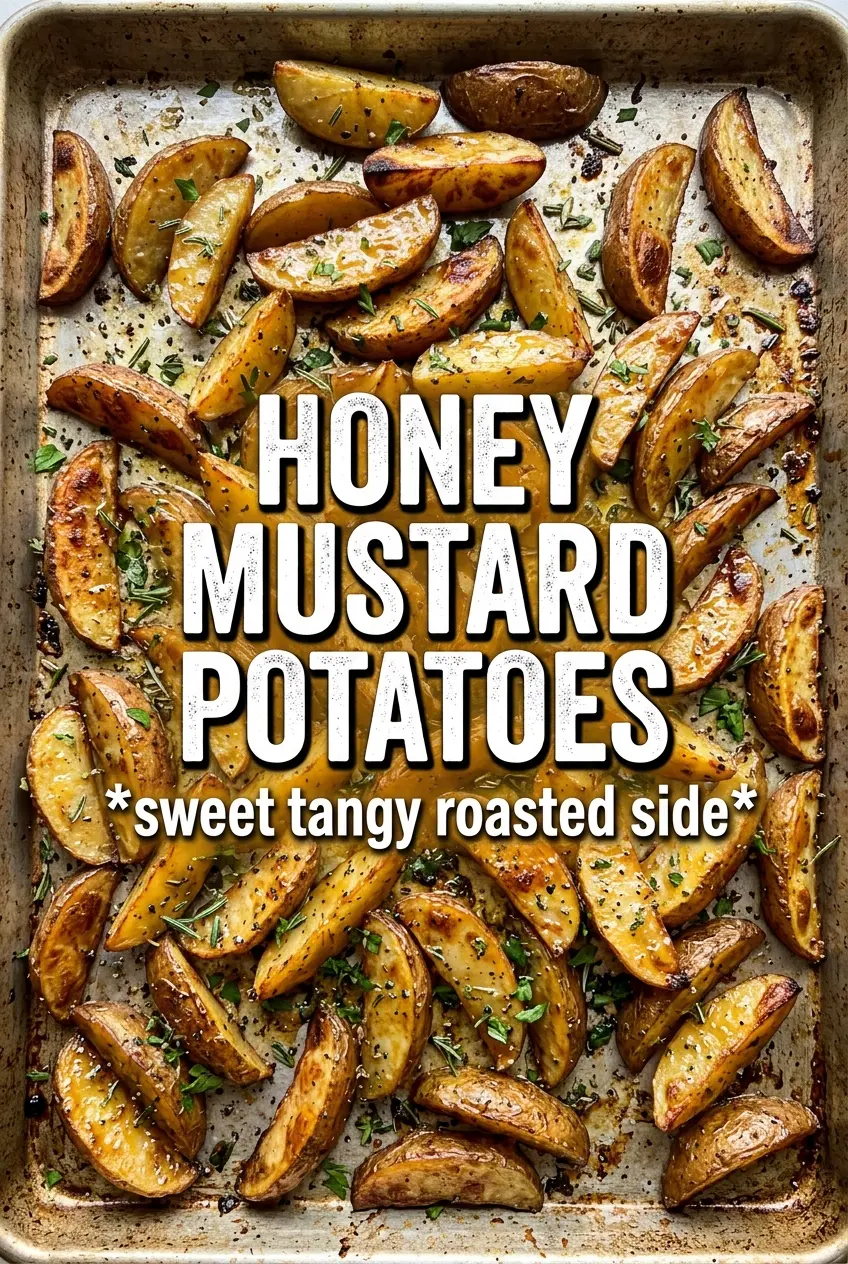
Spread the potatoes in a single layer on the lined baking sheet and roast at 425F. Leave space between pieces so the glaze can caramelize. If the potatoes are crowded, they’ll soften and pale instead of getting that deep golden finish. Toss them halfway through, then return them to the oven until the edges look browned and the centers yield easily when pierced.
Finishing for the best texture
Finish with parsley and flaky salt while the potatoes are still hot. The parsley adds a fresh note that cuts through the sweetness, and the flaky salt gives the outside a little crunch right at the end. If you wait too long, the salt won’t cling as well to the glaze.
How to Adapt These Honey Mustard Potatoes for Different Tables
Dairy-Free by Nature
These potatoes are already dairy-free, so you don’t need to change the glaze at all. That makes them an easy side for mixed tables where you need something everyone can eat without a second version.
Make Them More Savory and Less Sweet
Cut the honey back to 2 tablespoons and add an extra teaspoon of Dijon if you want a sharper, more mustard-forward finish. The potatoes will still caramelize, but the glaze will read more tangy than sweet.
Make a Bigger Batch Without Soggy Potatoes
Double the ingredients only if you use two sheet pans. If you pile a larger batch onto one pan, the potatoes steam and the glaze turns thin instead of sticky. Rotating the pans halfway through helps them brown evenly.
What to Use If You Don’t Have Fresh Rosemary
Use 1/3 teaspoon dried rosemary, crushed between your fingers before mixing it in. Dried rosemary is stronger and a little woodier, so less goes further. If you want a softer herb note, thyme works too.
Storage and Reheating
- Refrigerator: Store in an airtight container for up to 4 days. The glaze softens a bit, and the edges lose their crispness.
- Freezer: They freeze, but the texture softens enough that I only do it if I’m planning to use them in a hash or breakfast skillet later.
- Reheating: Reheat on a sheet pan at 400F until hot and re-crisped, usually 10 to 15 minutes. The microwave will warm them, but it leaves the glaze sticky and the potatoes a little damp.
Answers to the Questions Worth Asking
Honey Mustard Potatoes
Ingredients
Equipment
Method
- Preheat the oven to 425F and line a sheet pan so the potatoes roast in a single layer. Set up for easy tossing at the halfway point.
- Whisk Dijon mustard, whole grain mustard, honey, olive oil, apple cider vinegar, garlic, fresh rosemary, smoked paprika, salt, and pepper until smooth. The mixture should look glossy and well combined.
- Toss the halved baby potatoes or Yukon golds in the honey mustard mixture until evenly coated. Make sure the cut sides get a good coating for browning.
- Spread the potatoes on the sheet pan in a single layer and roast for 30-35 minutes, tossing halfway, until caramelized and golden. Look for browned edges and a deep golden glaze.
- Finish the honey mustard potatoes with fresh parsley and flaky salt right out of the oven. Serve while they’re hot and visibly glossy.