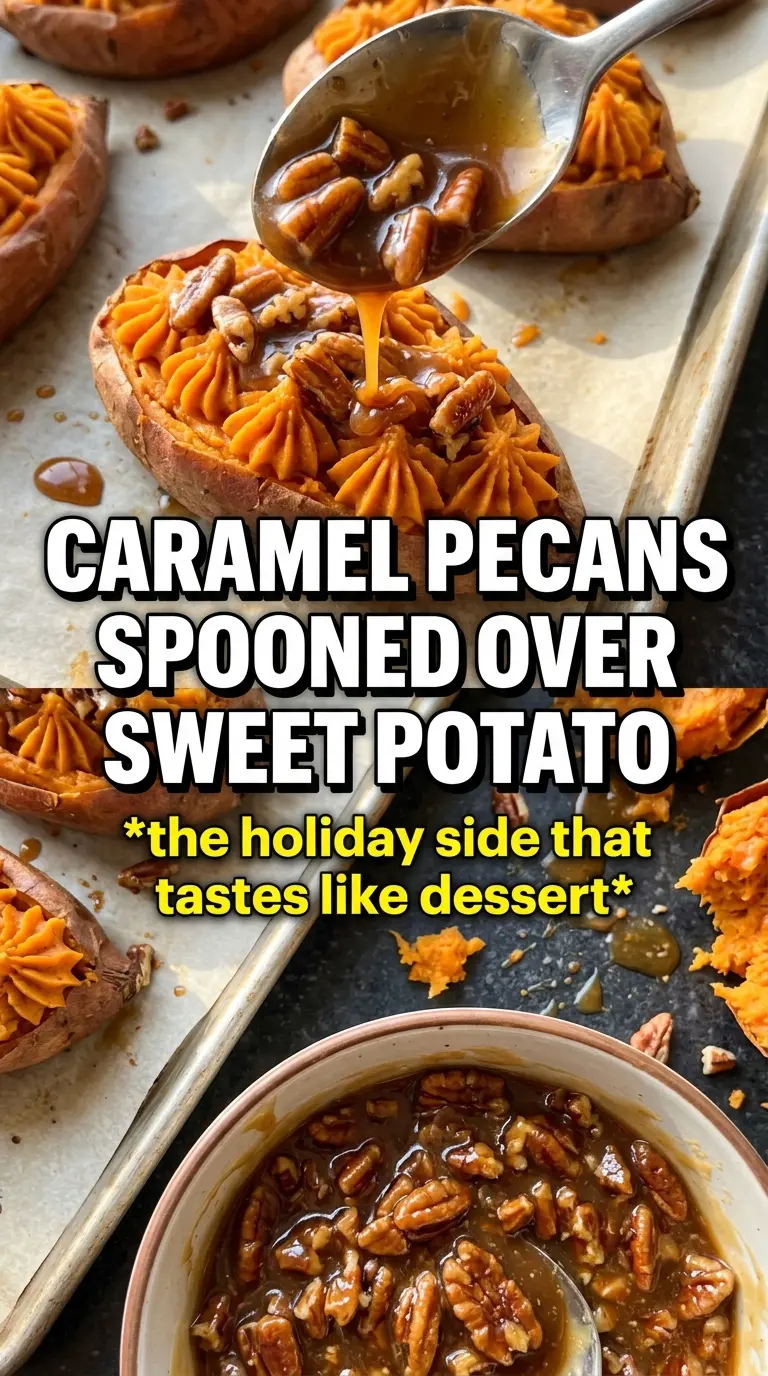
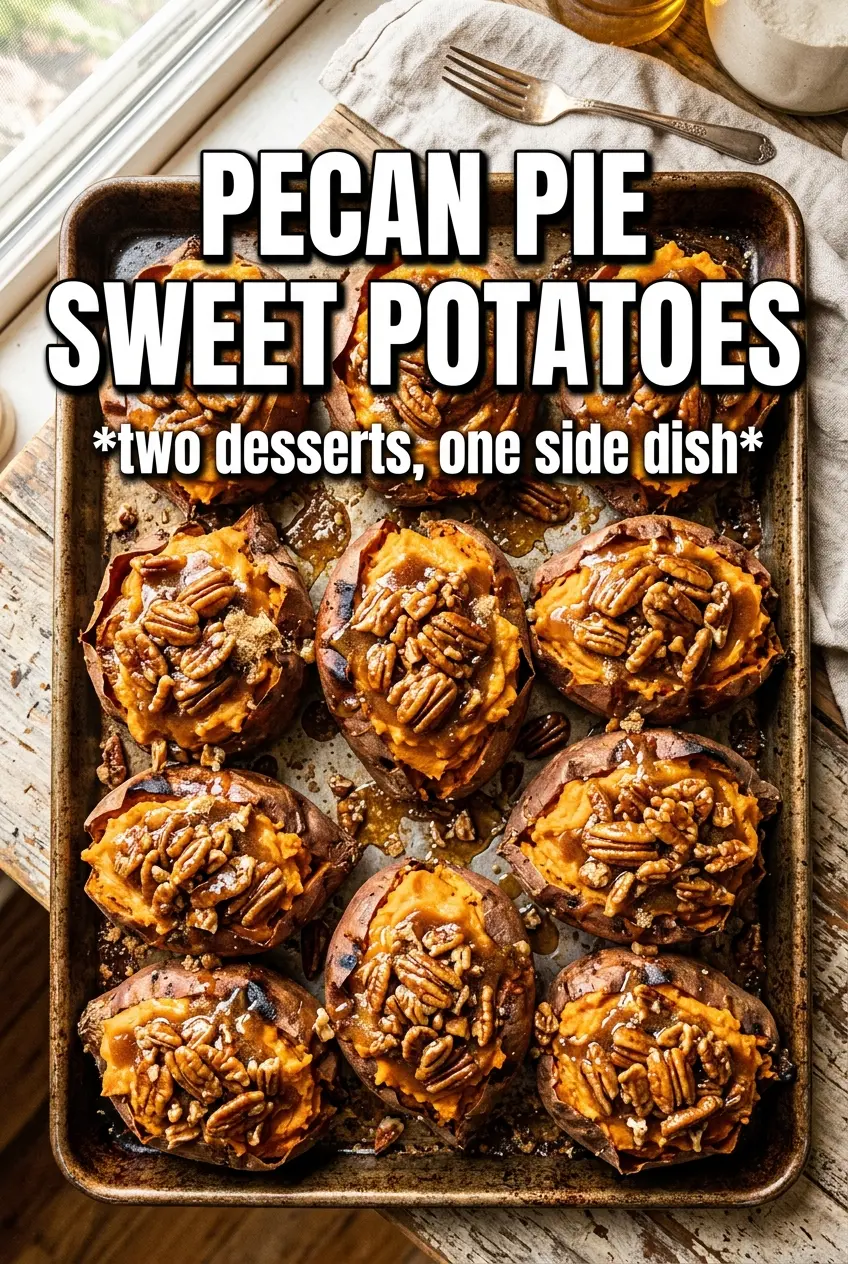
Pecan pie twice-baked sweet potatoes land right in that sweet spot between holiday side dish and full-on comfort food. The filling stays soft and buttery, the skins hold their shape, and the pecan topping bakes into a sticky, glossy layer that tastes like pecan pie met a loaded sweet potato. It’s the kind of side that gets attention before the main dish even hits the table.
What makes this version work is balance. The sweet potato mash gets enough butter and maple to taste rich, but not so much that it turns loose or watery. The topping is cooked briefly on the stove first, which gives the brown sugar a head start dissolving and keeps the final bake from feeling grainy. That little bit of cream helps the pecans cling together in a caramel-like layer instead of sliding off in a sugary puddle.
Below, I’ve included the two places where people usually miss the mark: getting the filling fluffy instead of dense, and cooking the topping just long enough for shine without burning the sugar. Those small details matter here.
The sweet potato filling stayed fluffy and the pecan topping set up like a real pie layer, not a runny glaze. I served them with roast turkey and every plate came back clean.
Love the sticky pecan topping and creamy sweet potato filling? Save these pecan pie twice-baked sweet potatoes for the next holiday side dish spread.
The Trick to Keeping the Filling Creamy Instead of Gluey
The biggest mistake with twice-baked sweet potatoes is overworking the flesh. Once the potatoes are baked through, the inside should be mashed just until smooth and combined. If you beat it hard or use a mixer for too long, it can turn dense and sticky instead of light and spoonable. The butter and maple syrup are there for flavor, but the texture comes from handling the potatoes gently.
Another thing that helps is scooping the flesh while the potatoes are still warm, not piping hot. Warm sweet potato breaks down easily and mixes evenly, but it’s less likely to release excess steam into the filling. That means a better bake the second time around.
- Sweet potatoes — Large potatoes give you sturdy skins and enough filling to mound high. If yours are on the smaller side, expect to use all the flesh and a lighter topping layer.
- Butter — Softened butter blends smoothly into the mash. Cold butter leaves little streaks, and melted butter can make the filling feel loose.
- Maple syrup — This brings a deeper sweetness than plain sugar alone. Honey works in a pinch, but it tastes sharper and less classic here.
- Brown sugar — Use it in both the filling and the topping for that caramel note. Dark brown sugar gives a deeper molasses flavor; light brown sugar keeps things a little cleaner and sweeter.
- Pecans — Roughly chopping them gives you texture without making the topping hard to eat. Whole halves look pretty, but they don’t spread as evenly across the potatoes.
- Heavy cream — This is what turns the topping into a glossy, spoonable caramel. Half-and-half can work, but the sauce will be thinner and less rich.
What Each Ingredient Is Actually Doing in This Recipe
- Primary ingredient (the star) — Quality matters most. Choose the best you can find.
- Cooking medium (oil, butter, or broth) — This carries flavors and prevents dryness.
- Seasonings (salt, pepper, spices, herbs) — Layer flavors so nothing overpowers. Build depth gradually.
- Aromatics (garlic, onion, herbs) — Cook with fat to bloom flavors. Become the foundation.
- Supporting ingredients — Complement the main ingredient without overpowering it.
- Sauce or liquid (if applicable) — Brings flavors together. Balance richness with acid.
- Acid (lemon, vinegar, wine, or other) — Brightens and prevents flat-tasting results.
- Final finish (garnish, glaze, or sauce) — Prevents one-dimensional taste and adds visual appeal.
Building the Pecan Topping So It Stays Glossy
Baking the Potatoes First
Bake the sweet potatoes at 400°F until they give easily when pressed and the skins look a little wrinkled. That first bake should fully cook the centers so the second bake only has to warm everything through and caramelize the topping. If the potatoes are underbaked, the filling can turn watery because the flesh won’t mash smoothly.
Mixing the Filling
Scoop the flesh into a bowl and mash with the softened butter, maple syrup, brown sugar, cinnamon, and vanilla until fluffy and evenly combined. You want a creamy mash that holds its shape when spooned back into the skins. Stop as soon as the mixture looks uniform; that’s the line between smooth and gummy.
Cooking the Pecan Layer
Melt the butter in a small saucepan, then stir in the brown sugar, maple syrup, cream, and salt. Let it bubble gently for about 2 minutes so the sugar dissolves and the mixture turns glossy. If the heat is too high, the sugar can scorch at the edges before it thickens, so keep it at a steady simmer and watch for a syrupy texture.
Finishing in the Oven
Fold in the pecans, spoon the topping over the filled potatoes, and bake at 375°F until the tops are caramelized and the edges look set. The topping should be shiny and sticky, not dry or crusted over. If it looks pale after baking, give it a couple more minutes rather than blasting the heat, which can harden the sugar before the center warms through.
Three Ways to Adjust These for Your Table
Dairy-Free Version
Swap the butter for a plant-based butter that bakes well and use full-fat coconut cream in place of heavy cream. The topping will still set, but it will taste a little less like classic pecan pie and a little more like caramel candy.
Less Sweet, More Savory
Cut the brown sugar in the filling by half and leave the topping as written. That keeps the sweet potato base from tasting dessert-like while still giving you the sticky pecan finish on top.
Make-Ahead Holiday Side
Bake and fill the sweet potatoes up to a day ahead, then cover and refrigerate without the pecan topping. Cook the topping fresh and finish the final bake right before serving so the pecans stay crisp and the caramel layer stays glossy.
What to Do With Extra Filling
If you have extra mash, spoon it into a small baking dish, top with a few pecans, and bake alongside the potatoes. It won’t have the same dramatic presentation, but it makes a great bonus side with the same flavor.
Storage and Reheating
- Refrigerator: Store leftovers in an airtight container for up to 4 days. The topping will firm up, but the flavor stays excellent.
- Freezer: These freeze best without the topping. Freeze the filled sweet potato halves, then add a fresh pecan layer after thawing for the best texture.
- Reheating: Warm in a 350°F oven until heated through. Microwaving works for speed, but it softens the pecan topping and can make the skins soggy.
Questions I Get Asked About This Recipe
Pecan Pie Twice-Baked Sweet Potatoes
Ingredients
Equipment
Method
- Bake the sweet potatoes at 400°F for 50 minutes, until tender. Let them cool slightly, then halve lengthwise.
- Scoop out the flesh and mash it until smooth. Mix in the softened butter, maple syrup, brown sugar, cinnamon, and vanilla until creamy.
- Fill each potato skin with the sweet mash. Arrange them so the tops are level for even browning.
- Melt the butter, then stir in brown sugar, maple syrup, heavy cream, and salt. Cook for 2 minutes, stirring, until glossy.
- Fold in the chopped pecans, then spoon the pecan topping over the filled potatoes. Make sure the pecans are evenly distributed on top.
- Bake at 375°F for 15–18 minutes, until the topping looks caramelized and golden. Let rest briefly before serving so the topping sets.