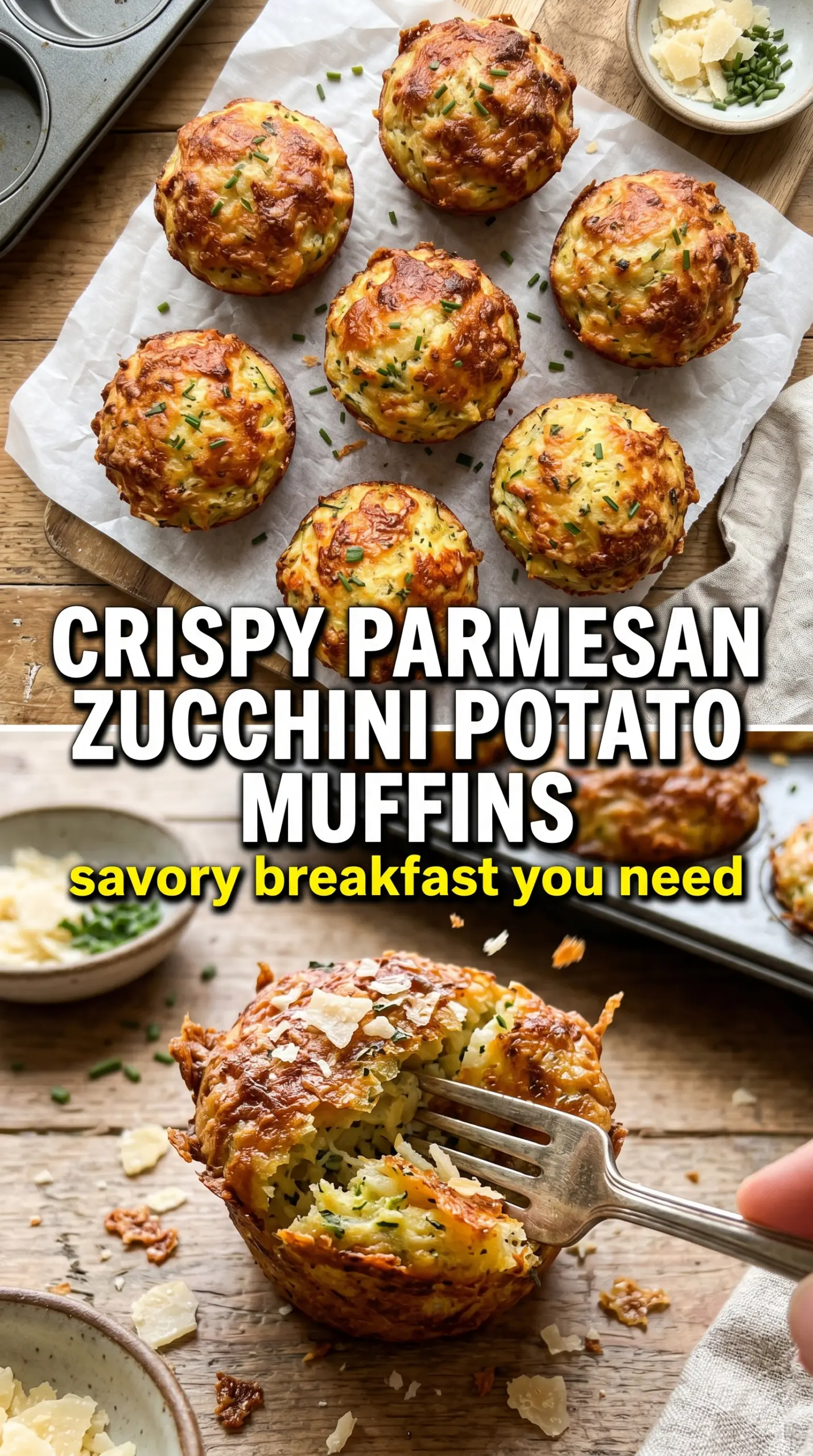
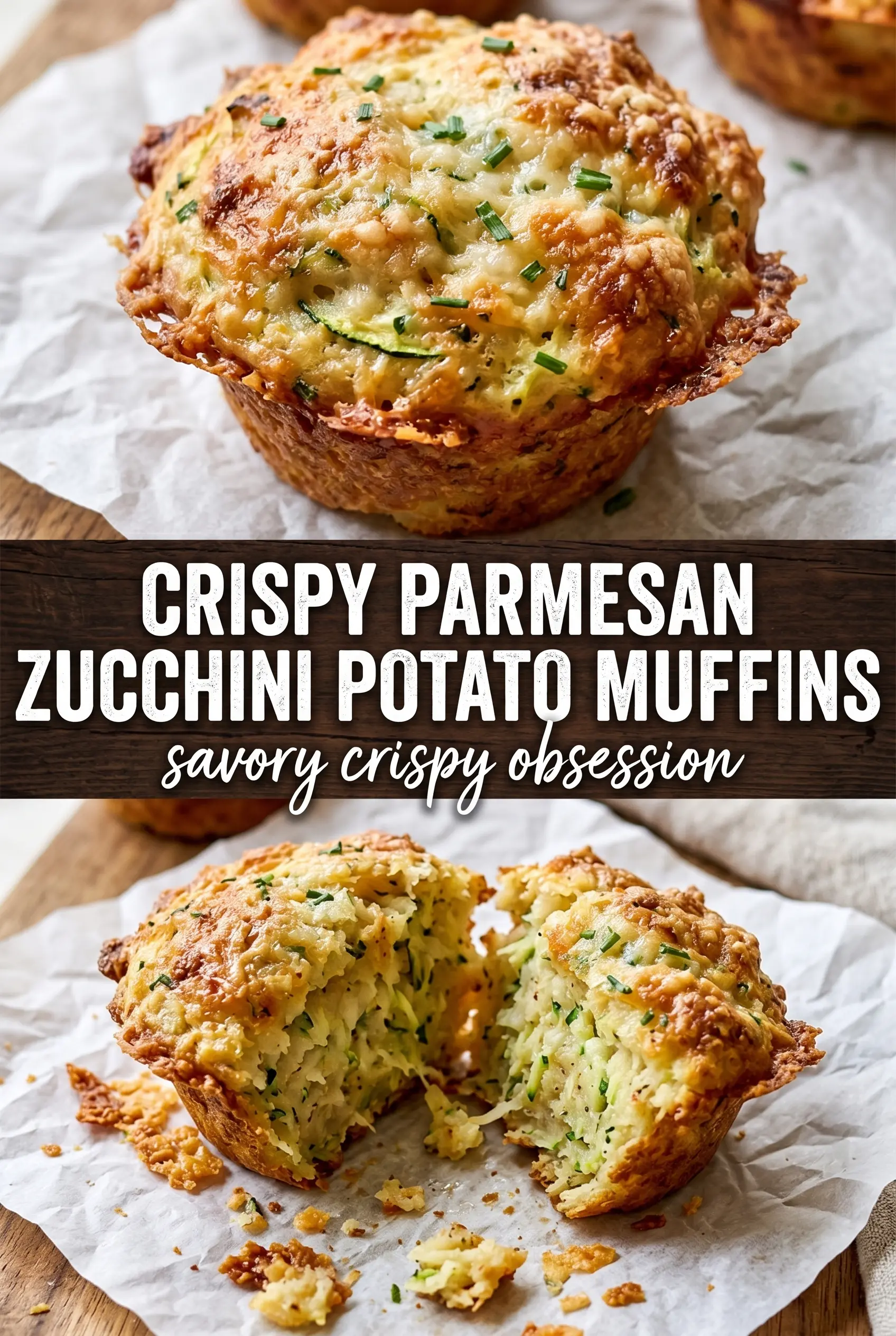
These crispy Parmesan zucchini potato muffins bake up with crackly, golden edges and a soft, savory center that tastes far more intentional than the ingredient list suggests. The parmesan on top turns into a salty crust in the oven, while the grated potato gives the middle a little more body than a standard zucchini muffin ever gets. They’re the kind of snack that disappears off the cooling rack before they’ve fully cooled.
The trick is squeezing the zucchini and potato dry before they go into the bowl. If you skip that part, the muffins steam instead of crisping, and the crumb turns heavy. A good muffin tin and a generous coating of oil also matter here; these are meant to release with bronzed, crisp sides, not pale bottoms stuck to paper liners.
Below, I’ve included the small details that matter most, plus a few swaps that still keep the texture on track. If you’ve ever had savory muffins come out bland, soggy, or oddly dense, the process notes here will help you avoid all three.
The muffins came out with crispy edges and a tender middle, and the parmesan on top formed this salty crust that my kids kept picking off first.
Crispy Parmesan zucchini potato muffins with that shattering cheesy crust? Save this one for the next time you need a savory snack that actually delivers crunch.
The Moisture Trap That Keeps Savory Muffins From Browning
Most savory veggie muffins fail for one reason: the vegetables carry too much water into the batter. Zucchini and potato both release moisture as they bake, and if that moisture is still sitting in the shreds, the muffins turn gummy before the tops ever have a chance to brown. Squeezing them dry first is not an extra step here. It’s the difference between a muffin that tastes baked and one that tastes steamed.
The other thing working in your favor is the parmesan. It doesn’t just add salt and sharpness; it helps create the crisp, lacy edges that make these worth making. That’s why the cheese goes in two places — some inside the batter for flavor, then the rest on top where it can blister and brown into a crust.
- Use russet potato, not waxy potato. Russets grate into a dry, fluffy texture that bakes into the muffin instead of staying dense. Waxy potatoes hold more moisture and tend to make the crumb heavier.
- Squeeze the zucchini and potato separately. If you combine the shreds before pressing, it’s harder to tell when you’ve pulled enough water out. Each vegetable should feel noticeably drier before it hits the bowl.
- Finely grated parmesan works best. The finer grate melts and browns more evenly across the top. A chunky grate will still taste good, but it won’t give you that thin, crisp crust.
- Skip the liners. Paper keeps the edges from crisping. A greased muffin tin lets the batter make direct contact with the hot metal, which is what gives you those browned sides.
What Each Ingredient Is Actually Doing in These Muffins
- All-purpose flour gives the muffins structure without making them bready. It’s the backbone that holds the vegetables in place.
- Baking powder and baking soda work together for lift and browning. The soda also helps the parmesan and sour cream play nicely in the batter.
- Sour cream adds moisture and a little tang while keeping the crumb tender. Plain Greek yogurt can step in here, but the muffins will taste a touch firmer and a little less rich.
- Olive oil keeps the texture soft and helps the edges brown. A neutral oil also works if that’s what you have, but olive oil gives a nicer savory note.
- Zucchini and russet potato are the body of the muffin. The zucchini brings moisture and freshness; the potato adds heft so the muffins don’t collapse into a wet pile.
- Parmesan is doing double duty as seasoning and crust. Buy the real finely grated kind if you can, because the powdery texture melts and crisps better than pre-shredded cheese.
- Chives lighten the whole thing with a mild onion note. If you don’t have them, a small amount of finely sliced green onion works well.
How to Build the Batter So the Muffins Stay Crisp
Mix the dry base first
Whisk the flour, leaveners, garlic powder, onion powder, pepper, and salt together until the mixture looks even. That keeps the baking soda from clumping in one spot and prevents little pockets of bitter seasoning. The bowl should look uniform before any wet ingredients go in.
Stir the wet ingredients just until smooth
Beat the eggs, sour cream, and olive oil together until the mixture looks creamy and no streaks of yolk remain. Don’t overwhisk here; you’re not trying to add volume, just combine. If the oil looks separated at first, keep whisking for a few more seconds and it will come together.
Fold in the vegetables at the end
Once the batter is mostly mixed, add the zucchini, potato, half the parmesan, and the chives. Stir only until everything is evenly distributed. If you keep going after that, the flour tightens up and the muffins bake up tough instead of tender.
Load the pan and finish with cheese
Divide the batter into a well-greased muffin tin and press it in lightly so each cup is filled evenly. Top with the remaining parmesan, because that layer is what bakes into the crisp, salty cap. If a few muffin tops look rough, that’s fine — those jagged bits are usually the first to turn deeply golden.
Make Them Gluten-Free With a Cup-For-Cup Blend
A good gluten-free all-purpose blend can replace the flour 1:1 here. The texture will be a little more delicate and slightly less springy, but the zucchini, potato, and parmesan still give the muffins enough structure to hold together well.
Swap the Sour Cream for Plain Greek Yogurt
Greek yogurt works if that’s what you have in the fridge. It brings a slightly tangier flavor and a firmer crumb, but it still keeps the muffins moist and helps the tops brown nicely.
Make Them Dairy-Free Without Losing the Savory Bite
Use a plain dairy-free yogurt and replace the parmesan with a firm vegan parmesan-style substitute. The muffins will still bake up savory and crisp, though the crust will be a little less deeply browned than with real parmesan.
Turn Them Into a Bigger Snack Spread
Bake the batter in a mini muffin tin for bite-size snacks or keep the standard size for lunchboxes and brunch. Mini muffins will brown faster, so start checking a few minutes early; the edges should still look deeply golden and the tops should spring back lightly when touched.
Storage and Reheating
- Refrigerator: Store in an airtight container for up to 4 days. The crust softens a little, but the flavor stays strong.
- Freezer: These freeze well. Wrap individually and freeze for up to 2 months, then thaw in the fridge before reheating.
- Reheating: Rewarm in a 375°F oven or toaster oven for 8 to 10 minutes so the edges crisp back up. The microwave will heat them, but it also turns the crust soft and a bit rubbery.
Answers to the Questions Worth Asking
Crispy Parmesan Zucchini Potato Muffins
Ingredients
Equipment
Method
- Preheat the oven to 400°F and grease a 12-cup muffin tin well with oil or cooking spray; do not use liners.
- Whisk all-purpose flour, baking powder, baking soda, garlic powder, onion powder, black pepper, and salt in a large bowl until evenly combined.
- Beat eggs, sour cream, and olive oil in a separate bowl until smooth.
- Add the wet mixture to the dry ingredients and stir just until combined.
- Fold in grated zucchini, grated russet potato, 1/2 cup finely grated parmesan, and chopped chives until the batter looks evenly speckled.
- Divide the batter evenly among the muffin cups, then top each with the remaining finely grated parmesan.
- Bake for 22–25 minutes at 400°F until the tops and edges are deeply golden and crispy, with a visibly set, crunchy surface.
- Cool in the pan for 5 minutes.
- Run a knife around the edges and remove the muffins.