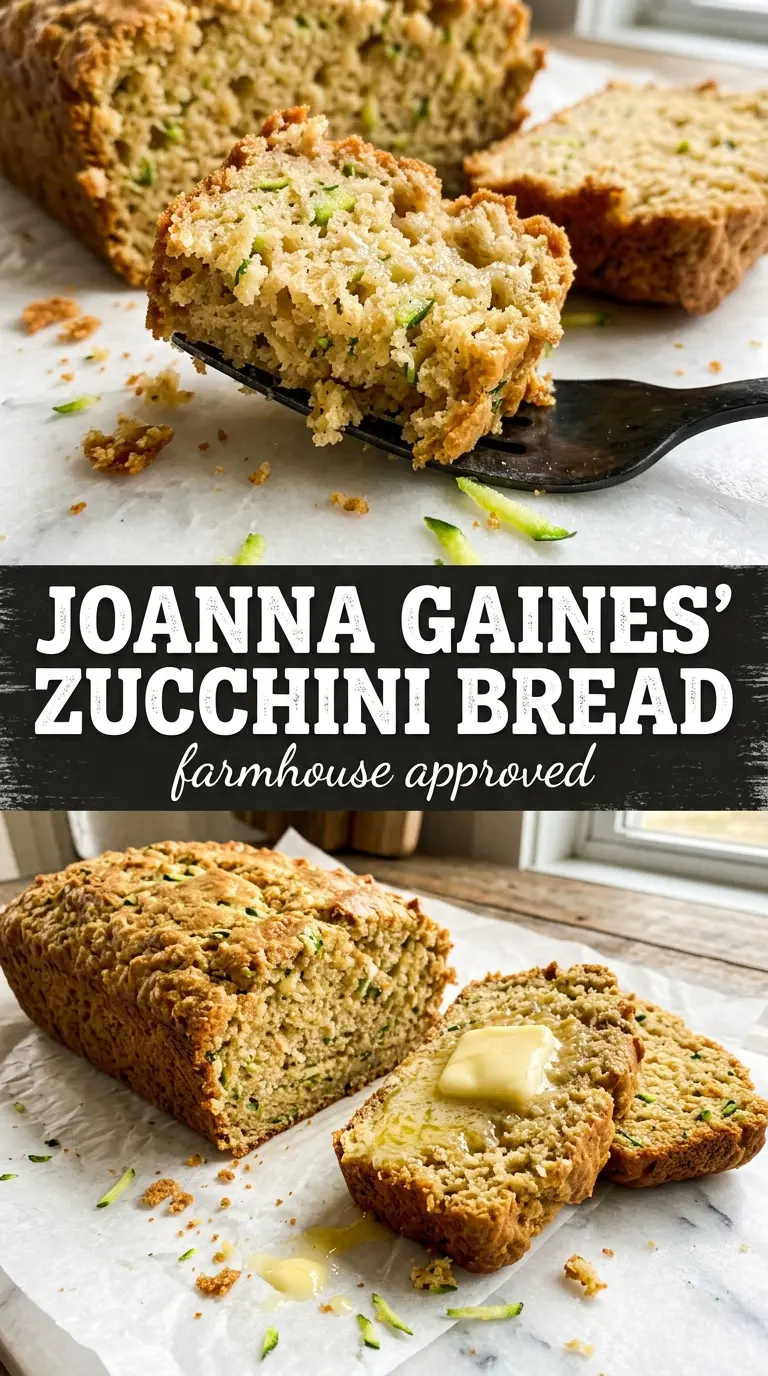
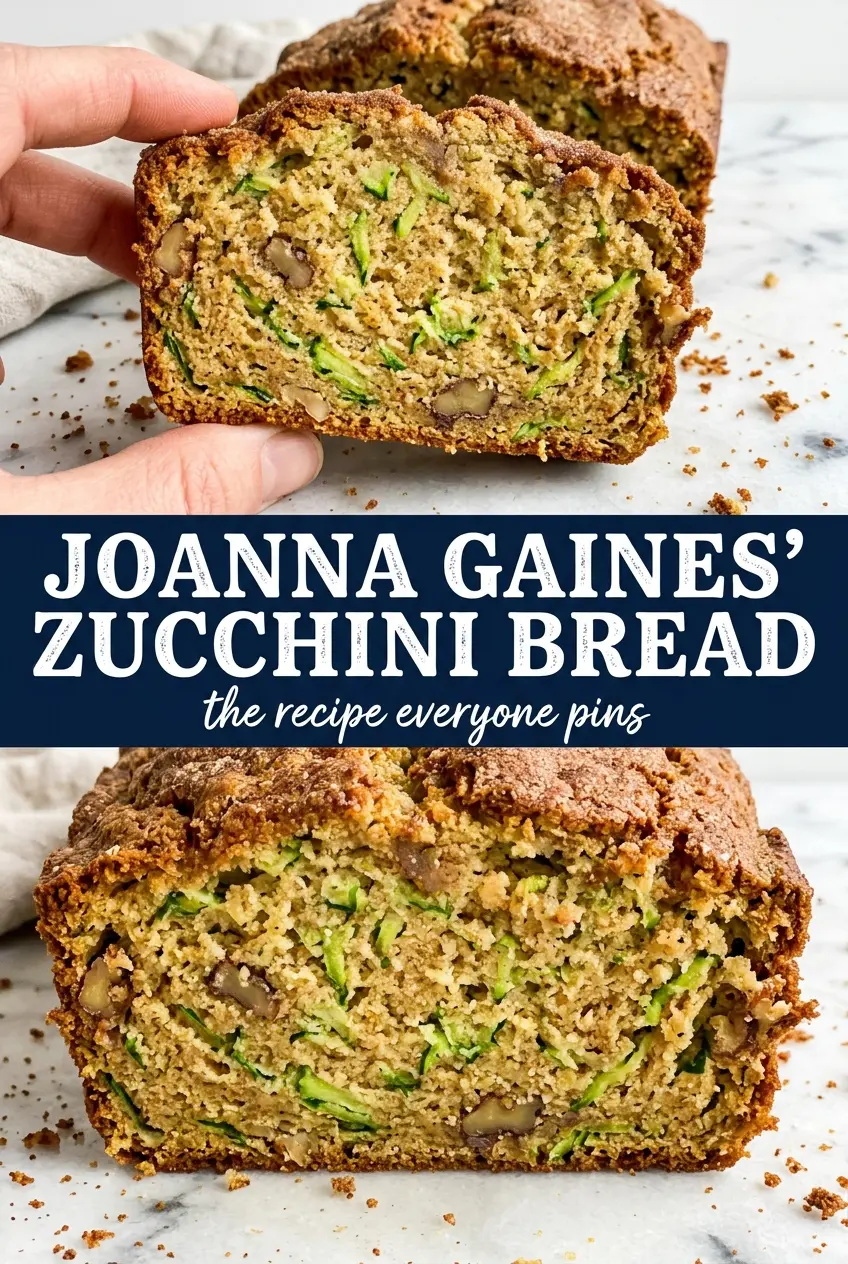
Joanna Gaines’ zucchini bread bakes up with a crackly, domed top, a tender crumb, and just enough cinnamon warmth to make the whole kitchen smell like something worth slowing down for. The loaf slices cleanly once it cools, but the inside stays soft and moist thanks to the zucchini that melts right into the batter.
What makes this version work is the balance: plenty of oil for richness, enough sugar for that classic bakery-style sweetness, and no extra fuss with squeezing the zucchini dry. That moisture isn’t a problem here; it’s part of what keeps the loaf from turning dense or dry. The turbinado sugar on top adds a little sparkle and a thin, crisp finish that gives each slice a better texture contrast.
Below you’ll find the small details that matter most, from why the zucchini should go in unsqueezed to how to keep the loaf from sinking in the middle. If you’ve ever ended up with a gummy center or a bland quick bread, the notes here will help you avoid both.
I was skeptical about not squeezing the zucchini, but the loaf turned out perfectly moist without being soggy. The top split beautifully and the turbinado sugar gave it that little bakery crunch my husband kept talking about.
Like this Joanna Gaines zucchini bread? Save it to Pinterest for the moist, cinnamon-spiced loaf with that split golden top.
The Mistake That Makes Zucchini Bread Heavy Instead of Tender
Zucchini bread usually goes wrong for one of two reasons: the batter gets overmixed, or the zucchini gets wrung dry before it ever reaches the bowl. This recipe needs that moisture. The grated zucchini softens the crumb as it bakes, and if you squeeze it out, the loaf can turn oddly dry and more muffin-like than bread-like.
The other trap is chasing a smooth batter. Once the dry ingredients go in, stir until the flour disappears and stop. Overworking the batter builds too much structure, and that’s how you end up with a tight loaf instead of one that pulls apart in soft, tender slices.
That domed top everyone wants comes from a batter that’s thick enough to hold its shape but loose enough to rise without splitting into a dense cap. The turbinado sugar helps here too, because it sets the top early and gives the loaf a little crust before the center finishes baking.
What Each Ingredient Is Actually Doing in This Loaf
- All-purpose flour — Gives the loaf its structure without making it chewy. Bread flour would make this heavier, and cake flour would make it too fragile.
- Baking soda and baking powder — The combination gives you lift and helps the loaf rise tall instead of flattening out. Soda also reacts with the batter for a better browning and that classic quick-bread flavor.
- Cinnamon and nutmeg — These warm the loaf without turning it into a spice bread. Cinnamon does most of the work; nutmeg stays in the background and rounds things out.
- Vegetable oil — This is what keeps the crumb soft for days. Melted butter would give a richer flavor, but the texture wouldn’t stay as moist.
- Unsqueezed zucchini — Freshly grated zucchini disappears into the batter and adds moisture without leaving a vegetable texture behind. If your zucchini is huge and watery, grate it on the medium holes and use it right away.
- Walnuts — Optional, but they add a clean crunch that plays well with the soft crumb. If you skip them, the loaf still works exactly as written.
- Turbinado sugar — This isn’t just decoration. It creates the crisp top that makes each slice taste finished, not flat.
Building the Batter Without Deflating the Loaf
Mix the dry ingredients first
Whisk the flour, leaveners, salt, cinnamon, and nutmeg together until the mixture looks even from edge to edge. This keeps the baking soda and baking powder from clumping in one spot, which matters because uneven leavening can leave you with tunnels in one slice and a heavy patch in another. If the spices aren’t blended well here, the first few bites can taste sharp and the rest bland.
Bring the wet ingredients together smoothly
Whisk the sugar, eggs, oil, and vanilla until the mixture looks glossy and thickened slightly. You’re not trying to whip air into it; you just want the sugar to start dissolving so the batter bakes up evenly. If the eggs are still streaky, keep whisking for another few seconds before adding the zucchini.
Fold in the zucchini, then stop early
Stir in the grated zucchini before the dry ingredients go in. The batter may look loose at this point, and that’s exactly right. Once the flour mixture is added, stir only until the last streaks disappear. If you keep mixing after that, the loaf can bake up tough and start to peak into a narrow dome instead of a wide, even split.
Bake for the split top, not just the timer
Divide the batter between greased pans and scatter the turbinado sugar over the top. Bake until the center is set and a toothpick comes out clean or with just a few moist crumbs; the exact time depends on your pan size and how wet your zucchini was. The top should be deeply golden and split down the center. If the loaf browns too quickly before the middle sets, tent it loosely with foil for the last 10 to 15 minutes.
Three Ways to Make This Zucchini Bread Work for You
Make it dairy-free without changing the texture
This recipe is already dairy-free as written, which is part of why the crumb stays soft for days. Keep the oil-based batter and you won’t lose the moist texture that butter-heavy loaves sometimes miss.
Swap the walnuts for chocolate chips
If you want a sweeter, dessert-like loaf, use chocolate chips instead of walnuts or skip the nuts entirely. Chips melt into small pockets and make the bread feel richer, but they also soften the cinnamon-spice character a little.
Turn it into muffins
Portion the batter into lined muffin cups and bake at the same temperature for about 18 to 24 minutes. You’ll lose the long bakery-style loaf slice, but you gain faster baking and better grab-and-go portions.
Use one large loaf pan instead of two smaller ones
The batter can go into one large loaf pan if that’s what you have, but the bake time will stretch longer and the center will need more checking. Watch for a deep golden crust and a toothpick that comes out clean from the thickest point, since underbaking is the fastest way to end up with a gummy middle.
Storage and Reheating
- Refrigerator: Store tightly wrapped for up to 5 days. The crumb stays moist, though the top will soften a bit after day one.
- Freezer: This loaf freezes well. Wrap slices or the whole cooled loaf tightly, then freeze for up to 3 months. Thaw at room temperature while still wrapped so condensation doesn’t make the crust soggy.
- Reheating: Warm slices in a toaster oven or low oven for a few minutes. The common mistake is microwaving too long, which makes the crumb rubbery instead of soft.
Questions I Get Asked About This Recipe
Joanna Gaines' Zucchini Bread
Ingredients
Equipment
Method
- Preheat oven to 350°F and grease two 9x5 loaf pans (or prepare one large pan). This helps the batter release cleanly and supports a domed top.
- Whisk all-purpose flour, baking soda, baking powder, salt, cinnamon, and nutmeg together in a bowl. Mix until evenly speckled so spices bake through every slice.
- Whisk granulated sugar, eggs, vegetable oil, and vanilla extract in a large bowl until well combined. Stop when the mixture looks smooth and glossy.
- Stir in grated zucchini without squeezing it. Keep the moisture from the zucchini so the loaf stays tender.
- Add the dry ingredients to the wet ingredients and stir until just combined, then fold in walnuts if using. Mix lightly to avoid a tough crumb.
- Divide the batter between prepared loaf pans, sprinkle turbinado sugar on top, and bake for 55–65 minutes at 350°F. Bake until a toothpick inserted in the center comes out clean.
- Cool the loaves for 20 minutes before removing from the pans. This sets the crumb and makes slicing easier without breaking the domed top.