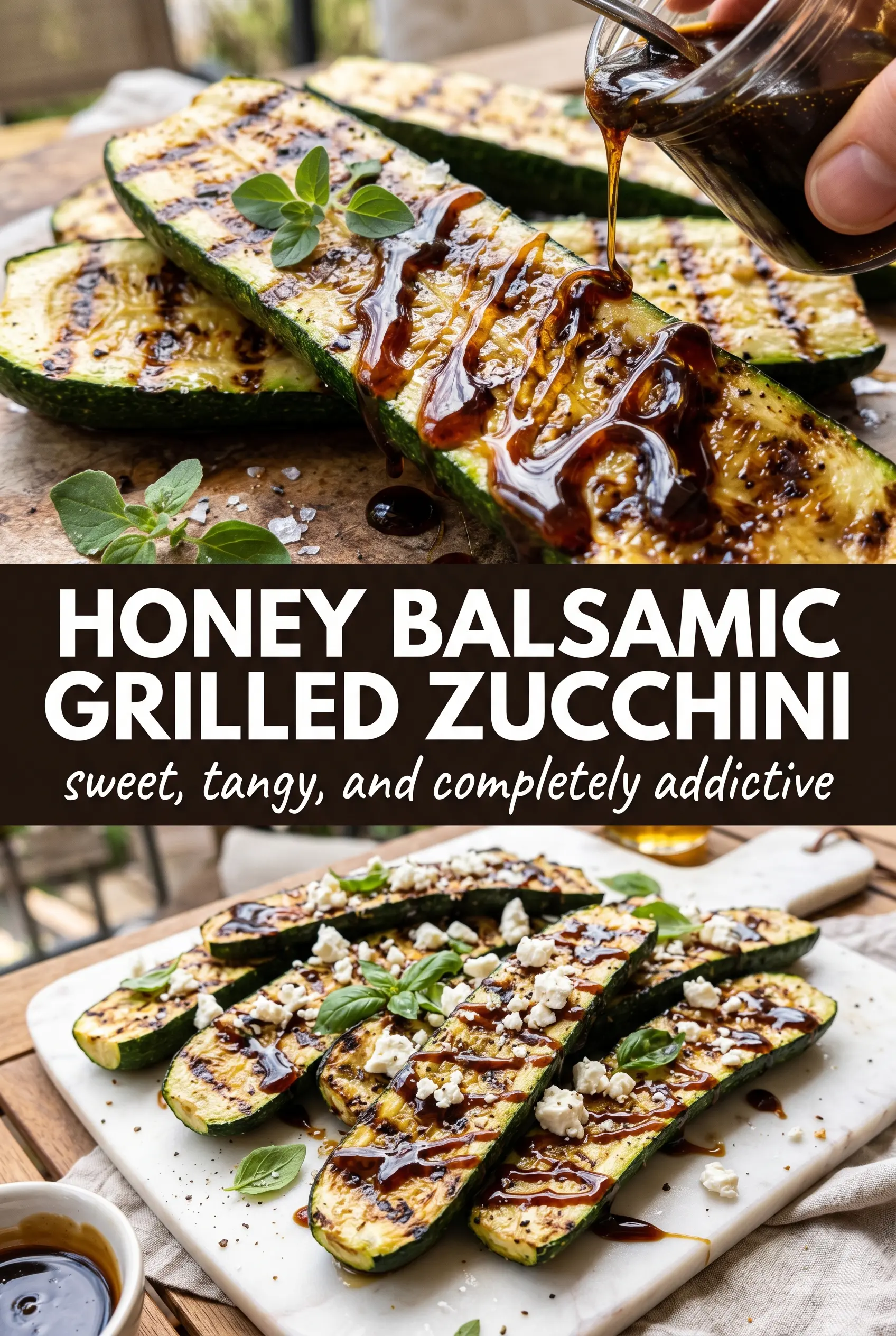
Honey balsamic grilled zucchini lands on the table with deep char marks, sticky edges, and a sweet-tangy glaze that clings to every plank. It’s the kind of side dish that disappears fast because it tastes like more work than it actually is, and the grill gives zucchini the kind of personality it needs. The honey caramelizes, the balsamic sharpens, and the zucchini stays tender instead of collapsing into mush.
The part that makes this version work is the short marinate and the last-minute brushing. Zucchini gives up moisture quickly, so a brief rest is enough to season the slices without flooding the grill. The glaze also needs a little attention over the fire because honey browns fast; that quick caramelization is what builds the glossy finish, but it can go from perfect to bitter if you walk away.
Below, I’ve included the timing that keeps the zucchini from turning soggy, plus a few smart swaps if your grill runs hot or you want to stretch the flavor in a different direction.
The glaze turned glossy and sticky exactly like you said, and the zucchini held its shape instead of going limp. I got those caramelized edges on the second side and served it with grilled chicken.
Like this honey balsamic grilled zucchini? Save it to Pinterest for a sticky, sweet-savory side that comes off the grill with real char and glossy glaze.
The Marinade Window That Keeps Zucchini Tender, Not Watery
Zucchini is full of water, and that’s the first thing people fight with on the grill. If it sits in a long marinade, it starts to weep before it ever hits the heat, which means less glaze on the vegetable and more liquid burning off the grates. Fifteen minutes is the sweet spot here: enough time for the garlic, thyme, honey, and balsamic to season the surface, not long enough to make the slices soggy.
The other mistake is grilling on a surface that isn’t hot enough. You want medium-high heat so the zucchini sears quickly and picks up those dark marks before it softens too much. If the grates are cool, the planks steam first, then slump. Hot grates give you that faintly smoky edge and help the glaze cling instead of sliding off.
What the Honey, Balsamic, and Olive Oil Each Bring to the Pan
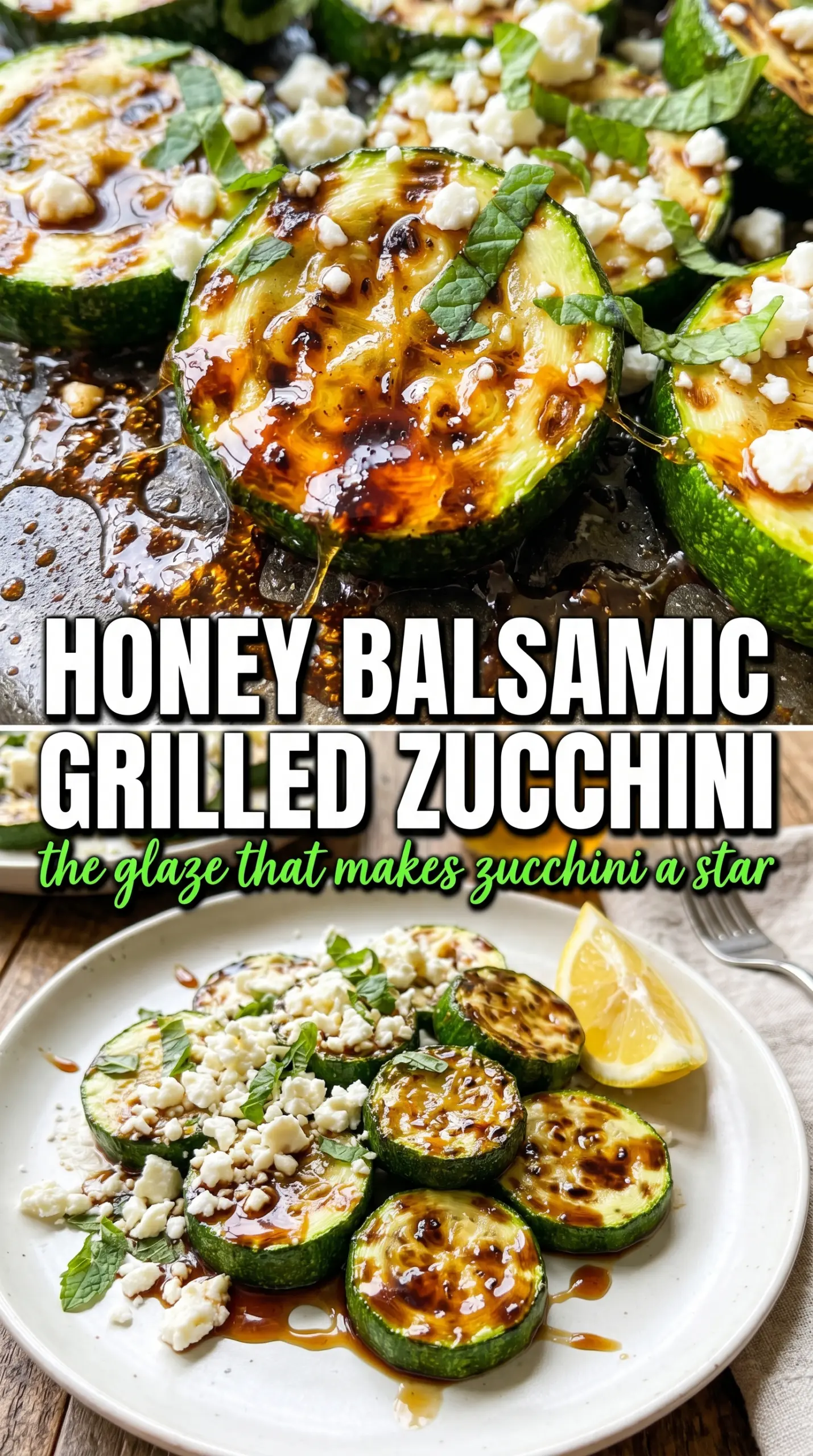
- Zucchini — Medium zucchini work best because they’re firm enough to hold their shape and not so large that the centers turn spongy. Slice them into even planks or halve them lengthwise so they cook at the same rate. Thicker cuts are safer than thin ones if your grill tends to run hot.
- Balsamic vinegar — This is the sharp, concentrated backbone of the glaze. A decent balsamic matters here because it reduces into a glossy coating instead of just tasting thin and acidic. If yours is especially sharp, the honey balances it; if it’s very syrupy already, use the lower end of the honey amount.
- Honey — Honey gives the glaze its sticky finish and helps the edges caramelize on contact with the grill. Maple syrup works in a pinch, but it lands a little softer and less floral. Keep an eye on it because honey browns faster than plain oil-based marinades.
- Olive oil — The oil helps the glaze spread evenly and keeps the zucchini from sticking to the grates. You don’t need anything fancy, but a decent extra-virgin olive oil adds a roundness that keeps the balsamic from tasting too sharp. It also gives the garlic and thyme a better chance to coat the surface evenly.
- Fresh thyme — Fresh thyme survives the grill better than dried and brings a woodsy note that works with the balsamic. If you only have dried thyme, use half the amount and whisk it in well so it doesn’t clump. Fresh herbs for garnish at the end make the whole dish taste brighter.
Getting the Glaze to Caramelize Without Burning
Whisking the Marinade
Whisk the olive oil, balsamic, honey, garlic, thyme, salt, and pepper until the glaze looks glossy and unified. If the honey sits in streaks at the bottom, it won’t coat the zucchini evenly and the first pieces off the grill will taste different from the last. The mixture should look loose enough to brush but thick enough to cling.
Coating and Resting the Zucchini
Brush the zucchini generously and let it sit for 15 minutes. You’re not trying to pickle it, just season it. If a puddle collects under the slices, don’t keep adding more glaze; that extra liquid will burn before the vegetables caramelize. A light, even coat on both sides is enough.
Grilling Over Direct Heat
Oil the grates, then lay the zucchini down and leave it alone until you see clear grill marks and the edges start to soften. Turn too soon and you’ll tear the surface before it has a chance to sear. The honey will darken fast, so if you smell a bitter scorch, move the pieces to a cooler part of the grill for a minute.
The Last Brush and Final Finish
Brush on the remaining glaze during the final minute of cooking so it turns sticky without disappearing into the fire. Pull the zucchini when it’s tender at the thickest point but still has some body left. Finish with fresh thyme and flaky salt while it’s hot so the salt melts into the glaze instead of sitting on top.
How to Adapt This for Different Grills and Diets
Make It Dairy-Free and Naturally Gluten-Free
This recipe already fits both of those categories as written, which makes it an easy side for mixed menus. Just keep an eye on any bottled balsamic you use, since a few cheaper brands include thickeners or additives you may not want. The flavor stays the same, and the texture doesn’t change at all.
No Grill? Use a Grill Pan or Broiler
A hot grill pan gives you the best stand-in because it still creates direct contact and visible char. If you use the broiler, place the zucchini close to the heat and watch it closely; the honey can go from caramelized to burned in a minute. You’ll lose a little smoky flavor, but the sticky glaze still works.
Swap the Herbs for Basil or Oregano
Thyme gives the dish its earthy backbone, but basil leans brighter and oregano leans more savory. Basil tastes softer and fresher, which works well if you’re serving this with tomatoes or grilled fish. Oregano makes the glaze feel more robust and a little more Mediterranean.
Storage and Reheating
- Refrigerator: Store leftovers in an airtight container for up to 3 days. The zucchini will soften a bit, but the glaze still tastes good cold or reheated.
- Freezer: I don’t recommend freezing this dish. Zucchini turns watery and grainy after thawing, and the glaze won’t have the same sticky texture.
- Reheating: Warm leftovers in a hot skillet or under the broiler for a minute or two. The biggest mistake is microwaving too long, which makes the zucchini collapse and washes out the caramelized edges.
Answers to the Questions Worth Asking
Honey Balsamic Grilled Zucchini
Ingredients
Equipment
Method
- Whisk olive oil, balsamic vinegar, honey, minced garlic, and fresh thyme leaves until smooth. Season with salt and black pepper to taste.
- Brush the zucchini generously with the honey balsamic glaze, coating all cut surfaces. Let it sit for 15 minutes so the glaze clings.
- Preheat the grill to medium-high, then oil the grates well. Place the zucchini on the hot grill.
- Grill for 3–4 minutes per side until deep grill marks form and the honey caramelizes quickly. Watch for flare-ups because the glaze can darken fast.
- Brush with extra honey balsamic glaze during the last minute of cooking, just as the zucchini finishes. Remove to a platter when tender and well char-marked.
- Arrange the zucchini on a platter and drizzle any remaining honey balsamic glaze over the top. Garnish with fresh thyme and flaky salt.