Charred zucchini and yellow squash get a sharp, glossy finish in this Dijon marinade, and that little hit of mustard is what keeps the vegetables from tasting flat on the grill. The edges pick up smoke and color fast, while the center stays tender instead of collapsing into a soft pile. It’s the kind of side dish that disappears first because it tastes bright, savory, and just a little unexpected.
The trick is in the balance. Dijon brings body and tang, whole grain mustard adds texture, and a touch of honey helps the vegetables caramelize instead of drying out. A short marinade is enough here; leave them too long and the squash starts to soften before it ever hits the heat. Grilling over medium-high heat gives you the char marks you want without burning the mustard or turning the planks limp.
Below, I’ll walk through the one grilling detail that matters most, what each ingredient is doing in the marinade, and the small timing change that keeps the vegetables glossy instead of soggy.
The mustard marinade caramelized beautifully on the grill, and the squash stayed tender with just enough bite. I had people asking what I did differently because it tasted so much more flavorful than plain grilled vegetables.
Like this grilled zucchini and squash? Save it to Pinterest for the nights when you want a tangy Dijon side dish with real char and barely any cleanup.
The Reason the Marinade Needs the Grill, Not a Long Soak
With vegetables like zucchini and squash, the biggest mistake is treating them like sturdy potatoes or carrots. They’re full of water, which means a long marinade doesn’t deepen flavor the way you’d expect; it softens the flesh before cooking and can make the finished slices slump on the grill. Thirty minutes is enough to coat the surfaces and season the planks without pulling too much moisture out too soon.
The other thing that matters here is heat. Medium-high grill heat gives you fast caramelization on the outside while the inside stays tender and a little creamy. If the grill runs too hot, the mustard and honey can scorch before the squash has time to develop those deep brown marks. If it’s too cool, you get grill marks without much flavor, which is a different kind of disappointing.
- Cut size matters — 1/3-inch diagonal planks are thick enough to hold together on the grate, but thin enough to cook quickly. Thinner slices can fall apart; thicker ones need longer heat and lose that lively texture.
- Don’t overmarinate — the vegetables only need a short soak. The marinade is for surface flavor and browning, not for tenderizing.
- Brush at the end — reserving a little marinade and brushing it on during the last minute adds shine and a fresh burst of Dijon without leaving raw garlic on the vegetables.
What the Dijon, Mustard Seed, and Honey Are Each Doing Here
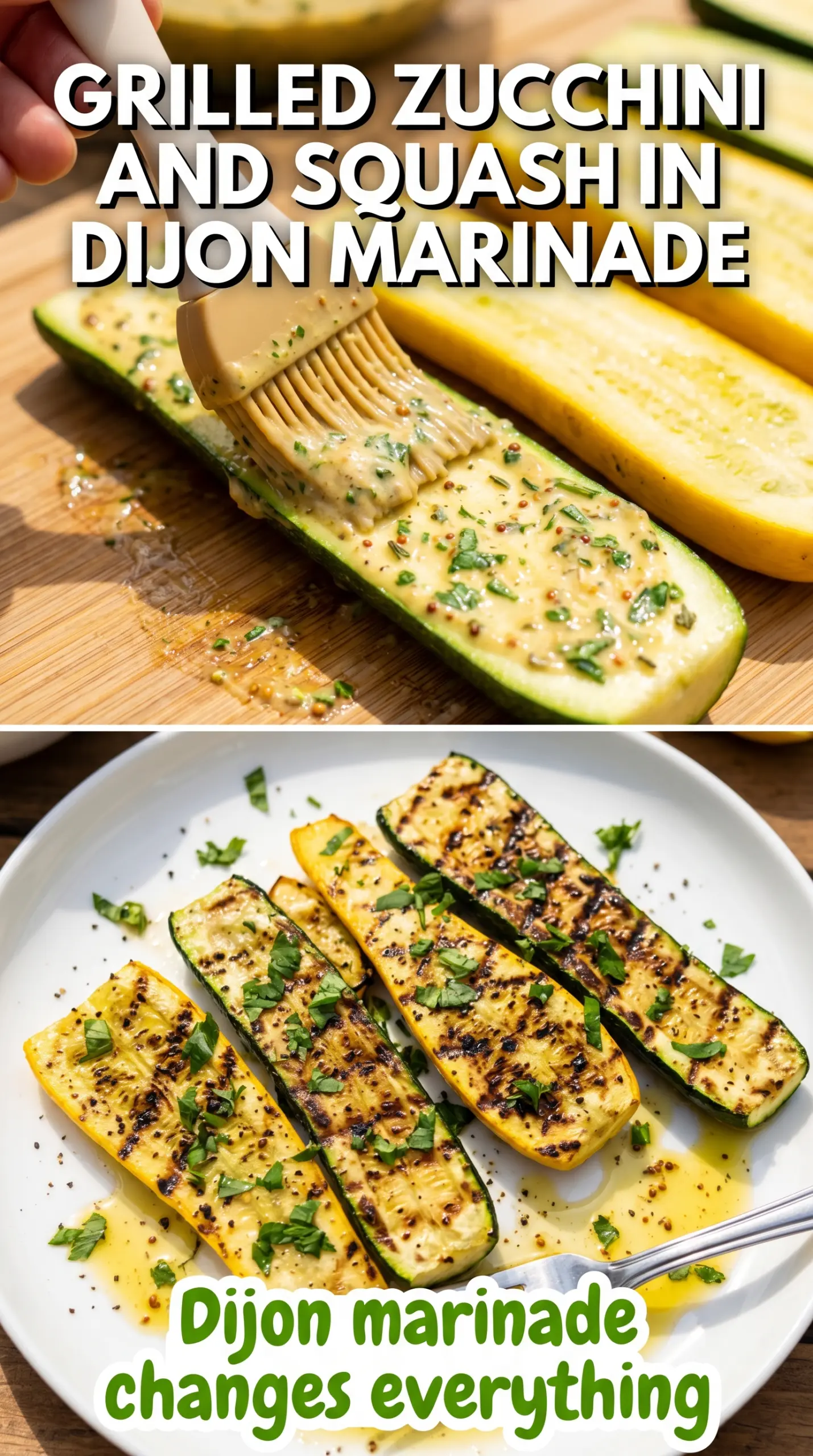
- Dijon mustard brings sharpness and emulsifies the marinade, helping the oil and vinegar stay blended long enough to cling to the vegetables. A good Dijon matters here because it defines the base flavor.
- Whole grain mustard adds little pops of texture and a more rustic mustard note. If you only have Dijon, the recipe still works, but the finish will be smoother and less layered.
- White wine vinegar keeps the marinade bright and cuts through the richness of the oil. Lemon juice can stand in if needed, though it reads a little softer and less winey.
- Honey isn’t there to make the dish sweet. It helps the surface caramelize and rounds out the vinegar so the marinade tastes balanced after grilling.
- Fresh thyme survives the grill better than most soft herbs and gives the vegetables a clean, woodsy note. Dried thyme works in a pinch, but use less because it reads stronger once heated.
Getting the Planks Charred Without Turning Them Limp
Mix the Marinade Until It Stays Together
Whisk the olive oil, Dijon, whole grain mustard, vinegar, garlic, thyme, honey, salt, and pepper until the mixture looks creamy and unified. If it separates right away, keep whisking for another few seconds; the mustard helps emulsify everything, and that’s what lets it coat the vegetables evenly. A broken-looking marinade still works, but it won’t cling as well.
Coat the Squash Briefly
Toss the zucchini and yellow squash in the marinade just until every surface is coated, then let them rest for 30 minutes. Stir once halfway through if the bowl starts pooling liquid at the bottom. If the slices sit much longer, they’ll release more water and become harder to grill cleanly.
Grill Over Medium-High Heat
Oil the grates well before the vegetables go on. Lay the planks across the grates and leave them alone until they release easily and show dark grill marks, usually 3 to 4 minutes. If they stick, they’re not ready yet. Flip once and cook the second side until the edges are browned and the centers are just tender.
Finish With the Reserved Marinade
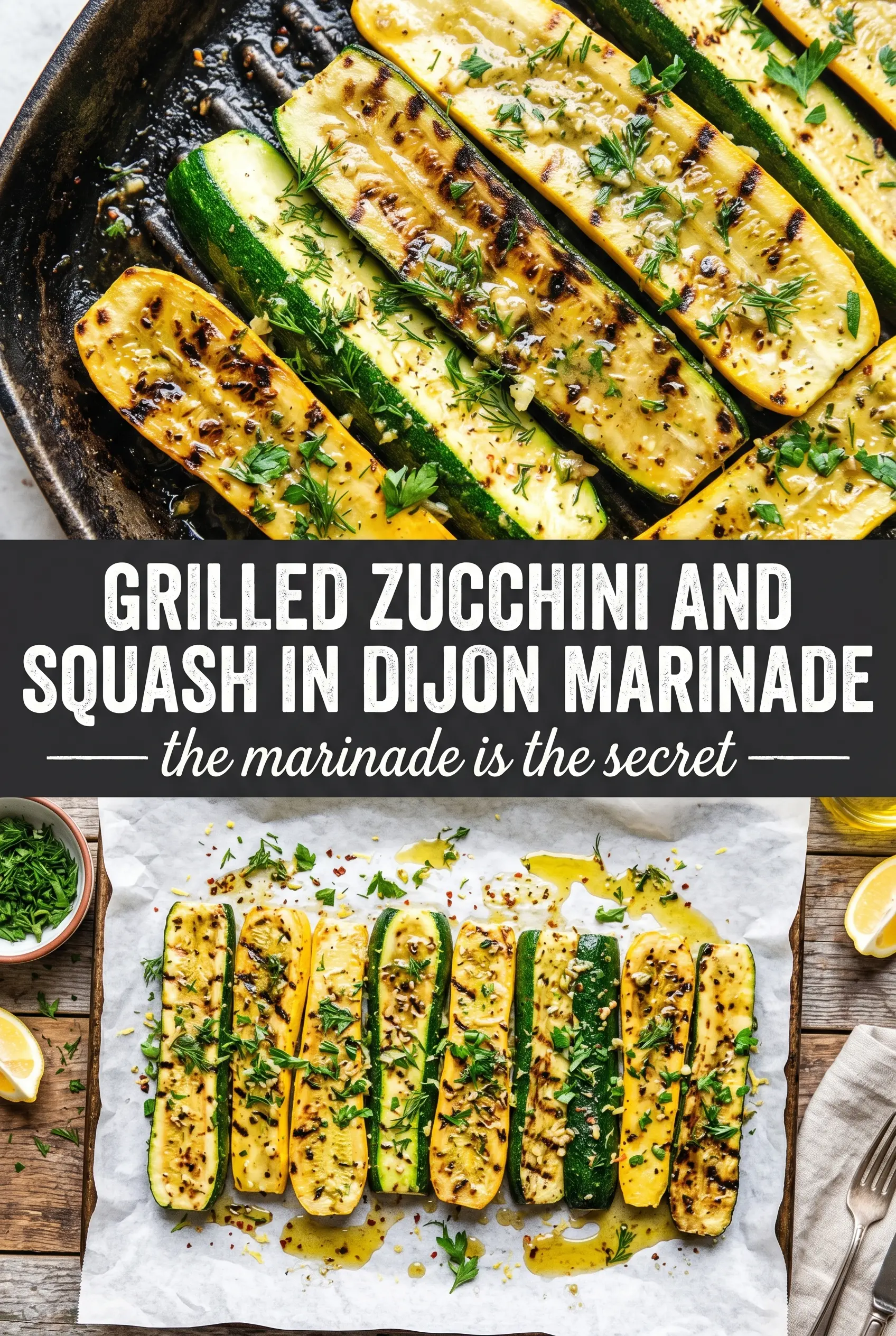
Brush on the reserved marinade in the last minute so it warms through without burning. That final coat gives the vegetables a glossy look and a sharper mustard hit right before serving. Scatter fresh thyme over the top and add lemon at the table for brightness. The lemon matters more than it seems; it wakes the whole platter up.
How to Adapt This for a Different Grill, a Different Diet, or a Bigger Crowd
Dairy-Free and Gluten-Free as Written
This recipe already fits both dairy-free and gluten-free cooking without any changes. The main thing to watch is your Dijon mustard label, since some brands include additives you may want to avoid. The rest is just vegetables, oil, vinegar, herbs, and honey.
No Grill? Use a Broiler
Arrange the marinated planks on a foil-lined sheet pan and broil them close to the heat source, watching carefully so the mustard glaze doesn’t scorch. You’ll get less smoke flavor than a grill gives you, but the edges will still brown and the marinade will caramelize nicely.
Swap the Honey for a Lower-Sugar Finish
Use a small amount of maple syrup or leave the sweetener out entirely if you want a sharper, more savory result. Without it, the vegetables still taste good, but the browning will be a little less pronounced and the marinade will read more aggressively tangy.
Storage and Reheating
- Refrigerator: Store leftovers in an airtight container for up to 3 days. The vegetables soften a little as they sit, but the flavor stays bright.
- Freezer: I don’t recommend freezing this. Zucchini and squash lose their texture and turn watery after thawing.
- Reheating: Reheat in a hot skillet or under the broiler just until warmed through. Microwaving makes the planks limp and mutes the charred edges, which are the best part.
Answers to the Questions Worth Asking
Grilled Zucchini and Squash in Dijon Marinade
Ingredients
Equipment
Method
- Whisk olive oil, Dijon mustard, whole grain mustard, white wine vinegar, minced garlic, fresh thyme, honey, salt, and black pepper together until smooth.
- Toss zucchini and yellow squash planks in the marinade, then let sit 30 minutes to marinate (cover if possible).
- Preheat the grill to medium-high and oil the grates so the vegetables don’t stick.
- Remove vegetables from the marinade, reserve the remaining marinade, and grill for 3–4 minutes per side until caramelized with visible char marks.
- In the last minute of cooking, brush the vegetables with the reserved marinade so it turns glossy and golden.
- Arrange on a platter, drizzle any remaining marinade over, garnish with fresh thyme, and serve with lemon.