Jumbo shells wrapped in a creamy, beefy sauce are the kind of dinner that disappears fast because every bite gets a little bit of everything. The pasta catches the tomato-rich sauce in its curves, the cheddar melts into the beef, and the whole skillet ends up spoonable, rich, and just loose enough to coat the shells without turning heavy.
What makes this version work is the order of the cooking. The pasta simmers right in the broth and tomatoes, which gives the sauce body instead of watering it down, and the cream goes in near the end so it can thicken without breaking. The sharp cheddar melts best once the pan is off the heat, so you get a smooth finish instead of a grainy one.
Below, I’ve included the small details that matter here: when to cover the pan, how to tell the pasta is done before the sauce dries out, and which swaps still keep the dish creamy and satisfying.
The shells stayed tender but didn’t fall apart, and the sauce thickened up beautifully once I added the cream. My husband went back for seconds before I even sat down.
Creamy Beef and Shells for the nights when you want one skillet, melty cheddar, and pasta that soaks up every bit of the sauce.
The Part That Keeps the Sauce From Turning Starchy
The biggest mistake with skillet pasta is letting the liquid disappear before the noodles are done. Here, the broth and tomatoes need to stay loose enough for the shells to move around while they cook. If the pan looks dry too early, the pasta will grab on and the sauce will turn thick in a gummy way instead of creamy.
Covering the skillet matters because it traps the steam that helps the shells cook evenly. Once the pasta is tender and most of the liquid has been absorbed, uncovering the pan for the cream gives you control over the final texture. You’re looking for a sauce that clings to the shells and still shifts when you stir it, not a paste.
What Each Ingredient Is Doing in the Skillet
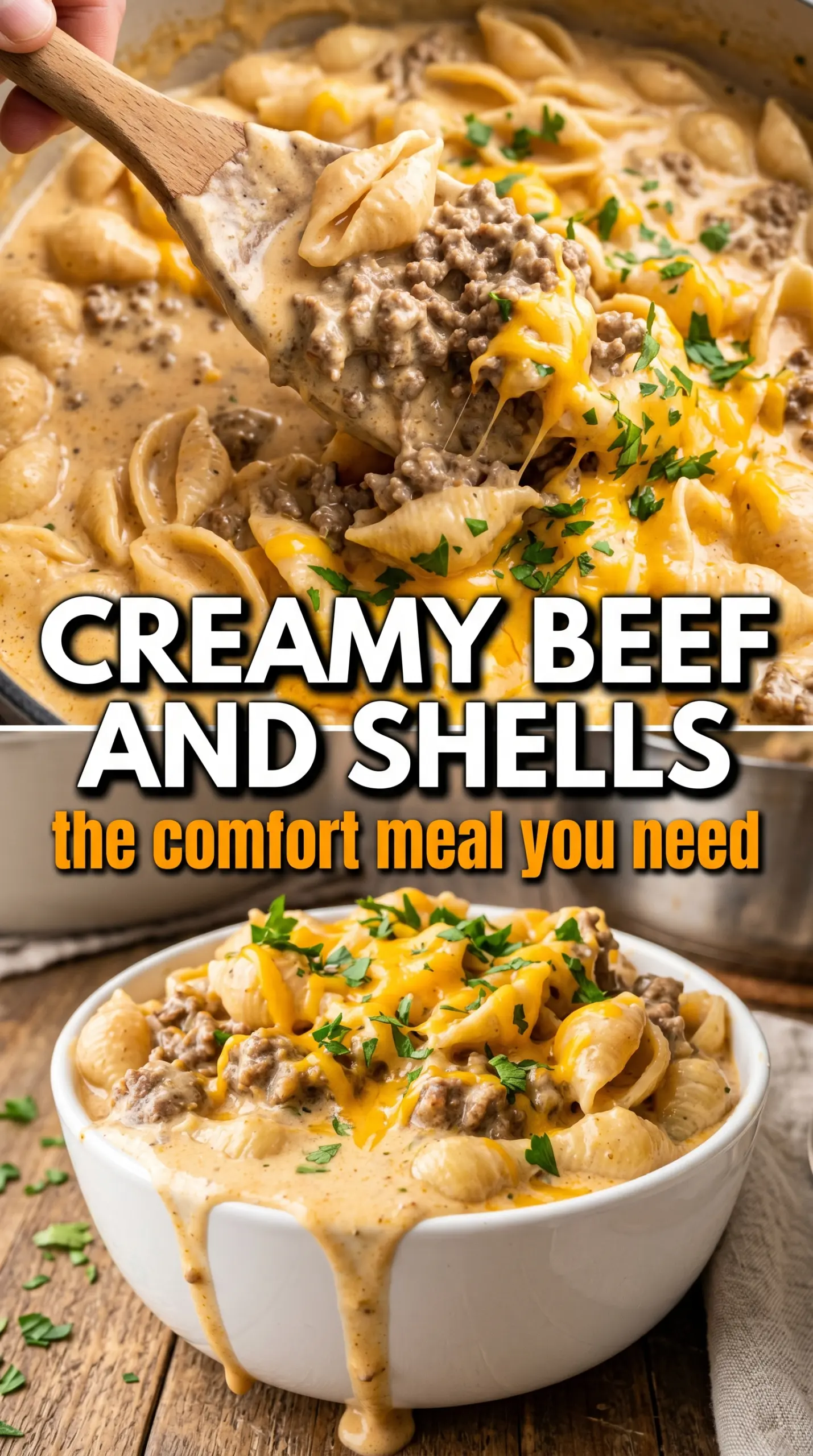
- Ground beef — This is the backbone of the dish. Use lean or medium-ground beef; if it’s very fatty, drain the excess after browning so the sauce doesn’t end up greasy.
- Shell pasta — Medium shells are worth using because they catch the sauce in the curves. Smaller pasta works in a pinch, but you lose some of that creamy-filled-shell bite that makes this dish feel hearty.
- Beef broth — This seasons the pasta from the inside out as it cooks. Water won’t give you the same depth, and the sauce will taste flatter unless you compensate with more salt and seasoning.
- Diced tomatoes and Rotel — These bring acidity and body. The Rotel adds a little heat and keeps the sauce from tasting one-note; if you want a milder pan, use plain diced tomatoes and add a pinch of extra paprika.
- Heavy cream — This is what turns the tomato-beef mixture into a proper creamy sauce. Half-and-half will work, but the sauce will be thinner and a little less rich.
- Sharp cheddar — Sharp cheddar gives the sauce its punch. Shred it yourself if you can; pre-shredded cheese often has anti-caking starch that can make the sauce less smooth.
Building the Creamy Sauce Without Breaking It
Browning the Beef First
Cook the beef over medium-high heat until it’s no longer pink and you see browned bits on the bottom of the pan. That browning gives the sauce a deeper, meatier taste, and it’s worth taking the extra minute to break the meat into small crumbles. If you skip draining a heavy amount of fat, the finished sauce can look slick instead of creamy.
Letting the Pasta Cook in the Sauce Base
After the onion and garlic soften, add the uncooked shells straight into the skillet with the broth, tomatoes, and seasoning. Stir well so nothing sticks on the bottom, then bring it to a boil before lowering the heat and covering the pan. The liquid should simmer gently; a hard boil can rough up the pasta and reduce the sauce too fast.
Finishing With Cream and Cheese
Once the shells are tender, stir in the cream and let it simmer uncovered just until the sauce looks glossy and slightly thicker. Pull the pan off the heat before adding the cheddar, then stir until it melts completely. That off-heat melt is what keeps the cheese smooth — if the pan is too hot, the cheese can tighten and go grainy.
How to Adapt This for Different Kitchens and Diets
Make It Gluten-Free
Use a gluten-free shell pasta and keep an eye on the cook time, since those pastas soften faster and can go mushy if you walk away. The sauce itself is already naturally gluten-free, so this swap is mostly about stopping the pasta at the right moment.
Make It Lighter Without Losing the Creamy Texture
Swap half-and-half for the heavy cream if you want a lighter sauce, but expect a thinner finish. Keep the cheese amount the same so the sauce still feels rich enough to coat the shells.
Use Ground Turkey Instead of Beef
Ground turkey works well if you want a milder, leaner version, but it needs the seasoning to carry more of the flavor. Add a little extra salt and don’t skip the smoked paprika, since the turkey won’t bring the same savory depth that beef does.
Storage and Reheating
- Refrigerator: Store in an airtight container for up to 4 days. The pasta will keep soaking up sauce, so it thickens as it sits.
- Freezer: It freezes, but the cream and cheese can separate a little after thawing. If you plan to freeze it, stop before adding the cheddar and stir it in after reheating.
- Reheating: Warm it gently on the stove with a splash of broth or milk, stirring often. High heat can make the sauce tighten up and turn oily, so low and slow is the fix.
Questions I Get Asked About This Recipe
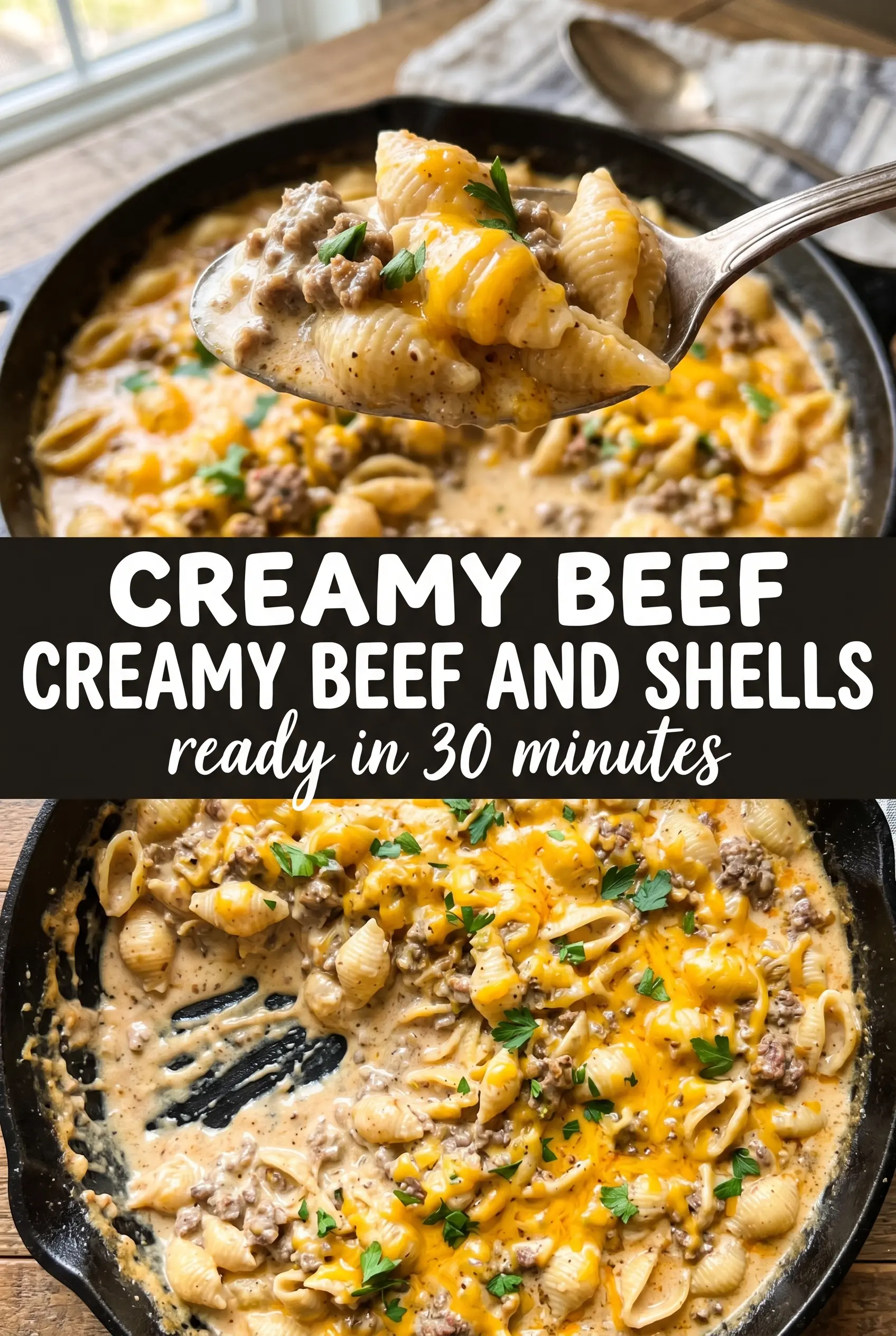
Creamy Beef and Shells
Ingredients
Equipment
Method
- Brown ground beef in a large deep skillet over medium-high heat, breaking it apart, then drain excess fat.
- Add diced onion and cook for 3 minutes until softened, then add garlic and cook 1 more minute.
- Add uncooked shells, beef broth, diced tomatoes, Rotel, Italian seasoning, smoked paprika, salt, and black pepper and stir to combine.
- Bring to a boil, reduce heat to medium-low, cover, and cook for 12–15 minutes until pasta is tender and most liquid is absorbed.
- Stir in heavy cream and simmer uncovered for 2–3 minutes until the sauce thickens.
- Remove from heat, stir in shredded cheddar until fully melted, and serve immediately.