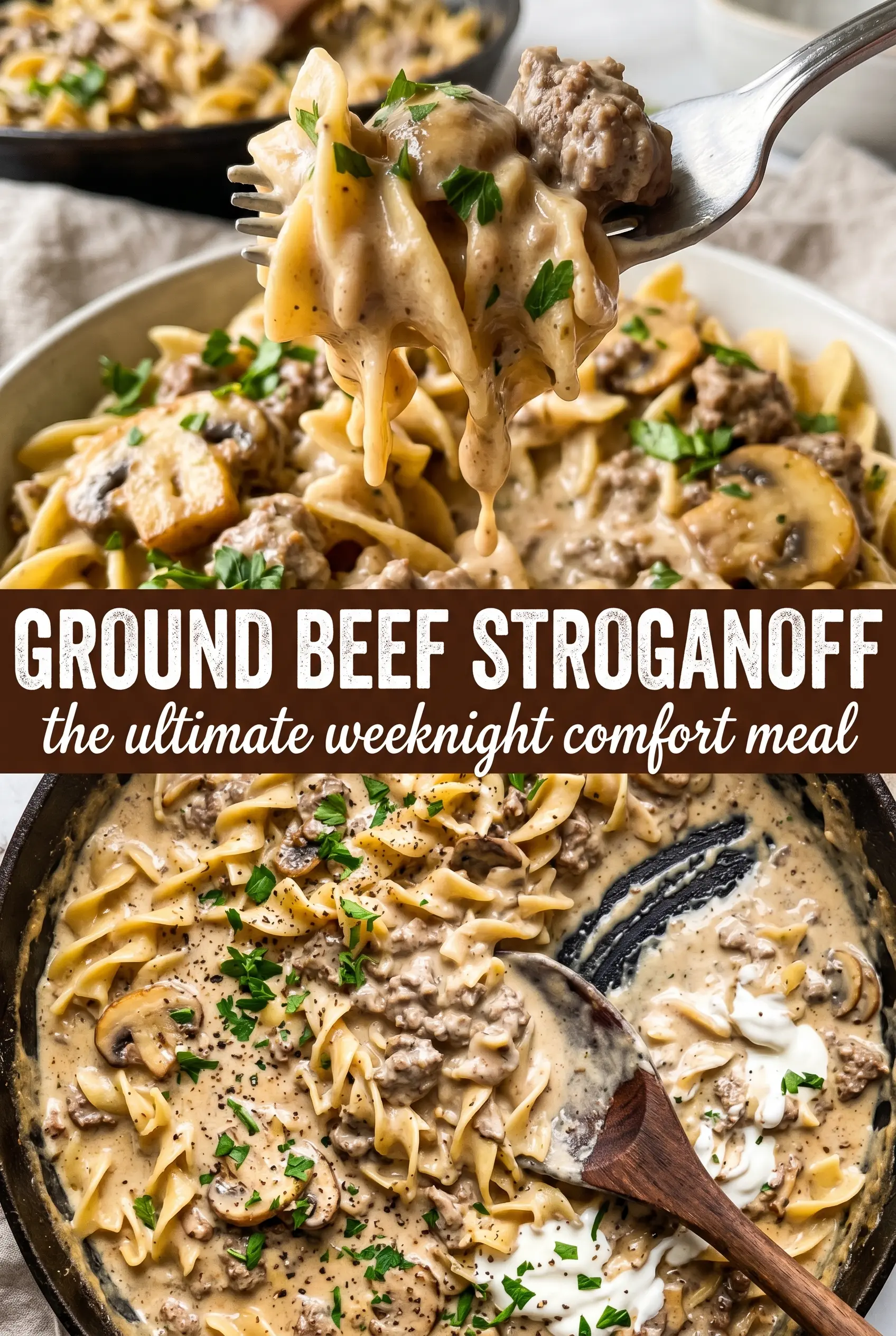
Wide egg noodles, a glossy mushroom sauce, and seasoned ground beef make this the kind of dinner that disappears fast. The sauce turns rich without feeling heavy, and the whole skillet comes together with the kind of straightforward, dependable flavor that earns a permanent place in the weeknight rotation.
What makes this version work is the order. The beef browns first so you get those savory bits stuck to the pan, then the mushrooms cook down in the same skillet and pick up all that flavor. A little flour thickens the broth, Dijon sharpens the sauce, and sour cream goes in off the heat so it stays smooth instead of turning grainy.
Below, I’m breaking down the one point that matters most if you want stroganoff that tastes balanced instead of flat, plus a few swaps that actually make sense when you’re working with what’s in the pantry.
The sauce thickened beautifully and stayed silky after I stirred in the sour cream. My husband went back for seconds and asked if I could make it again next week.
Love a creamy, one-pan dinner? Save this ground beef stroganoff for the nights when you want mushroom sauce, egg noodles, and minimal cleanup.
The Key to Stroganoff That Stays Creamy Instead of Splitting
The mistake that breaks a lot of stroganoff is heat. Sour cream doesn’t like a bubbling pan, and if it goes in while the sauce is still boiling, it can turn grainy or separate. Pull the skillet off the burner before stirring it in, and let the residual heat finish the job.
The other thing that matters is the flour step. Cooking the flour with the beef and mushrooms for a full minute gets rid of that raw taste and helps the broth thicken evenly later. Skip that short cook time and the sauce can stay thin or taste dusty.
- Browned beef — This gives the sauce its backbone. If there’s a lot of grease in the pan after browning, drain it off before you move on so the finished sauce doesn’t taste oily.
- Mushrooms — They bring the savory, woodsy flavor that makes stroganoff taste like stroganoff. Cremini mushrooms work beautifully, but white button mushrooms are fine if that’s what you have.
- Sour cream — Full-fat sour cream gives the smoothest finish and holds up best. Low-fat versions can work, but the sauce is a little more likely to loosen or look less silky.
- Egg noodles — Wide noodles catch the sauce in all the right places. If you use a different pasta, pick something with ridges or a broad shape so the sauce doesn’t slide off.
What Each Ingredient Is Actually Doing in This Stroganoff
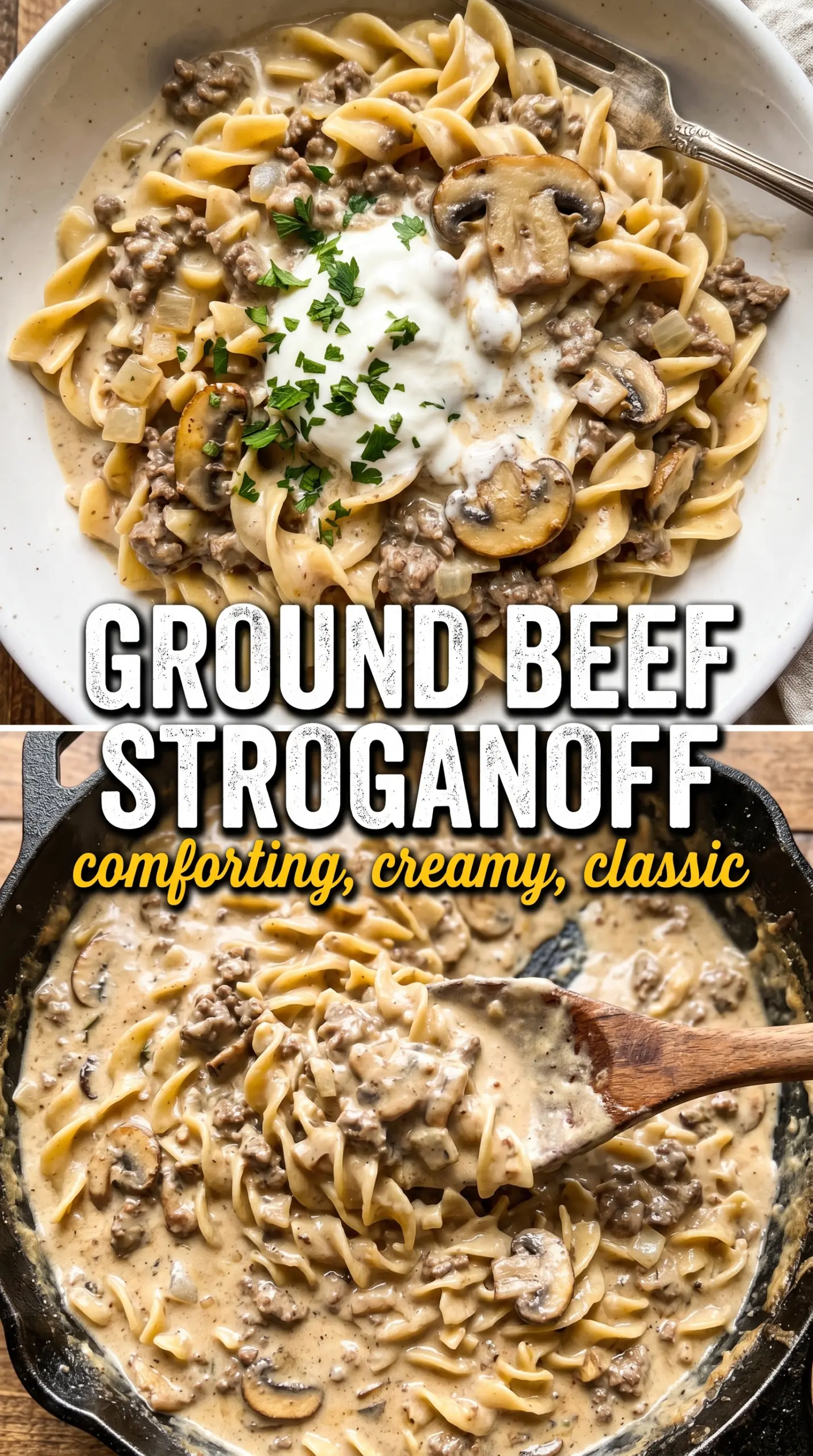
- Ground beef or beef strips (the protein) — Brown well so all the surface gets caramelized. This is where the flavor for the sauce comes from.
- Mushrooms (the earthiness) — Sauté until they release moisture and brown. Raw mushrooms make the sauce watery.
- Onions (the aromatic base) — Cook until golden and soft. They sweeten slightly and become part of the sauce structure.
- Sour cream (the signature richness) — Add it off the boil or it can break and look curdled. A squeeze of lemon juice keeps it smooth and silky.
- Beef broth (the body) — This creates the sauce and carries flavors. Don’t skip it or the stroganoff turns too thick and heavy.
- Paprika (the warmth and color) — This gives stroganoff its identity. Use Hungarian paprika if you have it for deeper flavor.
- Egg noodles (the traditional pairing) — Cook separately so they stay firm. Wide noodles catch the sauce better than thin ones.
- Butter for richness (the final touch) — Add before the sour cream so the sauce becomes silky. This prevents breaking.
Building the Sauce in the Same Pan
Brown the Beef First
Cook the ground beef over medium-high heat until it loses its pink color and starts to pick up a little browning on the edges. That color is flavor, and it’s what keeps the sauce from tasting flat. If the beef throws off a lot of liquid, keep cooking until most of it evaporates before you add the vegetables.
Cook Down the Onion and Mushrooms
Add the diced onion and sliced mushrooms to the same skillet and let them soften for about five minutes. The mushrooms will release moisture before they start to brown, so don’t rush this stage; if the pan looks crowded or wet, keep cooking until the excess liquid cooks off. Stir in the garlic at the end so it smells fragrant but doesn’t burn.
Thicken, Simmer, and Finish Off Heat
Sprinkle the flour over the meat mixture and cook it briefly, then pour in the beef broth and Worcestershire sauce while scraping up the browned bits from the bottom of the pan. Let the sauce simmer until it clings lightly to a spoon, then remove it from the heat before stirring in the sour cream. Toss with the cooked noodles right away so the pasta picks up the sauce while everything is still hot and glossy.
How to Tweak This for Different Kitchens and Diets
Make It Gluten-Free
Use a gluten-free flour blend in place of the all-purpose flour and serve it over gluten-free pasta. The sauce will still thicken, though it may look a touch less glossy than the original. If your broth isn’t certified gluten-free, swap that too because it’s an easy place for hidden wheat.
Use Ground Turkey Instead of Beef
Ground turkey works, but it needs a little help because it’s leaner and less rich than beef. Add a tablespoon of butter with the mushrooms or a little extra Worcestershire to bring back some depth. The finished dish will taste lighter, which is great if you want the same creamy comfort without the heavier beef flavor.
Swap the Egg Noodles
Rotini, fusilli, or pappardelle all work well here. Anything with some shape or surface area will hold the sauce better than plain spaghetti. If you use a sturdier pasta, reserve a splash of the cooking water and loosen the sauce at the end only if it feels too tight.
Storage and Reheating
- Refrigerator: Store leftovers for up to 4 days. The noodles will drink up some of the sauce, so expect the dish to thicken as it sits.
- Freezer: It freezes, but the sour cream can separate a little after thawing. For the best texture, freeze the beef and mushroom sauce without the noodles, then cook fresh pasta when you’re ready to serve.
- Reheating: Warm it gently on the stove or in the microwave at medium power with a splash of broth or water. High heat is what makes the dairy separate and the sauce turn greasy.