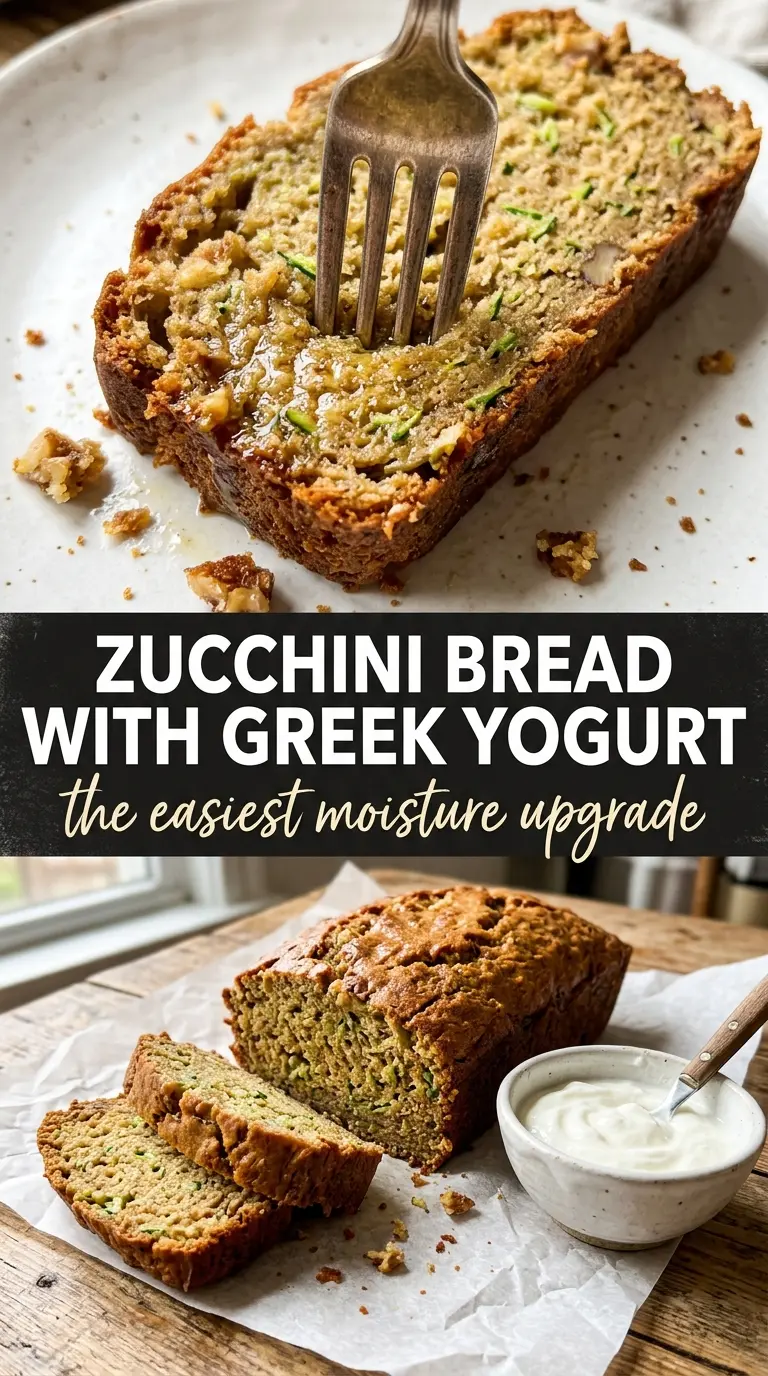
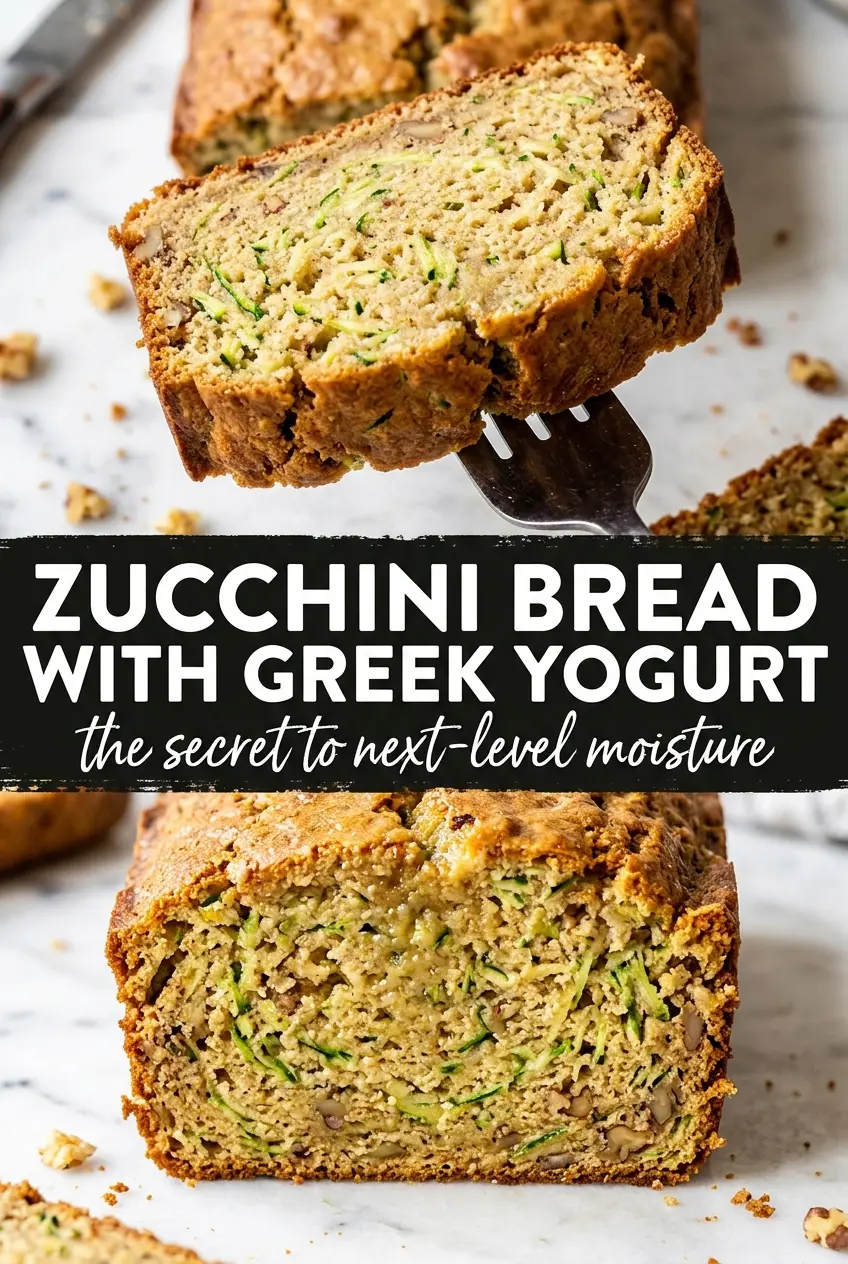
Moist zucchini bread with a tender crumb and a thin cinnamon-sugar crust earns its place on the counter fast. The Greek yogurt gives the loaf a gentle tang and keeps the texture soft for days, while the zucchini adds moisture without making the bread heavy or wet. Slices hold together cleanly, but the inside stays plush enough that you can tear into it warm and still get that bakery-style pull.
The trick is in the zucchini. Grate it fine, then squeeze out enough liquid that it feels damp instead of soggy. That keeps the batter from turning watery and lets the loaf rise with a proper crumb instead of baking up gummy in the center. Full-fat Greek yogurt matters here because it brings body, not just moisture, and the little bit of cinnamon sugar on top bakes into a delicate crackly finish that makes each slice better than the last.
Below you’ll find the small details that make this loaf reliable, from the one step that keeps it from collapsing to the easiest way to adapt it if you want a slightly different texture or need to work with what you have on hand.
The crumb stayed unbelievably moist for three days, and squeezing the zucchini first made all the difference — no gummy middle at all.
Save this Greek yogurt zucchini bread for the mornings when you want a moist, tangy loaf with a cinnamon-sugar top.
The Part That Keeps This Loaf from Turning Gummy
Zucchini bread can go wrong in one of two ways: too dry from overbaking or too wet from the vegetable itself. The answer here is not extra flour. It’s controlling the moisture before the batter ever hits the bowl. Once the zucchini is grated, squeeze it firmly in a clean towel or your hands until it stops dripping, but don’t wring it bone-dry. You want enough moisture left for tenderness, just not enough to flood the batter.
The other quiet problem is overmixing. Quick bread batter should look a little rough at the end. Once the flour goes in, stir only until the dry streaks disappear. If you keep going, the loaf turns tighter and denser, and that soft yogurt crumb disappears. The cinnamon-sugar topping helps here too, because it gives the loaf a finished crust before the center overbakes.
What Each Ingredient Is Actually Doing in This Zucchini Bread
- Zucchini (shredded, the moisture and nutrition) — Grate it and squeeze out excess moisture so the bread isn’t soggy. The starch binds the batter.
- Flour (the structure) — This creates the crumb. Don’t overmix or the bread becomes tough and dense instead of tender.
- Sugar (the sweetness and moisture) — This tenderizes the crumb and attracts moisture so the bread stays soft. Use the full amount for best texture.
- Oil (the richness and moisture) — This creates tender crumb and adds moisture. Oil keeps the bread moister than butter would.
- Eggs (the binder and structure) — These hold everything together. Room temperature eggs incorporate better than cold ones.
- Leavening (baking powder, the rise) — This creates lift. Too much makes the bread taste bitter; too little makes it dense.
- Spices (cinnamon, nutmeg, the warmth) — These add complexity. Warming spices pair perfectly with the mild zucchini.
- Nuts or mix-ins (optional texture) — These add crunch and richness. Walnuts or pecans are traditional; chocolate chips work too.
What the Greek Yogurt Is Doing That Sour Cream Would Only Partly Copy
- Full-fat Greek yogurt — This is what gives the loaf its plush crumb and slight tang. Low-fat yogurt works in a pinch, but the finished bread won’t feel as rich or stay moist as long.
- Zucchini — Use fresh, firm zucchini and grate it on the fine side of the box grater. Bigger shreds can leave pockets of water and create uneven slices.
- Vegetable oil — Oil keeps the crumb soft even after the loaf cools. Melted butter brings more flavor, but it also firms up more as the bread sits, which makes the texture less tender.
- Turbinado sugar topping — The coarse sugar bakes into a crackly top that gives each slice a little crunch. Regular granulated sugar will work, but it won’t give you the same texture on the crust.
Building the Batter Without Deflating the Crumb
Start with the Dry Bowl
Whisk the flour, baking soda, baking powder, salt, and cinnamon until the mixture looks evenly speckled. That keeps the leavening from clumping in one part of the loaf, which is how you end up with a bitter bite or an uneven rise. If you see a few cinnamon streaks left behind, keep whisking for a few more seconds. It should look uniform before it meets the wet ingredients.
Whip the Wet Ingredients Smooth
Beat the sugar, eggs, oil, Greek yogurt, and vanilla until the mixture looks creamy and cohesive. The goal is not aeration so much as smoothness, because the yogurt needs to be fully dispersed before the flour goes in. If the batter looks broken or curdled at this stage, it usually just means the ingredients were cold; it still comes together once the dry ingredients are added. Stir in the squeezed zucchini last so it gets distributed evenly.
Fold, Pan, and Bake Until the Center Springs Back
Add the dry ingredients to the wet and fold gently with a spatula until the flour just disappears. Scrape the batter into the loaf pan, level the top, and scatter the cinnamon sugar evenly over the surface. Bake until the top is deep golden and a toothpick comes out clean or with a few moist crumbs, not wet batter. If the top browns too quickly before the center is done, lay a loose piece of foil over the loaf for the last 10 to 15 minutes.
Three Ways to Make This Loaf Fit What You Need
Dairy-Free Version
Swap the Greek yogurt for an unsweetened dairy-free yogurt with a thick texture, preferably one made from coconut or almond. The loaf will still be moist, but the tang will be milder and the crumb a touch lighter.
A Little More Whole Grain
Replace up to half the all-purpose flour with white whole wheat flour. That adds a nuttier flavor and a slightly heartier crumb, but the loaf still stays soft because the yogurt and oil carry the moisture.
Add-Ins That Won’t Weigh It Down
A handful of chopped walnuts or mini chocolate chips works well here, but keep the total modest so the loaf doesn’t lose its lift. Toss mix-ins with a spoonful of flour first so they don’t sink to the bottom.
Storage and Reheating
- Refrigerator: Store wrapped or in an airtight container for up to 5 days. The crumb stays moist, and the flavor gets a little deeper by day two.
- Freezer: Freeze slices or the whole loaf tightly wrapped for up to 3 months. Thaw at room temperature while still wrapped so the surface doesn’t dry out.
- Reheating: Warm slices in a toaster oven or microwave just until soft and fragrant. If you heat it too long, the yogurt bread turns a little rubbery and loses that tender texture.
Answers to the Questions Worth Asking
Zucchini Bread with Greek Yogurt
Ingredients
Equipment
Method
- Preheat the oven to 350°F and grease a 9x5 loaf pan; set the pan aside so it’s ready for batter.
- Whisk all-purpose flour, baking soda, baking powder, salt, and cinnamon together in a bowl until evenly combined; look for a uniform dry mix.
- Beat granulated sugar, eggs, vegetable oil, plain Greek yogurt (full fat), and vanilla extract until smooth and creamy, with no visible egg streaks.
- Stir in zucchini, grated and squeezed dry and mix until the batter looks evenly speckled with zucchini.
- Fold the dry ingredients into the wet until just combined, stopping when no dry pockets remain.
- Pour the batter into the loaf pan and sprinkle turbinado sugar mixed with cinnamon evenly over the surface so the top is lightly sparkly.
- Bake for 50–60 minutes at 350°F until a toothpick comes out clean and the top is golden, with the loaf pulling slightly from the pan edges.
- Cool the loaf for 15 minutes before slicing so the crumb sets and stays tender.