Penne coated in a silky provolone sauce, loaded with browned steak, sweet onions, peppers, and mushrooms, hits that Philly cheesesteak comfort note without feeling like a heavy casserole. The pasta grabs onto the sauce, the steak stays savory and tender, and the vegetables bring enough sweetness and bite to keep every forkful interesting.
What makes this version work is the order. The steak gets a fast sear first, then the vegetables cook in the same skillet so they pick up all those browned bits left behind. That base gives the sauce depth before the cream and provolone go in, which keeps the whole dish tasting layered instead of flat.
Below you’ll find the detail that matters most: how to keep the cheese sauce smooth, when to loosen it with pasta water, and a few smart swaps if you want to adjust the richness or make it fit what you already have on hand.
The provolone sauce turned out smooth instead of grainy, and the steak stayed tender even after tossing everything together. My husband went back for seconds before I had even sat down.
Like this creamy Philly cheesesteak pasta? Save it to Pinterest for the nights when you want steak, peppers, and provolone in one skillet dinner.
The Step Most Philly Cheesesteak Pastas Get Wrong
The biggest mistake is dumping everything together before the steak and vegetables have had a chance to build flavor on their own. If the pan is crowded or the heat is too low, the steak steams instead of browning and the onions never get the sweetness that makes this dish taste like more than just pasta with meat in it.
Cook the steak fast, in a hot skillet, then pull it out before it overcooks. Use the same pan for the vegetables. Those browned bits on the bottom are the backbone of the sauce, and the Worcestershire helps pull that savory flavor into the cream without making it taste like bottled sauce.
What Each Ingredient Is Doing in the Pan
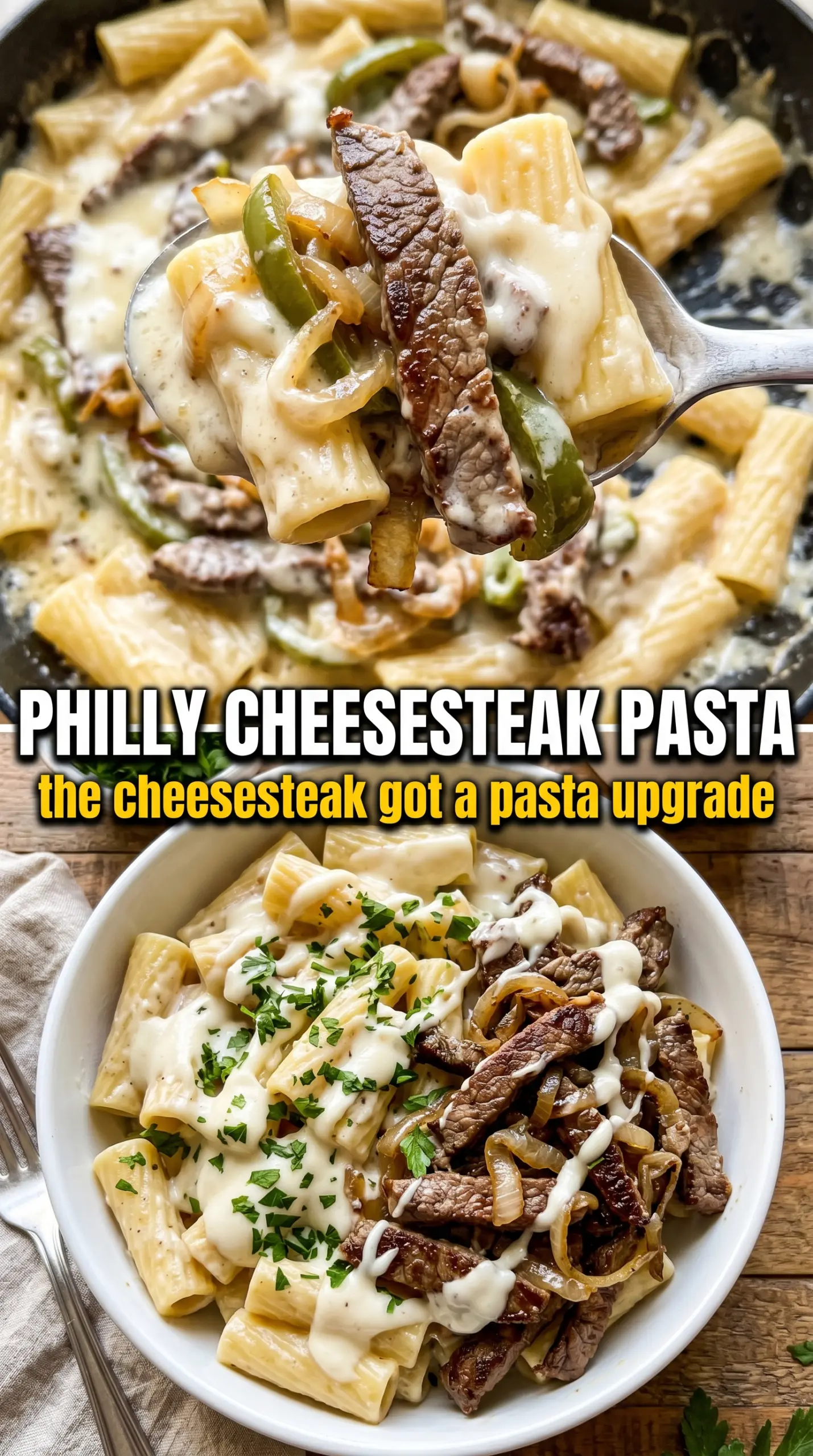
- Shaved steak or thin sirloin — This is the heart of the dish. Thin slices cook quickly and stay tender, which matters because they go back into the sauce at the end. If you use sirloin, slice it against the grain and keep the pieces thin so they don’t turn chewy.
- Provolone — Provolone gives you that familiar cheesesteak flavor and melts into a smooth sauce if the heat stays low. Pre-shredded cheese works in a pinch, but freshly shredded melts cleaner and gives you fewer grainy spots.
- Bell peppers, onion, and mushrooms — These bring sweetness, moisture, and a little earthiness that round out the steak. Slice them evenly so they cook at the same pace; if the pieces are too thick, they stay crunchy while the sauce finishes.
- Beef broth and Worcestershire — Together they deepen the sauce so it tastes savory instead of just creamy. Broth from a carton is fine here, but don’t skip the Worcestershire unless you have to; it’s doing the heavy lifting for that cheesesteak-style savoriness.
- Pasta water — A splash at the end helps the sauce cling to the noodles and keeps the provolone cream from tightening up. Add it a little at a time so the sauce stays glossy instead of watered down.
Building the Sauce Without Breaking It
Searing the Steak First
Season the steak before it hits the pan, then sear it quickly in butter over high heat until you get browned edges. You are not cooking it all the way through here; you just want color and a little fond in the pan. If the skillet is crowded, the steak releases moisture and turns gray, so cook it in batches if needed. Pull it out as soon as it browns.
Softening the Vegetables
Add the onions, peppers, and mushrooms to the same skillet and cook them until the onions are translucent and the mushrooms have given up their liquid. Keep the heat at medium-high so the vegetables soften and caramelize instead of steaming. Once the garlic and Worcestershire go in, stir for just a minute; garlic burns fast, and burnt garlic will take over the whole sauce.
Finishing the Cream Sauce
Pour in the beef broth and cream, then let it simmer gently for a few minutes until it reduces slightly. The sauce should look a little looser than you want at first, because the cheese will thicken it. Turn the heat down before adding the provolone. If the sauce is too hot, the cheese can turn stringy or grainy instead of silky.
Combining Everything at the End
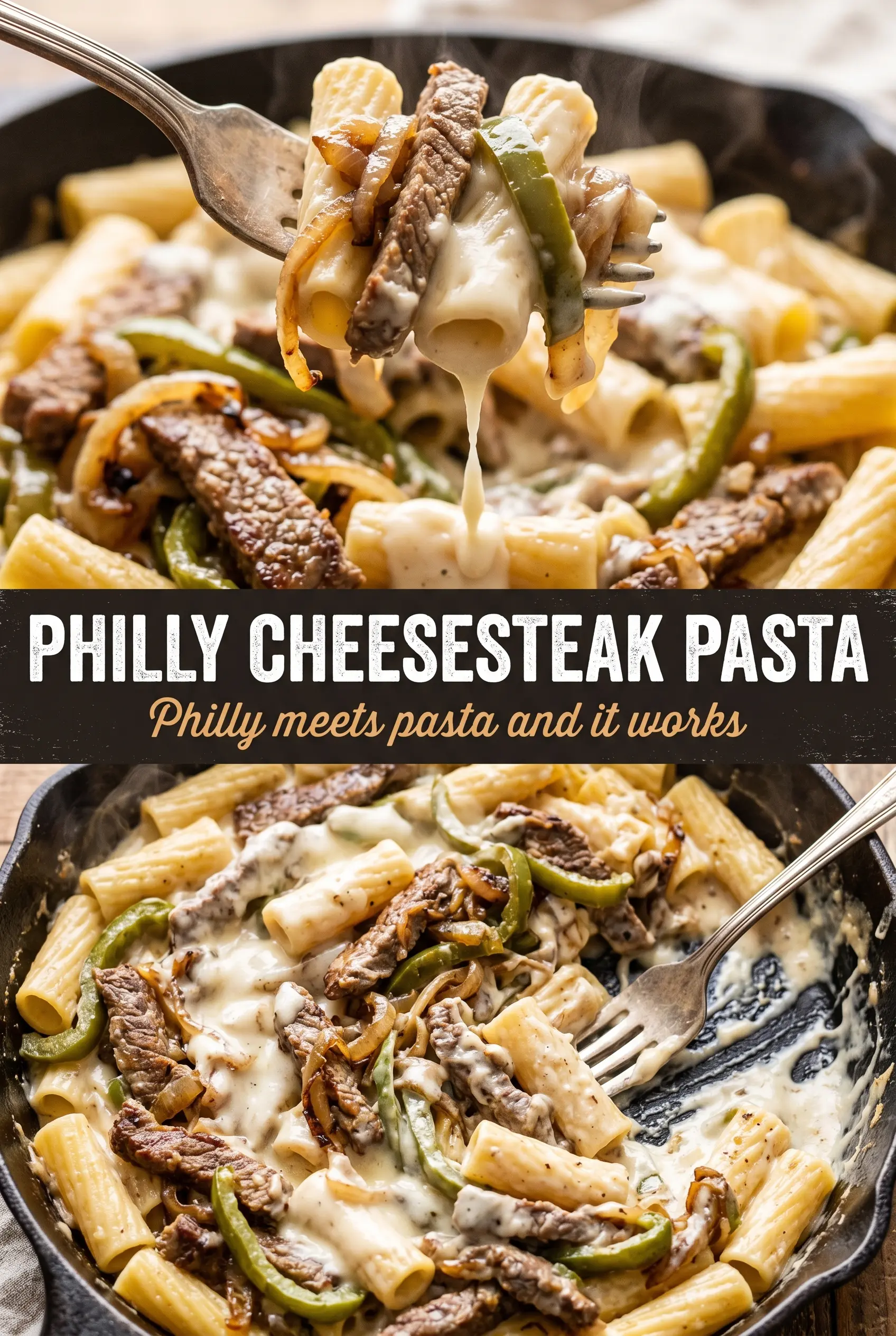
Stir in the cheese until smooth, then add the drained pasta and the steak back to the skillet. Toss until every piece is coated, adding reserved pasta water a splash at a time if the sauce tightens up. The finished dish should look glossy and cling to the noodles, not pool in the bottom of the pan. Serve it right away with extra provolone on top while the sauce is still loose and creamy.
How to Tweak This for Different Kitchens and Different Eaters
Gluten-Free Pasta Swap
Use a sturdy gluten-free penne or rigatoni and cook it just shy of done so it doesn’t fall apart when tossed in the sauce. Keep an eye on the texture, because gluten-free pasta can go from firm to soft fast once it hits the hot pan.
Dairy-Light Version
Swap the heavy cream for half-and-half if you want a lighter sauce, but keep the heat low because it won’t tolerate boiling as well. The sauce will be a little less rich and a little thinner, so reserve extra pasta water in case you need help loosening it without thinning the flavor.
No Mushrooms, More Pepper
Leave out the mushrooms and add an extra half pepper if that’s your preference. The dish stays balanced, but you lose some of the earthy depth mushrooms bring, so let the onions cook a little longer to build more sweetness in the pan.
Storage and Reheating
- Refrigerator: Store leftovers in an airtight container for up to 3 days. The sauce will thicken as it sits.
- Freezer: Freezing isn’t ideal because cream and provolone can separate after thawing, but it can be done if needed. Freeze in a tightly sealed container for up to 1 month and expect a less smooth sauce when reheated.
- Reheating: Warm gently on the stovetop or in the microwave with a splash of broth or milk to bring the sauce back to a silky texture. High heat is what usually makes the cheese sauce break, so reheat slowly and stir often.
Questions I Get Asked About This Recipe
Philly Cheesesteak Pasta
Ingredients
Equipment
Method
- Bring a large pot of salted water to a boil and cook penne or rigatoni until al dente. Reserve 1/2 cup pasta water, then drain the pasta and set aside.
- Season the shaved steak with salt and black pepper. Sear in a hot skillet with 1 tablespoon butter for 2–3 minutes, until browned, then set aside.
- Melt the remaining butter in the same skillet and cook the onion, bell peppers, and mushrooms over medium-high heat for 6–8 minutes, until caramelized.
- Add the minced garlic and Worcestershire sauce, then cook for about 30 seconds until fragrant.
- Pour in beef broth and heavy cream and bring the mixture to a simmer, cooking for 3–4 minutes until slightly reduced and glossy.
- Lower heat to prevent scorching, then stir in shredded provolone until melted and smooth, creating a thick, creamy sauce.
- Toss the drained pasta with the provolone cream sauce and add the seared steak back in so it’s evenly coated.
- Loosen the sauce with reserved pasta water as needed until it lightly clings to the pasta. Serve immediately with extra provolone on top.