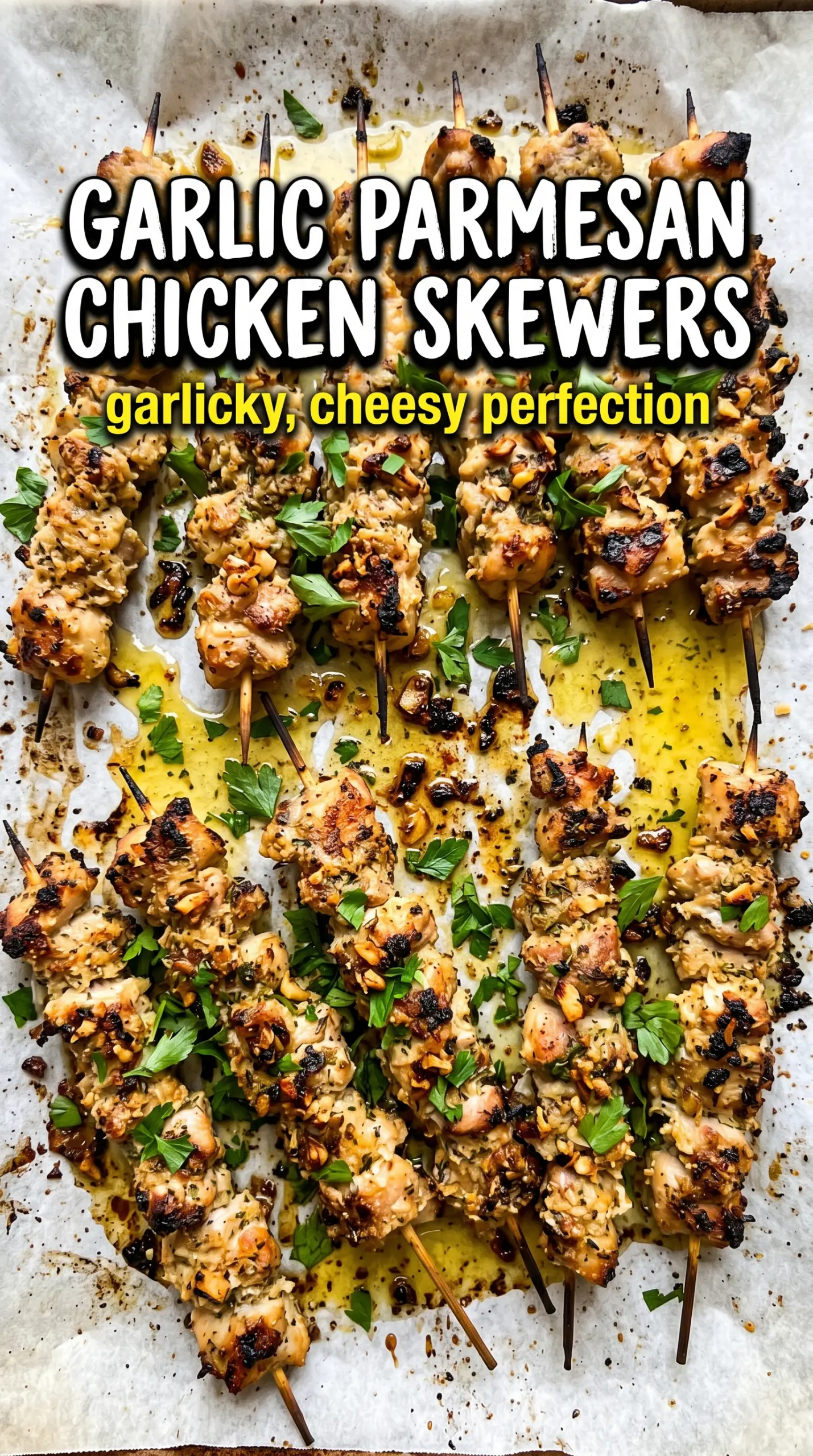
Golden, charred chicken skewers finished with garlic parmesan butter hit that sweet spot between smoky grill flavor and rich, salty comfort. The chicken stays juicy because it gets a short marinade before it ever touches the heat, and the butter finish clings to the edges instead of sliding off the surface. What you end up with is the kind of main dish that disappears fast, whether you serve it from the grill or tuck it into a weeknight spread.
The small gap between each chicken cube matters more than people think. It gives the heat room to circulate, so the pieces brown instead of steaming, and it helps the parmesan butter coat the outside without turning the skewer soggy. Freshly grated parmesan also changes the finish here; pre-shredded cheese tends to stay grainy and won’t melt into the butter the same way.
The chicken stayed juicy, the edges picked up a nice char on the grill pan, and the garlic parmesan butter soaked into every piece without making it greasy. I used fresh parmesan like suggested and it melted right into the butter instead of clumping.
Like this garlic parmesan chicken skewers recipe? Save it to Pinterest for smoky, buttery chicken with crisp edges and a fast 15-minute cook time.
The Difference Between Juicy Chicken and Dry Skewers
The biggest mistake with chicken skewers is treating them like they need a long cook. Chicken breast gets dry when it sits over heat too long, especially once it’s cut into small cubes. The marinade here helps, but the real protection is timing: high enough heat to brown the outside fast, then pulling the skewers as soon as the center hits 165°F.
Spacing matters too. When the pieces are packed tight on the skewer, the sides touching each other stay pale and soft. Leave a little room between each cube so the grill can do its job. That gap also gives the garlic parmesan butter more surface area to cling to when you brush it on at the end.
- Cut size — Aim for even 1.5-inch cubes. Smaller pieces cook too fast and dry out before the edges have a chance to char.
- Marinade time — Thirty minutes is enough here. Much longer than that doesn’t add much because the olive oil and spices season the surface, not the center.
- Heat level — Medium-high gives you color without burning the garlic in the butter finish later.
What Each Ingredient Is Actually Doing in These Skewers
- Chicken breast — Lean chicken breast gives you a clean, quick-cooking base that turns tender when it’s not overcooked. Thighs will work if you want more richness, but they need a minute or two longer on the grill.
- Olive oil — This carries the garlic and spices across the chicken and helps the surface brown instead of sticking to the grill. You don’t need an expensive bottle here.
- Fresh garlic — Garlic goes in both the marinade and the butter so the flavor shows up twice: once deep in the seasoning layer and again in the finish. Mince it finely so it disperses instead of burning in little chunks.
- Parmesan — Freshly grated parmesan melts into the warm butter and gives the skewers that salty, savory finish. Pre-grated cheese can stay sandy and won’t coat the chicken as smoothly.
- Butter — Melted butter turns the seasoning into a glaze that sticks right after the chicken comes off the grill. Add it while the skewers are still hot so it loosens and clings instead of pooling underneath.
Building the Marinade, Grill Marks, and Butter Finish in the Right Order
Coating the Chicken Evenly
Stir the olive oil, garlic, Italian seasoning, paprika, salt, and pepper together before adding the chicken. That keeps the spices from clumping in one spot and gives every cube the same start. Toss until each piece looks lightly slicked, then let it sit for at least 30 minutes. If the chicken goes onto the grill dry on the outside, it will brown unevenly and you’ll lose a lot of the seasoning to the bowl.
Threading Without Crowding
Push the chicken onto the skewers with a small gap between each piece. That little bit of space is what lets the heat kiss all sides of the meat instead of steaming the underside. If you’re using wooden skewers, soak them first so the exposed ends don’t scorch before the chicken is done. Metal skewers work too and heat the chicken from the inside as they cook.
Grilling for Char Without Drying Out
Set the grill or grill pan over medium-high heat and let it get properly hot before the chicken goes down. You want a steady sizzle as soon as the skewers hit the surface. Cook for 5 to 6 minutes per side, turning only when the chicken releases easily and has good color. If it sticks, it needs another minute. Pull it once the center is cooked through; the last thing you want is to keep chasing grill marks after the meat is already done.
Finishing While the Skewers Are Hot
Mix the melted butter, garlic, parmesan, and parsley while the chicken cooks so the finish is ready the second the skewers come off. Brush it on immediately. The heat from the chicken melts the cheese slightly and helps everything settle into the charred ridges. Add a final scatter of parmesan and parsley right before serving so the topping still looks fresh and bright.
How to Adapt These Skewers for the Grill Pan, the Oven, or a Dairy-Free Table
Oven-Baked Skewers
If you don’t have a grill, bake the skewers on a foil-lined sheet pan at 425°F and broil them for the last minute or two to pick up some color. You won’t get the same smoky edges, but the garlic parmesan butter still gives you a strong finish.
Dairy-Free Version
Use a good dairy-free butter and swap the parmesan for a dairy-free hard-style cheese or nutritional yeast. The flavor shifts a little less nutty and less sharp, but the garlic and paprika still carry the dish.
Chicken Thigh Swap
Boneless, skinless thighs give you a juicier, richer skewer with a little more forgiveness on the grill. They usually need just a touch longer than breast, but they’re less likely to dry out if you’re distracted for a minute.
Make-Ahead Prep
You can marinate the chicken a few hours ahead and thread the skewers just before cooking. Waiting to assemble keeps the skewers from drying out at the edges and helps the chicken cook more evenly.
Storage and Reheating
- Refrigerator: Store leftovers in an airtight container for up to 3 days. The parmesan butter will firm up, but the flavor stays strong.
- Freezer: Freeze cooked chicken off the skewers for up to 2 months. The texture softens a little after thawing, so this is better for meal prep than for serving to guests.
- Reheating: Warm gently in a 325°F oven or in a covered skillet over low heat with a splash of water. High heat dries out the chicken fast and makes the garlic butter separate.
Answers to the Questions Worth Asking

Garlic Parmesan Chicken Skewers
Ingredients
Equipment
Method
- Combine olive oil, garlic, Italian seasoning, smoked paprika, salt, and black pepper in a bowl until evenly mixed. Add chicken cubes and toss to coat, then let marinate for at least 30 minutes, covered.
- Thread the marinated chicken onto skewers, leaving a small gap between each piece. Preheat the grill or grill pan to medium-high heat and cook skewers for 5–6 minutes per side until cooked through and charred, flipping once when the first side is visibly browned.
- Mix melted butter with minced garlic, parmesan cheese, and chopped parsley to make the finishing sauce. Brush the warm skewers generously with garlic parmesan butter immediately after removing from the grill so it glistens and clings, then serve with extra parmesan and fresh parsley on top.