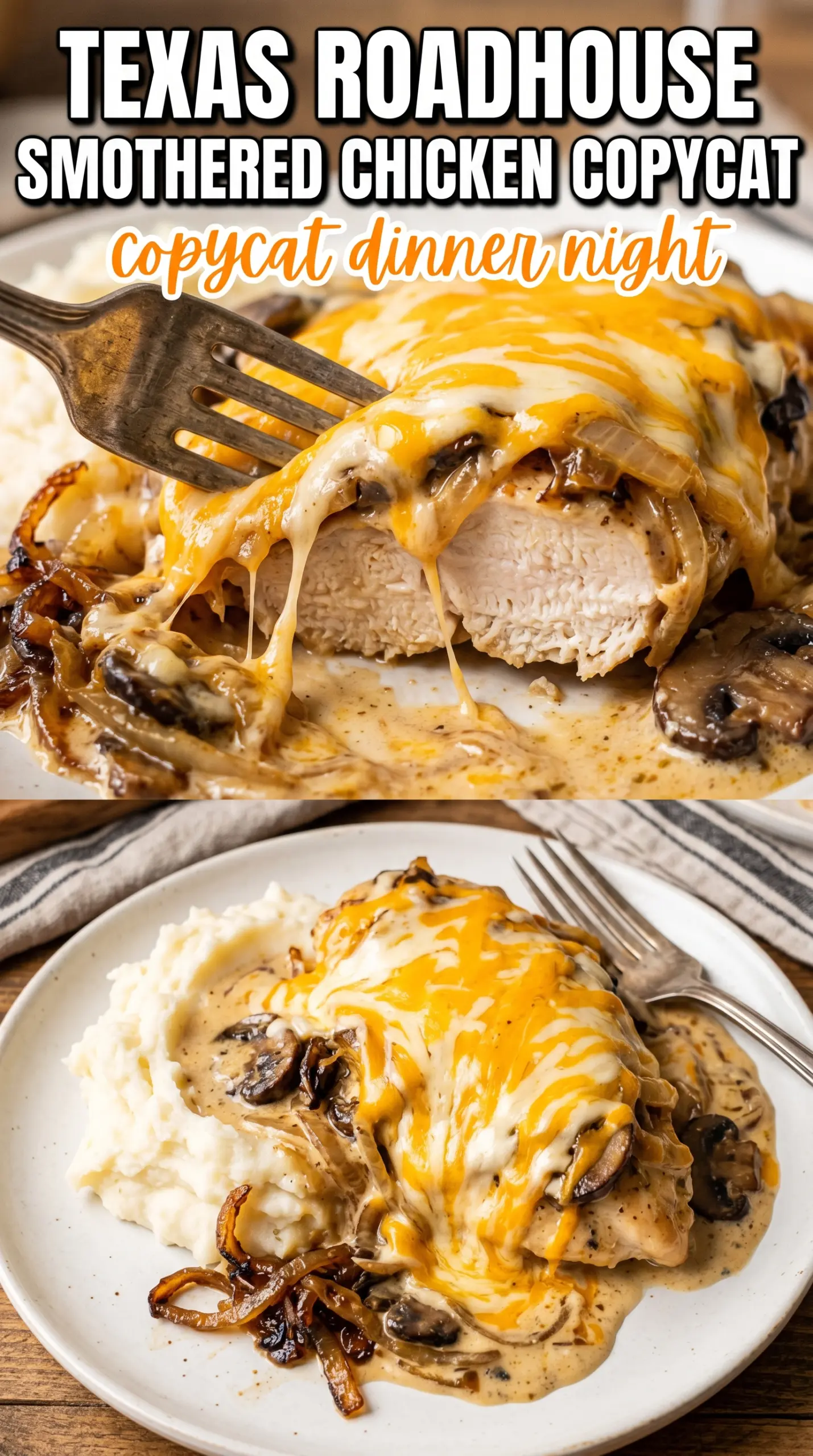
Seared chicken breasts under a layer of buttery mushrooms, sweet onions, and melted jack cheese hit that sweet spot between restaurant comfort food and weeknight dinner. The chicken stays juicy because it gets browned first, then finished under the broiler just long enough to melt the cheese without drying out the meat. What you end up with is a skillet full of savory juices, a little caramelized edge on the onions, and cheese that settles into the mushrooms instead of sliding off the top.
The trick here is building flavor in layers. A hot sear gives the chicken a proper crust, and the same pan picks up the browned bits when the onions and mushrooms go in. That means the broth turns into a quick pan sauce instead of thin liquid sitting at the bottom of the skillet. Monterey jack matters here because it melts smoothly and gives you that stretchy, creamy finish without turning greasy.
Below, I’m walking through the sear, the onion-mushroom base, and the broiler finish so you can avoid the two big problems with smothered chicken: bland chicken and watery toppings. There’s also a few smart swaps if you need to adjust the cheese or mushrooms without losing the feel of the dish.
The chicken browned beautifully and the onions and mushrooms cooked down into a rich, savory topping instead of turning soggy. I used the broiler for 3 minutes and the jack cheese melted perfectly without overcooking the chicken underneath.
Love the melty jack cheese, caramelized mushrooms, and skillet pan sauce in this Texas Roadhouse smothered chicken? Save it to Pinterest for the nights when you want a restaurant-style chicken dinner with almost no cleanup.
The Move That Keeps Smothered Chicken from Going Watery
The biggest mistake with smothered chicken is crowding everything into the pan and hoping the mushrooms and onions magically turn rich on their own. They won’t. Mushrooms release a lot of liquid before they brown, and if the heat is too low or the skillet is too full, that liquid just steams the vegetables and thins out the whole dish. You want a wide skillet, enough heat to hear the onions sizzle, and a little patience while the moisture cooks off.
The other place this recipe can slip is the finish. Broiling too long doesn’t improve the cheese; it tightens the chicken and dries the top before the center needs any more heat. The chicken is already cooked by the time it goes back into the skillet, so the broiler’s job is only to melt and bubble the jack cheese. Stop as soon as the edges get glossy and a little browned.
What Each Ingredient Is Doing in the Skillet
- Chicken breasts — Pounding them thin gives you faster, more even cooking and keeps the sear from turning into a long, dry bake. If your chicken breasts are large, slice them in half horizontally first so the pieces cook at the same pace.
- Mushrooms — These bring the deep, savory base flavor. White button mushrooms work fine, but cremini give you a darker, meatier taste if you want the skillet to taste a little closer to the restaurant version.
- Onion — This is where the sweetness comes from. Slice it thin so it softens and caramelizes in the same window as the mushrooms instead of staying crunchy under the cheese.
- Monterey jack cheese — This is the finish that makes the dish feel like Texas Roadhouse smothered chicken. It melts smoothly and stays creamy; cheddar will taste sharper and can separate a little more under the broiler.
- Chicken broth — A small splash loosens the browned bits and turns the pan drippings into a light sauce. Stock works too, but broth usually has enough salt and body without overpowering the mushrooms.
- Butter and olive oil — The oil helps with searing, and the butter gives the onions and mushrooms a richer finish. Don’t swap in only butter for the chicken sear, or the pan can brown too fast before the chicken develops color.
Building the Chicken, the Topping, and the Melt
Season and Sear the Chicken
Coat both sides of the chicken with garlic powder, onion powder, salt, and pepper, then lay it into a hot skillet with the olive oil. You want a steady sizzle the second the chicken hits the pan. If it doesn’t sizzle, the pan isn’t hot enough and the chicken will soak up oil instead of browning. Cook it until the first side releases easily and turns deep golden, then flip and finish the second side.
Cook Down the Mushrooms and Onions
Use the same skillet. Don’t wipe it out. The browned bits stuck to the pan are the flavor base for the whole dish, and the butter will lift them once the onions and mushrooms go in. Stir occasionally and let the vegetables soften, then keep cooking until the onions turn golden at the edges and the mushrooms have given up their liquid and started to brown.
Deglaze and Bring It Together
Pour in the chicken broth and scrape the pan with a wooden spoon. That little bit of liquid should loosen the caramelized bits immediately and form a shallow, glossy sauce. Nestle the chicken back on top of the vegetables so it sits partly in the broth, then pile the cheese over each piece. If the sauce looks thin, that’s normal; it tightens as the broiler heat finishes the dish.
Broil Until the Cheese Bubbles
Set the skillet under the broiler and watch it closely. The cheese should melt first, then bubble at the edges, and finally pick up a few browned spots on top. That’s your cue to pull it out. Any longer and the cheese can separate or the chicken can overcook before the top looks any better.
Three Smart Ways to Adjust the Dish Without Losing What Makes It Good
Use provolone or mozzarella for a milder melt
If you want a softer, milder cheese finish, swap the Monterey jack for provolone or mozzarella. You’ll lose a little of the sharp, creamy richness, but the top will still melt cleanly and hold that smothered-chicken look.
Make it dairy-free with a meltable plant-based cheese
For a dairy-free version, use a plant-based butter for the vegetables and a dairy-free shredded cheese that melts well under heat. The flavor won’t be as rich as the original, but the skillet still gives you the same savory onion-mushroom topping and a satisfying finish.
Swap the mushrooms for extra onions if that’s what you have
If mushrooms aren’t your thing, use more onion and cook it a little longer until deeply golden. You’ll lose the earthy, meaty bite mushrooms bring, but the sauce will still taste full and savory because the browned onions carry the skillet flavor.
Make it gluten-free without changing the method
This recipe is naturally gluten-free as written as long as your broth is certified gluten-free. The method doesn’t change at all, which is part of why it works so well for a fast skillet dinner.
Storage and Reheating
- Refrigerator: Store leftovers in an airtight container for up to 3 days. The cheese will set up and the mushrooms will soften a little more, but the flavor holds well.
- Freezer: It freezes okay, though the cheese texture changes a bit after thawing. Wrap portions tightly and freeze for up to 2 months if you need to, then thaw in the fridge before reheating.
- Reheating: Reheat covered in a 325°F oven until hot, or warm gently on the stovetop with a splash of broth. High heat dries the chicken out and makes the cheese greasy, so low and slow works best.
Answers to the Questions Worth Asking

Texas Roadhouse Smothered Chicken Copycat
Ingredients
Equipment
Method
- Season the pounded chicken breasts with garlic powder, onion powder, salt, and black pepper. Let them sit briefly while you heat the skillet.
- Heat olive oil in an oven-safe skillet over medium-high heat and sear the chicken for 5–6 minutes per side until golden. Set the chicken aside on a plate.
- Melt 1/2 of the butter in the same skillet, then add the onions and mushrooms. Cook over medium heat for 8–10 minutes until caramelized, stirring as needed.
- Pour in the chicken broth and stir to deglaze the browned bits from the pan. Continue stirring until the liquid looks glossy.
- Nestle the chicken back into the skillet on top of the mushroom-onion mixture. Spoon the topping over the sides so it clings.
- Pile Monterey jack cheese generously on top of each chicken breast. Place the skillet under the broiler for 3–4 minutes until melted and bubbly, then garnish with fresh parsley.