Pesto pasta salad lands in that sweet spot between fresh and filling. The pasta holds onto the basil pesto, the tomatoes bring a little pop of acidity, and the mozzarella pearls soften the edges just enough that every bite tastes balanced instead of heavy. It’s the kind of side dish that disappears fast at a picnic, but it also works just as well for lunch straight from the fridge.
What makes this version work is the way the warm pasta gets coated with pesto first. That step helps the sauce cling to the noodles instead of sitting in the bottom of the bowl. The lemon juice matters too. It brightens the whole dish and keeps the pesto from tasting flat after it chills.
Below, I’ve included a few practical notes on picking pesto, keeping the salad from drying out, and what to change if you need to work around an ingredient you don’t have on hand.
The pesto coated every piece of pasta and it held up beautifully after chilling. I loved that the lemon kept it from tasting heavy, and the mozzarella stayed creamy instead of getting lost.
Save this pesto pasta salad for the days when you want a cold, make-ahead side with basil, tomatoes, and creamy mozzarella.
The Trick to Keeping Pesto Pasta Salad Green, Not Claggy
The biggest mistake with pasta salad is dumping cold noodles into pesto and expecting the sauce to behave. Cold pasta doesn’t absorb much, so the pesto can slide around and pool instead of coating each piece. Tossing the pasta while it’s still warm helps the oil and herbs cling to the noodles, which gives you a salad that looks glossy instead of greasy.
Chilling is part of the recipe, not just a waiting period. The pasta firms up a little, the lemon wakes everything back up, and the mozzarella settles into the mix instead of turning into a soft mess. If the salad seems a touch dry after an hour in the fridge, that’s normal. A spoonful of extra pesto or a small squeeze of lemon brings it right back.
What the Pesto, Tomatoes, and Cheese Are Each Doing
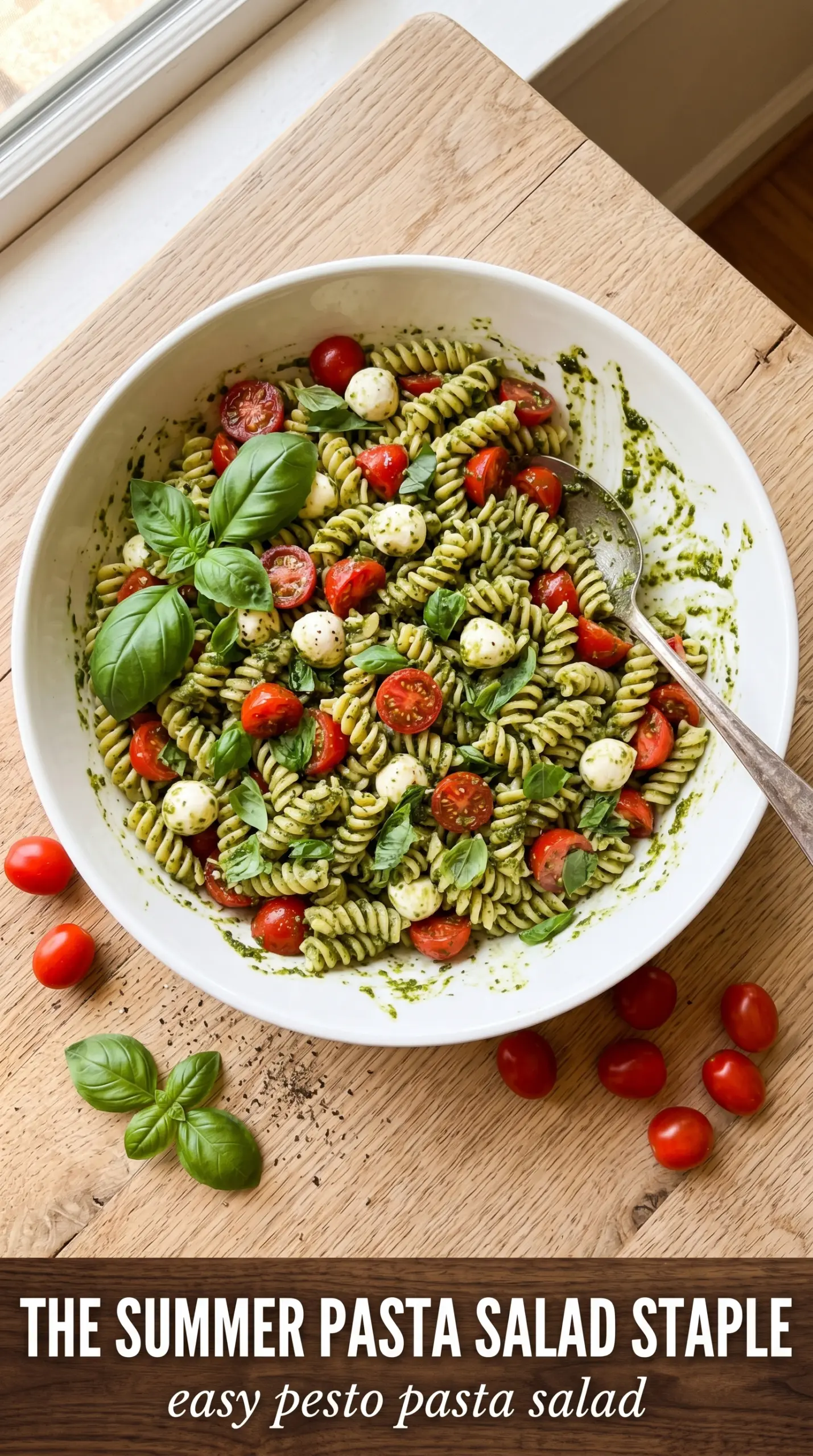
- Basil pesto — This is the backbone of the dish, so quality matters. A good pesto should taste grassy, garlicky, and nutty, not flat or overly oily. Store-bought works fine here, but if it’s thick and intense, loosen it with a tablespoon of pasta water or a little more lemon juice so it coats evenly.
- Fusilli or penne — Short pasta with ridges or curves catches the pesto better than long noodles. Fusilli is my first pick because the spirals hold onto herbs, pine nuts, and bits of cheese. If you use penne, cook it just to al dente so it stays pleasant after chilling.
- Cherry tomatoes — Halving them lets their juices mingle with the pesto instead of leaking all over the bowl later. Their acidity keeps the salad from tasting heavy. If your tomatoes are pale and out of season, a small extra squeeze of lemon helps bring back the brightness.
- Fresh mozzarella pearls — These add creamy pockets that soften the pesto’s boldness. Cubed mozzarella can work in a pinch, but the pearls give you a better distribution and a more polished bite.
- Toasted pine nuts — They add crunch and a warm, buttery note that makes the salad taste finished. Toast them until they’re just fragrant and lightly golden. If they go too far, they turn bitter fast, so don’t walk away from the pan.
Building the Salad So Every Bite Stays Coated
Cooking the Pasta to the Right Bite
Boil the pasta in well-salted water until it’s just al dente. You want it tender with a little firmness in the center, because it will continue to soften slightly as it chills. Drain it, then rinse with cold water so it stops cooking and cools fast enough for the pesto to cling. If you skip the rinse, the pasta stays too hot and turns the cheese soft before the salad has a chance to set up.
Tossing the Warm Pasta with Pesto First
Put the warm pasta in a large bowl and add the pesto before anything else. Stir until every curve and ridge looks coated. This is the moment that gives the salad its color and flavor, so take a minute here instead of rushing ahead. If the pesto looks tight or sticky, add a tiny splash of pasta water or lemon juice and keep tossing until it loosens.
Adding the Fresh Ingredients Without Bruising Them
Fold in the tomatoes, mozzarella, pine nuts, Parmesan, and lemon juice after the pasta is evenly coated. Gentle mixing keeps the tomatoes intact and prevents the mozzarella from tearing apart. Season at the end with salt and pepper, then taste again after the salad chills, since cold food always mutes seasoning a little. The fridge time lets the flavors marry, but if it’s too long before serving, fresh basil on top brings the whole bowl back to life.
Make it dairy-free with a bright, nutty pesto
Use a dairy-free pesto or make your own with extra basil, olive oil, garlic, nuts, and a little nutritional yeast. Skip the mozzarella and Parmesan, then add extra tomatoes or sliced olives for more substance. The salad will taste a little sharper and less creamy, but it still holds onto the same fresh, herb-forward structure.
Turn it gluten-free without changing the method
Use your favorite gluten-free short pasta and cook it just until tender, since many gluten-free pastas can get soft if they sit in boiling water too long. Toss it with pesto while it’s still warm, just like the original version. The only real difference is texture: some gluten-free pastas absorb more dressing as they sit, so it may need a small refresh of pesto before serving.
Swap the pine nuts if you need a cheaper crunch
Toasted sunflower seeds or chopped walnuts both work well in place of pine nuts. Sunflower seeds keep the flavor mild, while walnuts add a deeper, earthier note that plays nicely with basil. Whatever you use, toast it first so the salad still has that little bit of contrast against the soft pasta and cheese.
How to keep it lunch-ready for the next day
This salad holds up well in the fridge for about 3 days, and the flavor often improves overnight. If it looks dry after chilling, stir in a spoonful of pesto or a drizzle of olive oil before serving. The tomatoes and cheese stay best when you keep the salad cold and covered, and the texture is at its nicest on day one or two.
Answers to the Questions Worth Asking
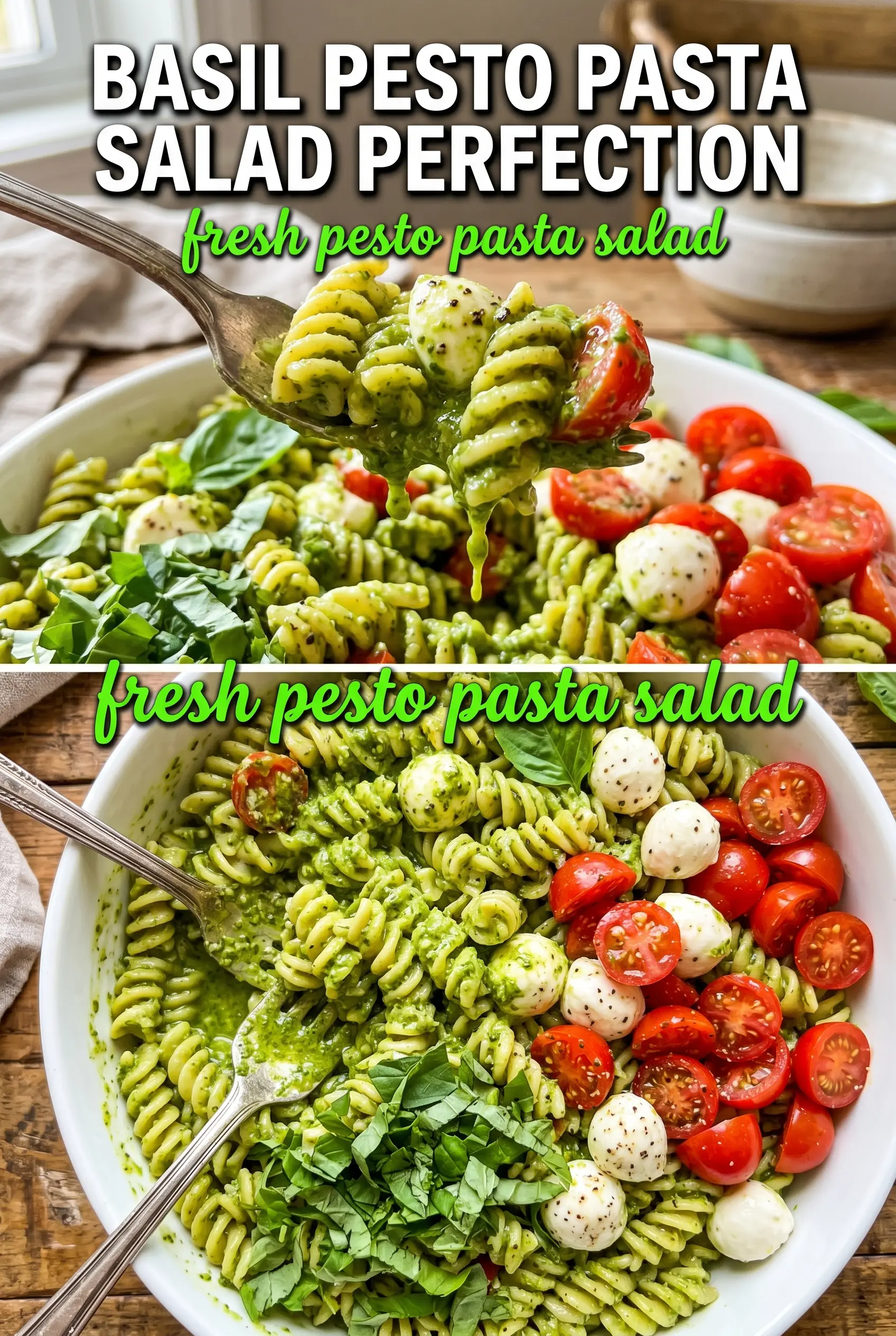
Pesto Pasta Salad
Ingredients
Method
- Bring a pot of water to a boil, cook the fusilli or penne pasta according to package directions, then drain. Rinse under cold water until cool so the pasta doesn’t keep cooking; it should look separate and not sticky.
- In a large bowl, toss the warm pasta with basil pesto until evenly coated. Stop when every piece looks glossy green and no dry spots remain.
- Add cherry tomatoes, fresh mozzarella pearls, pine nuts, and Parmesan cheese, then drizzle in lemon juice. Toss gently just until the tomatoes are distributed and the cheese pearls are still intact.
- Season with Salt and pepper to taste, then toss gently again. The mixture should taste bright and balanced, with green pesto coating the pasta.
- Cover and refrigerate the pasta salad for at least 1 hour to allow flavors to develop. The texture should firm up slightly and look vibrant and cohesive when you stir.
- Before serving, garnish with Fresh basil leaves for garnish. Add a fresh green pop on top right before serving so it looks and smells fragrant.