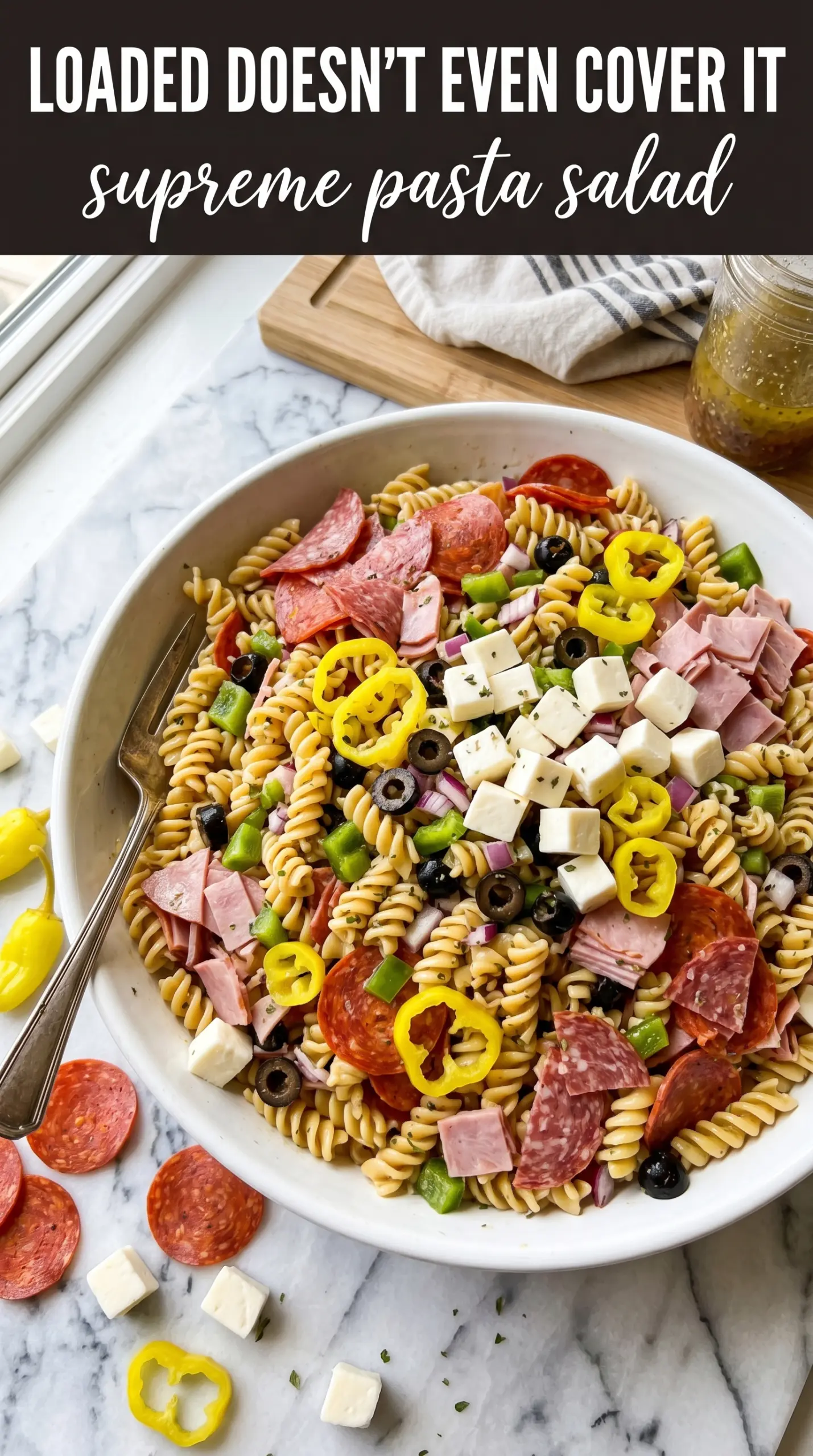
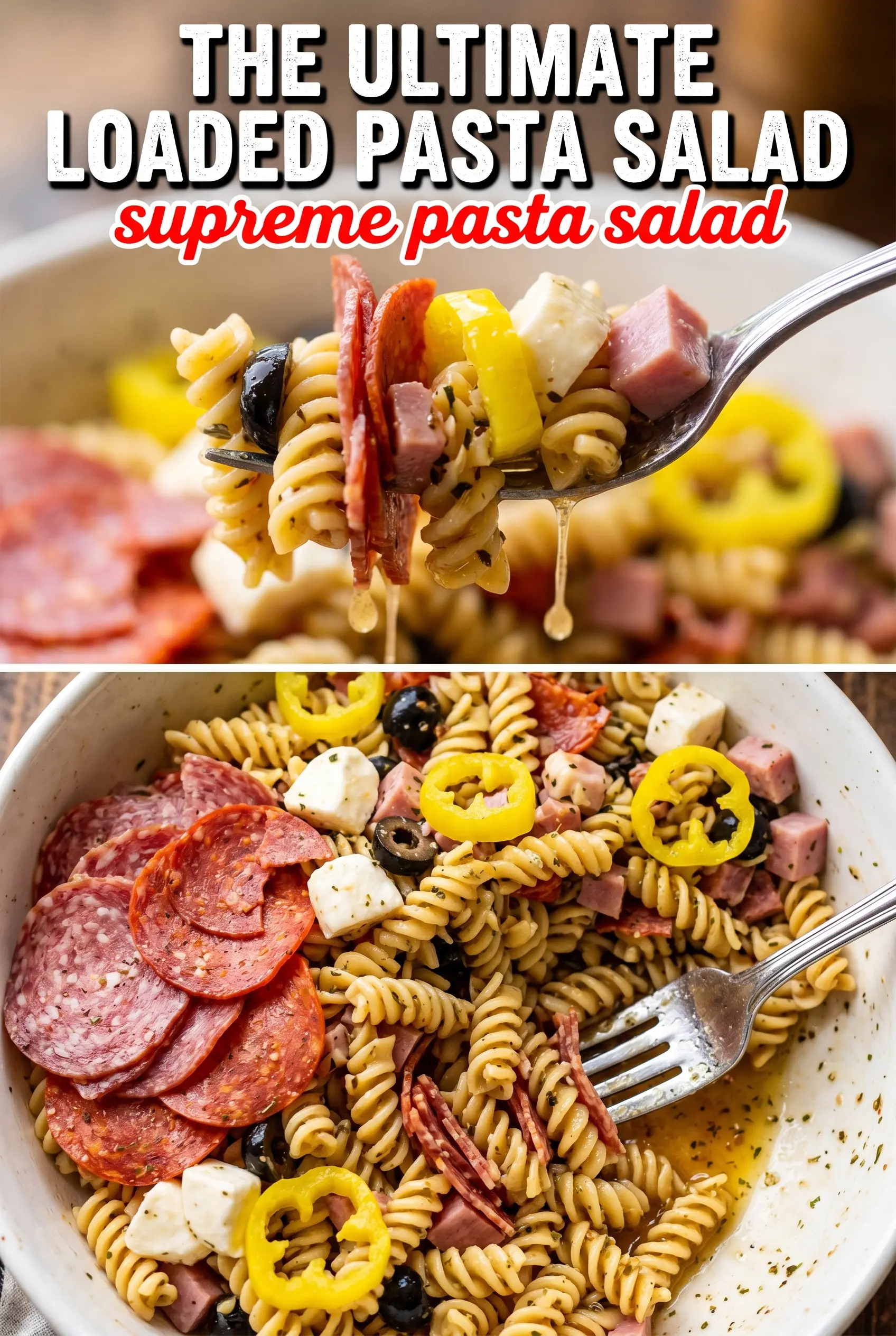
Supreme pasta salad earns its place at the front of the buffet because every bite has a little bit of everything: chewy pasta, salty salami and pepperoni, cool crisp vegetables, and enough creamy Italian dressing to pull it all together without turning soggy. It tastes like the kind of bowl people hover around, and it gets even better after the chill time when the pasta absorbs the dressing and the flavors settle in.
The trick is balance. Rinsing the pasta stops the cooking fast and keeps the rotini from going mushy, but the real payoff comes from chilling the salad long enough for the dressing to soak into the noodles and meats. I also like to cube the mozzarella instead of shredding it; those little soft bites hold their shape and make the salad feel substantial instead of heavy.
Below, you’ll find the ingredient choices that matter most, the one resting window that changes everything, and a few smart ways to adapt this bowl for different diets and different crowds.
The dressing soaked in during the chill and the rotini stayed springy instead of getting soft. I made it the night before and it was even better the next day.
Like this loaded supreme pasta salad? Save it to Pinterest for potlucks, cookouts, and easy make-ahead lunches.
The Chill Time That Keeps Supreme Pasta Salad from Going Flat
The biggest mistake with loaded pasta salad is serving it the second it’s mixed. Right away, the dressing sits on the outside of the pasta and the flavors taste separate. After a couple of hours in the fridge, the rotini picks up the seasoning, the onions mellow, and the whole bowl tastes like one finished dish instead of a pile of ingredients tossed together.
That resting time also helps the texture. Cold pasta firms back up after cooking, which gives the salad that satisfying bite instead of a slick, soft feel. If the bowl looks a little dry before serving, that’s normal; pasta salad almost always tightens up as it chills, and a small splash of dressing right before it hits the table brings it back.
- Rotini — The spirals trap dressing in all those ridges, which is why this shape works better here than smooth pasta. Cook it just to tender, then rinse well so it stops carrying residual heat into the rest of the salad.
- Salami and pepperoni — These bring the salty backbone. The texture matters here, so cube the salami and quarter the pepperoni instead of slicing everything thin; you want distinct bites, not meat that disappears into the dressing.
- Mozzarella — Low-moisture mozzarella holds up much better than fresh mozzarella. Fresh balls release water and can make the salad watery, while the cubed version stays clean and creamy.
- Italian dressing — This is the binder and the seasoning base. A thick bottled dressing works fine, but if yours is sharp or oily, whisk it first and add it gradually so the salad doesn’t get slippery.
- Parmesan — This adds a little salt and a deeper savory note. Grated Parmesan disappears into the dressing and coats the pasta instead of clumping.
What Each Ingredient Is Actually Doing in This Bowl
- Cherry tomatoes — They add juicy sweetness and keep the salad from feeling too heavy. Halve them so the juices blend into the dressing instead of puddling in the bottom of the bowl.
- Cucumber — This gives the salad a fresh crunch. Dice it small enough to fit on a fork with the pasta, and if your cucumber is seedy, scoop out the middle so the salad stays crisper longer.
- Black olives — They bring that briny, Italian-American deli flavor that makes this salad taste complete. Slice them so the salt spreads through the bowl instead of landing in one overpowering bite.
- Green bell pepper and red onion — These are there for crunch and sharpness. The onion tastes smoother after it chills, so don’t skip the rest time if raw onion usually feels too aggressive to you.
- Italian seasoning — This gives the dressing more depth without making the salad taste like straight bottled dressing. If you want a brighter finish, add a pinch more just before serving so the herbs stay noticeable.
Building the Salad So Every Bite Stays Balanced
Cook the pasta to the edge of done
Boil the rotini until it’s just tender with a little bite left in the center. Overcooked pasta turns soft after the dressing goes on, and pasta salad needs structure. Drain it well, then rinse under cold water until it’s fully cool and no longer steaming. If the pasta stays warm, it will absorb too much dressing too fast and the cheese can start to soften in an unhelpful way.
Layer the bowl before adding dressing
Combine the pasta, meats, cheese, and vegetables in a large bowl before you pour anything over them. That gives you a better read on the ratio and keeps the heavier ingredients from sinking to the bottom. Toss gently at this stage so the mozzarella and tomatoes stay intact. If you stir hard, the tomatoes burst and the pasta gets streaky before the dressing even goes in.
Let the dressing settle in the fridge
Add the Italian dressing, Parmesan, and seasoning, then toss until everything is coated. Refrigerate for at least 2 hours, and toss it once or twice during that chill if you’re around. That movement helps the dressing reach every ridge of the pasta. Right before serving, taste again and add a little more dressing if the salad looks dry or the pasta has absorbed more than you expected.
How to Adapt Supreme Pasta Salad for Different Tables
Make it gluten-free without losing the shape
Use a sturdy gluten-free rotini made from corn or rice, and cook it a minute shy of the package time so it doesn’t crumble once chilled. Gluten-free pasta can absorb dressing faster than wheat pasta, so plan on adding a little extra right before serving.
Swap in a lighter vegetarian version
Leave out the salami and pepperoni, then add extra cucumber, tomatoes, and olives for a salad that still feels full and colorful. To replace some of the savory depth, add chickpeas or cubes of roasted red pepper, which help the bowl feel complete without trying to mimic the meat.
Use mayo-based dressing for a creamier pasta salad
If you want a thicker, more classic deli-style result, replace half the Italian dressing with mayonnaise or use a creamy Italian dressing instead. The salad will coat the pasta more heavily and hold together a little better on a buffet, but it will lose some of the bright, tangy edge from the original version.
Storage and Reheating
- Refrigerator: Keeps for 3 to 4 days in a covered container. The pasta will absorb more dressing as it sits, so expect it to taste a little tighter on day two.
- Freezer: This one doesn’t freeze well. The vegetables lose their crunch, and the dressing separates once thawed.
- Reheating: No reheating needed. Serve it cold, and stir in a splash of dressing after chilling if the pasta has soaked up too much of the sauce.
Answers to the Questions Worth Asking
Supreme Pasta Salad
Ingredients
Equipment
Method
- Cook the tri-color rotini pasta according to package directions until al dente. Drain and rinse with cold water so the pasta stays firm and won’t clump.
- Combine the pasta, salami, pepperoni, mozzarella, cherry tomatoes, cucumber, black olives, green bell pepper, and red onion in a large bowl. Mix until the ingredients are evenly distributed and the bowl looks colorful and abundant.
- Add Italian dressing, Parmesan cheese, and Italian seasoning, then toss to coat thoroughly. Scrape the sides and bottom to make sure every piece is glossy with dressing.
- Season with salt and pepper, then toss again. Stop when the flavors taste balanced, with no bland spots.
- Refrigerate for at least 2 hours, tossing occasionally. Keep it covered so the pasta absorbs flavor and the salad chills all the way through.
- Before serving, check the texture and add more dressing if needed, then toss. Serve cold and look for a creamy coating that clings to the pasta.