Pasta salad only works when every bite stays bright, seasoned, and a little bit firm, and this Greek version gets there by leaning on the ingredients that already know how to taste good together. The pasta carries the dressing instead of drowning in it, the cucumber stays crisp, the tomatoes bring juice without turning everything watery, and the feta finishes each forkful with that salty, creamy edge that makes the whole bowl taste balanced.
The detail that matters most here is the chill time. Right after tossing, the dressing tastes sharp and a little loose, which is exactly what you want because the pasta absorbs it as the salad rests. A quick rinse under cold water stops the cooking and keeps the noodles from going soft, and using a good block-style feta instead of pre-crumbled cheese gives you cleaner, richer flavor. The oregano and lemon need that rest too; they settle in and stop tasting separate.
Below, I’ll walk through the one mistake that makes pasta salad bland, how to layer the ingredients so the feta doesn’t disappear, and a few smart ways to adapt the bowl for different diets or whatever’s already in your fridge.
I was worried the pasta would soak up all the dressing overnight, but it stayed perfectly coated and the cucumbers were still crisp the next day. The lemon-oregano dressing tasted even better after chilling.
Pin this Greek Pasta Salad for a chilled side that stays bright, tangy, and loaded with cucumber, feta, and olives.
Why This Pasta Salad Stays Bright Instead of Turning Mushy
The usual pasta salad problem is that the noodles keep drinking after you’ve dressed them, and by the time the bowl hits the table everything tastes flat and soft. The fix here is simple: cook the pasta just to al dente, rinse it cold, and give it time in the fridge so the dressing settles in instead of sitting on the surface. That rest is where the flavor comes together.
The second thing that keeps this salad from getting heavy is the balance of wet and dry ingredients. Tomatoes and cucumber bring freshness, but they don’t need to dominate the bowl. Feta and olives are the salt anchors, so if the salad tastes underseasoned at the end, it usually needs more lemon or a pinch of salt rather than more cheese.
What Each Ingredient Is Doing in the Bowl
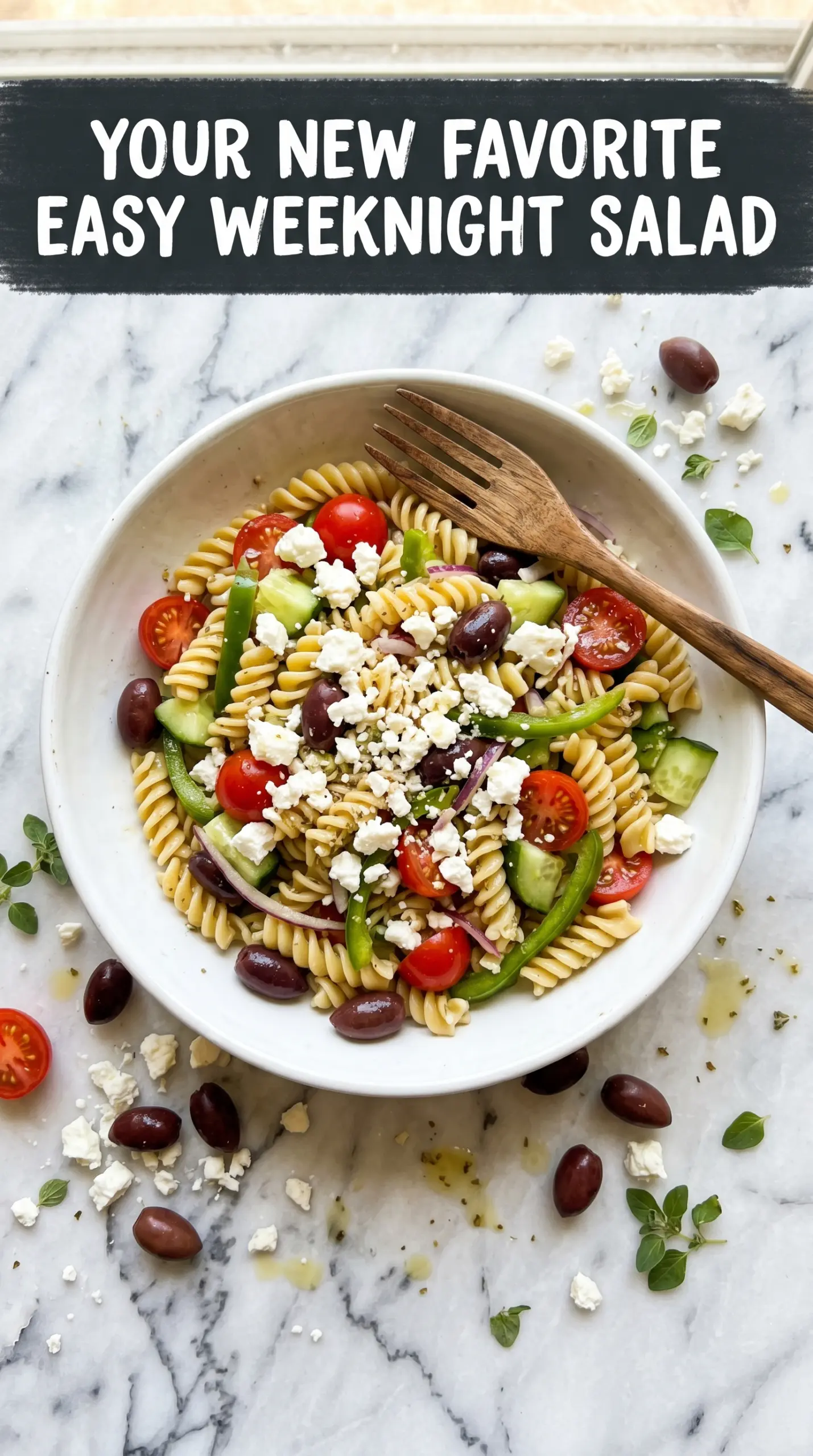
- Penne or rotini — Either shape holds the dressing well, but rotini catches little bits of feta and onion in the spirals. Don’t overcook it; soft pasta turns this from a salad into a paste after chilling.
- Kalamata olives — These add the deep briny note that makes the salad taste Greek instead of just “pasta with vegetables.” Cheap black olives won’t give you the same richness.
- Feta — Use a block if you can and crumble it yourself. It tastes cleaner and holds a better texture than the dry pre-crumbled stuff, which can vanish into the dressing.
- Lemon juice and red wine vinegar — The lemon gives freshness, while the vinegar sharpens the dressing so it doesn’t taste thin after chilling. If you only use lemon, the flavor can flatten out in the fridge.
- Fresh oregano — Fresh oregano is punchy and herbal, but dried oregano works fine here if that’s what you have. Rub the dried oregano between your fingers before whisking it in so it wakes up a little.
The Chill Time That Pulls It All Together
Cooking the Pasta to the Right Bite
Bring the pasta to a real boil and cook it just until it still has a little firmness in the center. Once it’s done, drain it and rinse under cold water until the noodles stop steaming. If you skip the rinse, the heat keeps cooking the pasta and the dressing won’t cling as nicely.
Whisking a Dressing That Stays Sharp
Whisk the olive oil, lemon juice, vinegar, garlic, oregano, salt, and pepper until it looks fully combined and a little emulsified. The garlic should be finely minced so it disperses instead of hitting in sharp chunks. If the dressing tastes too aggressive on its own, don’t panic; the pasta and vegetables mellow it during the chill.
Assembling Without Crushing the Salad
Toss the pasta with the tomatoes, cucumber, olives, onion, and most of the feta in a large bowl. Pour the dressing over and fold gently so the vegetables stay intact and the cheese stays in small crumbles instead of smearing. Save a little feta for the top because it makes the finished bowl look fresh and keeps some of that salty bite on the surface.
Letting the Fridge Do the Work
Refrigerate the salad for at least 2 hours before serving. That resting time isn’t optional if you want the flavor to taste complete; the pasta needs it, and the onion loses some of its bite as it sits in the dressing. Give the bowl one more toss before serving, then add the remaining feta right on top.
Three Ways to Adjust This Greek Pasta Salad Without Losing the Point
Make it gluten-free with sturdy pasta
Use a gluten-free penne or rotini that holds its shape after chilling. Some brands soften fast, so pull it from the pot when it still has a firm bite and toss it with the dressing as soon as it’s cool enough to handle.
Dairy-free version with the same Mediterranean feel
Leave out the feta and add a handful of chopped roasted red peppers or artichoke hearts for another savory layer. You’ll lose the creamy saltiness of feta, so taste the dressing after chilling and add a little more salt or lemon to keep the salad bright.
Turn it into a heartier main dish
Add diced grilled chicken, chickpeas, or cooked shrimp. Chickpeas keep it vegetarian and hold up best for meal prep, while chicken makes the salad more filling without changing the dressing at all.
Storage and Reheating
- Refrigerator: Keeps for 3 to 4 days. The vegetables soften a bit, but the flavor stays good.
- Freezer: Don’t freeze it. The cucumber and tomatoes release too much water and the texture breaks down.
- Reheating: Serve it cold or let it sit at room temperature for 15 to 20 minutes. Heating this salad turns the feta grainy and makes the vegetables watery.
Answers to the Questions Worth Asking
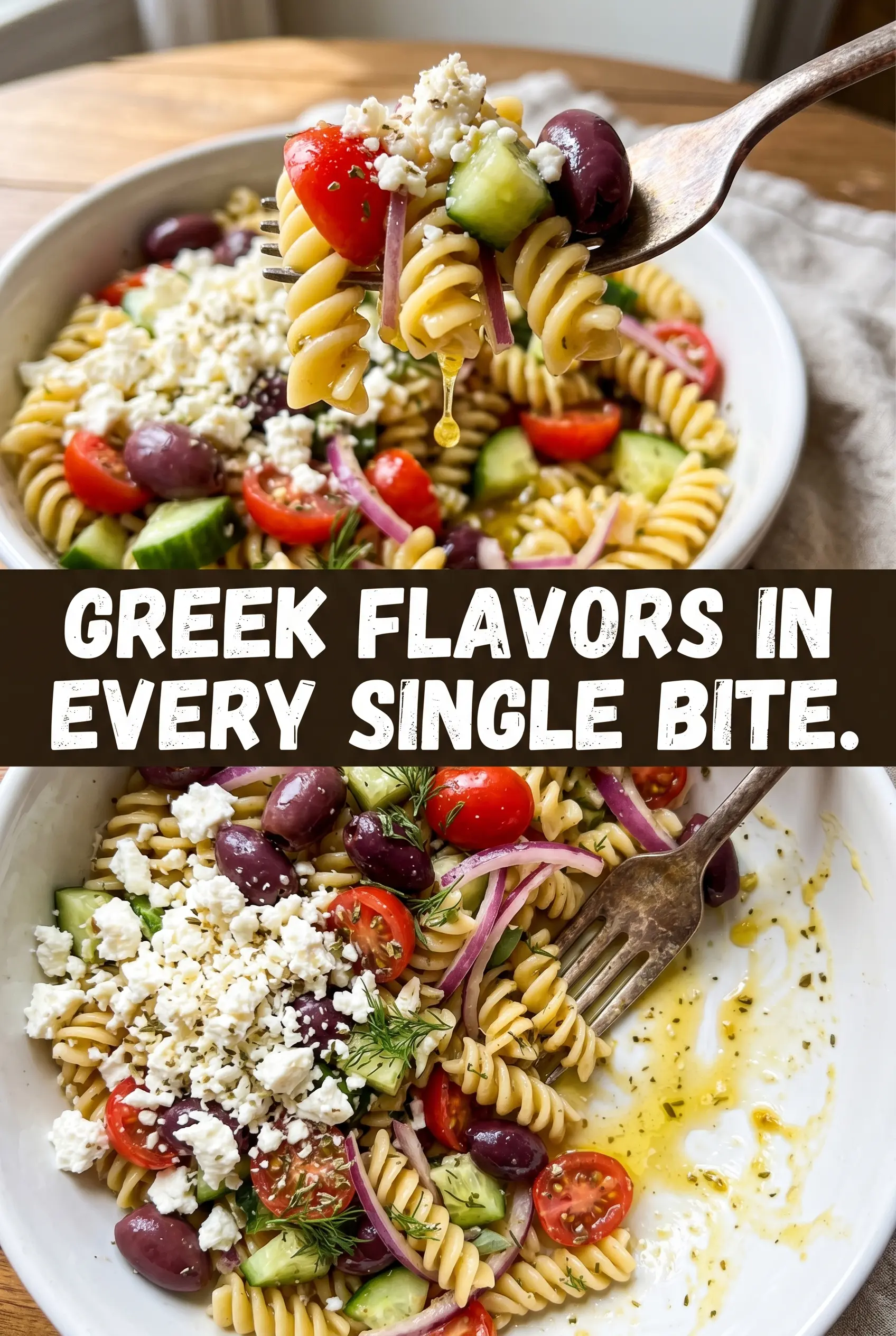
Greek Pasta Salad
Ingredients
Method
- Bring a pot of water to a boil, then cook the penne or rotini according to package directions. Cook for 10 minutes, then drain and rinse under cold water until no longer hot (visual cue: pasta feels cool to the touch).
- Whisk olive oil, lemon juice, red wine vinegar, minced garlic, oregano, salt, and pepper until the dressing looks evenly blended and glossy. Taste and adjust with more salt and pepper if needed (visual cue: no separated oil pools).
- In a large bowl, combine cooled pasta, halved cherry tomatoes, diced cucumber, pitted and halved Kalamata olives, and thinly sliced red onion. Stir gently until the colors are evenly distributed (visual cue: red, green, white, and black are clearly visible).
- Add most of the crumbled feta to the bowl and toss gently to coat. Keep some feta aside for topping before serving (visual cue: feta is scattered throughout rather than all on top).
- Pour the lemon-oregano dressing over the pasta salad and toss gently until everything looks lightly coated. If the salad seems dry, toss for 30-60 seconds more (visual cue: dressing clings to pasta).
- Cover and refrigerate the Greek pasta salad for at least 2 hours. Chill until firm and well flavored (visual cue: salad looks set and cold throughout).
- Right before serving, top with the remaining feta and toss very lightly just to distribute. Serve cold (visual cue: fresh feta sits on top, not fully mixed in).