Classic pasta salad earns its spot at cookouts because it holds up on the table, eats well cold, and still tastes like something with a little care behind it. The best versions aren’t overloaded; they’re balanced. You want tender pasta, crisp vegetables, and a dressing that clings instead of sliding to the bottom of the bowl.
The trick is in the temperature and the seasoning. Rinsing the pasta stops the cooking and cools it fast, which keeps the mayo dressing from thinning out too much when it goes in. A little vinegar and Dijon keep the salad from tasting flat, and the short rest time gives the pasta a chance to absorb the dressing instead of leaving it all on the surface.
Below, I’ve included the one step that makes the flavor settle in properly, plus a few practical swaps if you need to work with what’s in the fridge. This is the kind of side dish that gets better after a chill, which is exactly why it shows up so often at picnics, potlucks, and backyard dinners.
The dressing thickened up perfectly after chilling, and the celery still had a nice crunch the next day. I made it for a cookout and there wasn’t a spoonful left.
Like this classic pasta salad? Save it to Pinterest for your next picnic, potluck, or barbecue side dish.
The Dressing Needs to Be a Little Brighter Than You Think
Pasta salad gets dull fast when the dressing tastes right in the bowl but fades after chilling. The mayonnaise carries the body, but the vinegar and Dijon are what keep it from tasting heavy. If the dressing seems a touch sharp before it hits the pasta, that’s usually the right place to stop, because the noodles and vegetables will mellow it as they rest.
The other mistake is overdressing too early. Warm pasta drinks up the mayo and can make the salad greasy, while properly cooled pasta holds the dressing on the surface first and then absorbs it gradually. That’s what gives you a salad that tastes seasoned all the way through instead of just coated.
What Each Ingredient Is Actually Doing in This Salad
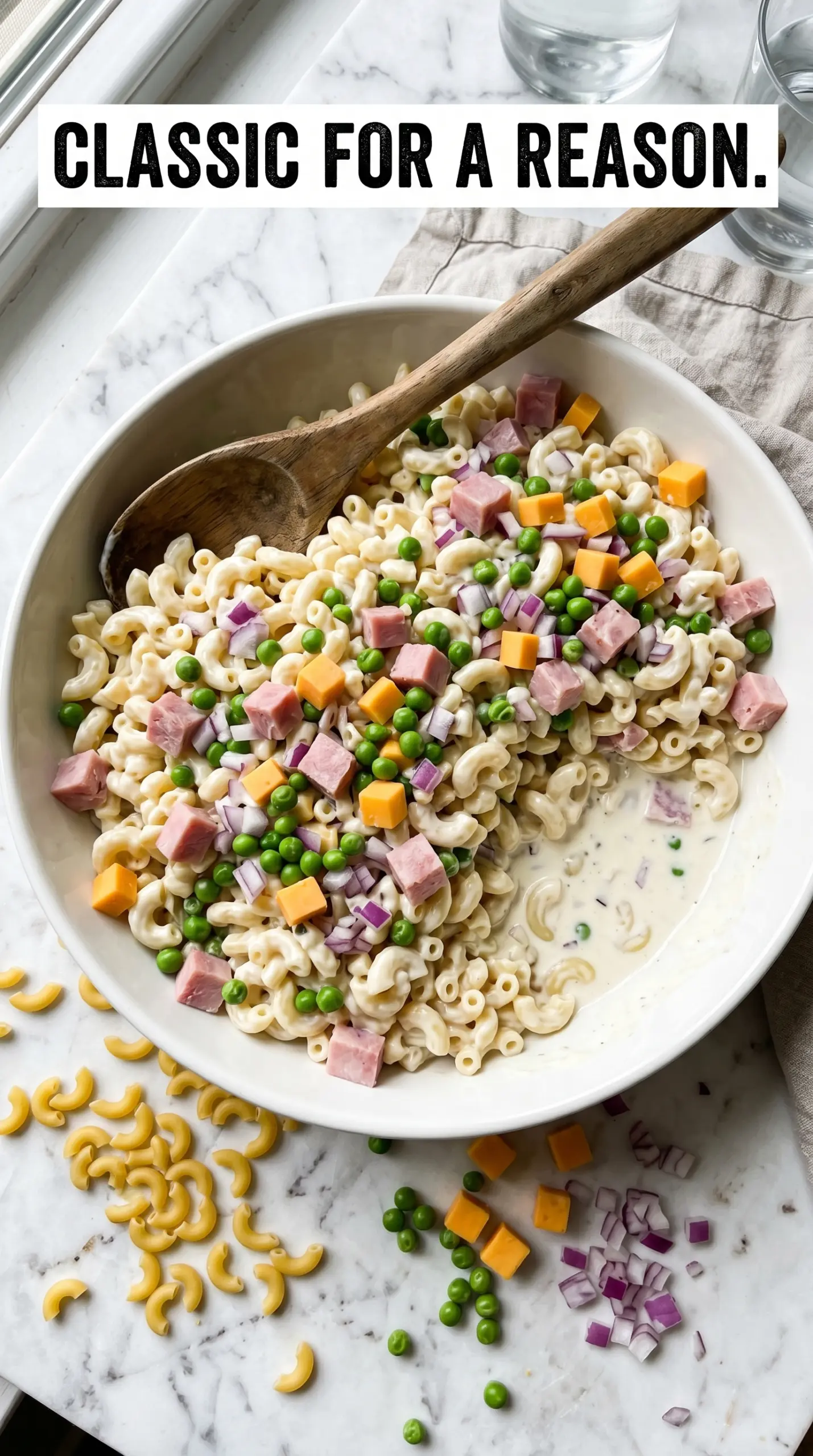
- Elbow macaroni — The shape matters here because the curves catch the dressing and bits of vegetable. Small shells or rotini work too, but long pasta gets slippery and doesn’t eat like a true pasta salad.
- Mayonnaise — This gives the salad its creamy base and helps the dressing coat every piece evenly. Use a good grocery-store mayo; homemade isn’t necessary here, but very thin light mayo can make the dressing feel watery after chilling.
- White vinegar — This is the cleanest way to cut through the richness. If you swap in apple cider vinegar, the salad will taste a little rounder and less sharp, which is fine, but white vinegar keeps the classic profile most intact.
- Dijon mustard — Dijon adds depth without making the salad taste mustardy. It also helps the dressing emulsify, which keeps it smoother after it rests.
- Celery, bell pepper, and red onion — These give the salad its crunch and bite, and the red onion especially benefits from a very fine dice so it doesn’t overpower the bowl. If raw onion is too strong for you, soak it in cold water for 10 minutes and drain well before mixing.
- Frozen peas — Thawed peas are sweet, tender, and easy. Fresh peas are nice when you have them, but frozen peas are the practical choice and stay pleasantly firm once chilled.
Building the Salad So It Stays Creamy, Not Gloppy
Cooking the Pasta to the Right Point
Boil the macaroni until it’s just tender, then drain it and rinse under cold water right away. You’re stopping the cooking and washing off excess starch, which keeps the dressing from turning pasty. If the pasta goes in warm, the mayonnaise can loosen too much and the final salad turns oily instead of creamy.
Mixing the Dressing First
Whisk the mayonnaise, vinegar, sugar, Dijon, salt, and pepper together before you add anything else. That gives the seasoning an even base, so you don’t end up with pockets of plain mayo in the finished bowl. Taste it now; it should be a little punchy because the pasta will soften it later.
Letting the Chill Do Its Job
Once the pasta and vegetables are coated, refrigerate the salad for at least 3 hours. This rest isn’t optional if you want the flavor to settle in properly. The dressing thickens, the onion mellows, and the pasta absorbs just enough of the sauce to taste seasoned all the way through.
Finishing Before Serving
Give the salad a stir after chilling because the dressing settles as it sits. If it looks dry, add a spoonful of mayo or a splash of vinegar, then season again. Cold food needs a final salt check right before serving because refrigeration mutes seasoning more than people expect.
How to Adapt This for a Picnic, a Potluck, or a Lighter Plate
Dairy-Free Classic Pasta Salad
This recipe is already dairy-free if your mayonnaise is dairy-free, which most standard brands are. That makes it one of the easier picnic sides to adapt, and the creamy texture stays intact without any special substitutions.
Make It a Little Sharper
If you like a more tangy pasta salad, add another teaspoon or two of vinegar after chilling. The cold dulls acidity, so the salad often needs a final lift before it goes to the table.
Swap the Vegetables Based on What You Have
Diced cucumber, chopped carrots, or chopped celery leaves all fit the same role here: crunch and freshness. Keep the pieces small and dry so they don’t water down the dressing.
Storage and Reheating
- Refrigerator: Store covered for up to 4 days. The pasta will soften a little more each day, but the flavor stays good.
- Freezer: I don’t recommend freezing this salad. Mayo-based dressings break after thawing, and the vegetables lose their crunch.
- Reheating: Don’t reheat it. Serve it cold straight from the fridge, then stir and refresh with a small spoonful of mayo or a splash of vinegar if it looks dry.
Answers to the Questions Worth Asking
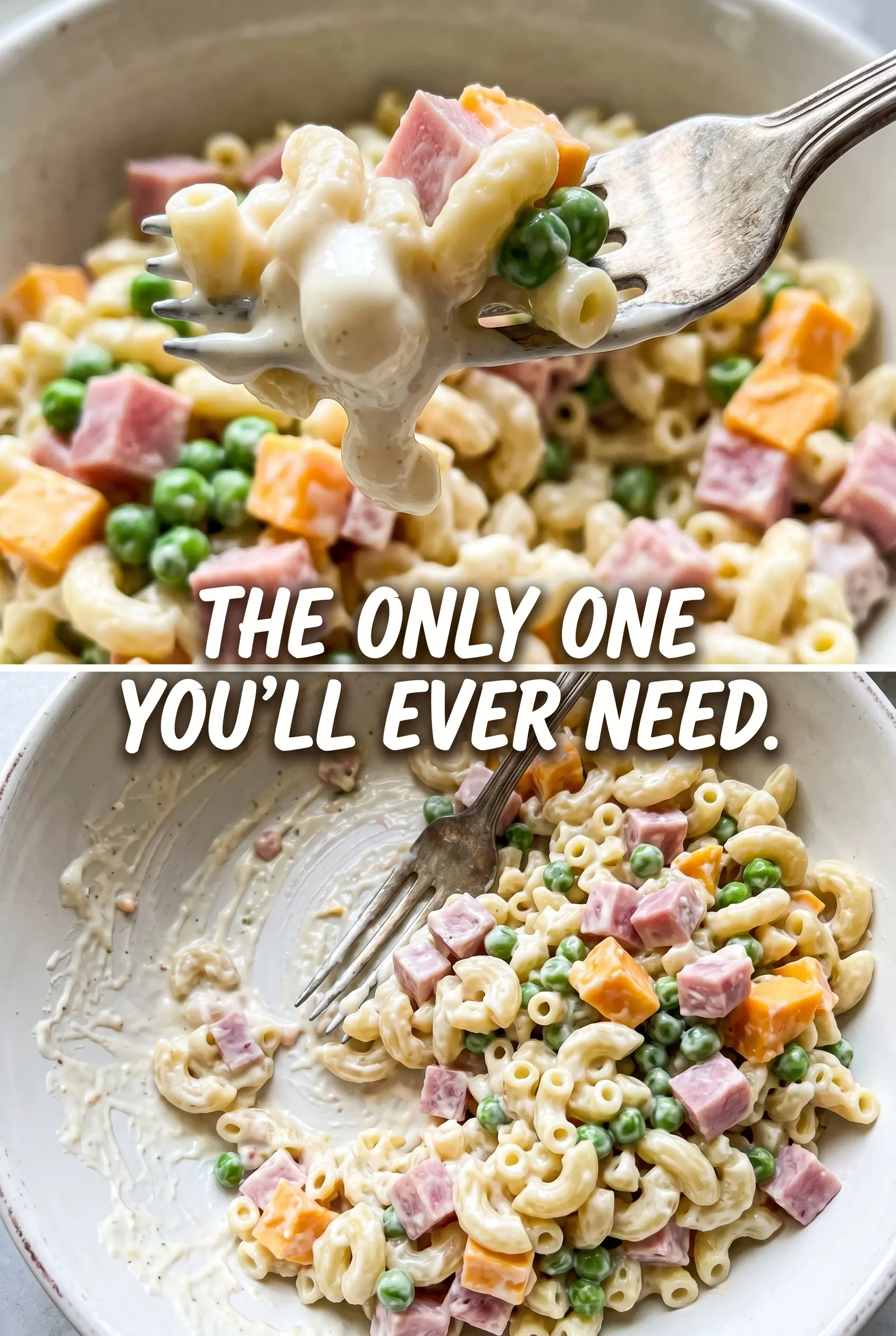
Classic Pasta Salad
Ingredients
Method
- Cook elbow macaroni according to package directions, then drain and rinse with cold water until the pasta looks cool and stops steaming.
- Whisk mayonnaise, white vinegar, sugar, Dijon mustard, salt, and pepper until smooth and glossy, with no sugar granules visible.
- Combine pasta, diced celery, diced red bell pepper, finely diced red onion, and thawed peas in a large bowl until the vegetables are evenly distributed.
- Pour the dressing over the salad and toss to coat evenly, so the pasta appears lightly slick and every vegetable is covered.
- Refrigerate for at least 3 hours or overnight so the salad firms up slightly and the flavors meld.
- Stir before serving and adjust seasoning until taste is balanced and the dressing clings smoothly to the pasta.