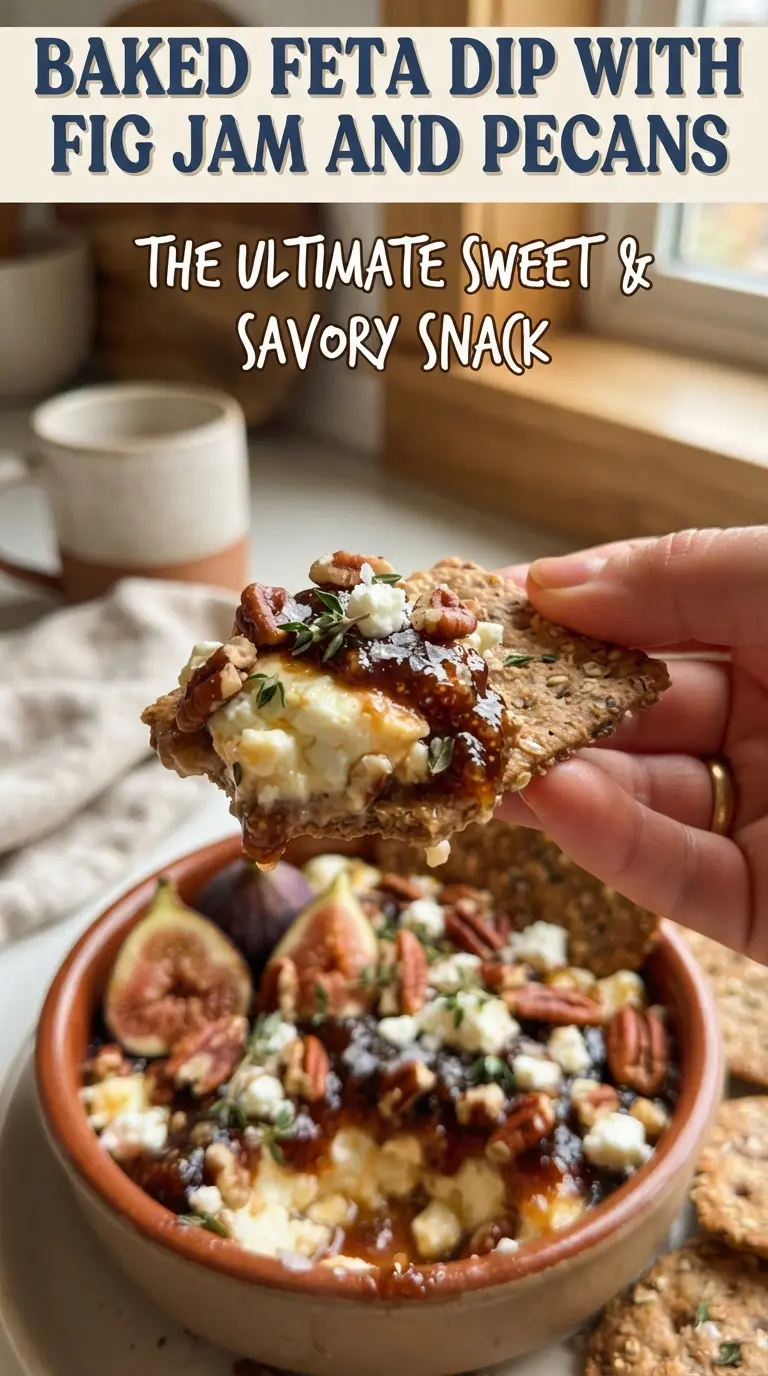
Warm baked feta turns soft and spoonable in the oven, then the fig jam melts into a glossy sweet layer that clings to every bite. The pecans bring just enough crunch to keep the dip from feeling one-note, and the rosemary gives it that savory edge that makes people keep reaching back in for another scoop.
What makes this version work is the order. The feta gets a head start so it can soften before the jam goes on, which keeps the cheese from drying out while the topping bubbles. Fig jam can brown quickly, so the second bake is just long enough to warm everything through and toast the nuts without burning the edges. A final drizzle of honey after baking adds shine and rounds out the saltiness of the feta.
Below, I’m breaking down the one step that keeps the cheese creamy instead of rubbery, plus the easiest swaps if you need to work with a different jam or want to adjust the sweetness.
The feta stayed creamy instead of getting dry, and the fig jam with the toasted pecans tasted like something from a fancy appetizer platter. I served it with warm baguette and it disappeared in minutes.
Like this baked feta dip? Save it to Pinterest for the nights when you want a warm, sweet-savory appetizer that comes together fast.
The Part That Keeps the Feta Creamy Instead of Tight
The biggest mistake with baked feta is blasting it with toppings too early. Feta needs that first stretch of dry heat so the center loosens before the jam goes on, or the cheese stays chalky under the topping instead of turning soft and scoopable. The oil on top helps the surface warm evenly and keeps the edges from scorching while the middle catches up.
The second bake matters just as much. Once the jam is on, the goal is bubbling, not browning. If you leave it in until the top looks deeply caramelized, the pecans can turn bitter and the feta can seize up again as it cools. Pull it when the jam is glossy and active at the edges.
What Each Ingredient Is Actually Doing in This Dip
- Feta — Use a block, not crumbles. A block softens into a creamy slab that holds together under the jam, while crumbles dry out and disappear into the dish.
- Fig jam — This gives you the sweet fruit layer and the glossy finish. If you substitute another jam, pick one with some body, like apricot or cherry, so it doesn’t turn watery in the oven.
- Pecans — Chop them fairly small so they toast quickly and stick to the top. Walnuts work too, but they bring a sharper bitterness and less of that buttery crunch.
- Rosemary — Fresh rosemary cuts through the richness and keeps the dip from leaning candy-sweet. Dried rosemary can taste woody here, so if that’s what you have, use half the amount and crush it between your fingers first.
- Honey — Add it after baking. If it goes in too early, it can darken too fast and turn sticky instead of giving you that final silky sheen.
Building the Dip So the Topping Bubbles, Not Burns
Warming the Feta First
Set the feta in a small baking dish and drizzle it with olive oil before it goes into the oven. After about 10 minutes, the edges should look soft and slightly slumped, but the block should still hold its shape. That first bake is what turns the cheese into a spreadable base, so don’t rush it or the jam will sit on top of a cold center.
Adding the Sweet Layer
Spoon the fig jam over the softened feta and spread it just enough to cover the top. Scatter the pecans, rosemary, and red pepper flakes over the jam so the nuts get direct heat and toast instead of just warming through. If you pile everything in one thick mound, the center can stay cool while the edges overcook.
Finishing at the Right Moment
Bake again until the jam is bubbling and the pecans smell toasted, usually 8 to 10 minutes. Pull it as soon as the top looks glossy and active at the edges; if it sits too long, the jam thickens into paste and the cheese underneath gets firm again. Finish with honey and black pepper while it’s still hot so the honey melts into the surface instead of sitting on top in a sticky streak.
How to Adapt This for Different Crowds and Different Pantry Shelves
Make It Nut-Free
Skip the pecans and add toasted pumpkin seeds for crunch. You lose a little of the buttery richness, but you keep the contrast that makes the dip interesting.
Make It Dairy-Free
Use a firm almond- or cashew-based feta-style cheese that bakes well. It won’t taste exactly the same, but it should still soften under the jam and give you that salty-sweet contrast.
Swap the Fig Jam
Apricot or cherry jam both work well here. Apricot keeps the dip brighter and a little tangier, while cherry makes it deeper and more dessert-like.
Storage and Reheating
- Refrigerator: Store leftovers covered for up to 3 days. The feta firms up as it chills, and the jam thickens.
- Freezer: I don’t recommend freezing this dip. The feta turns grainy and the jam loses its glossy texture after thawing.
- Reheating: Warm it in a 300F oven until the center loosens again, about 10 minutes. The microwave makes the cheese rubbery in spots, so use the oven if you want the creamy texture back.
Questions I Get Asked About This Recipe

Baked Feta Dip with Fig Jam and Pecans
Ingredients
Equipment
Method
- Preheat the oven to 400°F. Place the feta in a small baking dish and drizzle with the olive oil.
- Bake for 10 minutes, until the feta begins to soften. It should look slightly melty around the edges.
- Spread the fig jam over the top. Scatter the pecans, rosemary, and red pepper flakes evenly across the surface.
- Bake 8 to 10 minutes more, until the jam is bubbly and the pecans are toasted. Look for active bubbling at the jam edges.
- Drizzle with honey and season with black pepper. Serve warm while the center is soft.
- Serve the baked feta dip with pita chips or toasted baguette. Scoop into the creamy center for each bite.