Golden puff pastry wrapped around warm brie is the kind of appetizer that disappears the moment it hits the table. The outside bakes up crisp and deeply browned while the center turns molten and spoon-soft, with jam and toasted pecans cutting through the richness so every bite tastes balanced instead of heavy. It looks like something you’d order at a nice restaurant, but it comes together with a handful of ingredients and a little care at the seams.
The trick is keeping the pastry cold enough to stay flaky while the brie heats all the way through. A thin layer of jam gives you sweetness and a little insurance against a bland center, while the egg wash gives the pastry that glossy, bakery-style finish. The rest is about timing: bake until the crust is a deep golden brown, then let it sit long enough for the cheese to settle slightly before cutting in.
Below you’ll find the exact cues that tell you when it’s done, plus a few smart swaps if you’re changing the jam, skipping nuts, or serving a bigger crowd.
The pastry stayed crisp all the way around, and the raspberry jam with the brie was the perfect mix of sweet and rich. I let it rest the full 10 minutes and it sliced instead of running everywhere.
Save this baked brie with raspberry jam and puff pastry for the appetizer table when you want a crisp shell and a molten center.
The Part That Keeps Puff Pastry Crisp Instead of Soggy
The enemy here is moisture. Brie softens fast, jam loosens as it heats, and if the pastry spends too long sitting around before it goes into the oven, the bottom starts to steam instead of bake. Rolling the pastry just enough to smooth the seams helps it wrap neatly without thinning it out, and placing the wrapped brie seam-side down gives you a better seal and a more reliable crust.
The other mistake is underbaking. Pale pastry might look done from a distance, but it will taste doughy at the bottom and the cheese inside won’t have that full molten texture. You want deep color and a firm feel when you tap the top gently. If the pastry is browning too quickly before the center feels hot, the oven is running hot and it needs the full lower-middle rack treatment to finish evenly.
What Each Ingredient Is Actually Doing Here
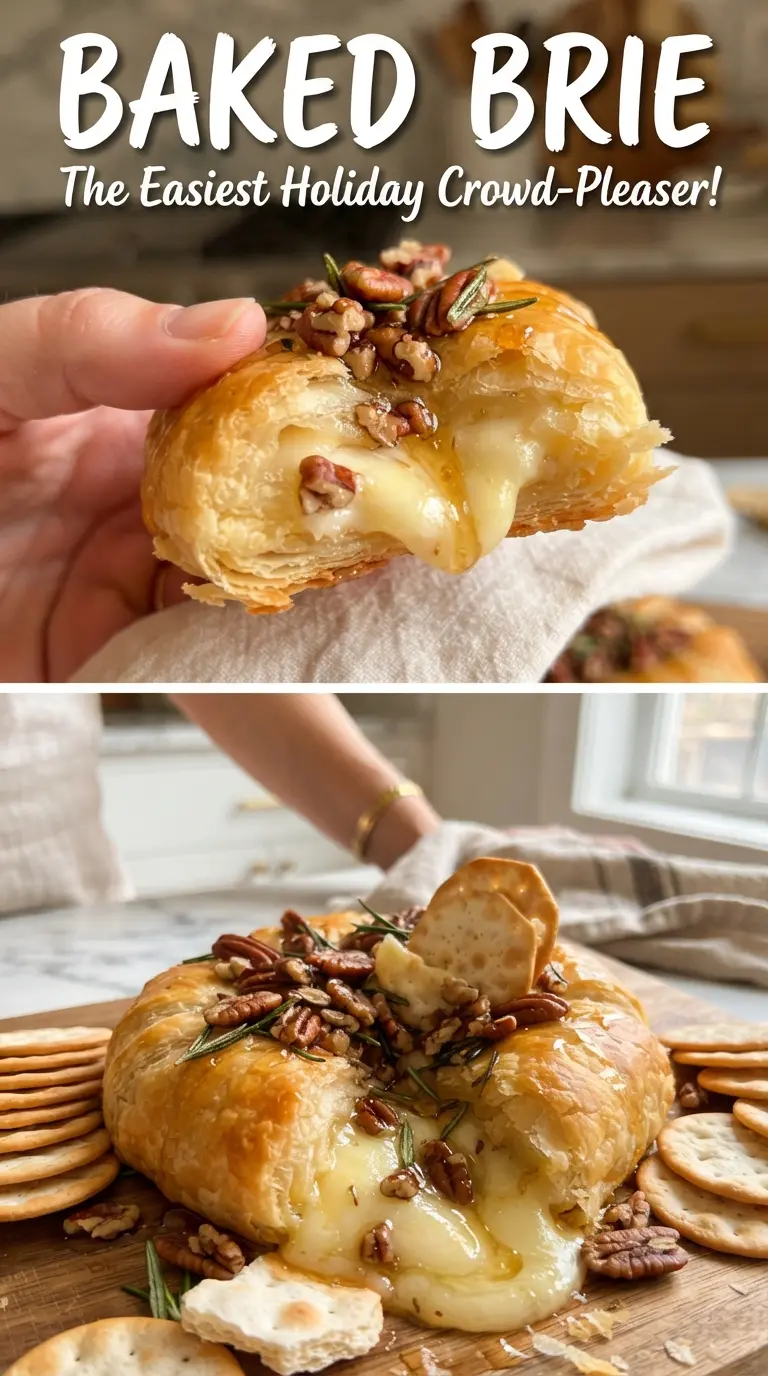
- Puff pastry — This gives the dish its structure and crunch. Store-bought pastry is exactly right here; homemade is overkill for an appetizer like this. Keep it thawed but still cool so the butter layers can puff in the oven instead of melting out before they set.
- Brie — A wheel around 8 ounces is the sweet spot for the pastry wrap and baking time you need. Leave the rind on; it helps the cheese hold together as it melts. If your brie is very cold from the fridge, give it a few minutes on the counter before wrapping so the center heats more evenly.
- Raspberry or fig jam — This is doing more than adding sweetness. It keeps the interior from tasting one-note and gives you that glossy layer that mingles with the cheese. Fig jam tastes deeper and less tart; raspberry is brighter. Either works, but avoid very watery jam or the pastry can soften.
- Pecans and brown sugar — The nuts add crunch and the sugar helps the filling taste a little more caramelized. Chop the pecans fine enough that they stay put when you fold the pastry. If you skip the nuts, the brie will still bake well; you’ll just lose that contrast in texture.
- Egg wash — This is what gives the pastry that deep golden finish. Water alone won’t give the same shine or color. Brush it on lightly and evenly; puddles of egg wash can create dark spots before the pastry is fully baked.
Wrapping and Baking the Brie So the Cheese Stays Put
Building the Filling Layer
Set the brie in the center of the rolled pastry and spread the jam over the top before adding the pecans and brown sugar. That order matters because the jam acts like glue and keeps the nuts from sliding around when you fold the pastry. Don’t overfill the top; too much jam will leak and scorch on the pan instead of staying tucked inside the pastry.
Folding and Sealing the Package
Bring the pastry up and over the brie, trimming away excess if needed so the seams aren’t bulky. Press the joins firmly so the cheese stays enclosed as it melts, then turn the whole bundle seam-side down onto the lined baking sheet. If the seams feel loose, they’ll split in the oven and the cheese will escape early.
Getting the Color Right in the Oven
Brush the pastry with egg wash and bake at 400°F until the outside turns deep golden brown, usually 22 to 25 minutes. You’re looking for crisp layers and a surface that feels set, not soft and pale. If the top browns before the pastry feels crisp at the base, move the tray lower in the oven next time or give it a few extra minutes before pulling it out.
Letting It Rest Before the First Cut
Give the baked brie about 10 minutes to sit after it comes out of the oven. That short rest lets the molten center thicken just enough so it oozes instead of flooding the plate. If you cut in too soon, the cheese rushes out before the pastry has a chance to hold its shape.
How to Change This Baked Brie Without Losing the Good Part
Use apricot jam instead of raspberry
Apricot gives the brie a softer, rounder sweetness and a little less tartness. It works best if you want the cheese to stay front and center. The flavor is lighter, but the pastry still bakes the same way.
Skip the nuts for a nut-free version
Leave out the pecans and keep the jam layer a little thinner so the filling doesn’t get too loose. You’ll lose the crunch, but the pastry still gives you enough texture to keep each bite interesting. This is the cleanest adjustment if you’re serving guests with nut allergies.
Make it gluten-free with gluten-free puff pastry
Use a gluten-free puff pastry that bakes up from chilled, and watch it closely because some brands brown faster than standard pastry. The result won’t be quite as shattery, but it still gives you the same warm, gooey center. Let it cool a little before slicing so the crust holds together.
Add rosemary or thyme to push it more savory
Tuck a few tiny leaves into the jam layer or use them as garnish after baking. Herb notes pull the richness back and make the brie taste a little more elegant with crackers, apples, or sliced pears. Keep the amount small so the herbs don’t take over the cheese.
Storage and Reheating
- Refrigerator: Store leftovers tightly wrapped for up to 3 days. The pastry softens, but the flavor stays good.
- Freezer: Freezing isn’t ideal once it’s baked; the brie can turn grainy and the pastry loses its crispness. If you need to freeze ahead, freeze the assembled unbaked pastry-wrapped brie before brushing with egg wash, then bake from chilled.
- Reheating: Warm leftovers in a 325°F oven until the center loosens again and the crust crisps back up. The mistake is using the microwave, which makes the pastry limp and the cheese leak out.
Questions I Get Asked About This Recipe
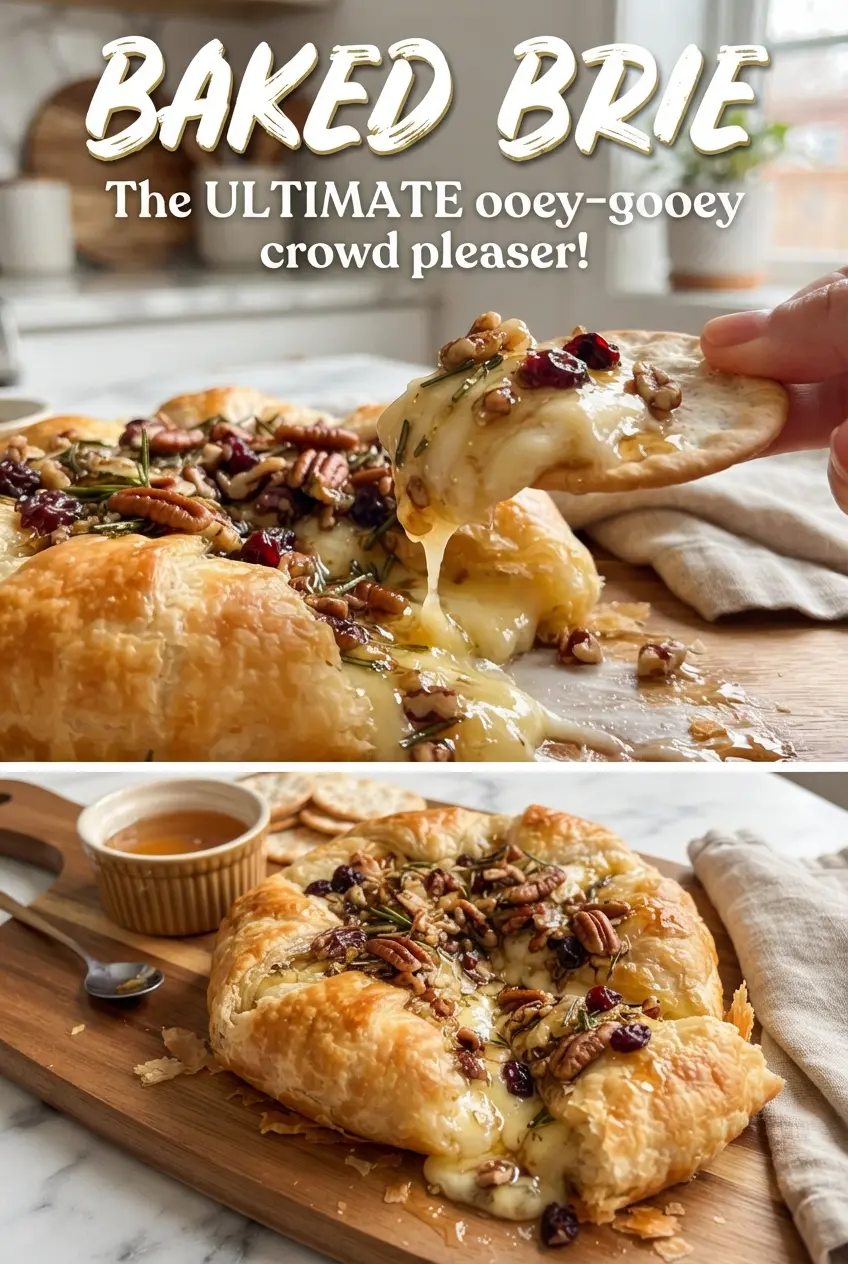
Baked Brie in Puff Pastry
Ingredients
Equipment
Method
- Preheat the oven to 400F and line a sheet pan with parchment for easy release.
- Roll the puff pastry slightly and place the brie in the center.
- Spread the raspberry or fig jam over the brie, then sprinkle with the chopped pecans and brown sugar.
- Fold the pastry up over the brie, trim any excess, and press the seams to seal.
- Flip the brie seam-side down onto the sheet pan, then brush with the egg wash for a golden finish.
- Bake at 400F for 22-25 minutes until the pastry is deep golden brown and puffed.
- Rest for 10 minutes so the cheese sets slightly, then garnish with fresh rosemary.
- Serve warm with crackers and apple slices for dipping.