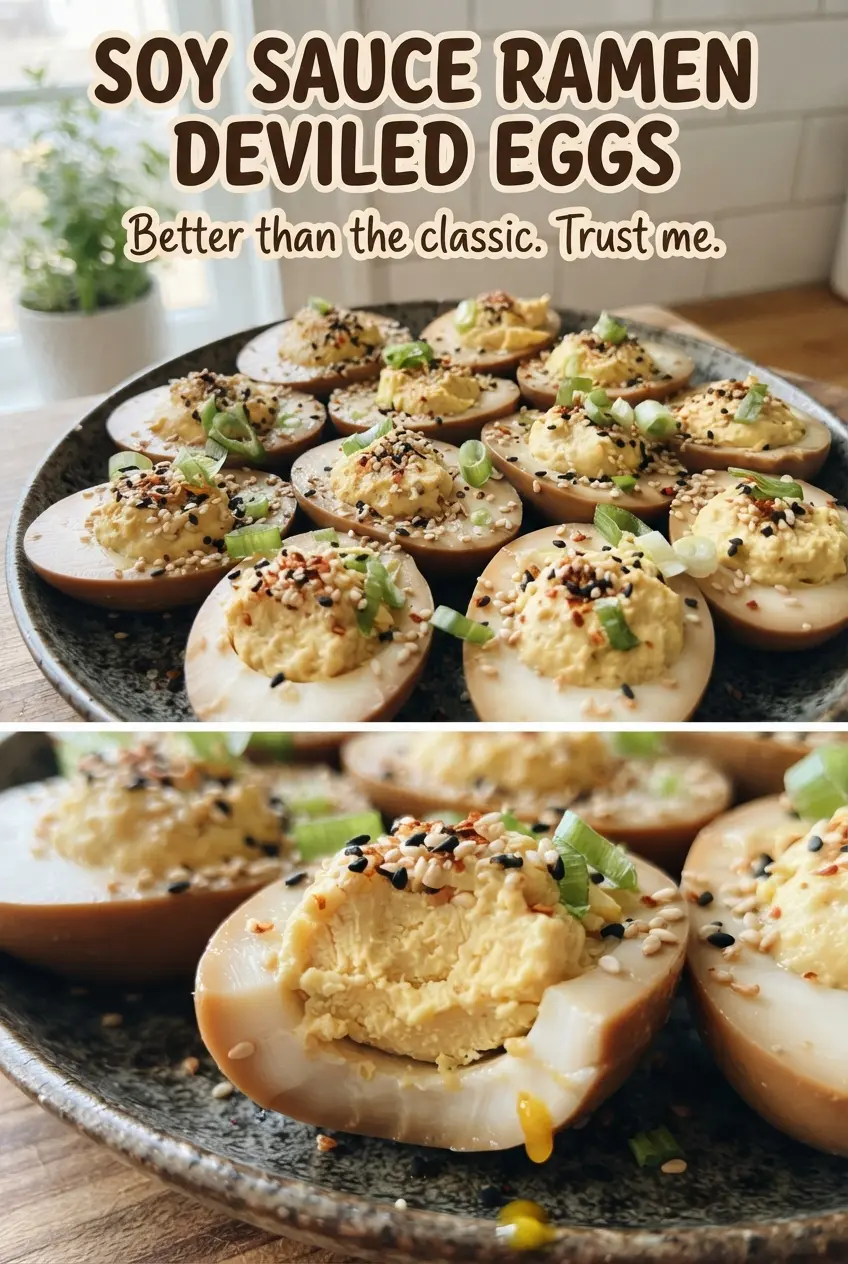
Amber-edged egg whites and a creamy, savory yolk filling turn deviled eggs into something that tastes familiar and new at the same time. The soy marinade gives the whites a deep, seasoned bite instead of the usual plain egg-white background, and the filling lands richer and silkier than a standard picnic-style version. These disappear fast because every bite has salt, a little sweetness, gentle heat, and that unmistakable ramen-shop umami.
The trick is in the balance. A short soy-mirin marinade seasons the whites without turning them rubbery, while Japanese mayonnaise keeps the filling plush and smooth. Rice vinegar brightens everything so the eggs don’t taste heavy, and a little sesame oil goes a long way; it should smell nutty, not dominate the plate. If you’ve ever wanted deviled eggs that feel a little more polished without getting fussy, this is the kind of recipe that delivers.
You’ll find the key timing for marinating the eggs, the ingredient swaps that still keep the filling creamy, and the few small details that make the garnish actually matter instead of just looking decorative.
The soy marinade gave the whites such a nice color and the filling stayed smooth and pipeable. I used the full 4 hours and they tasted like something from a sushi bar appetizer menu.
Save these soy sauce ramen deviled eggs for the appetizer tray that needs bold flavor, glossy egg whites, and a creamy sesame filling.
The Marinade Timing That Keeps the Whites Seasoned, Not Rubbery
Deviled eggs can go wrong fast once the whites sit in liquid too long. The soy sauce, water, mirin, and sugar should season the outside of the egg without pulling all the moisture out of it, which is why the 4-hour mark matters. Much longer and the whites can start to get firm at the edges; much shorter and you’ll lose the color and savory depth that make these different from standard deviled eggs.
The eggs need to be fully peeled before they go into the marinade, and they need to be submerged as evenly as possible. If part of an egg stays exposed, the color will come in patchy and the seasoning will be uneven. A shallow container helps keep them in contact with the liquid, and a gentle turn halfway through the chill gives you a more even amber finish.
What Each Ingredient Is Actually Doing in These Eggs
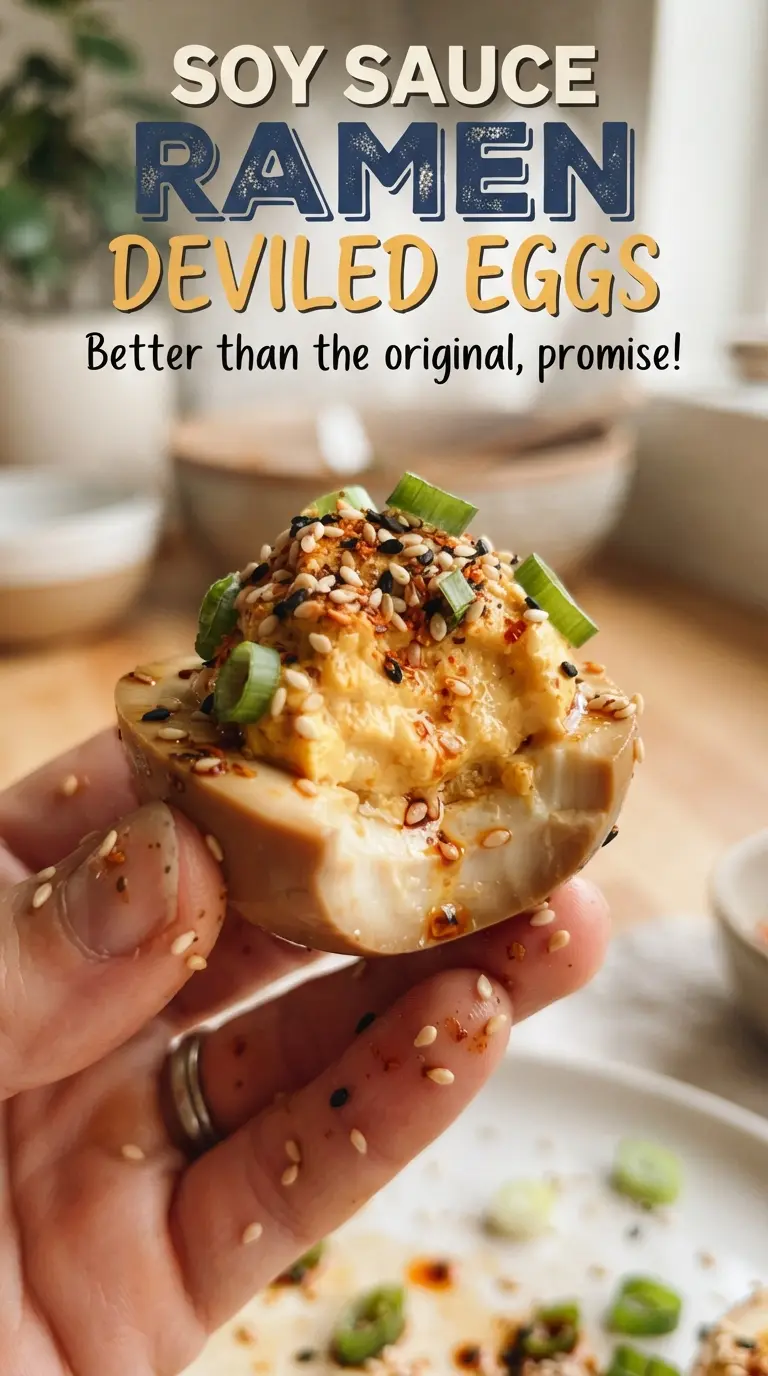
- Eggs — Fresh eggs are harder to peel, so eggs that are a few days old usually give you cleaner whites. The boil-and-ice-bath method matters here because the whites need to set firmly before they soak in the marinade.
- Soy sauce — This is where the color and the deep savory backbone come from. Use a good Japanese-style soy sauce if you have it; a very salty, aggressive soy sauce can overpower the filling.
- Mirin and sugar — These soften the saltiness and give the whites that rounded, ramen-adjacent finish. If you skip them, the marinade tastes harsh instead of balanced.
- Japanese mayonnaise — This is the difference between a filling that tastes rich and one that tastes flat. Regular mayo works in a pinch, but Japanese mayo is tangier, silkier, and more stable when mixed with yolks.
- Sesame oil, rice vinegar, and sriracha — Sesame oil gives the filling its toasty aroma, vinegar keeps it bright, and sriracha adds enough heat to wake everything up without making the eggs spicy. Add the sesame oil sparingly; too much takes over fast.
- Nori, sesame seeds, and green onion — These aren’t just garnish. They echo the ramen inspiration and add crunch, salt, and a fresh finish that keeps each bite from feeling heavy.
Building the Filling So It Pipes Cleanly
Boiling and Peeling Without Tearing the Whites
Start with eggs that have fully set yolks but still stay tender, about 10 minutes at a steady boil, then move them straight into an ice bath. That stop-and-chill step makes the eggs easier to peel and helps keep the whites from turning chalky around the edges. If the shells fight you, crack them all over and peel under cool running water.
Marinating for Color and Seasoning
Whisk the soy sauce, water, mirin, and sugar until the sugar dissolves before the eggs go in. You want a smooth marinade so the eggs season evenly instead of sitting in a grainy mix. Keep them chilled while they marinate, and don’t rush this stage; the color deepens gradually, and that full amber edge is part of what makes the finished platter look special.
Mashing the Yolks Into a Creamy Filling
Pull the yolks out while the whites are still cold, then mash them until there are no dry crumbles left. Stir in the mayonnaise, sesame oil, rice vinegar, and sriracha until the mixture turns smooth and pipeable. If the filling looks stiff, add another teaspoon of mayo rather than more liquid, because too much extra moisture makes the filling slump once it sits in the eggs.
Finishing With Garnish That Adds Texture
Pipe or spoon the filling back into the egg whites, then finish with sesame seeds, nori strips, and sliced green onion. The garnish should sit on top, not disappear into the filling, so add it right before serving if you want the nori to stay crisp. These eggs are best when the toppings still have a little texture against the creamy center.
Three Ways to Adapt These Deviled Eggs Without Losing the Point
Make Them Gluten-Free Without Changing the Texture
Use a certified gluten-free soy sauce or tamari. The marinade still gives the same color and savory depth, and the filling doesn’t need any changes. This is the easiest swap because the recipe doesn’t rely on wheat for structure at all.
Dial Down the Heat for a Milder Appetizer
Leave out the sriracha and add a tiny extra spoonful of mayo if you want the filling softer and less sharp. You’ll keep the sesame-and-soy flavor, but the finish will be gentler and more crowd-friendly for people who don’t want spice on an appetizer tray.
Use Regular Mayo if That’s What’s in the Fridge
Regular mayonnaise works well, though the filling will taste a little less tangy and rich. Add the rice vinegar in full so the mixture still has brightness, and whisk until completely smooth to keep the texture close to the Japanese mayo version.
How to Make Them Ahead for a Party
Marinate the eggs and make the filling a day ahead, but don’t assemble them until a few hours before serving. The whites hold well, and the filling stays smooth, but the nori softens quickly once it sits on the eggs. Keep the components separate and the final platter tastes fresher.
Storage and Reheating
- Refrigerator: Store assembled eggs in an airtight container for up to 2 days. The whites will keep their flavor, but the garnish softens after the first day.
- Freezer: Don’t freeze deviled eggs. The whites turn watery and rubbery once thawed, and the filling loses its smooth texture.
- Reheating: These are meant to be served cold. Let them sit at room temperature for 10 to 15 minutes before serving if they’ve been fully chilled, but don’t heat them or the filling will loosen and the whites will toughen.
Answers to the Questions Worth Asking
Soy Sauce Ramen Deviled Eggs
Ingredients
Equipment
Method
- Bring a pot of water to a boil, then boil the large eggs for 10 minutes. Immediately chill the eggs in an ice bath, then peel them while cold so the whites stay intact.
- Whisk soy sauce, water, mirin, and sugar until the sugar dissolves. Submerge the peeled eggs in the soy mixture, cover, and marinate in the fridge for 4 hours.
- Halve the marinated eggs lengthwise and remove the yolks, keeping the egg whites whole. Mash the yolks with Japanese mayonnaise, sesame oil, rice vinegar, and sriracha until smooth.
- Pipe the yolk mixture into the amber egg whites using a steady pressure for neat ridges. Top with toasted sesame seeds, thin nori strips, and sliced green onions right before serving for the best color.