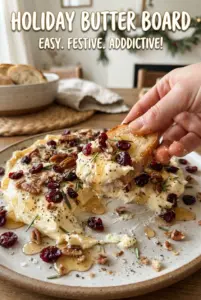
Soft butter spread across a board, finished with honey, cranberries, pistachios, orange zest, and rosemary, turns into the kind of appetizer people gather around before they even realize dinner has started. The best part is the texture contrast: cool, creamy butter against chewy fruit, crunchy nuts, bright citrus, and salty flakes, all scooped up with warm bread. It looks generous and festive, but it takes almost no time, which is exactly why it earns a place at parties.
The key is starting with butter that’s properly softened, not melted. You want it spreadable enough to make swoops and ridges with the back of a spoon, because those little valleys catch the honey and toppings. Salted butter gives the board a stronger base, while the orange zest and rosemary cut through the richness so every bite tastes balanced instead of heavy. Chop the cranberries and pistachios small enough to cling to the butter, and serve it right away so the bread stays crusty and the butter stays plush.
Below, I’ve included the small details that make a butter board work for a crowd, plus the swaps that keep it flexible if you need to change the fruit, nuts, or garnish.
The butter stayed soft enough to spread the whole time, and the orange zest with the rosemary made it taste way brighter than I expected. I used sourdough, and every slice got coated perfectly.
Pin this holiday butter board for the party appetizer with honey, cranberries, pistachios, and bright citrus that disappears fast.
The Trick That Keeps a Butter Board from Looking Sloppy
The board works when the butter holds its shape just enough to catch the toppings without turning greasy. If the butter is too cold, it tears instead of spreading. If it’s too warm, the honey runs off and the toppings slide around. Room-temperature butter is the sweet spot: soft enough to swoosh, firm enough to stay in place once the board is assembled.
The other thing that matters is cutting the toppings small. Big pieces of cranberry or pistachio fall off the bread instead of staying anchored in the butter. A little texture is good here, but you want the board to eat neatly. That balance between spreadable and structured is what makes this feel polished instead of rushed.
What Each Topping Is Actually Doing Here
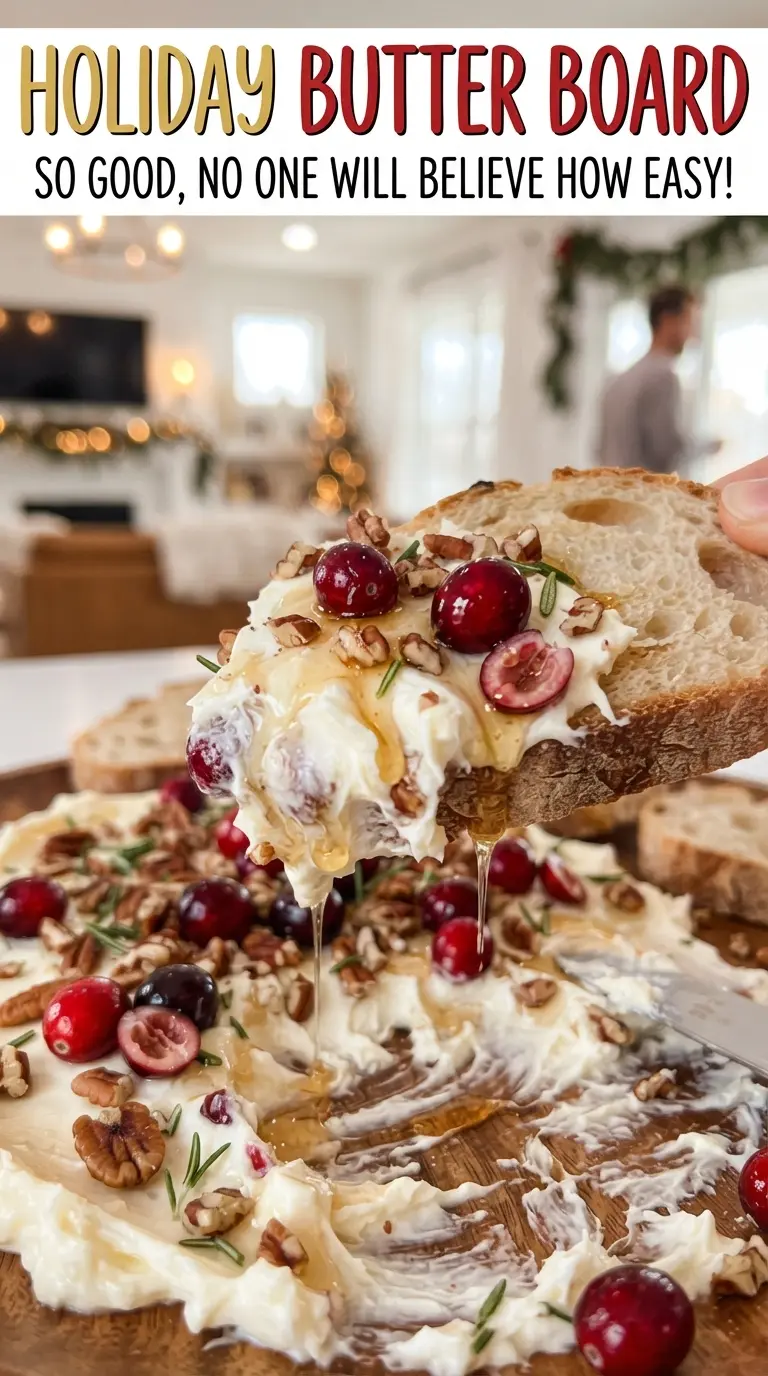
- Salted butter — This is the base and the main flavor, so use one you’d actually enjoy eating plain. Unsalted butter works if that’s what you have, but add a little extra flaky salt at the end or the board can taste flat.
- Honey — Honey helps the toppings cling and gives the butter a glossy finish. Warm it for a few seconds if it’s thick so it drizzles instead of dragging the butter around.
- Dried cranberries — These bring chew and tartness. Chop them so they scatter evenly and don’t make the board hard to spread.
- Pistachios — They add crunch and a buttery nuttiness that fits right into the base. If you swap them, keep the nuts finely chopped so they don’t break the swooping look.
- Orange zest and rosemary — These are the bright top notes that keep the dish from tasting one-note. Fresh is worth using here because dried rosemary won’t give the same lift.
How to Build the Board So Every Swipe Picks Up Toppings
Making the Butter Surface
Spread the butter onto the board with the back of a spoon in short strokes, then go back and create swoops and ridges. Those ridges matter because they hold the honey and give the toppings places to settle. Don’t try to make it perfectly smooth; a little texture is what makes the board look inviting. If the butter starts smearing into a translucent layer, it’s too warm and needs a few minutes in the fridge before you continue.
Layering the Sweet, Salty, and Herbal Pieces
Drizzle the honey over the butter first so it can settle into the grooves. Then scatter the cranberries, pistachios, orange zest, and rosemary across the top, aiming for even coverage without piling everything in one spot. Finish with flaky sea salt and red pepper flakes at the very end so they stay visible and don’t dissolve into the butter. If the board looks sparse, add a little more zest or a few extra nuts rather than more butter-heavy toppings.
Serving It at the Right Moment
Set out the torn or sliced bread as soon as the board is assembled. The butter tastes best when it’s still plush, and crusty bread gives you the best contrast against the soft spread. If you let the board sit too long in a warm room, the toppings can sink and the butter can lose its shape. For a party, put the board on the table right before people start eating.
Ways to Adjust the Board Without Losing the Point
Make it dairy-free
Use a high-quality plant-based butter that’s meant for spreading, not a tub margarines that melts into oil. The result will still be creamy and scoopable, though it may taste a little less rich, so the orange zest and flaky salt become even more important.
Swap the fruit for a different holiday note
Chopped dried apricots or cherries can stand in for cranberries. Apricots lean sweeter and softer; cherries bring a deeper, jammy edge. Keep the pieces small so they cling to the butter instead of dropping off the bread.
Change the nuts when pistachios aren’t available
Chopped pecans or toasted almonds work well here. Pecans make the board taste warmer and rounder, while almonds stay a little crisper. Toasting the nuts first adds extra flavor and helps them stand out against the butter.
Storage and Reheating
- Refrigerator: The assembled board is best served immediately. If you have leftovers, scrape the butter off the board and refrigerate it in a covered container for up to 3 days; the toppings will soften a bit.
- Freezer: I don’t recommend freezing the finished board. The butter can freeze, but the toppings lose their texture and the whole thing turns muddy when thawed.
- Reheating: No reheating is needed. If the butter firms up in the fridge, let it sit at room temperature until spreadable again before serving. Microwaving will melt the edges and ruin the swooshed look.
Answers to the Questions Worth Asking
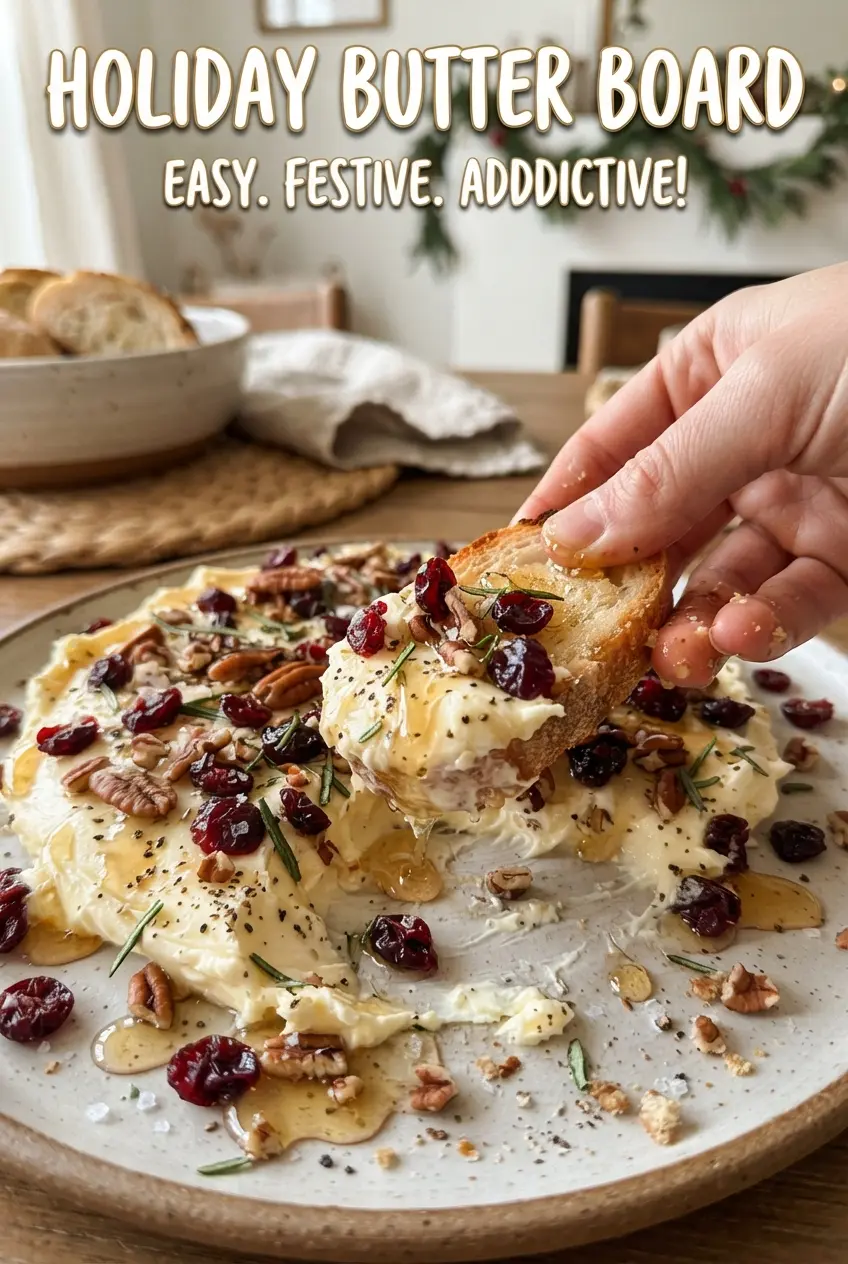
Holiday Butter Board
Ingredients
Equipment
Method
- Spread softened salted butter across a wooden board using the back of a spoon, making swooshes and swirls (no heat). Use a smooth, even layer so toppings stick to every ridge.
- Drizzle honey over the butter in thin, uneven ribbons so it pools lightly in the swirls (no set time required). Aim for coverage without fully soaking the surface.
- Scatter chopped dried cranberries, chopped pistachios, orange zest, and finely chopped rosemary evenly over the butter (no pressing). Distribute toward the edges so every bite has a mix of flavors.
- Finish with flaky sea salt and red pepper flakes (no cooking). Serve immediately with torn or sliced baguette or crusty sourdough for swiping.