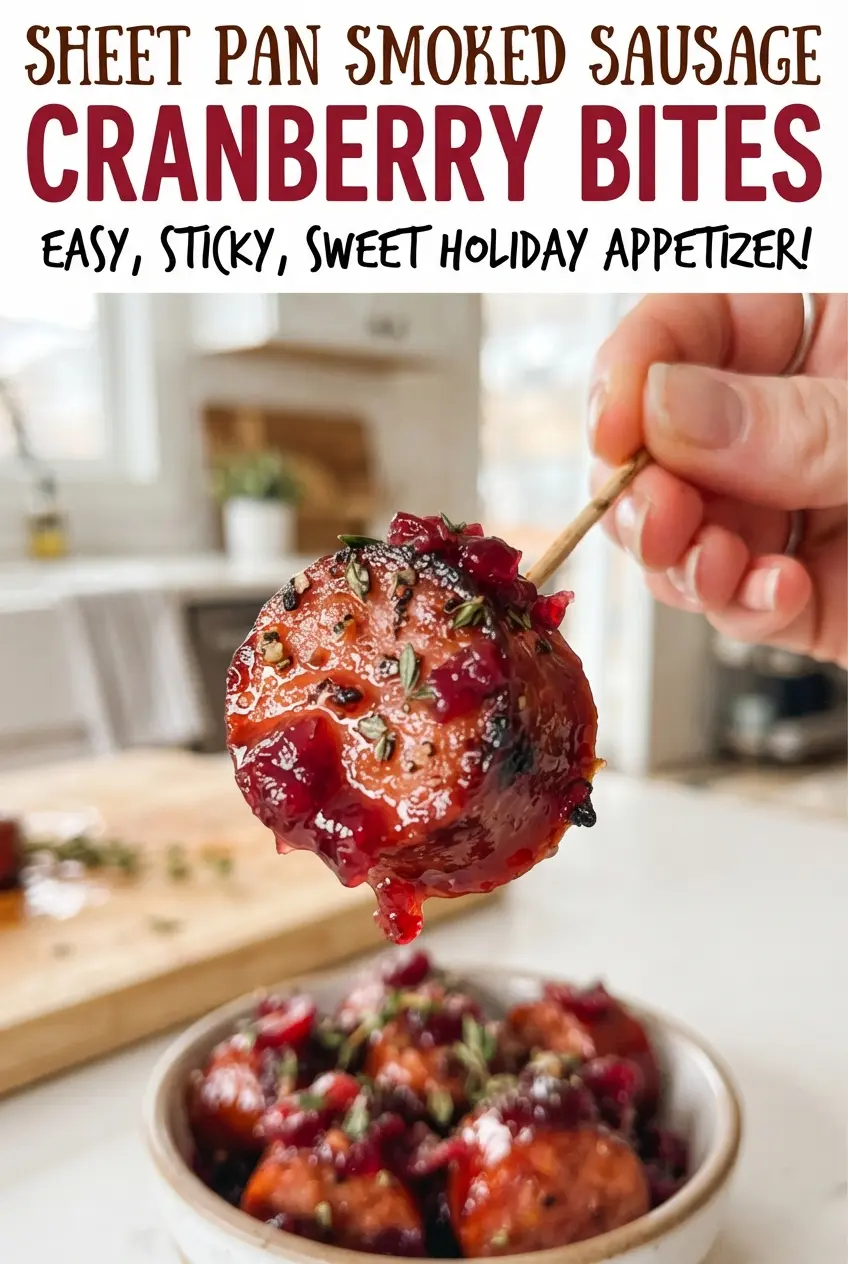
Sticky, caramelized sausage bites with a sweet-tart cranberry glaze disappear fast because they hit every snack-time note at once: smoky, glossy, a little tangy, and just sharp enough from the Dijon to keep the sweetness in check. Baked on a sheet pan, the sausage edges turn browned before the glaze goes on, which gives the finished bites better texture than tossing everything together from the start.
The trick here is giving the sausage a head start in the oven so it can render a little and pick up color before the cranberry mixture joins the party. The glaze is built from whole berry cranberry sauce, brown sugar, Dijon, and apple cider vinegar, which gives you that clingy, shiny coating without needing cornstarch or extra fuss. A little orange zest at the end wakes up the whole tray and keeps the flavor from leaning flat or overly sweet.
Below you’ll find the timing that keeps the glaze sticky instead of burnt, plus a few smart swaps if you want to make these a little spicier or a little lighter.
I was worried the cranberry sauce would be too sweet, but the Dijon and vinegar balanced it out and the glaze got sticky in the oven exactly like you said. I served these with toothpicks and the pan was empty in minutes.
These Sheet Pan Smoked Sausage Cranberry Bites turn sticky, caramelized, and party-ready with almost no cleanup.
The Trick to Keeping the Glaze Sticky Instead of Burnt
Whole berry cranberry sauce already has body, which is why it works better here than jelly. The berries give the glaze texture and keep it from turning into one-note sugar syrup, while the brown sugar helps it caramelize around the sausage instead of sliding off the pan. Dijon and apple cider vinegar pull the whole thing back into balance so the final bite tastes bright, not cloying.
The biggest mistake with a recipe like this is adding the glaze too early. The sausage needs time in the oven first so the cut edges brown and the fat starts to render; otherwise, you end up steaming everything under a sweet sauce. Once the glaze goes on, the remaining bake should be just long enough to bubble and tighten, not long enough to dry out the sausage or scorch the sugar.
What the Glaze Is Actually Doing Here

- Smoked sausage — This gives you the smoky backbone and enough fat to crisp at the edges. A good grocery-store sausage works fine here because the glaze carries the flavor, but slice it into even 1/2-inch coins so everything browns at the same rate.
- Whole berry cranberry sauce — The berries matter. They help the glaze cling and give little pops of tart fruit throughout the tray. If you only have jellied cranberry sauce, it will work, but the finish will be smoother and a little less textured.
- Brown sugar — This deepens the glaze and helps it set into that lacquered finish. Dark brown sugar will give you a richer molasses note; light brown sugar keeps it a little cleaner and brighter.
- Dijon mustard and apple cider vinegar — These are the balance agents. Dijon brings sharpness and emulsifying power, while vinegar keeps the sweetness from flattening out. Don’t swap both for milder ingredients or the glaze will taste heavy.
- Orange zest and thyme — Add these at the end so they stay fresh and fragrant. If you put them in too early, the citrus turns muted and the thyme can taste woody instead of bright.
How to Get Browning, Glaze, and Shine in One Pan
Give the Sausage a Dry First Roast
Spread the sausage in a single layer on a foil-lined rimmed sheet pan and roast it until the edges start to brown. This first bake does the heavy lifting: it dries the surface just enough for color to develop and keeps the finished bites from tasting soft or boiled under sauce. If your pan is crowded, the sausage will steam, so use two pans if needed.
Whisk the Glaze Until It Looks Unified
Stir the cranberry sauce, brown sugar, Dijon, vinegar, garlic powder, and red pepper flakes until the mixture looks glossy and mostly smooth. You’re not trying to dissolve every berry; you just want the sugar to disappear into the sauce and the mustard to distribute evenly. If the glaze seems loose in the bowl, don’t worry — it thickens in the oven as the sugar concentrates and the cranberry sauce reduces.
Finish Until It Bubbles and Clings
After the glaze goes on, return the pan to the oven just long enough for the sauce to bubble around the sausage and turn sticky. Watch the edges of the pan first; that’s where scorching starts. Pull it when the glaze looks shiny and thick enough to coat a spoon, then toss with orange zest and thyme while it’s still hot so the aromatics bloom over the top.
Three Ways to Adjust the Tray for Different Crowds
Make It Spicier for a Game Day Spread
Increase the red pepper flakes to 1/2 teaspoon and add a pinch of cayenne if you want heat that lands after the sweet cranberry glaze. This keeps the bites balanced instead of turning them into candy with a kick.
Use Turkey Sausage for a Lighter Bite
Turkey smoked sausage works well, but it won’t render as much fat, so the browning will be a little less dramatic. Give it the full first roast and don’t skip the foil, because the glaze still needs that initial dry heat to cling properly.
Make It Gluten-Free Without Changing the Method
Use a certified gluten-free smoked sausage and check the mustard label, since some brands sneak in additives you wouldn’t expect. The glaze and roasting method stay the same, so you don’t lose any of the sticky finish.
Storage and Reheating
- Refrigerator: Store in an airtight container for up to 4 days. The glaze will thicken as it chills, which is normal.
- Freezer: These freeze well for up to 2 months. Freeze in a single layer first if you want the pieces to stay separated, then move them to a freezer bag.
- Reheating: Warm in a 350°F oven until hot, or use short bursts in the microwave. The mistake is blasting them too long, which makes the sausage rubbery and the glaze seize up instead of loosening.