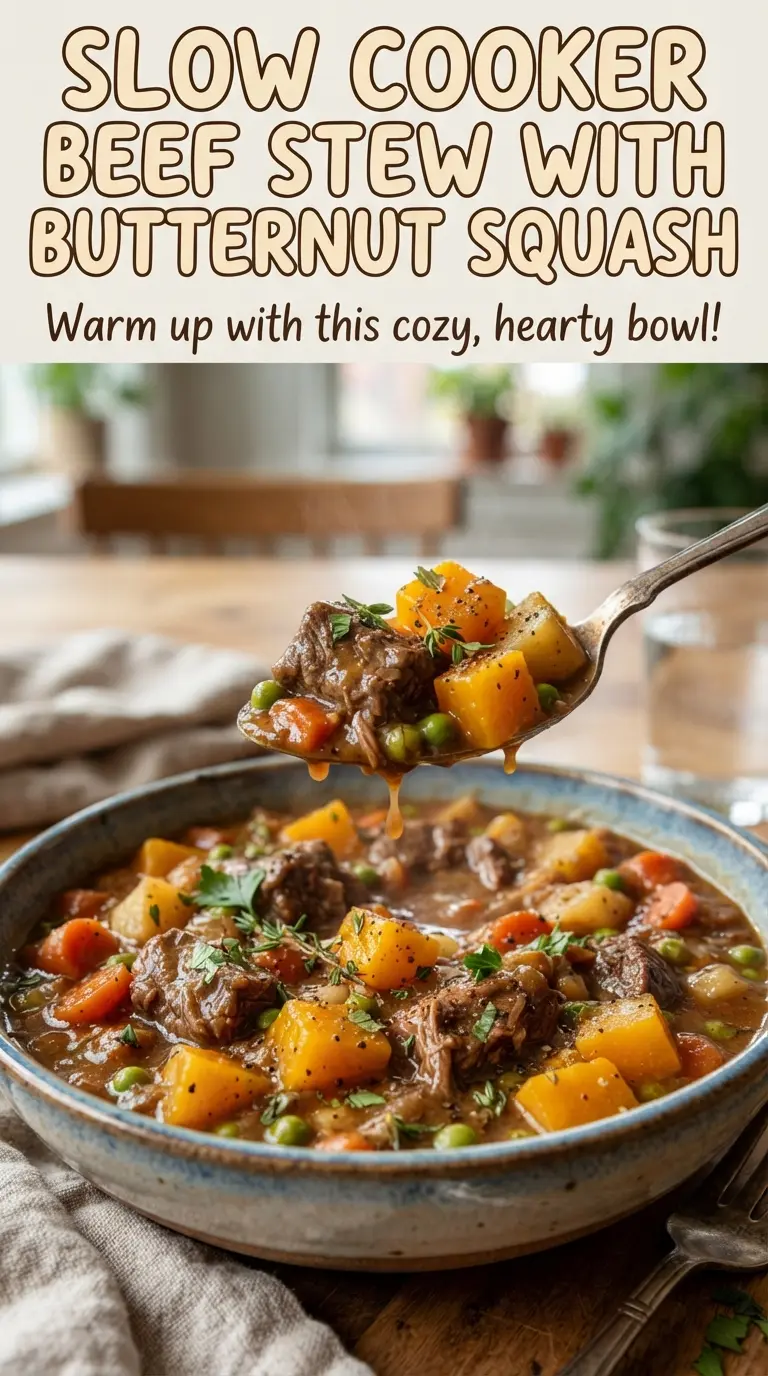
Slow cooker beef stew gets a lot more interesting when butternut squash takes the place of the usual potatoes. The squash melts just enough to thicken the broth, the beef turns spoon-tender, and the kale gives the pot a fresh, earthy finish that keeps the whole bowl from tasting heavy. It’s the kind of stew that tastes like it simmered all day because, in a way, it did.
The texture comes from a few smart choices: dredging the beef lightly in flour helps the broth turn glossy, browning the meat adds depth, and holding the squash until later keeps it intact instead of turning it to mash. A little red wine deglazes the pan and gives the gravy a deeper edge, but extra broth works fine if that’s what you have on hand.
Below, I’ve added the timing detail that matters most, plus a few swaps and storage notes for making this stew work with what’s in your kitchen.
The beef was fall-apart tender and the squash held its shape perfectly. I loved that the gravy thickened up on its own from the flour on the beef.
Save this slow cooker beef stew with butternut squash for a rich, hands-off dinner with tender beef and a glossy sage-scented gravy.
The Part That Keeps the Beef Tender Instead of Stringy
The biggest mistake in slow cooker beef stew is treating the pot like a trash bin for raw ingredients. Browning the flour-dusted beef first matters because it builds flavor and gives the stew a body the slow cooker can’t create on its own. If you skip that step, the broth tastes flatter and the beef can end up soft without tasting deeply savory.
Adding the butternut squash later is the other key move. It softens beautifully in the last stretch without dissolving into the gravy, which would make the whole pot taste one-note and muddy. The kale goes in at the end for the same reason: it keeps its color, keeps a little bite, and brightens the finished stew.
What Each Ingredient Is Actually Doing in the Pot
- Beef chuck — This cut has enough connective tissue to turn tender over a long cook. Leaner stew meat can work, but it won’t give you the same silky texture.
- Flour — The light coating helps the beef brown better and thickens the broth as it cooks. It’s what gives the stew that glossy, clingy finish.
- Tomato paste — A small amount deepens the broth and adds a little backbone without making the stew taste like tomato sauce. Cooking it for a few minutes takes away the raw edge.
- Dry red wine — This lifts the pan fond and adds depth. If you’d rather skip it, use extra broth and a splash of vinegar at the end for a little brightness.
- Butternut squash — It brings sweetness and thickness that potatoes don’t quite match. Cut it into even cubes so it softens at the same pace.
- Kale — Stirring it in at the end keeps it from going army-green and limp. If you want a milder green, use chopped spinach and add it in the last few minutes instead.
Building the Stew So the Slow Cooker Does the Rest
Brown the Beef First
Toss the beef with the flour, salt, and pepper until every piece is lightly coated, then brown it in hot oil in batches. You’re looking for deep color on a few sides, not a crust on every surface. If the pan is crowded, the meat steams and the stew loses that roasted flavor before it even starts.
Cook the Aromatics Until They Smell Sweet
The onion, garlic, and tomato paste need a short turn in the same pan before they go into the slow cooker. The onions should soften, the garlic should smell warm, and the tomato paste should darken a shade. That extra minute or two removes the sharp edge from the garlic and gives the broth a richer base.
Add the Vegetables in Two Waves
Carrots can go in with the broth because they hold their shape through a long cook. The butternut squash goes in later, after the beef has already had time to tenderize. If you add it too early, it breaks down into the gravy and you lose those distinct orange cubes in the finished bowl.
Finish with the Greens at the End
Stir in the kale during the last 15 minutes so it softens without fading out completely. By then, the stew should be thick, fragrant, and bubbling gently around the edges. Taste it before serving and adjust the salt at the end, because slow-cooked broth often needs that final nudge.
How to Adapt This Stew Without Losing the Good Part
Gluten-Free Version
Swap the all-purpose flour for a 1:1 gluten-free flour blend, or skip dredging entirely and thicken the finished stew with a slurry of cornstarch and cold water. The stew will still be rich, but the sauce will be a touch less velvety without the flour on the beef.
No Wine, Still Deep Flavor
Use extra beef broth in place of the wine and add a teaspoon of red wine vinegar or balsamic vinegar at the end. You’ll lose a little of the pan’s sharp edge, but the stew will still have enough acidity to keep the broth from tasting flat.
Dairy-Free and Naturally Hearty
This stew is already dairy-free as written, which is one reason it works so well for a crowd. If you want it even richer, stir in a spoonful of olive oil or top each bowl with chopped parsley right before serving.
Make It Ahead for Better Flavor
This stew tastes even better the next day after the broth has had time to settle around the beef and vegetables. Cool it completely before refrigerating, then reheat it gently so the squash doesn’t collapse into the sauce.
Storage and Reheating
- Refrigerator: Store in an airtight container for up to 4 days. The broth thickens a bit as it chills, which is exactly what you want.
- Freezer: It freezes well for up to 3 months. Cool it fully first and leave a little headspace so the liquid can expand.
- Reheating: Warm it gently on the stove over low heat or in the microwave in short bursts, stirring between intervals. High heat can make the beef tough and the squash break apart before the center is hot.
Answers to the Questions Worth Asking
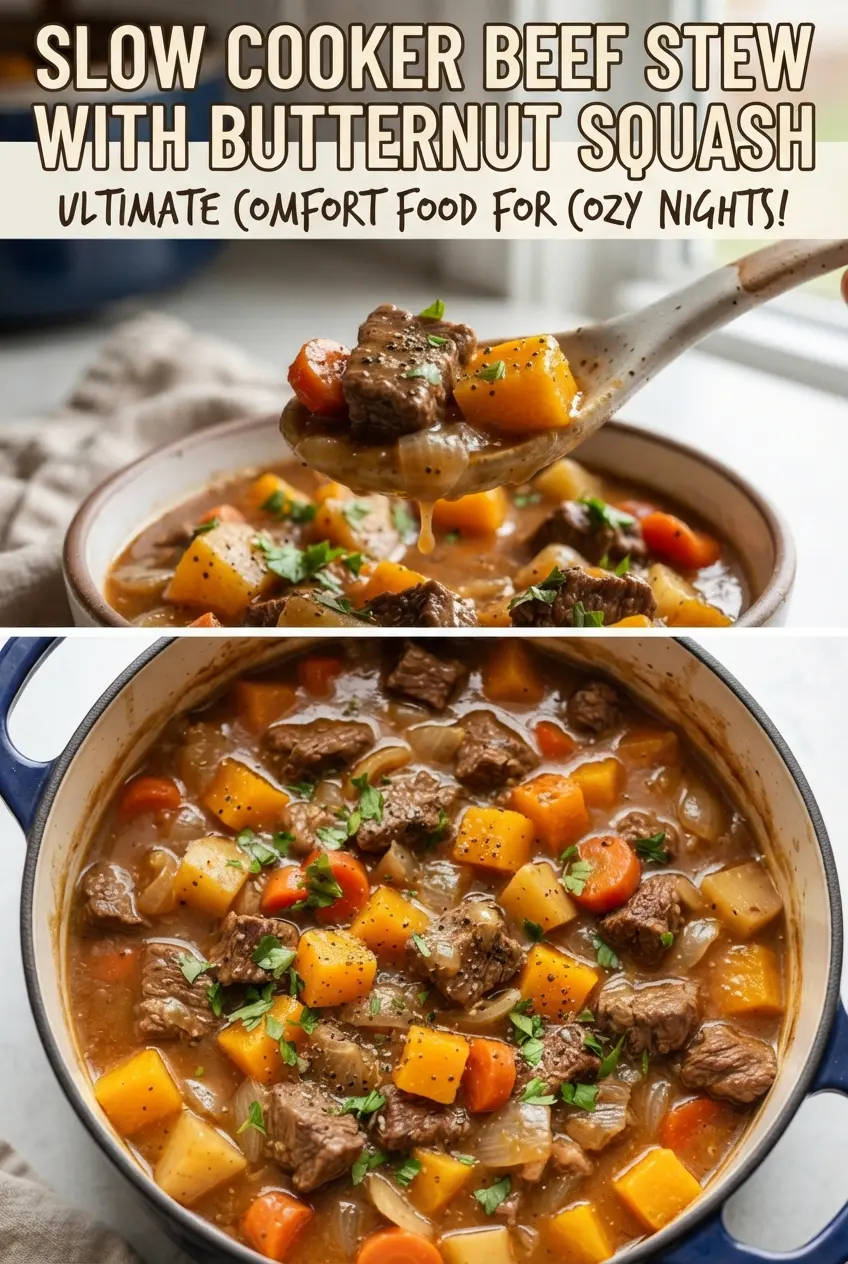
Slow Cooker Beef Stew with Butternut Squash
Ingredients
Equipment
Method
- Toss beef with flour, salt, and pepper, then brown in hot olive oil in a cast iron skillet until well-browned on the edges.
- Transfer the browned beef to the slow cooker.
- Cook onion, garlic, and tomato paste for 3 minutes until softened and fragrant, then deglaze with red wine (or extra broth).
- Pour the onion mixture into the slow cooker over the beef.
- Add beef broth, Worcestershire sauce, dried thyme, dried sage, and carrots to the slow cooker and stir to combine.
- Cover and cook on LOW for 5 hours.
- Add butternut squash cubes after 5 hours, cover, and cook on LOW for 2 to 3 hours more, until the beef and squash are tender.
- Stir in chopped kale and cook covered for 15 minutes on LOW until just tender.
- Taste and season as needed, then serve hot with the stew’s glossy gravy.