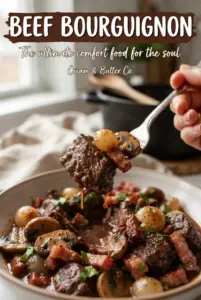
Beef Bourguignon earns its reputation the first time you lift the lid and see beef that falls apart at the edge of a spoon, braised in a glossy red wine sauce that tastes like it spent all afternoon becoming itself. The bacon gives the stew a savory backbone, the wine turns the sauce deep and rich, and the mushrooms and pearl onions keep every bite from feeling heavy. It’s the kind of dish that fills the kitchen with the smell of patience.
What makes this version work is the order of the cooking. The beef gets seared in batches so it browns instead of steaming, and the flour and tomato paste cook long enough to lose their raw edge before the wine goes in. That step gives the braising liquid body from the start. Browning the mushrooms and pearl onions separately at the end keeps them intact and gives the finished stew more texture than if everything simmered together for hours.
Below, I’ve included the parts that matter most: how to build that deep wine sauce without a muddy flavor, which ingredients are worth paying attention to, and what to do if you need to make the stew ahead. The details matter here, but none of them are fussy once you know why they’re there.
The beef turned out buttery-tender and the sauce thickened beautifully after the oven time. Browning the mushrooms separately made such a difference, and the whole pot tasted even better the next day.
Save this Beef Bourguignon for the night you want deep red wine sauce, tender beef, and a pot that tastes even better tomorrow.
The Sear That Gives Bourguignon Its Backbone
The biggest mistake with beef bourguignon is crowding the pot and expecting the meat to brown anyway. It won’t. Once the surface moisture steams off, the beef needs space and heat so it can develop a deep brown crust before the braise starts. That crust is where the stew gets its savory base, not from the wine alone.
Here, the bacon goes first, and the beef sears in the rendered fat. That gives you layered flavor right from the start. If the pot looks dry after a batch or two, add a little olive oil, but don’t rush the process by piling in too much beef at once. Pale beef in a braise means a flatter-tasting stew.
What the Wine, Bacon, and Tomato Paste Are Really Doing
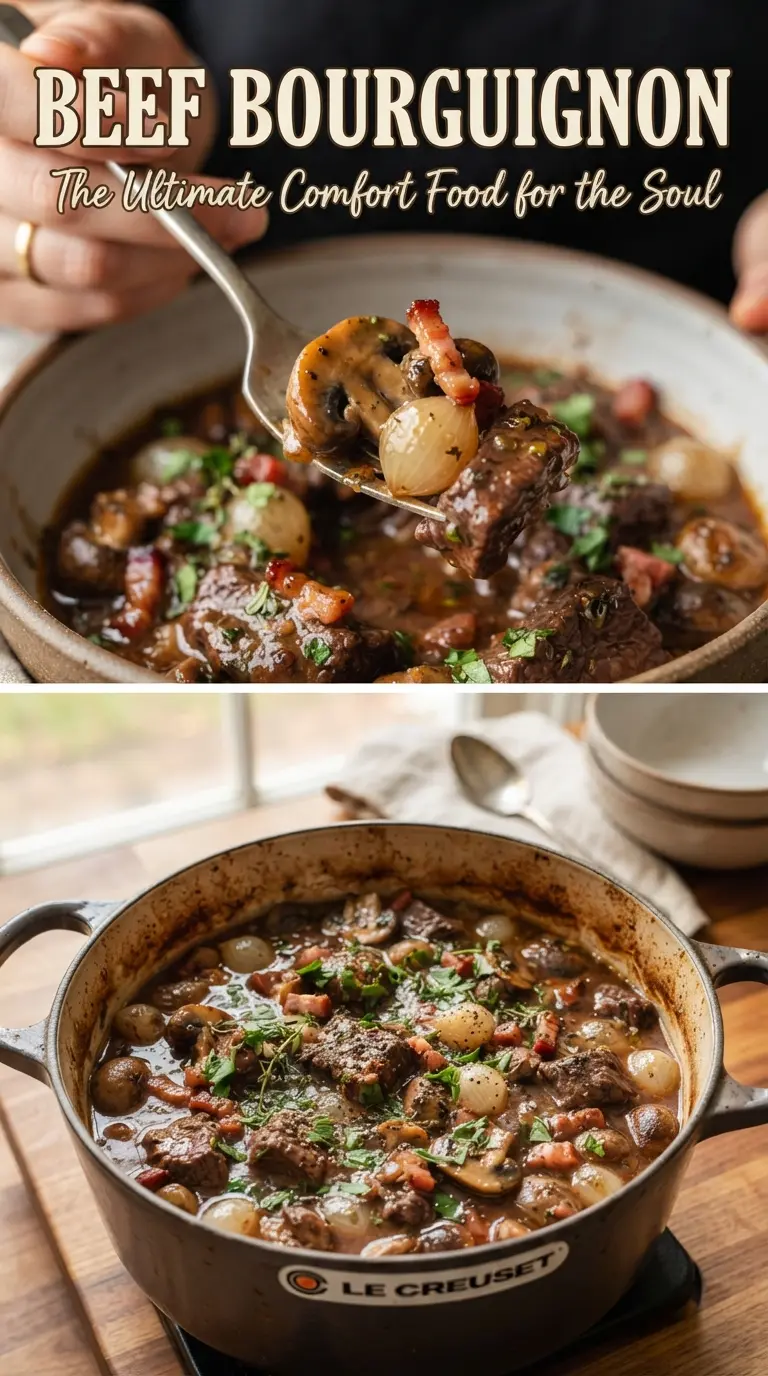
- Beef chuck — This cut has enough connective tissue to become spoon-tender during the long braise. Leaner cuts dry out before the sauce has time to develop, so chuck is the one worth using here.
- Dry red wine — This is the flavor of the dish, so use a wine you’d actually drink. It doesn’t need to be expensive, but it should taste dry and balanced; sweet wine can make the sauce muddy.
- Bacon — The lardons add smoke, salt, and depth, and the rendered fat helps the beef brown. Thick-cut bacon is better here because it holds its shape and gives you little meaty bites in the finished stew.
- Mushrooms and pearl onions — Cooking them separately keeps them from collapsing into the stew. The butter browning at the end gives them a polished finish and keeps their flavor distinct instead of swallowed by the braising liquid.
- Tomato paste and flour — These build body before the wine goes in. Let them cook for a minute or two so the sauce doesn’t taste raw or pasty; that small pause makes a big difference in the final texture.
Building the Braise So the Sauce Stays Rich, Not Muddy
Cooking Down the Vegetables
Once the beef is out of the pot, the onion and carrots go into the bacon fat and pick up every browned bit stuck to the bottom. Cook them until the onions start to soften and the edges look glossy. When the garlic, flour, and tomato paste go in, stir constantly for the full two minutes so the flour loses its chalky taste and the paste darkens slightly. If you rush this stage, the sauce can taste raw instead of deep.
Adding the Wine Without Losing the Browning
Pour in the wine and broth slowly, scraping the bottom as you go. The pot should sound like a gentle sizzle, not a hard boil. Bring it to a simmer before it goes into the oven, because the braise needs to start hot enough to move but not hot enough to bully the meat. If the liquid never comes to a proper simmer first, the beef can sit in lukewarm broth and cook unevenly.
Finishing With Butter and Fresh Parsley
The stew is done when the beef yields easily and the sauce looks silky rather than thin. Pull out the thyme and bay leaves before stirring in the last bit of butter; that final swirl rounds out the sauce and gives it a polished sheen. Add the parsley at the very end so it stays bright. If you add it too early, it disappears into the pot and loses the fresh finish that makes the stew taste complete.
How to Adapt This for a Different Night, a Different Pantry, or a Make-Ahead Plan
Gluten-Free Version
Swap the all-purpose flour for a gluten-free 1:1 blend or leave it out and reduce the sauce a little longer after braising. The stew will still be rich, but the sauce may be slightly looser if you skip the flour entirely.
No Wine, Less Traditional, Still Deep
Use extra beef broth plus 1 tablespoon red wine vinegar or balsamic vinegar for brightness. You’ll lose some of the classic bourguignon character, but the stew will still have enough acidity to keep the flavor from feeling flat.
Dairy-Free Finish
Skip the final butter and finish with a drizzle of olive oil instead. The sauce won’t have quite the same roundness, but the wine, bacon, and slow braise carry the dish well on their own.
Storage and Reheating
- Refrigerator: Store covered for up to 4 days. The flavor deepens overnight, and the sauce usually thickens as it chills.
- Freezer: It freezes well for up to 3 months. Cool it completely before freezing, and leave a little space at the top of the container for expansion.
- Reheating: Reheat gently on the stovetop over low heat or in a 300F oven until hot. A hard boil can make the beef tough and the sauce greasy, so warm it slowly and stir now and then.
Questions I Get Asked About This Recipe
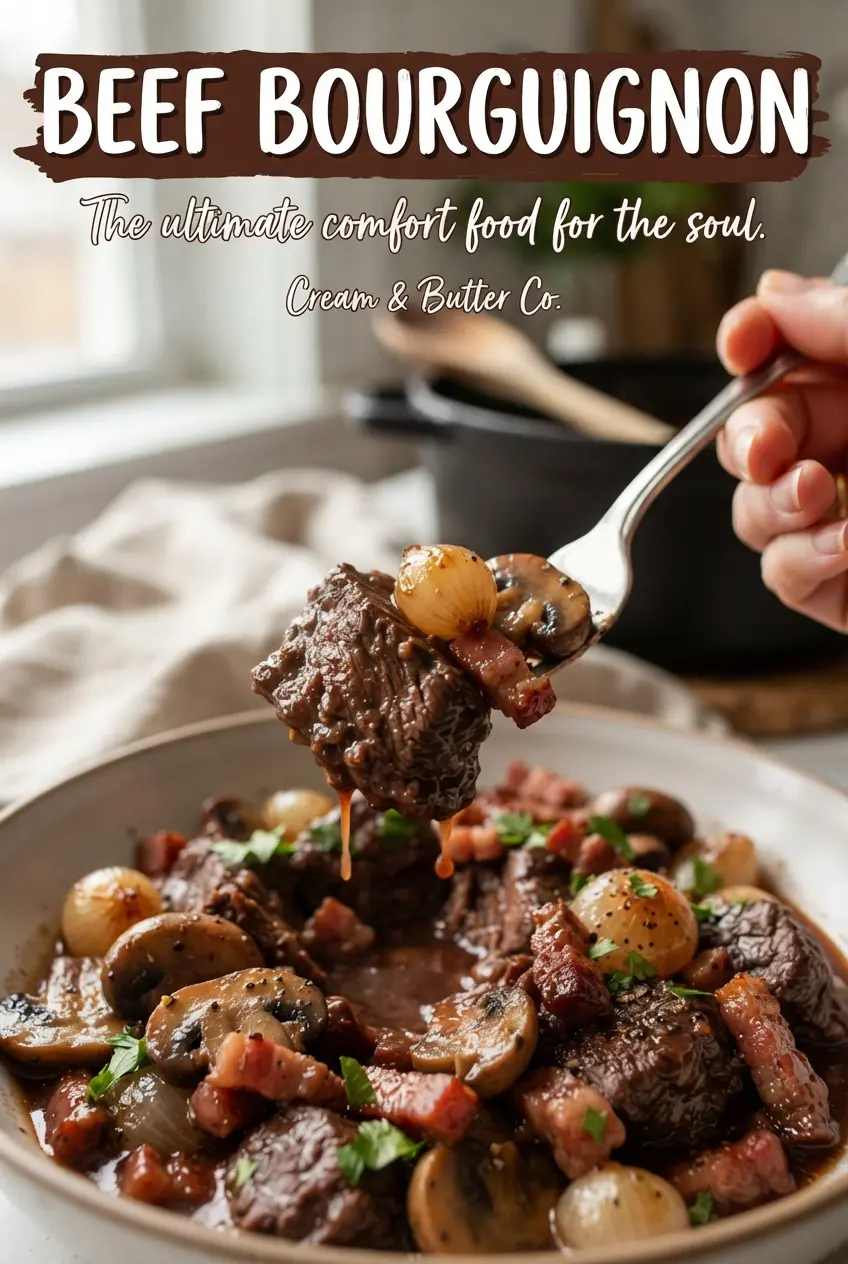
Beef Bourguignon
Ingredients
Equipment
Method
- Preheat the oven to 325F. Heat olive oil in a Dutch oven over medium heat until shimmering.
- Brown the thick-cut bacon in the olive oil and let it render until crisp and browned, then set aside. The visual cue is golden-brown bacon pieces.
- Pat the beef chuck dry, season it with salt and black pepper, and set aside while the pan is hot. Keep the pieces spaced for best browning.
- Sear the beef in batches in the bacon fat until deeply browned on all sides, then transfer to a plate. The visual cue is dark, caramelized edges.
- Cook the onion and carrots for 5 minutes in the Dutch oven, stirring as they soften. You want the vegetables to lose raw color.
- Add the garlic, flour, and tomato paste and cook for 2 minutes, stirring constantly. The mixture should smell fragrant and look slightly thickened.
- Add the dry red wine, beef broth, fresh thyme, bay leaves, beef, and bacon to the Dutch oven. Bring everything to a simmer, scraping up browned bits.
- Cover and braise in the oven at 325F for 3 hours until the beef is fork-tender. Look for steady bubbling and tender, soft meat.
- Brown the pearl onions and cremini mushrooms in butter in a cast iron skillet until golden. The visual cue is browned edges and concentrated flavor.
- Add the browned pearl onions and mushrooms to the stew for the last 20 minutes of braising. The stew should stay hot and gently simmer.
- Remove the thyme and bay leaves from the stew. The texture should be thick and glossy from the wine reduction.
- Swirl in the remaining butter to enrich the sauce right before serving. The final visual cue is a silkier, shinier surface.
- Top with chopped fresh parsley and serve. The visual cue is bright green flecks over the red sauce.