Hearty meatball stew lands in the bowl with tender meatballs, soft potatoes, and carrots tucked into a rich brown gravy that tastes like it simmered all afternoon. The meatballs hold their shape, the broth turns silky, and the peas add that last pop of sweetness right at the end. It’s the kind of one-pot dinner that feels complete without needing anything on the side, though a piece of bread never hurts.
The key is building flavor in layers instead of relying on one big seasoning dump. Browning the meatballs first gives the stew a deeper base, and a little flour with the onions thickens the broth into a proper gravy instead of a thin soup. Tomato paste and Worcestershire work quietly in the background, giving the sauce color, body, and a little backbone without making it taste like tomato stew.
Below you’ll find the method that keeps the meatballs tender, the step that stops the gravy from going pasty, and a few easy ways to adapt it if you want to stretch the vegetables or make it dairy-free.
The meatballs stayed tender and the gravy thickened up perfectly without getting gluey. I made it on a Sunday and my husband asked for leftovers the next night.
Save this meatball stew for nights when you want browned meatballs, tender vegetables, and a thick savory gravy in one pot.
The Step That Keeps the Meatballs Tender While the Stew Simmers
Meatball stew can go wrong when the meatballs are packed too tightly or simmered hard enough to knock them apart. A light mix keeps the texture soft, and browning them before they go into the broth gives them structure so they don’t shed into the gravy. You’re not cooking them through in the pan; you’re just building color and a little crust, which pays off later when the stew simmers.
The other place people get tripped up is heat. Once the broth goes in, keep it at a gentle simmer, not a rolling boil. Boiling turns the meatballs tough and can break the potatoes down before the carrots are tender. Covered simmering lets the vegetables soften evenly while the broth thickens into that spoon-coating texture.
What Each Ingredient Is Doing in the Pot
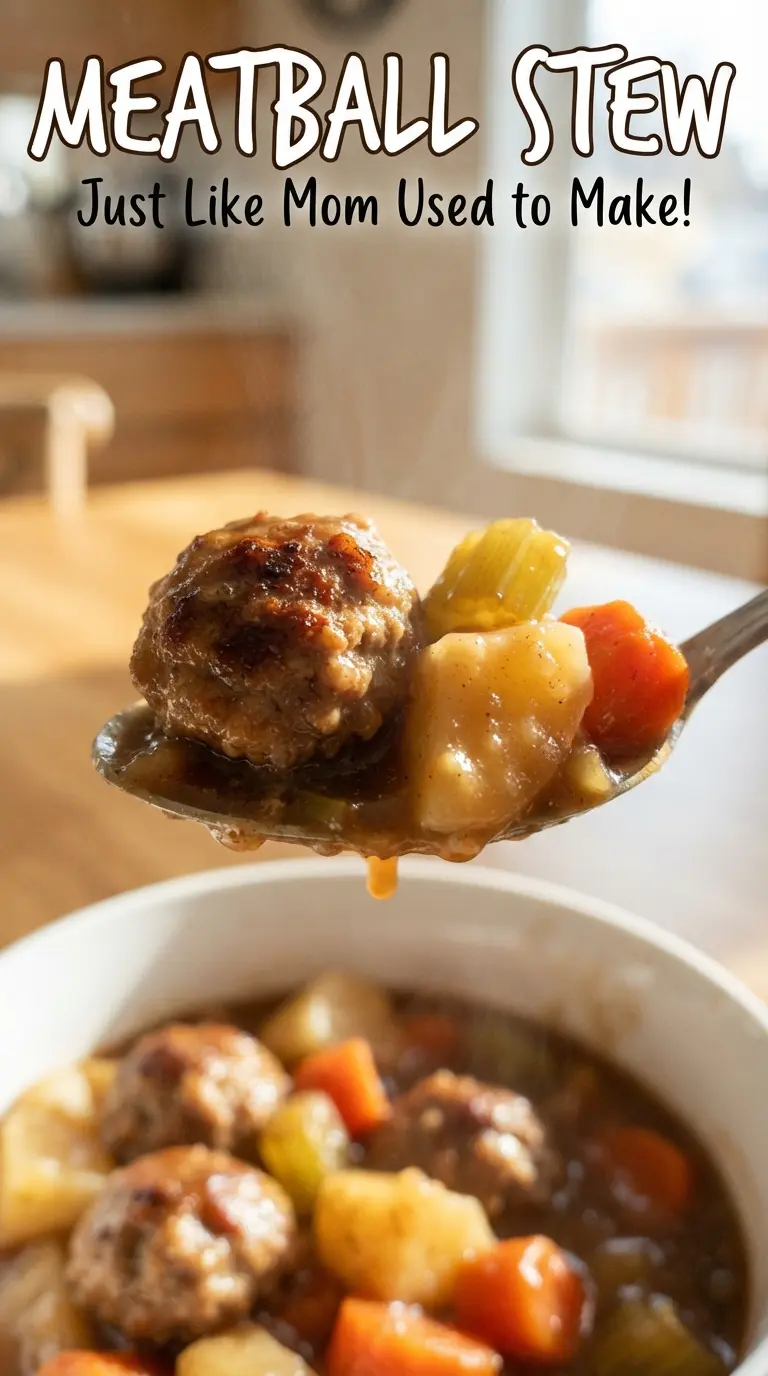
- Ground beef — An 80/20-style mix gives you meatballs that stay juicy and flavorful. Leaner beef works, but the stew will taste a little drier unless you’re careful not to overcook it.
- Breadcrumbs, egg, and milk — This trio keeps the meatballs tender and helps them hold together without turning bouncy. If you need a swap, crushed saltines or rolled oats pulsed fine can stand in for the breadcrumbs, but the texture will be slightly different.
- Flour — Stirred into the onions, it thickens the broth from the start so the stew turns rich instead of watery. Let it cook for a full minute so you don’t taste raw flour in the finished pot.
- Tomato paste and Worcestershire sauce — These are the quiet flavor builders. Tomato paste adds depth and color, while Worcestershire brings the savory edge that makes the gravy taste slow-cooked even though it isn’t.
- Potatoes and carrots — Use a waxy or all-purpose potato if you want the cubes to stay intact through the simmer. Russets will thicken the broth more, but they’ll break down faster.
- Frozen peas — They go in at the end because they only need a few minutes to heat through. Add them earlier and they’ll lose their bright color and sweet pop.
Building the Stew So the Gravy Turns Rich, Not Thin
Mix the Meatballs Gently
Combine the beef, breadcrumbs, egg, milk, salt, and garlic powder just until the mixture comes together. Overmixing makes the meatballs dense and springy instead of tender. Roll them into even-sized balls so they brown at the same rate and finish cooking at the same time.
Brown Before You Simmer
Work in batches and leave space around each meatball in the pan. If the pan is crowded, the meatballs steam and turn gray instead of picking up a proper crust. Set them aside once they’ve browned on a few sides; they’ll finish in the stew.
Cook the Onion and Flour Base
After the onion softens, sprinkle in the flour and stir it around for a minute so it coats the onion and loses its raw taste. The mixture will look a little pasty at first, and that’s fine. Once the broth goes in, whisk until the base smooths out before adding the tomato paste, Worcestershire, thyme, potatoes, and carrots.
Finish with a Gentle Simmer
Return the meatballs and keep the pot covered over low heat until the potatoes and carrots are tender. The stew should bubble lazily, not churn. Stir in the peas at the end and cook just long enough for them to heat through, then serve while the gravy is glossy and the vegetables still hold their shape.
Three Ways to Adjust Meatball Stew Without Losing the Good Part
Gluten-Free Version
Use gluten-free breadcrumbs in the meatballs and replace the flour with a 1:1 gluten-free blend or cornstarch slurry for the gravy. Cornstarch gives you a cleaner, slightly lighter finish, while a flour blend keeps the stew closer to the original texture.
Dairy-Free Meatballs
Swap the milk for unsweetened oat milk or broth. You still get a tender meatball, but the flavor stays neutral instead of leaning creamy. Avoid almond milk here; its flavor can come through in the finished stew.
Add More Vegetables
Celery, parsnips, or mushrooms fit in naturally. Add firmer vegetables with the potatoes and carrots, and add mushrooms after the onion so they can cook down and deepen the broth instead of going rubbery.
Make It Ahead
This stew tastes even better the next day after the gravy settles and the flavors marry. If you’re serving it later, stop cooking when the potatoes are just tender so they don’t turn mushy after reheating.
Storage and Reheating
- Refrigerator: Store in an airtight container for up to 4 days. The gravy thickens as it chills, so it may look tighter the next day.
- Freezer: It freezes well for up to 3 months. Cool completely first, then freeze in portions; potatoes soften a little after thawing, but the flavor holds up.
- Reheating: Warm gently on the stovetop over low heat with a splash of broth. High heat can split the gravy and toughen the meatballs before the center warms through.
Questions I Get Asked About This Recipe

Meatball Stew
Ingredients
Equipment
Method
- Mix the ground beef, breadcrumbs, egg, milk, salt, and garlic powder until evenly combined, then roll into 1 1/2-inch meatballs. Stop when the mixture holds together and no dry breadcrumbs remain.
- Heat the vegetable oil in a Dutch oven over medium-high heat, then brown the meatballs in batches. Cook until deep golden on the outside, then set aside.
- In the same pot, cook the diced onion for 4 minutes, stirring occasionally. Cook until softened and lightly translucent.
- Sprinkle in the all-purpose flour and stir for 1 minute to form a thick base. Keep stirring so it turns fragrant but does not brown too far.
- Whisk in the beef broth, tomato paste, Worcestershire sauce, and dried thyme, scraping up any browned bits. Bring the mixture to a steady simmer.
- Add the cubed potatoes and sliced carrots to the pot. Make sure they are submerged in the gravy.
- Return the browned meatballs to the pot, then simmer covered for 25-30 minutes. Cook until the vegetables are tender when pierced.
- Stir in the frozen peas and simmer for 5 minutes. Cook until the peas are bright green and hot throughout.
- Serve the meatball stew hot, topped as desired. Let it rest for 2 minutes so the gravy thickens slightly.